

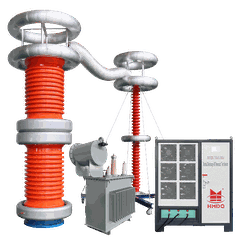

The accuracy of an AC resonant test system for Capacitor Voltage Transformers (CVTs) is a critical factor that directly impacts the reliability and effectiveness of high - voltage testing. As a supplier of AC Resonant Test Systems for CVT, I understand the importance of this accuracy in ensuring the proper functioning and safety of electrical power systems.
Understanding CVTs and the Need for Testing
Capacitor Voltage Transformers are widely used in high - voltage power systems to step down high voltages to measurable and manageable levels for metering, protection, and control purposes. They play a crucial role in maintaining the stability and safety of the power grid. However, like any electrical equipment, CVTs are subject to various stresses during their operation, such as electrical, thermal, and mechanical stresses. These stresses can lead to insulation degradation, which may ultimately result in failures.


Regular testing of CVTs is essential to detect potential issues early and prevent costly breakdowns. The AC resonant test system is one of the most effective methods for testing CVTs. It works by creating a resonant circuit with the CVT under test, allowing for the application of a high - voltage AC signal at the resonant frequency. This method has several advantages over traditional testing methods, including reduced power requirements, more accurate simulation of real - world operating conditions, and better sensitivity to insulation defects.
Factors Affecting the Accuracy of an AC Resonant Test System for CVT
Frequency Accuracy
The resonant frequency of the test system is a key parameter. The accuracy of the frequency generation directly affects the test results. In a CVT test, the resonant frequency is determined by the capacitance of the CVT and the inductance of the test system. Any deviation in the frequency can lead to inaccurate voltage and current measurements. Modern AC resonant test systems are equipped with high - precision frequency generators that can maintain a stable frequency within a very narrow tolerance range. For example, a high - quality test system can achieve a frequency accuracy of ±0.01%. This high level of accuracy ensures that the test is performed at the correct resonant frequency, providing reliable results.
Voltage Measurement Accuracy
Accurate voltage measurement is crucial in CVT testing. The test system needs to measure the applied voltage and the voltage across the CVT accurately. Errors in voltage measurement can lead to incorrect assessment of the CVT's insulation condition. The accuracy of voltage measurement depends on several factors, including the quality of the voltage sensors, the calibration of the measurement circuit, and the signal processing algorithms. Our AC Resonant Test Systems for CVT are equipped with high - precision voltage sensors that have been carefully calibrated to ensure accurate voltage measurement. The measurement accuracy can typically reach ±1% or even higher, depending on the specific model.
Current Measurement Accuracy
In addition to voltage measurement, accurate current measurement is also important. The current flowing through the CVT during the test provides valuable information about its insulation condition. Any abnormal increase in current may indicate insulation degradation or other defects. Similar to voltage measurement, the accuracy of current measurement depends on the quality of the current sensors and the calibration of the measurement circuit. Our test systems use high - precision current sensors that can accurately measure the current flowing through the CVT, with a measurement accuracy of ±1% or better.
Phase Measurement Accuracy
Phase measurement is another important aspect of CVT testing. The phase difference between the voltage and current signals can provide information about the power factor and the insulation loss of the CVT. Errors in phase measurement can lead to incorrect calculation of the power factor and inaccurate assessment of the insulation condition. Our AC Resonant Test Systems for CVT are designed to provide high - accuracy phase measurement, with a phase measurement accuracy of ±0.1°. This high - level of phase measurement accuracy allows for more precise analysis of the CVT's insulation performance.
Ensuring the Accuracy of the Test System
To ensure the accuracy of our AC Resonant Test Systems for CVT, we follow a strict quality control process. All our test systems are manufactured using high - quality components and advanced manufacturing techniques. Before leaving the factory, each test system undergoes a series of rigorous tests and calibrations to ensure that it meets the specified accuracy requirements.
We also provide regular calibration services for our customers. Calibration is essential to maintain the accuracy of the test system over time. Our calibration services are performed by highly trained technicians using state - of - the - art calibration equipment. By regularly calibrating the test system, customers can ensure that their test results are accurate and reliable.
The Importance of Accuracy in Real - World Applications
In real - world power systems, the accuracy of the AC resonant test system for CVT has a significant impact on the safety and reliability of the grid. Accurate testing can help detect insulation defects in CVTs early, allowing for timely maintenance and replacement. This can prevent costly power outages and equipment failures, reducing the overall operating costs of the power system.
For example, in a large - scale power grid, a single CVT failure can lead to a cascade of events that may result in widespread power outages. By using an accurate AC resonant test system, power utilities can identify potential problems in CVTs before they cause major issues. This proactive approach to maintenance can improve the reliability of the power grid and enhance the quality of power supply to consumers.
Comparison with Other Testing Methods
Compared with traditional testing methods, such as DC testing, the AC resonant test system for CVT offers higher accuracy and better simulation of real - world operating conditions. DC testing has some limitations, including the inability to detect certain types of insulation defects and the potential for damage to the insulation due to the accumulation of space charges. In contrast, the AC resonant test system applies an AC voltage at the resonant frequency, which is more similar to the actual operating conditions of the CVT. This method can detect a wider range of insulation defects, including those that may not be detectable by DC testing.
Our AC Resonant Test Systems for CVT
We offer a range of high - quality AC Resonant Test Systems for CVT that are designed to meet the diverse needs of our customers. Our test systems are known for their high accuracy, reliability, and ease of use. They are suitable for various applications, including power utilities, electrical equipment manufacturers, and testing laboratories.
In addition to the standard models, we also provide customized solutions to meet specific customer requirements. Our experienced engineering team can work with customers to design and develop test systems that are tailored to their unique needs.
If you are interested in our AC Resonant Test System for CVT, we also offer other related products such as HV Cable AC Resonant Tester and Vehicle - Mounted AC Resonant Tester.
Conclusion
The accuracy of an AC resonant test system for CVT is of utmost importance in ensuring the reliable operation of high - voltage power systems. Our company, as a leading supplier of AC Resonant Test Systems for CVT, is committed to providing high - accuracy test systems that can help our customers detect insulation defects in CVTs early and prevent costly equipment failures.
If you are looking for a reliable and accurate AC resonant test system for your CVT testing needs, please feel free to contact us. Our sales team is ready to provide you with detailed product information and assist you in making the right choice for your application. We look forward to the opportunity to work with you and contribute to the safety and reliability of your power system.
References
- Electrical Power System Testing Handbook, Second Edition, by John D. McDonald
- High - Voltage Testing Techniques, Third Edition, by E. Kuffel, W. S. Zaengl, and J. Kuffel