

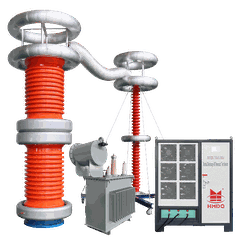



AC/DC Hipot Tester
The Prominant AC Hipot Tester Manufacture
Our company has specialized in the production and manufacturing of high-voltage testing equipment for 20 years, with a modern intelligent factory covering an area of over 10000 square meters, staffed by 51 professional technicians, and hold CE certification. 35 patents, 10+ software copyrights,Currently, we have over 150 stable distributors worldwide and established more than 10 service offices overseas.
An AC Hipot Tester(also known as an AC Dielectric Withstand Tester or AC Insulation Tester) is an electrical safety testing instrument designed to verify the integrity of the insulation in a component or device by applying a high AC voltage.
Our AC withstand voltage testers are widely used for generators, transformers, switchgear, GIS, busbars, cable transformers, cables, high-voltage switches, low-voltage electrical equipment, motors, relays, electronic components, household appliances, and more.


Why Choose Us
Product Applications
These solutions are widely applied across power engineering, transportation, power plant construction, railway infrastructure, petrochemical, metallurgical, and coal mining industries.
Sales Markets
Cumulative exports have reached Indonesia, India, Pakistan, Vietnam, the Philippines, Saudi Arabia, the United Arab Emirates, Egypt, Turkey, Israel, Brazil, Germany, the United States, Australia, and other countries and regions. With over 150 distributors worldwide and more than 10 overseas service offices, we have successfully opened up global markets.
Honors, patents, certificates
Our products are through the national, provincial power authorities testing, as well as CE certification! At present,0ur company has received ISO9001:2015 quality management system certification, ISO14001:2018 occupational health and safety management system certification, and ISO14001:2015 environmental management system certification,and also had got SGS certification.
Our Service
We pledge to treat every client with integrity and equality, regardless of contract size or whether they are domestic or international, new or existing customers, providing professional consultation and advice. Goldhome provides professional installation, commissioning and training for users' workers, ensures that users can get familiar with operation methods and put machines into use as soon as possible.


Why do we need to conduct an AC voltage withstand test?
The AC withstand voltage tester is designed to simulate the most severe overvoltage conditions before leaving the factory, actively detect insulation defects, and ensure the absolute safety of end users' lives.In addition, in order to capture potential defects in the production process and ultimately meet mandatory global safety regulations and certification standards, legal sales can be conducted.
Working Principle
The tester applies a pre - set AC high voltage (ranging from hundreds of volts to tens of thousands of volts, depending on the application) between two points of the device under test (e.g., between the live wire and the ground wire of an appliance).
Three Main Insulation Types
Dry-Type, Oil-Immersed, and Gas-Filled (typically SF6). Each transformer type possesses distinct advantages, disadvantages, and application scenarios. Details are provided below:
Dry-Type Transformer
Working Principle: Windings are encapsulated in solid insulating material (e.g., epoxy resin) and rely on air (natural or forced) for cooling.
Advantages
1. High safety, no fire risk
2. Environmentally friendly
3. Simple maintenance: Low maintenance costs
4. Convenient installation: Placeing near the load center, reducing cable losses.
5. Strong overload capacity: Withstand short-term overloads.
Disadvantages
1. Limited capacity and voltage: Constrained by air's insulation and cooling properties, typically lower single-unit capacity and voltage ratings (generally ≤20kV, capacity ≤20MVA).
2. Bulky size and noise
3. Higher cost
4. Sensitive to environmental conditions
Typical Applications
• Indoor installations: High-rise buildings, commercial centers, hospitals, schools, subway stations, airports, data centers
• Industrial sectors: Chemical plants, mines, ships
• Distributed power sources: As distribution transformers within buildings or workshops.


Oil-Immersed Transformer
Working Principle: Windings are immersed in mineral oil or synthetic ester insulating oil, which serves as both an insulating and cooling medium.
Advantages
1. Efficient cooling, high capacity
2. Mature technology, low cost
3. High reliability, long service life
4. Compact size, relatively low noise
Disadvantages
1. Fire hazard risk
2. Environmental risks
3. Complex maintenance: High maintenance workload and costs.
4. Demanding installation requirements
Typical Applications
• Power plants and substations:Almost all step-up, step-down, and interconnection transformers in power grids.
• Outdoor distribution:Pole-mounted transformers, outdoor distribution substations.
• Heavy industry:Factories requiring high-capacity power supply, such as metallurgy and papermaking.
• Any cost-sensitive applications with ample space and no stringent fire safety requirements.


Gas-Filled Transformer (refers to SF6 transformers)
Working Principle: The windings are sealed within a chamber filled with sulfur hexafluoride (SF6) gas. SF6 gas serves as the insulating medium, while heat is dissipated through radiators using air or water.
Advantages
1. Non-flammable and explosion-proof: Extremely high safety.
2. Compact and space-efficient: Minimal footprint.
3. Minimal environmental impact
4. Low noise: Operational noise lower than dry-type and oil-immersed transformers.
Disadvantages
1. Environmental concerns: Significant environmental impact from leaks.
2. Extremely high cost.
3. Complex decommissioning: Cannot be directly discharged.
4. Relatively poor heat dissipation performance.
Typical Applications
• High-end indoor locations with extremely limited space: Core areas of super high-rise buildings, floor substations in premium office towers, underground substations for rail transit.
•Special Environments: (Offshore platforms).


Comparative Analysis of Three Types Transformers
|
Characteristics |
Dry-Type |
Oil-Immersed |
Gas-Filled |
|
Safety |
Extremely High |
Low (Flammable) |
Extremely High |
|
Environmental Impact |
High |
Moderate/Low |
Extremely Low |
|
Capacity/Voltage |
Medium-Low (≤20MVA) |
High (Up to 1000kV+/1000MVA+) |
Medium (Limited by heat dissipation) |
|
Volume/Size |
Large |
Medium |
Small |
|
Maintenance Requirements |
Low |
High |
Very Low |
|
Initial Cost |
Medium-High |
Low |
Very High |
|
Installation Environment |
Indoor |
Outdoor or standalone substation |
Unrestricted |
How to choose a AC Hipot Voltage Tester?
Consider the following four aspects:
Safety and environmental regulations (primary consideration)
Application location (indoor/outdoor, space size, environmental conditions)
Capacity and voltage requirements
Total cost of ownership (initial cost + maintenance cost)
Core Components of an AC Hipot Voltage Tester
The AC Hipot voltage tester consists of the following key components:
High Voltage Generator (The Power Source)
This is the heart of the tester, responsible for creating the high AC output voltage.
Voltage and Current Measurement Circuit (The Sensors)
This system accurately measures what is happening during the test.
Control and Processing Unit (The Brain)
This component manages the test sequence, calculations, and user interaction.
User Interface (The Communication Hub)
How the operator interacts with the tester.
Safety and Interlock System (The Protector)
Perhaps the most critical set of components, designed to protect the operator.
Output Terminals and Connectors
The physical interface to the device under test.
Enclosure
The physical housing.


Key Applications of AC Hipot Voltage Tester
- Power Systems: Generators, transformers, switchgear, GIS, busbars, cables
- Power Transmission & Distribution: High-voltage circuit breakers, instrument transformers, busbars, transmission lines, transformers.
- Electrical Manufacturing: Transformers, cables, high-voltage switches, low-voltage electrical equipment

- Industrial Enterprises: Steel mill motors, chemical distribution cabinets, cement kiln head motors
- Transportation Industry: Railway signaling equipment, subway power supply equipment
- Electronics & Home Appliances: Motors, relays, electronic components, household appliances

- Medical Equipment: Electrocardiographs, X-ray machines, surgical equipment
- New Energy: PV combiner boxes, wind power substations, energy storage battery packs.
- Research & Education: Insulation materials, New Electrical Equipment.

AC High Voltage Testing Procedure
Preparation
• Power off equipment and discharge.
• Verify test standard parameters.
• Connect high-voltage output lead to equipment input terminal; return lead to equipment metal housing/ground.
Testing
•Start tester; voltage automatically ramps from zero to set value.
•Maintain voltage for set duration 60 seconds; instrument monitors leakage current in real time.
Evaluation
• If leakage current remains below the set limit throughout → Pass.
•If current exceeds the limit → Immediately disconnect output and determine as Fail (indicating insulation breakdown).
Conclusion
• Voltage automatically ramps down to zero.
• Discharge the equipment again, then disconnect all wiring.
Our Certifications

01
Certifications
ISO 9001:2015 QMS, OHSAS 18001, ISO 14001 EMS.

02
Honors
National High-Tech Enterprise, Wuhan Technology Innovation "Gazelle" Enterprise.

03
Intellectual Property
35 patents, 10+ software copyrights.

04
Industry Compliance
Products meet State Grid testing standards and international CE certification


FAQ
Q: 1. What is an AC withstand voltage test?
A: It is a destructive (strength) test that comprehensively evaluates the dielectric strength of insulation materials by applying a power frequency alternating voltage (50/60Hz) significantly exceeding the equipment's rated operating voltage for a sustained period.
Q: 2. Why is AC testing more commonly used than DC testing?
A: Because AC voltage more realistically simulates the actual operating conditions of electrical equipment (the power grid operates on alternating current). It simultaneously induces dielectric loss and electric field stress, enabling more effective detection of both generalised and localised insulation defects (such as ageing, moisture ingress, or contamination).
Q: 3. What are the main differences between AC and DC testing?
A: AC electric fields distribute according to dielectric constant, offering greater realism and facilitating detection of distributed defects (e.g., overall ageing). Equipment is heavier, but no charge accumulation occurs post-testing, enhancing safety. DC electric fields distribute according to resistivity, making DC testing more effective for identifying localised defects (e.g., individual bubbles). Equipment is lighter, but thorough discharge is essential after testing.
Q: 4. What consequences arise from insufficient capacity (kVA)?
A: This may result in the output voltage failing to reach the preset value (voltage sag), or the test being interrupted by overcurrent tripping during the test process, preventing its completion.
Q: 5. What protective functions are required?
A: Essential features include overcurrent protection (Trip), overvoltage protection, flashover (arc) protection, and zero-voltage start protection (preventing sudden energisation). These are critical for safeguarding personnel and equipment.
Q: 6. Primary applications for AC withstand voltage testing?
A: Insulation strength acceptance testing for virtually all electrical equipment: factory acceptance tests for transformers, motors, cables, switchgear, and household appliances; post-installation handover tests; and periodic preventive maintenance tests.
Q: 7. How should the leakage current threshold (Trip Level) be set?
A: There is no absolute standard. Typically, reference is made to historical data, experience with similar products, or testing standard recommendations. This value should distinguish between normal capacitive charging currents and abnormal insulation leakage currents.
Q: 8. What key accessories are required?
A: High-voltage test leads and shielded cables;
Earthing leads;
(Optional) Protective resistors;
(Optional) Coupling capacitors and voltage dividers.
As one of the most professional ac/dc hipot tester manufacturers in China, we're featured by quality products and good price. Welcome to buy ac/dc hipot tester in stock here and get pricelist from our factory. Contact us for customized service.
ac dc dielectric strength tester, 120kV 2mA DC Hipot Tester, hipot tester for electrical components