

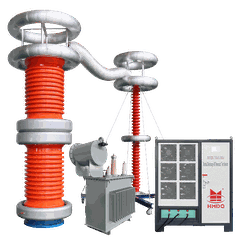



Transformer DC Resistance Tester
China Professional Transformer DC Resistance Tester Manufacturer
Our company has specialized in the production and manufacturing of Transformer DC Resistance Tester for 20 years, with a modern intelligent factory covering an area of over 10000 square meters, staffed by 51 professional technicians, and hold CE certification. 35 patents, 10+ software copyrights,Currently, we have over 150 stable distributors worldwide and established more than 10 service offices overseas.

35+
National patents
20+
Years Experience
51
Technical Staff
27886
Active Members


The Transformer DC Resistance Tester is a specialized electronic instrument designed to quickly and accurately measure the DC resistance of windings in inductive equipment such as transformers, motors, and current transformers.
It is also known as a “DC resistance meter” or “DC resistance tester.” This test is a mandatory requirement specified in standard procedures for the power industry (such as the “Code for Testing of Electrical Equipment”) and must be performed throughout the entire lifecycle of a transformer, including factory acceptance, handover, major overhauls, and preventive testing.
1. Detecting “Hidden Defects” During Manufacturing or Maintenance
After a transformer leaves the factory, is transported, installed, or undergoes major repairs, the following issues may arise, which DC resistance testing can accurately detect:
- Poor winding soldering: When multiple strands of wire are wound together, if a strand is poorly soldered or broken, the resistance will increase slightly.
- Loose lead connections: Bolts at the base of bushings or tap changer leads may become loose, or contact surfaces may oxidize.
- Tap changer contact erosion: Abnormal contact resistance in the moving and stationary contacts of on-load or off-load tap changers due to arcing or wear.
2. Preventing Power Safety Accidents
Transformers are among the most expensive pieces of equipment in the power grid; internal failures often lead to widespread power outages or even explosions. Through regular testing:
- Early warning of inter-turn short circuits: Damage to the insulation of a few turns of wire will slightly reduce the resistance of that phase, but this can be detected by comparing phases.
- Preventing open-circuit burnout: When a winding is nearing a critical open-circuit condition, the resistance will increase significantly; timely replacement can prevent sudden open circuits during operation.
- Verifying three-phase balance: National standards require that the imbalance rate of DC resistance among the three-phase windings (between phases) generally not exceed 2% (or 1% when there is no neutral point). Exceeding this standard indicates an internal issue.
3. Ensuring Correct Operation of Tap Changers
For on-load tap-changing transformers, DC resistance must be measured after each tap adjustment to confirm:
The switch has moved to the correct position and has not remained in an intermediate position (otherwise, arcing may occur during operation).
Resistance values across all taps exhibit a monotonic, smooth variation pattern, with no abrupt changes or inversions.


Based on Ohm’s Law (R = U/I), this method employs a constant current source combined with a four-wire measurement technique:
- Constant Current Output: The instrument generates a stable DC test current internally (typically 1 A, 5 A, 10 A, 20 A, or 40 A) and injects it into the winding under test.
- Voltage Measurement: The voltage drop across the winding is accurately measured via independent voltage leads (Kelvin connection), eliminating errors caused by lead resistance.
- Automatic Calculation: A microprocessor calculates and displays the DC resistance value in real time.
- Safe Discharge: After testing, inductive windings are automatically discharged to prevent injury from back EMF or damage to the instrument.
- High-precision four-wire (Kelvin) measurement: Eliminates the effects of test leads and contact resistance, ensuring measurement accuracy in the micro-ohm range to meet the precise testing requirements of various transformer windings.
- Wide-range constant current output: Supports multiple constant current output levels of 1A, 5A, 10A, 20A, 40A, and 50A, making it highly versatile for testing high-inductance windings such as those in power transformers.
- Fast measurement + fast discharge: Significantly reduces winding magnetization and test stabilization time, improving on-site testing efficiency; built-in fast discharge circuit automatically discharges after testing to ensure equipment and personnel safety.
- Automatic temperature compensation: Built-in temperature coefficients for copper and aluminum windings automatically convert measured resistance values to standard resistance values at 20°C, facilitating data comparison and standardized record-keeping.
- Three-Phase Synchronous Testing: Measures all three-phase windings with a single connection and automatically calculates the three-phase resistance imbalance ratio, eliminating the need for separate tests and manual calculations, thereby significantly improving work efficiency.
- Wide Measurement Range + High Stability: Measurement range covers microohms (μΩ) to kiloohms (kΩ). With strong anti-interference capabilities, it is suitable for complex environments such as substations and construction sites, ensuring stable and reliable test data.
- Intelligent Operation + Data Management: Equipped with a large LCD display for simple and intuitive operation; supports automatic data storage, USB data export, and printing functions, facilitating data archiving and subsequent analysis.
- Multiple Safety Protections: Integrated overcurrent, overvoltage, and reverse connection protection effectively prevent instrument damage and transformer winding damage, enhancing safety during the testing process.

Product Types
I.Classification by Output Current Specifications
- Low-Current Type (≤5A): Primarily designed for small-inductance, low-resistance equipment such as small transformers, current transformers, and motor windings. These units feature a compact size, low power consumption, and ease of use, making them suitable for laboratories, small substations, and portable on-site testing. Their measurement accuracy meets the requirements for routine testing of small equipment, and they are relatively economical.
- Medium-Current Type (10A–20A): The most widely used general-purpose model, suitable for distribution transformers and small-to-medium-sized power transformers (capacity 100kVA–1000kVA). It balances measurement speed with portability, enabling rapid and stable testing of medium-inductance windings while remaining easy to transport on-site. It meets the needs of most power operation and maintenance tasks as well as handover tests.
- High-Current Type (30A–60A and above): Specifically designed for testing windings of large power transformers (capacity 1000kVA and above) and high-voltage transformers. Due to the high inductance and low resistance of large transformer windings, high current significantly reduces magnetization stabilization time and improves testing efficiency. The instrument features a built-in high-power constant current source with enhanced anti-interference capabilities, making it suitable for complex on-site testing environments in substations.
II. Classification by Measurement Method
- Single-phase testers: These can measure the resistance of only one phase at a time and require manual switching of connections to test all three phases, making operation relatively cumbersome. However, they feature a simple structure and low cost, making them suitable for periodic inspections of small transformers and low-cost testing scenarios.
- Three-Phase Synchronous Testers: These devices can measure the resistance of all three-phase windings simultaneously with a single connection. They automatically calculate the three-phase resistance imbalance ratio without requiring manual switching, significantly improving testing efficiency. They are suitable for rapid testing of large transformers and batch testing, making them the preferred choice for power operation and maintenance as well as handover tests.
III. Classification by Portability
- Portable (handheld/portable): Compact and lightweight (typically 5–15 kg), equipped with a carrying handle or backpack, and battery-powered. Suitable for on-site inspections and outdoor testing (e.g., remote substations, construction sites). Offers flexible operation without the need for fixed installation.
- Bench-top: Larger in size and heavier in weight, requiring fixed placement in a laboratory or indoor testing area. Powered by AC mains, these units offer higher measurement accuracy and more comprehensive features (such as built-in data storage, printing, and networking capabilities). They are suitable for precise laboratory testing and batch sample inspection.
IV. Classification by Functional Advancement
- Basic Model: Features only core DC resistance measurement capabilities, supports constant current output and four-wire measurement. Simple to operate, suitable for basic testing needs, offers high cost-effectiveness, and is widely used in small businesses and repair shops.
- Smart Models: Build upon basic functions by adding automatic temperature compensation, three-phase imbalance calculation, data storage and export, USB/Bluetooth connectivity, and large-screen touchscreen operation. Some models support integration with power operation and maintenance systems, making them suitable for professional power operation and maintenance as well as intelligent testing in large substations.
- Multi-Function Integrated: Integrates multiple functions such as DC resistance measurement, turns ratio measurement, and bank testing. A single instrument can perform multiple electrical performance tests on transformers, reducing the number of devices required to carry. It is suitable for comprehensive on-site testing and efficient operation and maintenance.
Selecting Model Reference
When selecting a model, please consider the following four factors:

1.Test Current
A common rule of thumb is to select a test current equal to 10% of the transformer’s rated operating current.
- Distribution transformers (e.g., 10 kV/35 kV): Instruments with a range of 10 A to 20 A are recommended.
- Medium-sized power transformers (110 kV): A range of 20 A to 40 A is recommended.
- Large power transformers (220 kV and above): High-current models rated at 50 A or higher are recommended.
- Voltage transformers (PT): A current of ≤10 mA is sufficient to meet requirements.
2.Measurement Range and Accuracy
- Range: Ensure the upper limit covers the resistance of the transformer’s high-voltage windings (typically tens of ohms), and the lower limit can measure low-resistance components such as switches (milliohm/microohm range). It is recommended to allow for some margin.
- Accuracy: For power system handover/preventive testing, industrial-grade accuracy of 0.1%–0.2% is recommended; laboratory calibration requires higher accuracy (e.g., 0.01%–0.05%).
3.Number of Test Channels
- Single-phase: Suitable for small transformers, limited budgets, or scenarios with low testing volume.
- Three-channel: For large power transformers and scenarios prioritizing efficiency. A single primary connection can complete three-phase testing and automatically calculate the unbalance ratio.
4.Power Supply
- Mains Power (AC 220V): Supports higher test currents and offers stable performance, suitable for laboratories or workshops with a stable mains power supply.
- Battery Power: Features a built-in lithium battery; compact and lightweight, suitable for outdoor, high-altitude, or remote operations. Many models support both AC and DC power.
Famous Brand
Oversea Brands:
1.Megger: A globally recognized authority in the power testing industry, originating from the UK and the US, renowned for its equipment’s exceptional immunity to interference, measurement stability, and ruggedness. Its transformer DC resistance testers offer advantages such as high current output and portable battery life, making them suitable for extremely complex on-site testing environments. Megger is a brand trusted by professionals in the global power industry.
2.Doble: A high-end power testing brand from the United States, specializing in advanced diagnostic technologies. Its models excel in three-phase automatic testing and dynamic analysis of on-load tap changers, making them suitable for in-depth fault diagnosis of large transformers.
3.DV Power: A renowned European brand that stands out in high-current testing (up to 600A) and in-depth transformer condition assessment, providing precise testing solutions for large-scale power equipment.
4.Hioki: A well-known Japanese brand of electronic measurement instruments. Its transformer DC resistance testers feature high precision and innovative design as core strengths, and are widely used in the power generation, transmission, and distribution industries.
Domestic Brand:
Goldhome, formally known as Wuhan Goldhome Hipot Electrical Co., Ltd., was established in 2008 in the Wuhan Economic and Technological Development Zone. As a national-level high-tech enterprise and a Wuhan “Little Giant” enterprise in science and technology, the company has specialized in the R&D, production, and sales of high-voltage power testing equipment for over a decade. It has grown into a renowned equipment manufacturer and testing service provider in China’s high-voltage power testing sector. The brand has deeply established itself in the field of transformer DC resistance testers. Its products combine professionalism, high cost-effectiveness, and customization advantages, making it one of the preferred brands in the domestic and international power industries.
- Wuhan Guodian Xigao Electric Co., Ltd.: Positioned as a benchmark for “intelligent manufacturing” in the high-voltage power testing sector, the company holds a significant advantage in the high-end market for rapid DC resistance testers, with a market share of 23.5% in ultra-high-voltage projects above 750 kV.
- Shenggao Electric (Shanghai): A representative in the Shanghai region, the company operates modern production facilities and supplies power testing equipment.
- Shengxu Electric (Shanghai): A representative in the Shanghai region, the company specializes in high-voltage testing equipment and power metering and testing products.
Operating Procedure
Proper Wiring and Connection: Connect the test leads using a four-wire (Kelvin) connection method, and ensure that all connections are secure and reliable. If there is oxidation on the surface of the terminals, clean it thoroughly or firmly twist the test clamps to break through the oxide layer to ensure good contact.
Follow the Correct Operating Sequence:
Before Testing: Check the power supply voltage (typically AC 220V ±10%) and allow the unit to warm up for approximately 15 minutes after powering on to ensure the internal circuitry has stabilized.
During Testing: Wait until the output current has stabilized before reading the resistance value. For no-load voltage-regulating transformers, it is strictly prohibited to switch the tap selector during testing or before discharge is complete.
After testing: Follow the correct procedure to turn off the output, wait for discharge to complete, then disconnect the test leads and turn off the instrument’s power.
Handling special situations:
Unexpected power outage: If an external power outage occurs during testing, the instrument will automatically initiate the discharge procedure. Do not disconnect the leads immediately; wait at least 30 seconds to 5 minutes to ensure complete discharge before proceeding.
Current Overrange: If the instrument displays “Charging” or “Current Too Low,” this typically indicates that the selected current is inappropriate. Refer to the technical specifications to select the correct test current range.

Alternative Name
- Transformer DC Resistance Tester
- DC Resistance Tester for Transformer
- Transformer Winding DC Resistance Tester
- Transformer DC Resistance Meter
- 3 Phase Transformer DC Resistance Tester
- Kelvin Bridge Transformer DC Tester
- Transformer DC Resistance Measurement
- High Precision Transformer DC Tester
- 20A Transformer DC Resistance Tester
- 40A Transformer DC Tester
- Portable Transformer DC Resistance Tester
- Bench Top Transformer DC Tester
- Power Transformer DC Resistance Tester
- Distribution Transformer DC Tester
- Transformer DC Tester for Substation
- Transformer DC Resistance Tester for Industrial
- 230V Transformer DC Resistance Tester
- DC Winding Resistance Tester
- Digital DC Resistance Tester
- Portable DC Resistance Tester
- Handheld DC Resistance Tester
- Transformer DC resistance test
- Winding resistance test
- Power factor tester
- Transformer winding ohmmeter
- Portable automatic transformer DC winding resistance tester
- Transformer Ohmmeter
- Winding Ohmmeter
FAQ
Q: 1. How do I select the appropriate test current?
A: When selecting the test current, refer to the range specified in the technical specifications section; avoid operating outside this range. The general guidelines are as follows:
- High-voltage side of a 10kV/1000kVA transformer: With a resistance value of approximately 1–5 Ω, a current range of 1–10 A is typically selected.
- Distribution transformers: 10 A–20 A is recommended.
- Medium-sized power transformers (110 kV): 20 A–40 A is recommended.
- Large power transformers (220 kV and above): 50 A or higher is recommended.
- Voltage transformers: ≤10 mA is sufficient.
Q: 2. What precautions should be taken when using the auxiliary magnetization method for testing?
A: The auxiliary magnetization method connects two high-voltage coils in parallel and one in series, introducing approximately 1.5 times the resistance of the high-voltage coils into the entire test circuit. This factor must be taken into account when selecting the measurement range. If the range is exceeded, the output current may fail to reach the set value or become unstable. Additionally, when disconnecting the short-circuit points of the three wires used in the auxiliary magnetization method after discharge is complete, residual current may remain. This may cause arcing or discharge during disconnection, which is a normal phenomenon; appropriate protective measures must be taken during operation.
Q: 3. Why does the instrument continuously display “Charging” or “Current Too Low” after selecting a current?
A: “Charging”: This is usually because the selected current is too high, exceeding the range, and the current cannot reach the preset value. It may also indicate an issue with the transformer’s magnetic circuit.
“Current too low”: The selected current is too low, which can cause unstable readings for high-capacity transformers.
Solution: Verify the range and select an appropriate current to retest. If the current remains unchanged and stays at zero for an extended period, check the circuit for open circuits.
Q: 4. What should I do if the instrument won’t turn on and the fan isn’t running?
A: First, check if the power cord is properly plugged in, confirm that the power supply is functioning normally, and verify that the instrument’s power switch is in the “ON” position. Then, check if the fuse has blown. If using battery power, check if the battery has sufficient charge. If all of the above are normal, try replacing the power cord or plug; if the issue persists, contact the manufacturer for repair.
Q: 5. What should I do if the LCD screen does not light up after powering on?
A: First, check if the power supply is normal; then check if the fuse has blown. If the fuse is confirmed to be blown, replacing it with one of the same specification will restore functionality. If the fuse is intact, check if the display connection cable is loose or damaged, and try restarting the device.
Q: 6. What should I do if the test data is unstable or fluctuates?
A: Unstable data is typically caused by poor contact in the test leads, loose fixtures, insufficient discharge of the test winding, or the presence of induced voltage. Solutions:
Fully discharge the winding before testing (using a dedicated discharge rod for at least 2 minutes).
Check the test leads for loose or intermittent connections.
Clean any oxidation from the terminals and secure the connection firmly using C-clamps or specialized pliers.
If the issue persists, check the test specimen for corrosion.
Q: 7. What causes the fuse to blow upon startup?
A: 5A–10A DC resistance testers: This is typically caused by the built-in transformer being damaged by high voltage.
DC resistance testers rated at 20A or higher: This may be due to a switching power supply failure.
Solution: Replace the damaged transformer or switching power supply promptly. Repairs must be performed by a professional engineer; if on-site repair is not possible, return the unit to the factory for servicing.
Q: 8. What should I do if the buzzer sounds continuously during testing, preventing further testing?
A: First, check if the temperature protection has been triggered, and prioritize checking the fan’s operating status. If the fan is operating normally, power on the unit without performing any test operations. Wait until the fan has completed cooling the unit, then try the test again.
Q: 9. What should I do if the display shows an “Out of Range” or “Open Circuit” alarm?
A: Possible causes include an open circuit in the test leads, improper range selection, an internal break in the winding, or an instrument output anomaly. Solution:
Check the continuity of the test leads and replace any damaged wires.
Estimate the resistance value based on the transformer’s capacity and select the appropriate current range.
If the winding is confirmed to be normal but the error persists, restart the instrument or switch to manual mode to troubleshoot.
Q: 10. How do you determine whether the test results are acceptable (three-phase imbalance standards)?
A: According to standards such as GB 50150 and IEC 60076, the limits for three-phase DC resistance imbalance are as follows:
Transformer Capacity Phase Resistance (with neutral point tap) Line Resistance (delta connection)
1600 kVA and above Not more than 2% of the three-phase average Not more than 1% of the three-phase average
1600 kVA and below Not more than 4% of the three-phase average Not more than 2% of the three-phase average
Formula for calculating imbalance: Imbalance (%) = (Maximum value – Minimum value) ÷ Average value × 100%
In addition, when compared to values measured at the same location previously (converted to the same temperature), the variation should not exceed 2%.
Q: 11. What are the possible causes of high or low measurement values?
A: Measurement is too high: Usually caused by loose connections or poor soldering; it may also be due to dirty or oxidized tap changer contacts. Inspect and retighten connection points, or clean the tap changer contacts.
Measurement is too low: May indicate an inter-turn short circuit, creating an additional parallel current path. It is recommended to verify this by conducting other tests, such as an induced voltage withstand test.
Temperature not corrected: The instrument’s temperature compensation function has not been enabled.
Residual magnetism effect: For large transformers, performing a demagnetization procedure beforehand can eliminate the influence of residual magnetism on inductance charging and discharging.
Incorrect tap switch position: Confirm that the tap switch is set to the specified position and locked to prevent slippage during testing.
Q: 12. What causes repeated fluctuations in single-phase readings?
A: When the DC resistance reading of one phase in a three-phase transformer fluctuates repeatedly while the other two phases remain stable, this strongly indicates an intermittent contact issue in that phase. The most common causes are:
Loose terminal connections: Poor contact at bolt connections or bushing connection points.
Tap changer contact issues: Oxidation, contamination, or misalignment of contacts leading to unstable contact resistance.
Q: 13. How should transformer DC resistance test results be analyzed?
A: Analysis is primarily conducted through the following aspects:
- Compare with standard values: Compare the measured values with the standard values in the transformer technical manual to determine if there are any abnormalities in the windings. Note that the measured values must be temperature-compensated to the standard temperature (20°C) before comparison.
- Calculate three-phase imbalance: Check whether the resistances of the three phases are balanced; an imbalance exceeding the limit indicates a possible internal defect.
- Assessing winding condition: Abnormally low resistance values may indicate a turn-to-turn short circuit, while abnormally high values may indicate poor contact or broken strands.
- Checking connection quality: Abnormal resistance values may indicate loose or oxidized connection terminals.
- Analyzing historical data: By comparing historical data from multiple measurements, trends in resistance values can be identified, aiding in the early detection of potential issues.
- Combine with other test results: Integrating results from insulation resistance tests, turns ratio tests, and gas chromatography analysis of transformer oil allows for a more accurate assessment of the transformer’s overall condition.
Q: 14. Why must we wait for the discharge to complete before disconnecting the wires after testing?
A: Transformer windings are large inductive loads that store a significant amount of magnetic energy after testing. If the test leads are disconnected immediately after testing, the magnetic energy stored in the core will instantly convert into an extremely high reverse electromotive force, which may cause severe electric shock injuries to operators and damage to equipment. Therefore:
After testing is complete, you must wait until the discharge alarm stops before turning off the power and disconnecting the test leads.
It is recommended to wait at least 10 seconds after the discharge alarm stops to ensure that the energy has been fully released before disconnecting the leads.
Q: 15. What precautions should be taken when switching tap positions while testing a no-load tap-changing transformer?
A: Before switching tap positions on a no-load tap-changing transformer, you must press the reset button to initiate the discharge process. Only after the discharge is complete and the alarm sound has stopped should you switch tap positions. It is strictly prohibited to switch tap positions during the test or while the discharge process is still in progress.
Q: 16. What should be done if a power outage occurs during testing?
A: If an external power outage occurs during testing, the instrument will automatically initiate the discharge procedure. Do not disconnect the test leads immediately; wait until the instrument has fully discharged (the alarm stops) before proceeding. It is recommended to wait at least 30 seconds to several minutes to ensure complete discharge.
Q: 17. What precautions should be taken when using a battery-powered handheld resistance tester?
A: When the battery level indicator shows low power, recharge the battery promptly. A red light on the charger indicates charging is in progress; a green light indicates charging is complete.
If the instrument is not used for an extended period, it is recommended to charge it once a month for maintenance to prevent the battery from being damaged due to self-discharge.
Never use a non-dedicated power adapter to charge the instrument, as this may cause an explosion.
If the battery runs low during testing, you may connect the charger to perform an emergency test.
Q: 18. Does the instrument housing need to be grounded?
A: Yes. The instrument housing must be securely grounded to ensure the safety of both the equipment and the operator, as well as to prevent the buildup of static electricity and electromagnetic interference.
Q: 19. What precautions should be taken when connecting test leads?
A: Use a four-wire (Kelvin) connection method for the test leads and ensure that all connections are secure and reliable.
If the transformer terminals are exposed to air for an extended period, a layer of oxidation may form on their surface, potentially causing unstable or inaccurate measurement results. When connecting the leads, be sure to remove this oxidation layer, or after connecting the test clamps to the terminals, twist them firmly a few times to break through the oxidation layer and ensure good contact.
Q: 20. Does a DC resistance tester require periodic calibration?
A: Yes. Prolonged use may lead to a decline in measurement accuracy. It is recommended to calibrate the instrument once a year to ensure the accuracy and stability of measurement values. Regular calibration also helps identify potential internal issues with the instrument and prevent systematic errors.
Q: 21. How should a DC resistance tester be maintained?
A: Storage Environment: Store the instrument in a dry, well-ventilated environment free of corrosive gases, and avoid locations exposed to direct sunlight, rain, or excessive dust.
Avoid Severe Vibration: The instrument should be protected from severe vibration.
Battery Maintenance: Charge and discharge the battery every three months to extend its service life; if the battery is aging, replace it promptly.
Keep Dry and Clean: Clean the instrument regularly and keep it dry.
Professional Maintenance: Instrument maintenance and calibration should be performed by qualified personnel.
Q:22. What should I do if the instrument’s display malfunctions?
A: Cause 1: Poor contact in internal cables—Turn off the power, check if the cables are loose, and secure them.
Cause 2: Abnormal screen display due to electromagnetic interference — Contact the manufacturer to add a filter capacitor.
Q: 23. What types of equipment can a DC resistance tester measure?
A: The transformer DC resistance tester is primarily used to measure the DC resistance of power transformer windings, but it can also be used to test the DC resistance of inductive equipment such as motors, current transformers, reactors, and switchgear.
Q: 24. Does the instrument have a demagnetization function?
A: Many modern DC resistance testers have a built-in transformer demagnetization function, which can effectively reduce residual magnetism in the core after testing and prevent excessive inrush current when the transformer is put into operation. For large transformers, it is recommended to perform demagnetization before testing.
Q: 25. What should I do if the instrument cannot store or export data?
A: Check whether the memory or data interface is functioning properly.
Check if the memory is full; if so, delete some old data to free up space.
Ensure that the options and parameters for data storage or export are set correctly.
If the problem persists, you may need to contact the manufacturer for repair.
Q: 26. What should I do if the displayed values fluctuate significantly during test lead calibration?
A: During calibration, if the test leads are coiled like an inductive coil rather than spread out, this may cause significant fluctuations in the displayed values. The solution is to pull the test leads apart to reduce their mutual inductance.
Q: 27. Is it normal for the displayed current to drop during charging?
A: Yes, it is normal. This unit uses an automatic current selection output mode. To ensure the stability of measurement results, the actual measured current may be lower than the charging current; this is a normal operating phenomenon and requires no special action.
As one of the most professional transfomrer dc reslstance tester manufacturers in China, we're featured by quality products and good price. Welcome to buy transfomrer dc reslstance tester in stock here and get pricelist from our factory. Contact us for customized service.