

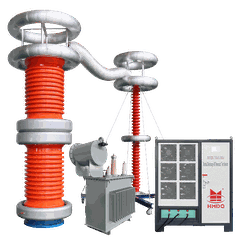



Standard Current Transformer
Supply Manufacture Price for Standard Current Transformer
Wuhan Goldhome Hipot Electrical Co., Ltd. was established in 2008, located in Economic and Technical Development Zone, working area more than 10000 square meters.We are professional OEM, ODM, OBM Manufacturer which is engaged in the research, development, sale and service of High Voltage Testing Equipment including: AC Series Resonant Test Systems, AC DC Hipot Testers, Lightning Impulse Voltage Generator, Primary Current Injection Testers, CT PT Analyzer, Standard Current Transformer, Transformer Turns Ratio, Insulation Resistance Tester,Circuit Breaker Testers, Relay Protection Testers, Cable Fault Locator, SF6 Comprehensive Analyzers, Transformer Oil Test Device, etc.
01
High Quality
Reliable Quality for Safe Power.
02
Advanced Equipment
Precision Equipment,Superior Performance
03
Professional Team
51 professional technicians, Advanced Solutions
04
Custom Service
Technical Consultation:≤1 H
Quotation:≤2 H


A standard current transformer refers to a type of current transformer characterized by extremely high precision and stability. It is not used directly for on-site measurement or protection, but rather serves as a “calibration standard” or reference instrument in laboratories or high-precision test benches (such as the Current Transformer Test Bench you previously inquired about). Its purpose is to calibrate and verify the performance of other standard current transformers, thereby facilitating the “traceability of measurement values” from national measurement standards to on-site equipment.
- Measurement Standards: Serve as high-precision reference standards for current ratio measurement, used for the transfer and traceability of current values.
- CT Verification: Specifically used to verify and calibrate general-purpose measurement and protection current transformers, detecting ratio error and phase angle error.
- Instrument Calibration: Calibrate ammeters, energy meters, power testing instruments, and CT test benches.
- Accuracy Comparison: Conducting error comparisons and factory quality inspections in laboratories, metrology institutes, and transformer manufacturers.
- Precision Measurement: Providing standard current signals with extremely low error and high stability to ensure accurate power metering.


- Ultra-High Accuracy Class
These transformers feature extremely high accuracy classes, typically 0.01, 0.02, 0.05, and 0.1, far surpassing ordinary industrial current transformers, with strict error control.
- Excellent Error Performance
They exhibit minimal ratio error and phase angle error, excellent linearity, high repeatability, and low long-term drift, meeting the requirements for precision verification.
- Use as a Metrological Reference
Can serve as a reference standard for value transfer, traceability, and error comparison, acting as the core reference equipment for current transformer verification.
- High Operational Stability
Made from high-quality materials with precision manufacturing, it is minimally affected by load, temperature, and environmental interference, ensuring stable and reliable performance during long-term testing.
- Standardized Rated Parameters
Adheres to industry-standard transformation ratios, rated loads, and power factors, making it compatible with various CT test benches and calibration devices.
- Dedicated Application Scenarios
Specifically designed for laboratories, metrology institutes, and transformer manufacturers, it is primarily used for calibration, verification, and testing, and is not intended for routine on-site measurement or protection applications.
- Strict Load Adaptability
Maintains high-precision output throughout the entire range of specified rated loads, ensuring the accuracy and validity of verification data.
1.Principle of Electromagnetic Induction
Similar to a standard current transformer, this device operates on the principle of electromagnetic induction. A high-current primary current passing through the iron core generates an alternating magnetic field, inducing a standard low-current secondary current in the secondary winding.
2.Precise Current Ratio Conversion
Using a fixed standard transformation ratio, the high-current primary current is precisely converted into a standard 1A/5A low-current secondary current, with a highly accurate current ratio.
3.Ultra-Low Error Control
Utilizing high-permeability, high-quality cores and precision winding techniques, excitation errors and leakage magnetic losses are significantly reduced. Ratio error and phase angle error are controlled within an extremely narrow range, meeting the requirements for high-precision metrological verification.
4.Isolation and Signal Transmission
Achieves electrical isolation between high and low voltage while outputting a stable, standard, and linear current signal. This signal serves as a reference standard for comparison, calibration, and verification of standard current transformers and instruments.


- Factory Calibration: Acting as an “examiner” on the production line at the transformer manufacturer, we test each new product individually for various performance metrics (such as transformation ratio and error) to ensure they comply with national standards upon leaving the factory.
- Pre-Storage and Pre-Commissioning Calibration: When power companies receive newly purchased transformers, or before new equipment is officially commissioned at a substation, we conduct “pre-storage verification” and “handover tests.” This ensures that every piece of equipment about to enter service meets performance standards, safeguarding grid safety at the source.
- Periodic Calibration/Preventive Testing: For current transformers that have been in operation within the power system for some time, periodic “check-ups” are conducted at set intervals (e.g., every 3–5 years). This allows for precise detection of any changes in performance due to aging or environmental factors after long-term operation, enabling the early identification and prevention of potential metering errors and protection misoperation risks.
- Post-Fault Verification: When a metering device is suspected of malfunctioning, or following a power system incident, standard current transformers are used to conduct specialized inspections of the relevant transformers. This determines whether they have been damaged by the fault and provides critical data support for incident analysis.
Test Procedure
Step 1: Thorough Preparation
- Verify equipment and environmental conditions: Confirm the accuracy class of the standard CT (which is typically two classes higher than that of the CT under test), as well as parameters such as rated current and turns ratio. At the same time, ensure that the ambient temperature and humidity are within the equipment’s specified range (e.g., 0°C to +40°C, with humidity not exceeding 80%).
- Check Instrument Condition: Ensure that the standard CT and auxiliary equipment (current boosters, transformer testers, etc.) are in good working order and within their valid calibration periods. Before wiring, disconnect the transformer under test from external equipment and clean its terminals.
- Implement Safety Protections: Operators must wear insulated shoes and gloves. Ensure the test area is free from strong magnetic field interference and post safety warning signs.
Step 2: Proper Wiring
- Primary-Side Series Connection: Following the “primary-side series connection” principle, connect the current booster, standard CT, and the CT under test in series to form a circuit. Pay special attention to the current direction and polarity of terminals P1 and P2; ensure that the primary-side wires are securely connected.
- Secondary-Side Connection to the Calibrator: Connect the secondary windings (S1, S2) of the standard CT and the CT under test to the corresponding measurement terminals on the calibrator. Throughout the wiring process, the secondary windings must never be left open-circuited.
- Matching Turns Ratio and Load: Verify that the current ratios of the standard CT and the CT under test are exactly the same. Connect an accurate load matching the rated value to the secondary side of the CT under test; a load box may be used for simulation. For multi-tap CTs, connect to the tap under test.
Step 3: Demagnetization
- Purpose: To eliminate residual magnetism in the core, which is critical for ensuring test accuracy. Residual magnetism affects the excitation characteristics, leading to increased errors.
- Procedure: Common demagnetization methods include closed-circuit and open-circuit demagnetization.
- Closed-loop demagnetization: Connect a resistor on the secondary side with a resistance of approximately 10–20 times the rated load, then adjust the current from zero to 1.2 times the rated value, and slowly reduce it back to zero.
- Open-loop demagnetization: With the secondary side open-circuited, apply current to the primary side, increasing it from zero to 100% of the rated value, then slowly reduce it back to zero, and repeat this process.
Step 4: Current Ramp Test
Parameter Setup: Enter the rated parameters, turns ratio, and rated load of the CT under test into the calibrator or control software, and preset multiple test current points (e.g., 5%, 10%, 20%, 100%, 120%, etc.).
Current Increase and Recording: Instruct all personnel to stay clear of the equipment, then slowly increase the current. Once the current has stabilized, record the ratio error (ratio deviation) and phase error (phase deviation) displayed by the calibrator. Repeat this process to record data for all preset test points.
Step 5: Current Decrease and Conclusion
- Slowly Return to Zero: Ensure that the final data point has been recorded before slowly reducing the current to zero.
- Disconnect Power: Turn off the power switches for the current booster and other equipment.
- Short-Circuit Protection: Before disconnecting the wiring, immediately and securely short-circuit the secondary windings of the standard CT and the CT under test using a shorting lead to ensure safety prior to disconnection.
- Safe Discharge: The equipment may retain residual charge; use a discharge rod to fully discharge it before touching.
- Disconnect Wiring: Disconnect the connecting cables between each piece of equipment in sequence, and inventory and organize all tools and cables.
How to Select?
I. Confirming the Accuracy Class
Select based on calibration accuracy requirements:
Routine transformer calibration: Class 0.1, Class 0.05
Laboratory metrology and high-standard traceability: Class 0.02, Class 0.01
The higher the accuracy class, the smaller the error, and the more accurate the calibration results.
II. Selecting the Appropriate Turns Ratio
Based on the range of primary currents commonly used in daily testing;
Give priority to turns ratios specified in national standards;
Standard secondary current: 1 A or 5 A, compatible with CT test benches and calibrators.
III. Matching the Rated Secondary Load
Ensure that the actual external load does not exceed the transformer’s rated load;
Excessive load will increase ratio error and phase angle error, compromising accuracy;
Select the model based on the combined load of the test bench, cables, and calibrator.
IV. Consider Insulation Class and Operating Environment
Dry-type insulation is sufficient for indoor laboratories;
High-voltage testing and humid environments require reinforced insulation and corrosion-resistant construction;
Keep away from strong magnetic fields; prioritize models with high-permeability, low-loss cores.
V. Consider Material and Stability
High-quality nanocrystalline/high-silicon steel cores ensure low excitation current and stable error;
Precise winding processes result in low temperature drift and excellent long-term repeatability;
Suitable for long-term metrological verification and frequent comparison testing.
VI. Selecting Models Based on Application Scenarios
Transformer manufacturers, power supply maintenance: Choose economical 0.1/0.05-class models;
Metrology institutes, quality inspection laboratories: Choose ultra-high-precision 0.02/0.01-class models;
When used with CT calibration test benches, prioritize desktop models that are lightweight and easy to install.
Famous Brands
Domestic Brands
- Goldhome Hipot (HMDQ)
A leading brand of high-precision standard CTs, offering a complete range of accuracy classes: 0.01, 0.02, 0.05, and 0.1. Its integrated standard transformers with current boosters are bestsellers, used for transformer calibration, laboratory comparisons, and traceability of measurement values.
- Dalian Northern Transformer (DLBF)
A long-established manufacturer of precision transformers, offering stable high-precision measurement and standard-grade CTs, widely used by metrology institutes and provincial electric power research institutes.
- State Grid NARI / NARI Relay Protection (NARI)
A leader in the power system sector, offering standard CTs with excellent accuracy and consistency, suitable for calibration laboratories of State Grid and China Southern Power Grid.
- Xuji Electric (XJ)
Possesses comprehensive qualifications in the UHV and metrology fields; its standard CTs are widely used in metering at interconnection points and transformer calibration scenarios.
Internationally Brands
- ABB (Switzerland)
A global benchmark, offering Class 0.005–0.1 standard CTs with excellent stability and temperature drift control; commonly used by metrology institutes.
- Siemens (Germany)
Mature precision electromagnetic design; standard CTs exhibit good linearity and long-term repeatability.
- GE Grid Solutions (USA)
Leader in high-voltage and UHV standard CT technology, suitable for reference laboratories handling high voltages and large currents.
- Hitachi Energy (formerly ABB Grid)
Inherits ABB’s technology; its high-precision standard CTs are highly recognized in international comparisons.
Alternative Name
· Standard Current Transformer
· Reference Current Transformer
· Standard CT
· Calibration Current Transformer
· Instrument Reference Transformer
· High Precision Current Transformer
· Precision Current Transformer
· Laboratory Standard Current Transformer
· Current Transformer Calibration Standard
· CT Testing Reference Transformer
· Metering Grade Current Transformer
· 0.05 Class Standard Current Transformer
· Bench Standard Current Transformer
· Accuracy Reference CT

FAQ
Q: 1. What is a standard current transformer?
A: A standard current transformer is an ultra-high-precision, metrological-grade reference transformer with extremely low ratio error and phase angle error. It serves primarily as a standard for current value transfer and is used for the verification and calibration of standard current transformers and electrical meters.
Q: 2. What is the difference between a standard CT and a standard CT?
A: Standard CTs have higher accuracy classes (Class 0.01, 0.02, 0.05, or 0.1), extremely low error, and high stability, making them suitable for calibration and testing;
Standard measurement/protection CTs have lower accuracy and are used only for routine on-site current measurement and relay protection.
Q: 3. What are standard current transformers primarily used for?
A: They serve as measurement standards for verifying various types of current transformers, calibrating power testing instruments and electricity meters, and are used for laboratory comparisons, factory testing by transformer manufacturers, and traceability of measurement values at metrology institutes.
Q: 4. What is the working principle of a standard current transformer?
A: Based on the principle of electromagnetic induction, it utilizes a high-precision core and winding design to convert a high primary current into a standard secondary current with a precise turns ratio, thereby achieving high-precision current ratio transmission.
Q: 5. What are the most critical precautions when using them?
A: The secondary side must never be left open-circuited, as this will generate high voltage, endangering equipment and personal safety; simultaneously, ensure the secondary load remains within the rated range to prevent accuracy deviations.
Q: 6. How should one correctly select a standard current transformer?
A: Select the accuracy class and standard turns ratio (secondary 1A/5A) based on requirements, match the rated secondary load, and consider the test voltage level and operating environment. Prioritize reputable brands with strong stability (such as Guodian Huamei).
Q: 7. Can standard current transformers operate under continuous load for extended periods?
A: Continuous operation under load is not recommended. They are intended solely for short-term verification and calibration in laboratory settings and are suitable for intermittent testing conditions.
Q: 8. What impact does excessive load have on standard CTs?
A: Excessive secondary load directly leads to increased ratio error and phase angle error, reduced accuracy, and inaccurate verification data; in severe cases, it can accelerate equipment aging.
Q: 9. Do they need to be sent for periodic calibration?
A: Yes. As metrological standards, they must undergo periodic third-party verification to ensure measurement accuracy and the compliance and validity of test results.
Q: 10. How should standard current transformers be stored and maintained?
A: Store them in a dry, dust-free environment free from strong magnetic fields; avoid humidity, high temperatures, and severe vibrations; disconnect the wiring when not in use, and keep the secondary circuit closed.
Q: 11: How should the equipment be properly shut down after testing?
A: You must first slowly reduce the current to zero before disconnecting the power supply. Abruptly cutting off the power can cause overvoltage, which may damage the equipment’s insulation and leave residual magnetism in the transformer core, thereby affecting the accuracy of the next test.
Q: 12: Is demagnetization required before use? How is it performed?
A: Yes, especially after the previous use or following an inrush current event, demagnetization is a critical step to ensure measurement accuracy. The closed-circuit demagnetization method can be used: Connect a resistor with a resistance of approximately 10 to 20 times the rated load to the secondary side, then apply approximately 1.2 times the rated current to the primary side, and slowly reduce it to zero.
Q: 13: What common issues can arise during the use of standard CTs?
A: In addition to an open secondary circuit, common issues include:
- Moisture ingress: This leads to a decline in internal insulation performance.
- Overload: Prolonged operation under high current causes the core to overheat and saturate, resulting in increased measurement errors.
- Core residual magnetism: Caused by factors such as sudden power loss or the application of DC current, this directly affects measurement accuracy.
- Loose connections/poor contact: Increases loop resistance, causing overheating and measurement inaccuracies.
Q: 14: How should standard CTs be maintained and serviced to extend their service life?
A: Routine maintenance should focus on the following aspects:
- Environmental control: When not in use for extended periods, store in a dry environment with temperatures between 0°C and +40°C, free from corrosive gases and conductive dust.
- Periodic Calibration: As a measurement standard, it must be periodically sent to a nationally accredited metrology institution for periodic verification in accordance with the new regulation JJG 1189.1-2026 (scheduled to take effect on October 2, 2026).
- Insulation Monitoring: Regularly inspect the insulation condition to prevent insulation aging and damage to the housing.
As one of the most professional standard current transformer manufacturers in China, we're featured by quality products and good price. Welcome to buy standard current transformer in stock here and get pricelist from our factory. Contact us for customized service.