

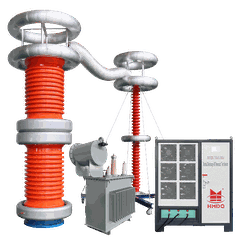



Grounding/Insulation Resistance Test Series
A Grounding/Insulation Resistance Tester Manufacturer and Supplier in China, High Quality Product!
Wuhan Goldhome Hipot Electrical Co., Ltd. was established in 2008, located in Economic and Technical Development Zone, working area more than 10000 square meters.We are professional OEM, ODM, OBM Manufacturer which is engaged in the research, development, sale and service of High Voltage Testing Equipment including: Resonant Test System, High Voltage Tester,Transformer Tester, Primary Current Injection Tester, Circuit Beaker Tester, Relay Protection Tester, Cable Tester, SF6 Test Analyzer, Oil Testing Instruments,etc.
A Grounding / Insulation Resistance Tester (often called a Megger®or a multifunction insulation tester) is a handheld electrical instrument used by electricians and engineers.
- Grounding (Earth Resistance) Tester Purpose: To ensure that an electrical grounding system (like a ground rod for a building or substation) can safely carry fault current into the earth.
- Insulation Resistance Tester Purpose: To measure the quality of the insulation (the plastic coating around wires, motor windings) that prevents current from leaking out.


Our Advantages
- Professional Consultation – Respond technical enquiries within one hours;
- Detailed Documentation – Dispatch requested technical materials within one hour;
- Competitive Quotation – Provide a reasonable quotation within two hours.
- Certificated By CE, lSO9001,SGS, BV,TUV.
- Trust And RecognitionFrom 180 Countries And Regions
- High-Level Professional Factory With Over 45.000 m
- Product demonstration videos
- Strict contract requirements
- Timely production progress updates synchronization
- On-time delivery
- 12-month warranty
- Overseas training support
- Regular follow-ups by professionals
- Extended warranty (optional)
- Factory testing available
- CE certification
- 35 patents
- 10+ software copyrights
- Customization available
- Professional after-sales Team
- Product Innovation
- Quality Control
- Authorized calibration (optional)
- Authorized as a National-Level “High-Tech Enterprise”
-
Wuhan Technology Innovation "Gazelle" Enterprise.
The Component Name of Grounding/Insulation Resistance Tester
Digital Display / LCD Screen: Displays measurement results (resistance value in Ω/MΩ), battery charge level, test voltage, warning messages, etc.
Function Selector Switch (Rotary Dial): Selects test modes and parameters.
Test Button (Start/Stop): Initiates or halts testing.
Test Leads / Probes: Conductors connecting the instrument to the device under test, typically colour-coded (red, black, green).
Alligator Clips / Clamps: Located at the ends of test leads to securely grip test points.
Terminals (E, P, C, G):
Interfaces on the instrument panel:
- Insulation Test: Typically Line (L) and Earth (G).
- Earth testing: Typically E (earth electrode), P (potential electrode), C (current electrode).
Auxiliary Ground Stakes / Rods: Metal rods driven into soil during earth resistance testing to connect P and C terminals.
Insulation Tester: High-Voltage DC Generator: Generates the highly stable DC voltage required for testing.
Ground Tester: Signal Generator & Precision Circuit: Produces a test current at a specific frequency, measures the voltage drop, and calculates resistance using Ohm's Law.
Microprocessor: The instrument's central processing unit, controlling the test sequence, calculating resistance values, and managing safety functions.
Battery Compartment / Rechargeable Battery: Provides portable power supply.
Case / Housing: Protects internal components, typically constructed from impact-resistant, insulating materials with safety rating certification ( CAT III).
Data Communication Port (USB, Bluetooth): Used to upload test data to a computer or mobile device for report generation.
Guard Terminal (G): Advanced function. When testing cable insulation, connects to the cable shield to eliminate the influence of surface leakage current on measurements, enhancing accuracy.


Keywords and Alternative Name of Grounding /Insulation Resistance Tester
- Megohmmeter
- Megger
- Insulation Tester
- Dielectric Withstand Tester
- Earth Tester
- Ground Resistance Tester
- Earth Ground Resistor
- Ground Loop Impedance Tester
- Ground and Insulation Resistance Tester
- Electrical Safety Tester
- Installation Tester
- Megohmmeter insulation resistance tester
- Ground resistance tester price comparison
- Portable insulation resistance meter
- Best grounding tester for electrical contractors
- Digital earth ground resistance tester
- Megger alternative brands comparison
- Insulation resistance testing procedure steps
- Clamp-on ground resistance tester
The Main Principle of Grounding/Insulation Resistance Tester
The Core Idea: Two Opposing Checks
Both testers use Ohm's Law (R = V / I), but for completely opposite goals:
Insulation Tester:Checks if insulation is good(by measuring very high resistance).
Grounding Tester:Checks if a ground connection is good(by measuring very low resistance).
Insulation Tester Principle: The “Leakage”Test
Goal:To find out if the plastic insulation around a wire is still effective.
Operation:
The tester applies a high DC voltage across the insulation (between the copper wire and its outer sheath).
It measures the incredibly tiny amount of current that “leaks” through.
Using Ohm's Law, it calculates the resistance.
Result :
High Resistance (100 MΩ):Very little leakage. Te insulation is excellent.
Low Resistance (0.1MΩ): Significant leakage. The insulation is worn out, wet, or damaged.
Grounding Tester Principle: The “Pathway”Test
Goal:To ensure a ground rod or connection can easily carry fault current into the earth.
Operation :
The tester sends a known current through the ground rod and into the soil.
It measures how much voltage it takes to push that current.
Using Ohm's Law, it calculates the resistance of the path to earth.
Result :
Low Resistance ( <5Ω):Current can flow easily into the earth. The ground is good and safe.
High Resistance (>25Ω):The path is blocked. The ground is poor and unsafe.
The Main Feature of Grounding/Insulation Resistance Tester
Combined Functionality
Mean:One instrument performs both grounding (earth) and insulation resistance tests.
Benefit:You don’t need to carry two separate devices. It's cost-effective and convenient for electricians who perform both types of tests regularly.
Multiple Test Voltages
Mean:The ability to select different DC voltage levels for insulation testing (250V, 500V, 1000V).
Benefit:Allows you to safely test a wide range of equipment according to standards—from low-voltage wiring (250V) to high-voltage motors and cables (1000V or 5000V) without causing damage.
Advanced Insulation Diagnostic Tests
Mean:Special modes that provide a deeper analysis of insulation health.
Polarization Index (PI):Measures insulation resistance over 10 minutes. A rising value indicates good, dry insulation.
Dielectric Absorption Ratio (DAR):A shorter version of the PI test (typically 60 seconds / 30 seconds).
Benefit:These tests are better at spotting moisture and contamination than a simple “spot”test, helping to predict failure before it happens.
Programmable Test Sequences & Data Logging
Mean:The ability to pre-program test parameters (voltage, duration) and automatically save results.
Benefit:Ensures consistency when testing multiple similar assets. Stored data allows for trend analysis over time, which is crucial for predictive maintenance.
User and Equipment Safety Features
Mean:Built-in protections to prevent accidents.
Discharge Circuit:Automatically and safely discharges capacitive loads (like long cables) after a test.
Fused Terminals & Warning Indicators:Protect the tester and user from incorrect connections or live circuits.
Benefit:Makes testing high-energy systems much safer for the technician.
Clear, Informative Display
Mean:A backlit digital screen that shows numeric values, pass/fail indicators, and graphical trends.
Benefit:Makes it easy to read results in dark environments (like electrical rooms) and quickly interpret the data.
Stakeless Ground Testing (Optional)
Mean:A method to measure ground resistance without driving auxiliary stakes into the ground.
Benefit:Extremely useful in urban areas or places with rocky soil where driving stakes is impractical.
The Core Function of Grounding /Insulation Resistance Tester
The Main Function: Ensuring Electrical Safety
The single most important function of this instrument is to prevent electrical accidents by verifying two fundamental safety principles of any electrical system:
Safe Fault Path:That dangerous electrical faults have a safe, low-resistance path to the ground.
Safe Insulation:That live electrical parts are properly insulated to prevent shocks, short circuits, and fires.
Function of the Grounding (Earth) Tester
To verify the quality of a grounding system.
It does this by measuring the electrical resistance between the grounding electrode (like a ground rod) and the earth. A low resistance value (below 5 ohms) means the ground connection is good and fault current can flow away safely.
Function of the Insulation Resistance Tester
To verify the integrity of electrical insulation.
It does this by applying a high voltage and measuring how well the insulation resists electrical current from leaking through it. A very high resistance value (millions of ohms) means the insulation is in good condition.
How to Use This Grounding /Insulation Resistance Tester?
- De-energize:Always turn off and disconnect the equipment you are testing from all power sources.
- Lock Out/Tag Out (LOTO):Ensure the circuit cannot be accidentally re-energized.
- Discharge:After testing, wait for the instrument to automatically discharge any stored energy before disconnecting leads.
- Wear PPE:Use appropriate safety gloves and glasses.
Goal:To check if the wire or motor winding insulation is in good condition (high resistance to current flow).
Steps:
1.Isolate & Disconnect:Ensure the equipment (cable, motor) is completely disconnected from power. Disconnect both ends of the cable to avoid parallel paths.
2.Select Mode:Turn the tester's dial to the Insulation Resistance (IR)or MΩ setting.
3.Select Voltage:Choose the appropriate test voltage based on the equipment's rating (500V for low-voltage systems, 1000V or 2500V for medium-voltage).
4.Connect Leads:
- Connect the LINE (L) lead to the conductor (the copper wire itself).
- Connect the GROUND (G or E) lead to the equipment ground or the cable sheath/motor frame.
5.Perform Test:Press and hold the TEST button. The tester will apply voltage and display the resistance in Megaohms (MΩ). Hold until the reading stabilizes.
6.Interpret Results:
Good: A high, stable reading (>100 MΩ) indicates healthy, dry insulation.
Bad:A low or falling reading indicates damaged, wet, or contaminated insulation.
Goal: To measure the resistance of a grounding electrode (e.g., ground rod) to the earth (low resistance is good).
Method A: Stakeless/Clamp-On Test (Simplest & Quickest)
1.Select Mode:Turn the dial to the stakeless ground resistance setting (often a clamp symbol).
2.Clamp the Tester: Clamp the instrument around the ground rod or its connecting conductor.
3.Read Result:The tester instantly displays the resistance in Ohms (Ω).
Method B: 3-Point Fall-of-Potential Test (More Accurate)
1.Place Stakes: Hammer two auxiliary stakes into the soil in a straight line from the ground rod (distances specified in manual).
2.Select Mode: Turn the dial to the Earth Resistance (Ω) setting.
3.Connect Leads:
E (or C1)to the ground electrode under test.
P (or P2) to the potential stake (closer one).
C (or C2)to the current stake (farther one).
4.Perform Test: Press the TEST button. The tester injects a current and measures the voltage drop to calculate resistance.
Good:A low resistance value(<5-25 Ω, depending on application) means the ground connection is excellent.
Bad: A high resistance value means the ground is poor and unsafe.
The Application of Grounding /Insulation Resistance Tester
Applications of An Insulation Resistance Tester
Preventive Maintenance
Regularly scheduled testing of motors, generators, cables, and switchgear.
Example:A factory technician tests motor windings every six months to predict end-of-life and schedule replacement during a planned outage, avoiding unplanned production stoppages.
Installation and Commissioning
Testing new electrical installations before they are energized.
Example:An electrician tests the insulation of newly installed wiring in a building to ensure it meets code requirements before connecting it to the main power.
Troubleshooting
Diagnosing the cause of an electrical failure.
Example:A maintenance crew uses the tester to locate a specific section of underground cable that has been damaged and is leaking current to ground.
Applications of a Grounding (Earth) Resistance Tester
Safety Grounding Verification
Testing the ground rods and connections at electrical substations, cell towers, commercial buildings, and homes.
Example:A utility worker tests the grounding grid of a substation to ensure it can safely handle a lightning strike or a high-voltage fault.
Lightning Protection Systems
Testing the ground electrodes for lightning rods and surge protection devices.
Example:An inspector tests the ground resistance of a skyscraper's lightning rod system during an annual safety audit.
Telecom and Cathodic Protection
Ensuring grounding integrity for communication towers and pipelines.
Example:A telecom technician tests the ground resistance at a remote cell tower to protect sensitive electronics from voltage surges.
FAQ
Q: What is the fundamental difference between these grounding/ insulation resistance testers?
A: Their testing purposes are entirely opposite.
Insulation resistance tester: Measures high resistance (megohms, MΩ). Its purpose is to verify whether the insulating properties of materials are sound, preventing current leakage. Higher values are preferable.
Grounding resistance tester: Measures low resistance (ohms, Ω). Its purpose is to verify the conductive performance of grounding systems (earth rods), ensuring fault currents can be rapidly dissipated into the earth. Lower values are preferable.
Q: Why are these tests necessary?
A: The core objective is to ensure safety and prevent accidents.
Q: What voltage level should be selected for insulation testing?
A: Select based on the rated voltage of the equipment under test, adhering to relevant standards.
Common selections:
● 100V–250V: For low-voltage circuits and domestic appliances.
● 500V: For low-voltage motors and cables (rated up to 1000V).
● 1000V–2500V: For medium- and high-voltage equipment ( switchgear, transformers).
Q: What distinguishes the “three-pole method” from the “clamp method” in earthing tests?
A: Three-pole method (precise): Requires auxiliary earthing stakes for most accurate results.
Clamp method (convenient): Requires no grounding stake; simply clamp onto the grounding conductor for rapid measurement.
Q: How to select the appropriate grounding test method?
A: The three-electrode method is suitable for installation acceptance, periodic inspections, and scenarios with high soil resistivity.
The clamp method is suitable for scenarios with continuous grounding loops (e.g., grounding grids in buildings), but is susceptible to environmental interference.
Opt for the three-electrode method when precision is paramount; choose the clamp method for efficiency and routine inspections.
Q: What should be done if the insulation resistance reading remains unstable during testing?
A: This is typically caused by:
● Moisture or contamination in insulation: Clean and dry the tested equipment.
● High ambient humidity: Test in a dry environment or consider environmental correction factors.
● Insufficient discharge of tested equipment: Ensure complete discharge before and after testing.
● External electromagnetic interference: Move away from strong electromagnetic field sources.
Q: What megohm value constitutes a pass for insulation resistance?
A: There is no universally agreed absolute value.
The following principles may serve as reference:
● Absolute value assessment: For low-voltage equipment, typically > 1 MΩ is required. Higher values are preferable.
● Trend assessment: Compare with historical data or comparable equipment.
● Absorption ratio/PI value assessment: For large equipment (e.g., motors, transformers), the polarisation index (PI) must exceed 2.0.
Q: What is the acceptable grounding resistance value in ohms?
A: This depends on equipment and specification requirements.
Common standards include:
● Civil/general electrical equipment: Typically requires < 4 Ω.
● Telecom base stations, data centres: Stricter requirements, typically < 1–5 Ω.
● Lightning protection earthing: Typically requires < 10 Ω.
Crucially: Must comply with local power authority regulations and equipment manufacturer specifications.
Q: Do these instruments require calibration? How frequently?
A: Calibration is mandatory! Frequency: Typically annually.
Shorter intervals are advised for frequent use or harsh environments.
As one of the most professional grounding/insulation resistance test series manufacturers in China, we're featured by quality products and good price. Welcome to buy grounding/insulation resistance test series in stock here and get pricelist from our factory. Contact us for customized service.