

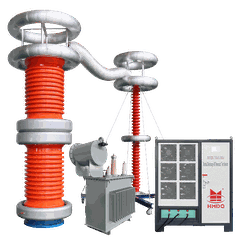



DC System/Battery Testing Instrument
A Prominent Manufacturer of DC System/Battery Testing Instrument in 20 years, Your Best Supplier.
Our company has specialized in the production and manufacturing of high-voltage testing equipment for 20 years, with a modern intelligent factory covering an area of over 10000 square meters, staffed by 51 professional technicians, and hold CE certification. 35 patents, 10+ software copyrights,Currently, we have over 150 stable distributors worldwide and established more than 10 service offices overseas.


Why Choose Us
Product Applications
These solutions are widely applied across power engineering, transportation, power plant construction, railway infrastructure, petrochemical, metallurgical, and coal mining industries.
Sales Markets
Cumulative exports have reached Indonesia, India, Pakistan, Vietnam, the Philippines, Saudi Arabia, the United Arab Emirates, Egypt, Turkey, Israel, Brazil, Germany, the United States, Australia, and other countries and regions. With over 150 distributors worldwide and more than 10 overseas service offices, we have successfully opened up global markets.
Honors, Patents, Certificates
Our products have passed inspections by national and provincial energy authorities and obtained CE certification. Additionally, the company has secured ISO 9001:2015 Quality Management System, ISO 14001:2018 Occupational Health and Safety Management System, ISO 14001:2015 Environmental Management System, and SGS certifications. We have been honored with titles such as National High-Tech Enterprise. We hold over 20 patented technologies, including utility model patents for variable-frequency series resonant test equipment.
Our Service
We pledge to treat every client with integrity and equality, regardless of contract size or whether they are domestic or international, new or existing customers, providing professional consultation and advice. Goldhome provides professional installation, commissioning and training for users' workers, ensures that users can get familiar with operation methods and put machines into use as soon as possible.
Professional Consultation – Respond technical enquiries within one hours;
Detailed Documentation – Dispatch requested technical materials within one hour;
Competitive Quotation – Provide a reasonable quotation within two hours.
Product demonstration videos
20 Years Of Specialization industry
Deep Cooperation With 8.000 Enterprises
Provide Technical Professional Technical Service And Team Guidance And Support For Life
Certificated By CE, lSO9001, SGS, BV, TUV.
Trust And RecognitionFrom 180 Countries And Regions
High-Level Professional Factory With Over 45.000 m
35 patents
10+ software copyrights
Authorized as a National-Level “High-Tech Enterprise”
Wuhan Technology Innovation "Gazelle" Enterprise
Strict contract requirements
Select the most optimal mode of transport
Respect customer arrangements
Timely production progress updates synchronization
On-time delivery
12-month warranty
Overseas training support
Regular follow-ups by professionals
Extended warranty (optional)
Factory testing available
Why it is so important in Grounding/Insulation Resistance Tester?
Importance of Insulation Resistance Testing
- Prevents Electrical Fires: Damaged or aged insulation can allow current to“leak”and generate excessive heat. This heat can ignite surrounding materials, leading to electrical fires.
- Prevents Equipment Failure: Current leakage can damage sensitive and expensive equipment like motors,transformers,and circuit boards,causing costly downtime and repairs.
- Ensures Operational Reliability:It identifies weak insulation beforeit fails completely, allowing for planned maintenance instead of unexpected, disruptive power outages.
- Protects Against Shock Hazards:Compromised insulation can expose live parts, creating a severe risk of electric shock to anyone who touches the equipment.
Importance of Grounding (Earth) Resistance Testing
- Prevents Electrocution:A properly grounded system provides a safe, low-resistance path for fault current to flow into the earth. This ensures that if a live wire touches a metal case, the circuit breaker will trip instantly, de-energizing the circuit and preventing electrocution.
- Protects Against Voltage Surges: It safely dissipates dangerous high-voltage surges from events like lightning strikes or power grid faults, preventing them from destroying connected equipment.
- Provides Voltage Stability:A reliable ground reference is essential for the stable operation of electrical systems and the correct functioning of protective devices.
What is a DC Instrument/Battery Testing Instrument?
A DC Instrument is a broad term for any measurement device designed to work with Direct Current (DC) electrical systems.
DC (Direct Current)is the type of electricity that flows in a single, constant direction. It is produced by sources like batteries, solar panels, and rectifiers.
A Battery Testing Instrument is a specialized type of DC instrument whose sole purpose is to assess the health, performance, and condition of batteries.
The Principle of DC system/Battery testing Instrument
A DC System tester evaluates the entire electrical environment that the battery operates within.
Core Principle: Simulate and Measure under Real-World Conditions.
The instrument assesses the combined performance of the battery AND the DC power path (wiring, connections, breakers).
Battery testers focus specifically on the health of the battery itself. They use two main physical principles.
Internal Resistance/Conductance Testing (Most Common)
This is the standard method for quick, non-invasive, and online testing.
Core Principle: Measure the opposition to current flow withinthe battery cell itself.
Capacity/Load Testing (The “Gold Standard”)
This is the most accurate way to determine a battery's actual energy storage capacity.
Core Principle: Fully discharge the battery under a controlled load to see exactly how much energy it can deliver.
The Core Components of DC System/Battery Tester
Microprocessor / Microcontroller: Responsible for controlling the test sequence, performing calculations (such as Ohm's Law), analysing data, and storing results.
Digital Display (LCD/LED): Displays test results (voltage, internal resistance, capacity, health percentage), menus, and status information.
Keypad / Control Buttons: Used for powering on, selecting test modes, inputting parameters (such as battery rated capacity), and navigating data.
Test Leads with Kelvin Clips: Employed for precise voltage measurement and injection of test currents.
DC Current Clamp (Optional): Clamped onto battery terminals to measure charge/discharge currents without interrupting the circuit.
Test Probe Ports / Terminals: Connections on the instrument for attaching test leads or current clamps.
Precision Voltage Measurement Circuit: High-accuracy measurement of battery terminal voltage and float charge voltage.
Internal Resistance/Conductance Measurement Circuit: Incorporates an AC signal source and precision measuring bridge, calculating internal resistance or conductance by injecting a small AC signal and measuring the voltage drop.
Programmable DC Load (for Capacity Testers): Performs constant-current or constant-power discharge at preset values to precisely measure battery capacity.
Signal Generator & Filter: Generates specific test frequency signals while filtering out interference to ensure stable and accurate internal resistance measurements.
Internal Rechargeable Battery: Provides portable power for the instrument.
Battery Charging Circuit: Manages the charging process of the internal battery.
Housing / Case: Protects internal components, typically constructed from insulating, impact-resistant materials and certified for safety (e.g., CAT III).
Data Communication Port (USB, Bluetooth): Used to upload test data to a computer or mobile device for trend analysis and report generation.
The Main Features of DC System/Battery Testing Instrument
For Batteries:
Internal Resistance/Conductance:The primary metric for assessing battery health and detecting aging.
Voltage:Basic state-of-charge indicator.
Intercell Connection Resistance: Measures the resistance of the physical links between battery cells, identifying loose or corroded connections that can cause failure.
For DC Systems:
Ripple Voltage: Measures AC noise on the DC bus from chargers/rectifiers, which can damage sensitive equipment.
Charger/Rectifier Performance:Tests voltage output, current limiting, and float/equalize charging accuracy.
System Voltage under Load:Verifies the entire DC system can maintain proper voltage during a simulated fault.
Modern testers are diagnostic partners, not just measurement tools.
- Automatic Temperature Compensation:Adjusts readings based on battery temperature for accurate results.
- Automatic Conclusions:Compares measurements against pre-programmed standards (IEEE, manufacturer specs) and instantly provides a PASS/FAIL or Replace/Service/Good verdict.
- Trending Analysis:Tracks test results for each individual battery over time, allowing you to see performance degradation and predict end-of-lif
One-Button Testing:Simplified operation. Connect the leads and press a single button; the instrument handles the rest.
- Guided On-Screen Menus:Step-by-step instructions and wiring diagrams prevent user error.
- Data-Logging & Reporting:Stores thousands of measurements. Can generate detailed PDF reports on the spot for compliance and maintenance records.
- Safety Features:Spark-proof clips, reverse polarity protection, and fused leads protect both the user and the instrument.
- Internal Memory:Stores results with unique battery ID tags (B-23, Rack-4).
- PC Software:Advanced software allows for in-depth analysis, fleet management, and scheduling of future tests.
- Export Options:Data can be transferred via USB, Wi-Fi, or Bluetooth for integration into broader asset management systems.
- Durable Construction:Built to withstand the harsh environment of battery rooms and electrical vaults.
- Lightweight and Portable:Designed for technicians to carry and use all day.
- Long Battery Life:Powered by rechargeable lithium-ion batteries for a full day of testing.
Alernative and Keyword Name of DC System/Battery Tester
- Battery load tester alternatives
- DC battery capacity tester
- Best battery tester for automotive use
- Battery conductance tester vs load tester
- 12V battery tester for cars and trucks
- Portable battery testing equipment
- Battery analyzer for lithium-ion batteries
- Battery impedance tester price
- UPS Battery Tester
- Stationary Battery Tester
- Automotive Battery Tester
- Battery Load Tester
- Battery Capacity Tester
- Internal Resistance Meter
- DC System Tester
- DC Load Tester
The Feature of DC System/Battery Testing Instrument
Digital Multimeter (DMM)
Purpose:Measures basic electrical parameters: DC Voltage, DC Current, Resistance.
Use Case:A universal tool for a quick "is it live?" check or to see if a battery has a roughly correct voltage. It cannot assess battery health or capacity.
DC Clamp Meter
Purpose: Measures DC current without breaking the circuit. Many modern clamp meters also include multimeter functions (voltage, resistance).
Use Case:Measuring the charge/discharge current of a battery bank or the output current of a solar charge controller.
Battery Impedance / Conductance Tester
Purpose:The industry standard for preventive maintenance. It measures internal resistance(in micro-ohms,μΩ) or conductance.
Operation: Applies a small, safe AC signal to the battery and measures the voltage response. A high resistance (low conductance) indicates a failing cell.
Use Case:Quickly testing every battery in a large UPS, telecom, or substation battery bank to identify weak cells before they fail.
Battery Load Tester
Purpose:Simulates the real-world demand on a battery by applying a high DC load.
Operation:Uses power resistors to draw a high current (100A for a car battery). It then measures the voltage drop. A large drop indicates a weak battery.
Use Case:Primarily for testing automotive starting batteries.
Battery Capacity Tester / Cycler
Purpose:The “gold standard”for determining a battery's actual energy storage capacity (Ampere-hour, Ah).
Operation:Fully charges the battery, then performs a controlled, constant-current discharge while precisely measuring the total energy (Ah) delivered.
Use Case:Lab testing, validating new battery specifications, or precisely determining the remaining capacity of a used battery. It is the most accurate but also the most time-consuming test.
DC System Load Tester
Purpose:Tests the entire DC system (battery, cables, connections) under a simulated high-load condition, like a fault event.
Operation: Contains a large, programmable load bank. It applies a load and measures the voltage drop across the entire system to check for weak connections and overall integrity.
Use Case: Commissioning new installations or troubleshooting intermittent DC power issues in substations or data centers.
DC Power Quality Analyzer
Purpose: Measures the quality of the DC power, specifically looking for AC ripple voltage generated by battery chargers/rectifiers.
Operation: Analyzes the DC waveform to detect and measure any AC noise, which can damage sensitive electronics and accelerate battery corrosion.
Use Case:Diagnosing unexplained equipment failures or verifying the output quality of rectifiers and chargers.
Non-Contact Infrared Thermometer
Purpose: To detect hotspots on battery terminals and inter-cell connections, which indicate high resistance and potential failure points.
Use Case: Used alongside other testers during battery bank inspections for a complete picture.
Electrochemical Impedance Spectroscopy (EIS) Analyzer
Purpose: An advanced R&D tool that provides a deep diagnostic of a battery's internal electrochemistry by measuring its impedance across a wide range of frequencies.
Use Case:Primarily in laboratory settings for developing new battery chemistries and analyzing failure mechanisms.
The Main Function of DC System/Battery Testing Instrument
Core Function: Assess Battery Health & Safety
- Measure Internal Resistance/Conductance:This is the primary indicator of battery health. A high resistance means the battery is deteriorating (due to sulfation, grid corrosion, or dry-out) and will struggle to deliver high current when needed.
- Verify Actual Capacity (Ah):The instrument can determine the battery's real-world runtime by performing a discharge test, answering the critical question: “Will this battery support the load for the required duration during a power outage?”
- Identify Weak or Faulty Cells: In a large battery bank, a single weak cell can compromise the entire system. Testers quickly find and flag these cells for replacement.
- Detect Safety Risks:By identifying high-resistance connections (which can overheat) or failing cells (which can leak or swell), the tester helps prevent thermal events and other hazards.
Core Function: Evaluate the Entire DC System Integrity
- Test Voltage under Load:They simulate a high-demand event (like a fault condition) to ensure the entire DC system—including cables, connections, and breakers—can maintain stable voltage without excessive drop.
- Check Charger/Rectifier Performance:They verify that the battery charger is operating correctly, providing the right voltage for float and equalize charging, which is essential for battery longevity.
- Measure Ripple Voltage:They detect AC noise on the DC bus from the charger, which can damage sensitive electronic equipment and accelerate battery corrosion.
Core Function: Enable Data-Driven Decision Making
- Provide Objective Pass/Fail Judgments:They compare measurements against industry standards (IEEE, IEC) and manufacturer specs to give a clear “Replace,” “Service,” or “Good” verdict.
- Track Performance Over Time:By storing historical data for each battery, they allow technicians to track degradation trends and predict end-of-life, enabling planned replacement instead of emergency repairs.
- Generate Audit-Ready Reports:They create detailed reports for compliance and maintenance records, proving due diligence and system reliability.
The Specific Application of DC System/Battery Testing Instrument
Core Application: Predictive & Preventive Maintenance
Routine Health Checks
Technicians perform scheduled tests on entire battery banks and DC systems to establish a baseline and monitor degradation over time.
Identifying Weak Cells
In a string of 40 batteries, one weak cell can cause the entire system to fail. Testers quickly find and flag this cell for replacement.
Preventing Unexpected Downtime
By finding problems during planned maintenance, they prevent catastrophic failures during a power outage, which can cost millions of dollars in data centers, telecom, and industrial facilities.
By Application & Battery Type
Automotive Battery Testers
Type:Typically combine Conductance and Load Testfunctionality.
Features:Often include a printer or software to generate reports for customers. Can test both starting and charging systems.
Example:A mechanic testing a car battery to see if it can hold a charge and start an engine.
01
Deep-Cycle & Renewable Energy System Testers
Type: Often Capacity Testers or advanced Electronic Load testers.
Features: Focus on measuring total Ah capacity to determine how long a battery can run appliances ( in an RV or off-grid solar system).
Example:A homeowner checking how much energy their solar battery bank can store after 5 years of use.
02
Industrial & UPS Battery Testers
Type: Primarily Battery Conductance/Impedance Testers.
Features:Data logging, ability to test long strings of batteries quickly, and software for trend analysis and reporting.
Example:A data center technician performing quarterly maintenance on a 40-battery string supporting a critical UPS.
03
Universal/Consumer Battery Testers
Type:Simple voltmeters or small load testers for common household battery sizes.
Features:Simple “Good/Bad” indicators or a needle gauge.
Example:Testing alkaline batteries from a remote control.
04
Key Industry Applications
Telecommunications & Data Centers
Protected instrument:Cell phone towers, network switches, routers, and entire server racks.
Application:Regular testing of large -48V DC systems and UPS battery strings ensures network reliability.
Electric Power Utilities & Substations
Protected Instrument: Protection relays, circuit breaker trip coils, control systems, and emergency switches.
Application:Testing ensures breakers can open and close and that protective relays will operate with the required power during a fault event.
Industrial Facilities & Manufacturing
Protected Instrument : Programmable Logic Controllers (PLCs), Distributed Control Systems (DCS), safety shutdown systems, and emergency drives.
Application: Ensuring batteries can support critical control systems during voltage dips or outages.
Emergency & Safety Systems
Protected Instrument : Fire alarm panels, emergency lighting, security systems, and exit signs.
Application:Verifying that batteries have the capacity to provide emergency power for the legally required duration (90 minutes).
Renewable Energy Systems (Solar & Wind)
Protected Instrument: Off-grid and hybrid power systems, solar microgrids.
Application:Monitoring battery state-of-health and capacity to ensure the energy storage system can meet demand.
Transportation
Protected Instrument:Railroad signaling, traffic control systems, airport runway lights, and navigation aids.
Application: Ensuring signaling and control systems remain operational during power interruptions.
FAQ
Q: What precisely can the DC/Battery testing instrument measure?
A: ● Battery health status: Core metrics include internal resistance/conductance (assessing battery ageing and sulphation) and capacity (determining remaining runtime).
● Overall DC system performance: This encompasses system voltage, ripple (AC noise from chargers), and connection point voltage drops, evaluating the integrity of the entire power circuit.
Q: How does it differ from a multimeter?
A: A multimeter only measures static voltage, indicating whether a battery is charged or not. This instrument functions like a CT scanner, revealing the battery's internal health (internal resistance) and true capacity, predicting its ability to withstand power outages.
Q: Is the DC/Battery testing instrument complicated to operate?
A: Not at all. It typically operates with one-button testing, completing automatically. The screen displays a guided menu.
Q: Can a battery tester be used for all types of tests?
A: No, a single battery tester cannot be used for all tests.
There are many different types of batteries and numerous aspects to test. Using the wrong tester can yield incorrect results or even damage the battery or the tester itself.
Q: Does testing require power disconnection?
A: Absolutely not. Testing is performed online.
Q: How are results interpreted?
A: “Good”: Battery is healthy and suitable for continued use.
“Warning”: Battery performance has declined; requires attention and increased monitoring.
“Fail”: Battery is no longer fit for purpose and must be replaced.
The specific internal resistance value and capacity percentage will also be displayed ( capacity remaining at 78%).
Q: Can data be saved and reports exported?
A: Yes, this is a standard feature.
Q: Can a DC system tester diagnose all kinds of problems?
A: No, a DC system tester cannot diagnose all kinds of problems by itself.
Q: What should I do if my battery fails a test?
A: Double-check.
Failed Test = Unreliable Battery.
Confirm the result with a retest after a full charge.
Usually, you need to replace it.
Q: How to select the appropriate model?
A: According to your requirements:
● Basic Model: Focuses on measuring internal resistance, suitable for routine inspections and rapid screening of faulty batteries.
● Diagnostic Model: Includes capacity testing functionality, enabling accurate estimation of remaining power supply duration.
● System Model: Incorporates DC system analysis capabilities (ripple, voltage drop), ideal for scenarios demanding exceptionally high power supply quality.
As one of the most professional dc system/battery testing instrument manufacturers in China, we're featured by quality products and good price. Welcome to buy dc system/battery testing instrument in stock here and get pricelist from our factory. Contact us for customized service.