

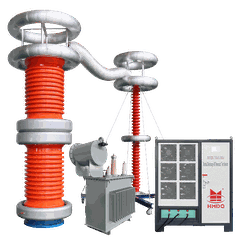



CT PT Analyzer
China Supply Manufacture Price for CT PT Analyzer

20+
years
Goldhome has specialized in the production and manufacturing of CT PT Analyzer for 20 years
35
patents
With 35 patents, Goldhome keeps innovating and providing advanced, reliable power testing equipment.
14
Service offices overseas.
Singapore, Malaysia,UAE, Saudi Arabia, South Africa, Nigeria, Germany, Poland, Brazil,the USA,India,the UK, Switzerland, Russia.


The stability and operational integrity of modern electrical power grids depend fundamentally on the precision and reliability of instrument transformers. These devices, primarily Current Transformers (CTs) and Potential Transformers (PTs)—also referred to as Voltage Transformers (VTs)—serve as the critical sensory interfaces between high-voltage primary circuits and the low-voltage secondary systems responsible for protection, control, and revenue metering. A CT PT Analyzer is a specialized, integrated diagnostic instrument designed to evaluate the performance, accuracy, and physical condition of these transformers with extreme precision. By automating a comprehensive suite of tests, these analyzers ensure that transformers operate within their specified parameters, which is essential for accurate revenue billing and the reliable operation of protective relays that prevent catastrophic equipment failure.
- Excitation Characteristics (Saturation) Test: The most critical test. By plotting the excitation curve, the magnetic characteristics of the transformer core are measured to identify the knee voltage. This ensures that the CT can still provide accurate transformation even when large fault currents occur, preventing waveform distortion due to saturation and guaranteeing the reliable operation of protective devices.
- Turns Ratio and Phase Shift Test: Precisely measures the turns ratio of the primary and secondary windings to verify their transformation accuracy, while simultaneously measuring the phase shift (angle error). Any angular error between the primary and secondary windings can lead to significant deviations in energy metering and power measurement.
- Polarity Check: Verifies that the instantaneous direction of the secondary-side current or voltage correctly corresponds to that of the primary side. This is critical for directional protection and accurate metering.
- Winding Resistance Measurement: Measure the DC resistance of the primary and secondary windings to detect turn-to-turn short circuits, loose connections, or internal anomalies.
- Secondary Circuit Load Test: Measure the total load (impedance) connected to the secondary side of the transformer. Ensure that the actual load remains within the transformer’s rated capacity; excessive load is a common cause of measurement errors.
- Demagnetization: After DC testing, residual magnetism may remain in the CT core, causing measurement errors. The analyzer can automatically demagnetize the core to restore measurement accuracy.
- Additional Parameter Analysis: Advanced models can also evaluate the Accuracy Limit Factor (ALF), Instrument Security Factor (FS), secondary time constant (Ts), and composite error, providing a comprehensive performance evaluation.


- One-Button Full-Parameter Testing: With a single connection, you can complete testing of all performance parameters for CTs (current transformers) or PTs (voltage transformers).
- CT Test Items: Includes excitation characteristics (V-A characteristics), turns ratio, polarity, secondary winding resistance, secondary load, phase error (ratio error/phase angle error), and calculation of inflection point voltage/current.
- PT Test Items: Includes unit excitation characteristics, transformation ratio, polarity, secondary winding resistance, and load testing.
- Automatic Demagnetization: Upon completion of testing, the instrument typically automatically demagnetizes the transformer to prevent residual magnetism from affecting relay protection operation.
Main Types of CT/PT Analyzers
Frequency-Modulated Analyzers
This is Goldhome’s core product line (the HMCTP-100P series).
Technical Principle: Rather than directly outputting high currents, this method employs the “equivalent circuit method.” By applying a frequency-modulated voltage to the secondary side, it measures the transformer’s leakage inductance and excitation characteristics, then uses mathematical models to calculate the error and transformation ratio at power frequency.
Key Features:
Safe and Eco-Friendly: The output voltage is extremely low (typically not exceeding 180V), making it very safe for personnel and equipment.
Exceptional Performance: Capable of testing large CTs with turn-on voltages as high as 45,000V.
Ultra-Portable: Compact and lightweight (approximately 9 kg), making it the top choice for on-site commissioning.
Power-Frequency Testers
This type simulates the actual operating frequency of the transformer (50 Hz or 60 Hz).
Technical Principle: Directly applies high voltage or high current at 50 Hz.
Key Features:
Intuitive and Reliable: Test data consists of actual measured values rather than mathematical calculations, earning high recognition among industry veterans.
Heavy and Bulky: Due to built-in high-power voltage and current boosters, the unit typically weighs 20–30 kg or more and may even require an external voltage booster.
Application Scenarios: Primarily used for factory acceptance testing by current transformer manufacturers, or for verification when results from the frequency-modulation method are disputed.
Transient CT Analyzer
Designed for “transient protection” current transformers, which have extremely high requirements in power systems. Technical Logic: Specifically designed to test TPX, TPY, and TPZ-class current transformers with air gaps.
Features: Multi-parameter evaluation: In addition to basic metrics, it measures the secondary time constant ($T_s$), residual magnetism coefficient ($K_r$), and transient area coefficient ($K_{td}$). Application Scenarios: Primarily used for calibrating relay protection systems in ultra-high-voltage substations of 500 kV and above to prevent protection misoperation caused by CT saturation during system faults.
Automatic Full-Range Comprehensive Type
This category of equipment emphasizes “software intelligence” rather than hardware power.
Technical Logic: Highly integrates both CT and PT test circuits into a single operating interface.
Specific Features:
Intelligent Judgment: Built-in global standards (IEC 60044-1/6, IEC 61869-2, ANSI C57.13).
Level of Automation: Automatically performs demagnetization, calculates errors (ratio error/phase error), and generates Word/Excel reports.
Working Principle
Low-Frequency/Variable-Frequency Method (Excitation Characteristics Testing)
This is the analyzer’s most critical technology, designed to address the challenge of testing “knee-point voltage.” Traditional power-frequency testing requires massive power supplies and extremely high voltages, whereas the low-frequency/variable-frequency method leverages the principle that the test voltage required for transformers operating at lower frequencies is correspondingly reduced, using mathematical formulas to simulate operating conditions. The analyzer only needs to output a lower variable-frequency voltage (e.g., just 180 V). Through internal control and calculations performed by high-performance DSP and FPGA chips, it can safely and accurately map equivalent knee-point voltages as high as 30 kV or even higher.
High-Precision Synchronous Sampling Principle (Turns Ratio, Ratio Error, and Phase Error Testing)
This test is used to verify the accuracy of the transformer. The analyzer first injects a known, precise signal (current or voltage) into the primary side. It then utilizes its own high-precision acquisition card and a standard transformer to act as a “referee,” simultaneously acquiring the primary-side signal and the induced signal on the secondary side. By comparing the amplitude and phase differences between the two signals, the ratio error and phase error are directly calculated.
Indirect Method/Voltage Method (Ratio and Polarity Testing)
The indirect method can be used in field testing scenarios where it is not possible to apply a large current to the primary side. The principle involves opening the CT’s primary side, injecting a low-voltage signal into the secondary side, and simultaneously measuring the voltage induced on the primary side. Although the winding under test is subjected to only a very low voltage, the analyzer can still accurately calculate the turns ratio by measuring the voltage ratio between the primary and secondary coils. This method is also commonly used to efficiently determine the polarity of the current transformer.
Four-Wire Method/DC Voltage Drop Method (Winding DC Resistance Test)
To accurately measure minute resistances in the milliohm range, this function employs the four-wire method to eliminate errors caused by the resistance of the test leads themselves. The principle involves outputting a stable DC current from a constant current source and directly reading the voltage drop (U) across the ends of the winding under test via two separate voltage measurement leads. Finally, the precise resistance is calculated using Ohm’s Law: R = U / I.
Voltage-Current Method (Secondary Load Test)
During testing, the analyzer outputs a specific signal to the connected secondary circuit and measures the voltage and current in that circuit. Based on Ohm’s Law (Z = U / I), the impedance of the entire circuit is calculated to determine whether connected loads—such as cables or instruments—exceed the transformer’s rated carrying capacity.

Test Procedure
1. Pre-test Preparation and Safety Checks Physical Isolation: Ensure that the CT/PT under test has been completely taken out of service, and disconnect all connections to the high-voltage primary side and secondary-side loads (meters, relays). Reliable Grounding: Connect the instrument’s ground terminal to the substation grounding grid. This is the most critical step for ensuring personal and equipment safety. Discharging: Before wiring, ensure that there is no residual charge inside the transformer.
2. Wiring Procedures (Using a CT as an Example) Most analyzers employ a four-wire measurement method to eliminate the impact of wiring resistance on accuracy: Secondary-side wiring: Connect the instrument’s Output (S1, S2) terminals to the CT’s secondary winding. This is used for excitation characteristic and resistance testing. Primary-side wiring: Connect the instrument’s Measurement (P1, P2) terminals to the CT’s primary side (H1, H2). This is required only when performing turns ratio and polarity tests. Check: Ensure the clamps are secure and that there are no short circuits between terminals.
3. Parameter Settings (Software Interface) Enter the CT nameplate parameters on the touchscreen so the instrument can determine compliance: Select Standard: Select the applicable international or national standard (e.g., IEC 61869, GB 20840). Rated Parameters: Enter the rated secondary current (typically 1A or 5A). Class: Select the accuracy class (e.g., 0.5 for measurement class, or 10P20 for protection class). Rated Load: Enter the rated load value (in VA).
4. Automated Test Sequence: After pressing the “Start/Run” button, the instrument will automatically complete the following items within 1–2 minutes: Secondary Resistance ($R_{ct}$): Inject a DC current to measure the winding resistance and automatically convert the result to 75°C (or the set temperature). Excitation Characteristics (Knee Point): Inject a frequency-modulated signal, automatically plot the voltage-current characteristic curve, and calculate the knee point voltage/current. Turns Ratio and Polarity: Measure the actual turns ratio and verify that the polarity is negative (as typically specified). Error Calculation: Automatically calculate the ratio error and phase angle error under different loads based on the built-in model. Automatic
5.Demagnetization: Before the test concludes, the instrument automatically smooths and reduces the signal to eliminate residual magnetism generated during the test.
Result Analysis and Report Export View Curves: Check whether the voltage-current characteristic curve is smooth and whether the inflection point meets design requirements. Result Determination: The system automatically displays “Pass” or “Fail.” Data Export: Insert a USB drive to export test data as a Word or PDF report.
How to Use the CT PT Analyzer?
1. Power-On and Main Interface Overview
Safe Connection: Use a three-prong power cord to power the instrument, and ensure that the ground terminal on the instrument panel is securely connected to the grounding system.
Power-On Self-Test: Press the power button; the instrument will perform a self-test and enter the main menu.
Main Menu Navigation: The interface typically displays core functional modules as large icons or in a list, such as: CT Test, PT Test, Transformation Ratio Test, Data Management, and System Settings.
2. Test Parameter Setup (Key Steps)
After selecting “CT Test” or “PT Test” from the main menu, the parameter setup screen will appear. This is critical for ensuring test accuracy.
Select Test Standard: Typically located at the top of the setup screen. Select a standard such as IEC 61869 or GB 1208 based on on-site requirements; the instrument will automatically determine compliance according to this standard.
Enter Nameplate Parameters:
Serial Number: Enter the unique serial number of this transformer for reporting purposes.
Current Ratio/Voltage Ratio: e.g., 600/5 or 10kV/100V. Some analyzers support nameplate calculation; simply enter the primary and secondary currents once, and the system will calculate the ratios automatically.
Rated Secondary Values: CTs are typically 5A or 1A; PTs are typically 100V or 110V.
Accuracy Class: e.g., 0.5 (for measurement) or 5P20 (for protection). For protection CTs, you must also enter the Accuracy Limit Factor (ALF).
Rated Load: e.g., 30VA, or enter the power factor directly (0.8).
Select Test Items: In fully automatic mode, the following are selected by default: excitation, transformation ratio, polarity, DC resistance, and secondary load. You may deselect or add items as needed.
3. Wiring Guide and Test Initiation
On-screen wiring diagram: After setting the parameters, a clear wiring diagram will appear on the instrument’s screen. Be sure to connect the analyzer’s P1/P2 and S1/S2 terminals to the transformers exactly as shown in the diagram. If the wiring is incorrect, the instrument will automatically detect the error and display a warning.
Test Initiation: After confirming that the connections are secure and that no one is touching the transformers, press the “Start Test” button. The instrument will automatically complete all test items according to the preset logic without requiring manual intervention.
4. Test Process and Real-Time Data Monitoring
Step-by-Step Execution: The screen will sequentially display messages such as “Testing excitation characteristics...” and “Testing turns ratio...”.
Real-Time Curves and Data: During excitation testing, the voltage-current curve is plotted in real time; during turns ratio testing, the primary and secondary values update dynamically.
Automatic Evaluation and Alerts: Upon completion of each test item, if the data meets specifications, the item status is marked as “Pass”; if it fails, it is marked as “Fail” with a red warning. In the event of wiring errors, overloads, or other issues, the instrument will automatically halt and display a pop-up alert; testing can only resume after the fault has been resolved.
5. Data Management and Report Generation
View Results Instantly: Upon test completion, the interface generates a summary table that centrally displays key data—including transformation ratio, error, polarity, inflection point voltage, DC resistance, and load—along with their evaluation conclusions. Clicking an individual item allows you to view detailed graphs such as excitation curves and error curves.
Save Data: Click “Save” to store all test data from the current session in the instrument’s internal memory. Data can typically be retrieved by ID or date.
Generating Reports:
Select the test records to export from the Data Management menu.
Depending on the instrument model, you can generate a simple report directly on the instrument, or insert a USB flash drive via the USB port and select “Export” to save the data in Excel or PDF format.
Some instruments support connection to PC-based software for more professional report editing and batch management.
6. Demagnetization and Shutdown
Demagnetization: After testing is complete, be sure to perform the demagnetization procedure before turning off the power or disconnecting the cables. Locate the “Demagnetize” function in the Main Menu or Tools Menu, press Confirm, and the process will be completed in a few seconds.
Disconnecting Cables and Shutdown: Once demagnetization is complete and the voltage indication on the screen disappears, you may disconnect the test leads and finally turn off the power.
Famous Brands
International Brands
1.OMICRON (Austria)
A global benchmark; the CT Analyzer model offers high accuracy and comprehensive functionality, supporting full-parameter testing and comparison with international standards. Suitable for high-end laboratories and critical infrastructure projects.
2.Megger (USA) MVCT/MRCT Ultra-lightweight design (<10 kg); one-button automatic testing; 1 kV DC insulation testing
3.Vanguard (USA): Specialized in testing transformers for high-capacity and complex protection systems; later acquired by Megger.
Domestic Brands
1.Goldhome Hipot(China, Wuhan)
Highly recommended; models HM404, HM6060, and HMCTP-100P. Fully automated comprehensive CT/PT testing, featuring ratio / phase angle error / polarity / V-A characteristic / secondary resistance / load measurements; built-in overvoltage / overcurrent / short-circuit / residual voltage discharge protection; compliant with IEC and national standards; widely used by State Grid, China Southern Power Grid, and major energy groups
2.Huatian Electric (China, Wuhan)
Model HTCT-200: portable all-in-one unit supporting one-button testing and automatic curve plotting, suitable for rapid on-site testing.
3.Ultra-High Voltage Power (Wuhan, China)
Model UHV-300, based on the low-frequency method, completes most CT tests with a single primary connection, supports storage of 2,000 data sets, and allows report export to a USB drive.
Alternative Name
· CT PT Analyzer
· CT Analyzer
· PT Analyzer
· Current Transformer Analyzer
· Potential Transformer Analyzer
· CT PT Comprehensive Tester
· CT PT Ratio Phase Angle Tester
· Transformer CT PT Test Equipment
· CT PT Excitation Characteristic Analyzer
· HV CT PT Analyzer
· CT Saturation Analyzer
· CT VT Analyzer
· Current Voltage Transformer Tester
· CT Secondary Burden Tester
· CT PT Polarity Tester
· Transformer Ratio Error Test Set
· Substation CT PT Analyzer
· Protection CT Analyzer
· Metering CT PT Tester
· CT Winding Resistance Analyzer
· VT Analyzer
· CT Test Set
· PT Test Instrument
· CT PT Diagnostic Analyzer
· Instrument Transformer Analyzer
· Portable CT Test Set
· Excitation Curve Tester
· Frequency Conversion CT Analyzer
·Knee Point Tester
·Low Voltage CT Analyzer
·MV/HV CT Tester
·Protection CT Analyzer
·Burden & Impedance Tester
·CT Testing Equipment
·CT Excitation Test Set
·CT Saturation Tester
·CT Ratio & Polarity Tester
·Automatic / Portable CT PT Analyzer

FAQ
Q1: What is a CT/PT analyzer?
A: Also known as a comprehensive transformer tester, it is an integrated, portable device specifically designed to test parameters such as excitation characteristics, turns ratio, polarity, winding resistance, and secondary load of current transformers (CTs) and voltage transformers (PTs). It can automatically determine whether the test results are acceptable.
Q2: Why is it necessary to test CTs and PTs?
A: CTs and PTs directly affect the accuracy of electricity metering and the reliability of protection system operation. Accuracy deviations, poor saturation characteristics, or reversed polarity can lead to serious incidents such as protection system false trips or failure to trip, as well as billing errors.
Q3: What types of transformers can it test?
A: Protection-class, measurement-class, metering-class, and TP-class transient protection transformers. In addition to traditional transformers, it can also test certain electronic transformers (model compatibility must be confirmed). CTs and PTs within GIS systems can also be tested.
Q4: What are the core test items?
A:
- Excitation characteristic curve (knee voltage/saturation characteristics)
- Rating ratio, ratio error, and phase angle error
- Polarity check
- DC resistance of secondary windings
- Actual load (burden) of secondary circuits
- 5% and 10% error curves (select models)
- Demagnetization function
Q5: What is the knee voltage? Why is it measured?
A: The knee voltage is the voltage point at which the transformer core begins to saturate. For protection-grade CTs, standards require that the knee voltage must exceed the voltage corresponding to the maximum possible fault current in that circuit; otherwise, the secondary current will become distorted during saturation, leading to protection failure. Measuring the knee voltage is critical to ensuring protection reliability.
Q6: Why is the low-frequency method used to measure excitation characteristics?
A: For CTs with high saturation voltages (e.g., tens of kilovolts), testing at power frequency requires massive power supplies and extremely high voltages, which is dangerous and cumbersome. The low-frequency method utilizes the relationship between core magnetic flux and voltage/frequency, using low-voltage, low-frequency signals to simulate high-voltage power frequency, thereby enabling safe and portable testing.
Q7: How are ratio error and polarity measured?
A: A known signal is injected into the primary side, and primary and secondary signals are simultaneously acquired. The amplitude difference (ratio error) and phase difference (angular error) are then compared. Polarity is confirmed by determining the signal direction to verify whether it is the standard “negative polarity.”
Q8: What is secondary load testing? Why is it important?
A: It involves measuring the total load impedance connected to the transformer’s secondary circuit. If the actual load exceeds the transformer’s rated capacity, it will lead to increased measurement errors. Many on-site accuracy issues stem from excessive secondary load.
Q9: Is demagnetization required after testing?
A: Yes, it is required. DC tests (such as DC resistance) leave residual magnetism in the core, causing subsequent errors. After testing, use the instrument’s built-in demagnetization function to eliminate residual magnetism before disconnecting the wires.
Q10: How do I choose a suitable CT/PT analyzer?
A: Key considerations:
Capacity: Whether it can measure the highest knee voltage required (e.g., 30 kV, 45 kV)
Accuracy: Typically 0.05% or 0.1%
Features: Whether you need to measure ratio error and phase angle error, and whether it supports TP-class testing, etc.
Portability: For on-site use, prioritize lightweight and rugged models
Standards: Whether it includes built-in automatic evaluation of IEC, GB, and other standards
Brand and Service: Technical support and after-sales response
Q11: What are the features of Guodian Huamei’s CT/PT analyzers?
A: Guodian Huamei’s flagship models, such as the HM404 and HM6060, offer fully automatic testing, low-frequency excitation, ratio and phase angle error testing, intelligent nameplate calculation, and report generation. They are easy to operate and support both protection-class and measurement-class transformers, making them suitable for both field and laboratory use.
Q12: What key parameters should be considered?
A: Measurement accuracy, maximum test voltage, ratio measurement range, output current/voltage capacity, compatibility with testing standards, storage and reporting capabilities, and weight.
Q13: What is the typical price range?
A: Prices vary significantly depending on features and brand. Mainstream domestic models typically range from tens of thousands to over 100,000 RMB. Simple devices for pure ratio error testing are less expensive, while high-precision analyzers with full excitation and ratio/angle error testing capabilities are more expensive. We recommend requesting the latest quotes from manufacturers.
Q14: What should I do if the test results show “polarity error”?
A: First, check whether the primary and secondary connections are reversed, then verify the direction of the primary wiring. If the error is confirmed, note it in the installation record and recommend re-commissioning the circuit.
Q15: What causes abnormal excitation characteristic curves?
A: Common causes include: residual magnetism not fully dissipated, inter-turn short circuits, the secondary circuit not being fully open during testing, insufficient instrument capacity preventing proper saturation, or quality issues with the transformer itself.
Q16: What typically causes the transformation ratio error to exceed the limit?
A: Turn-to-turn short circuits, actual secondary load not matching the nameplate rating, poor contact or incorrect wiring of test leads, or the CT’s accuracy class being insufficient.
Q17: What should be done if the instrument triggers an “open circuit” or “overcurrent” protection?
A: Check the test circuit for broken wires, loose clamps, or an open secondary circuit, which may cause induced high voltage and trigger the instrument’s protection. After troubleshooting, press the reset button or restart the instrument.
Q18: Is a CT/PT analyzer the same as a relay protection tester?
A: They are completely different. A relay protection tester injects current/voltage into relay protection devices to verify their operating logic, whereas a CT/PT analyzer specifically tests the physical characteristics and accuracy of the transformers themselves. The two are often used in conjunction.
Q19: Are there any safety risks associated with using the analyzer? How can they be avoided?
A: High-voltage output is present during testing, posing a risk of electric shock. Precautions: Ensure reliable grounding, discharge the primary side, properly short-circuit the non-test CT windings, do not touch the test terminals, maintain a safe distance during testing, and wait until discharge is complete before disconnecting the cables.
As one of the most professional ct pt analyzer manufacturers in China, we're featured by quality products and good price. Welcome to buy ct pt analyzer in stock here and get pricelist from our factory. Contact us for customized service.