

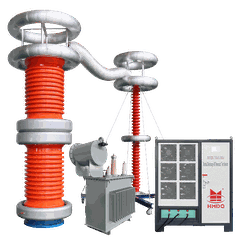



Oil BDV Tester
Transformer Insulating Oil Dielectric Strength Tester | HMDQ
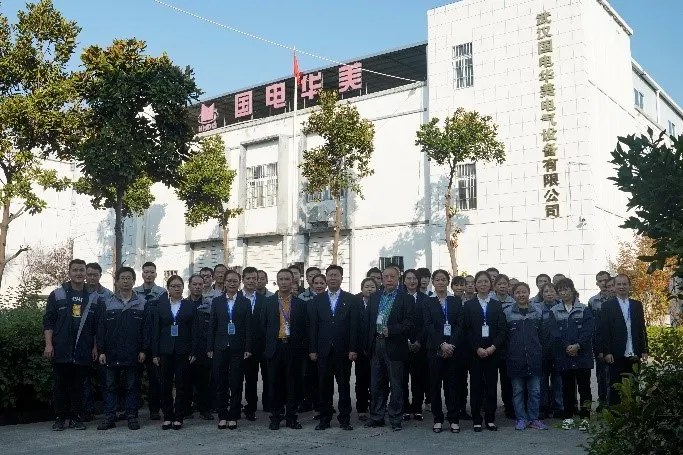
Our company has specialized in the production and manufacturing of Oil BDV Tester for 20 years, with a modern intelligent factory covering an area of over 10000 square meters, staffed by 51 professional technicians, and hold CE certification. 35 patents, 10+ software copyrights,Currently, we have over 150 stable distributors worldwide and established more than 10 service offices overseas.
35+
National patents
20+
Years Experience
51
Technical Staff
17924
Active Members


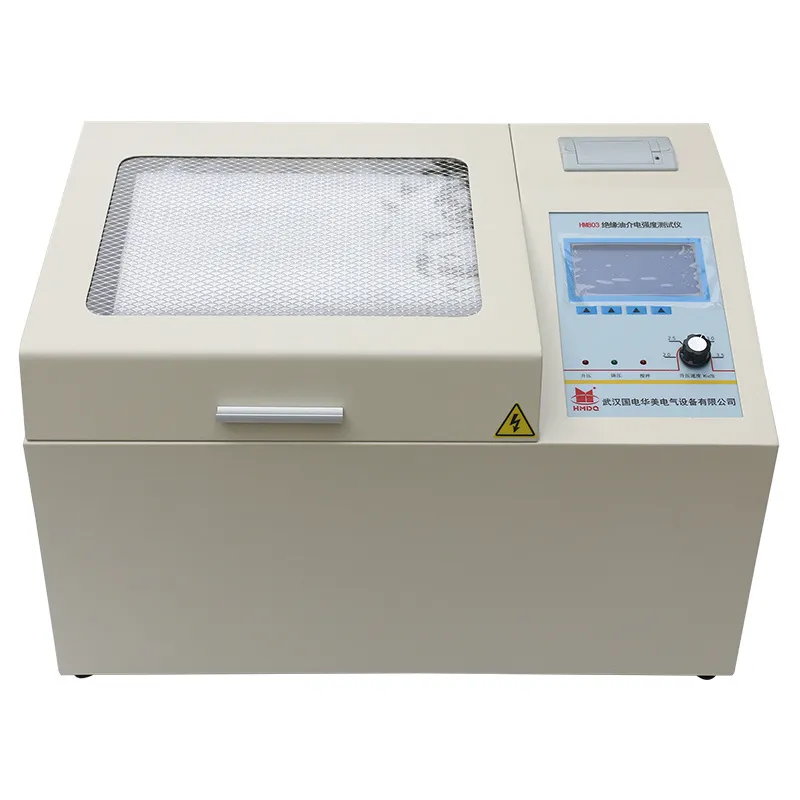
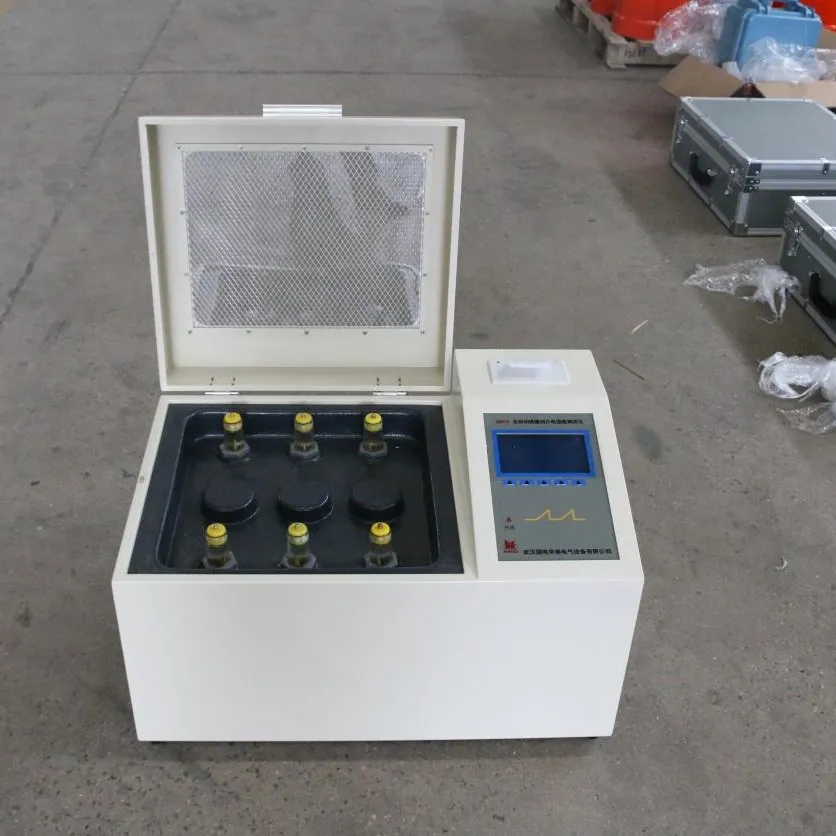
An insulating oil dielectric strength tester (also known as an insulating oil withstand voltage tester or transformer oil breakdown voltage tester) is a fully automatic, specialized instrument designed to measure the breakdown voltage of insulating oils (such as transformer oil and switchgear oil). It serves as the core testing equipment for assessing the quality of an insulating oil’s insulation properties and determining whether it is safe for use.Its primary function is to measure the dielectric strength (breakdown voltage) of insulating oil, which directly indicates the presence of moisture, impurities, and conductive particles in the oil, thereby determining whether the insulating oil has aged or deteriorated and whether it remains safe for continued use.
1. Insulating oil is highly susceptible to moisture
Once transformer oil becomes contaminated with water or moisture, its dielectric strength drops dramatically.
Even a tiny amount of moisture can cause the breakdown voltage to plummet from 40 kV to less than 10 kV.
→ Without testing, you won’t know the oil has “failed,” and the equipment could suffer an internal breakdown at any moment.
2. Oil ages and becomes contaminated
After prolonged operation, oil will:
Oxidize and turn black
Generate impurities and sludge
Become contaminated with metal particles and fibers
All of these factors reduce dielectric strength and threaten equipment safety.
3. Directly affects whether equipment will explode
The interiors of transformers, reactors, and circuit breakers rely on insulating oil for insulation and heat dissipation.
If the oil fails → internal discharge → localized overheating → breakdown → tripping or even explosion.
Failure to meet dielectric strength standards constitutes a major safety hazard.
4. Mandatory Requirements Under Power Industry Regulations
According to preventive testing standards:
New oil must be tested before commissioning
In-service oil must be tested periodically
Retesting is mandatory after oil filtration, oil replacement, or major repairs
Failure to comply constitutes a violation and non-compliance.
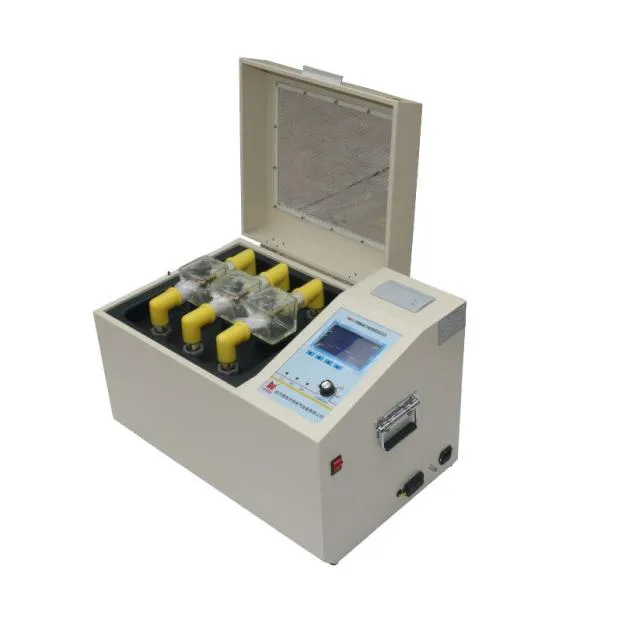

When insulating oil is subjected to an electric field, if the electric field strength exceeds its breakdown threshold, the oil molecules become ionized, forming conductive pathways and causing spark discharge. This phenomenon is known as breakdown.
The voltage at the moment of breakdown is referred to as the dielectric strength (breakdown voltage).
Instrument Structure
The instrument consists primarily of four parts:
Voltage-boosting system: Power-frequency step-up transformer + voltage regulator
Detection system: Breakdown current detection, voltage sampling
Control system: Microcontroller-based automatic control of voltage-rising speed, timing, and calculation
Oil cup electrodes: Standard spherical / flat electrodes, with a strictly maintained spacing of 2.5 mm
Principle of Operation
1. Sample Loading: Fill a standard oil cup with the oil sample (the electrode spacing is typically 2.5 mm).
2. Voltage Increase: The instrument automatically increases the AC voltage at a constant rate of 2–3 kV/s.
3. Breakdown: When the voltage exceeds the oil sample’s breakdown voltage, the oil breaks down and an arc is generated.
4. Measurement: The breakdown voltage is instantly detected and recorded, after which the power is automatically cut off and the arc extinguished.
5. Calculation: Typically, six consecutive measurements are taken, and the average value is automatically calculated as the final result.
1. Filling with Oil and Settling
Pour the insulating oil into a standard oil cup. After removing any air bubbles, allow the oil to settle so that impurities and air bubbles can stabilize, thereby preventing any impact on the test results.
2. Automatic Constant-Rate Voltage Increase
The instrument’s internal voltage regulator controls the step-up transformer to increase the voltage at a constant rate of
2 kV/s or 3 kV/s, in accordance with national standards.
3. Real-Time Current Monitoring
Before breakdown, the oil acts as an insulator, and the loop current is extremely low.
Once the oil breaks down, the current suddenly increases sharply.
4. Breakdown Detection and Shutdown
The detection circuit detects the breakdown current → The control system immediately cuts off the high voltage
(response time < 10 ms, to prevent electrode erosion).
5. Recording the Breakdown Voltage
The high-voltage side voltage sampling circuit records the voltage value at the moment of breakdown, which is the breakdown voltage for that test.
6. Averaging Multiple Tests
In accordance with national standards, six consecutive tests are typically performed. After automatically excluding outliers, the average value is calculated and used as the final dielectric strength.

1.Fully Automatic Dielectric Strength Testing
Automatically performs the entire process, including voltage ramp-up, breakdown detection, voltage ramp-down, arc quenching, and data calculation.
2.Automatic Processing of Multiple Tests
Supports continuous testing of 1 to 6 cycles in accordance with national standards, with automatic calculation of the average value.
3.Data Display and Storage
LCD display shows the breakdown voltage, average value, and number of tests for each cycle; capable of storing multiple sets of historical data.
4.Test Result Printing
Equipped with a built-in mini-printer or supports external printing to directly output test reports.
5.Automatic Stirring and Settling Control
Built-in magnetic stirring enables automatic stirring and settling to eliminate the effects of air bubbles and impurities.
6.High-Voltage Safety Protection
Overvoltage protection, overcurrent protection, rapid trip upon breakdown, and power-off protection when the lid is opened.
7.Customizable Parameters
Allows setting of voltage ramp-up speed, number of tests, stirring time, settling time, and more.
Product Features
Fully Automated, One-Button Testing
Simply place the oil sample and press start; no manual supervision is required, reducing human error.
Smooth Voltage Rise and High Accuracy
Features programmable voltage rise with stable speed, high voltage measurement accuracy, and excellent repeatability.
Compliant with National and Industry Standards
Meets the requirements of GB/T 507, DL/T 429.9, IEC 60156, and other standards.
Fast Breakdown Response and Rapid Arc Extinguishment
High voltage is cut off within milliseconds after breakdown, protecting the electrodes from ablation and preventing oil sample carbonization.
Simple Operation and User-Friendly Interface
Large Chinese LCD screen with menu-driven operation, making it easy for on-site personnel to use.
Compact Design, Safe and Reliable
The high-voltage chamber is isolated from the control unit and features safety interlocks for enhanced safety.
Strong Interference Resistance
Suitable for various on-site environments such as substations, power plants, and laboratories.
Three-cup / Single-cup Options Available
The single-cup model is compact and portable; the three-cup model allows simultaneous testing for higher efficiency.
Application Field
Power System Operation and Maintenance
Substations and power supply bureaus conduct regular preventive tests on transformer oil, circuit breaker oil, and instrument transformer oil in service.
These tests determine whether the insulating oil has become damp, aged, or contaminated, and decide whether oil filtration or replacement is necessary.
Electrical Equipment Manufacturing
Pre-shipment oil testing by manufacturers of transformers, reactors, switches, capacitors, and other equipment.
Testing oil quality for compliance following equipment overhauls, oil filling, or oil filtration.
Insulating Oil Production and Sales
Inspection of new oil prior to shipment by insulating oil manufacturers.
Incoming inspection and quality control at oil depots and oil distributors.
On-site Power Plants at Industrial and Mining Enterprises
Oil testing for internal substations and switchgear rooms at steel mills, cement plants, chemical plants, mines, and other enterprises.
Ensuring the safe and stable operation of large high-voltage equipment.
Research and Quality Inspection Institutions
Quality Inspection Institutes, Electric Power Research Institutes, and third-party testing agencies.
Research on oil performance, aging tests, and quality arbitration testing.
Railways, Aviation, New Energy, and Other Industries
Oil quality testing for high-speed rail traction transformers and transformers in new energy power stations.
This testing is required for all high-voltage electrical equipment using insulating oil.
Famous Brands
International:
1. Megger (U.S.): A renowned brand in the global power testing industry with a broad product portfolio; it is one of the key contributors to industry standards.
2. BAUR GmbH (Austria): Specializes in cable fault location and power equipment testing; its insulating oil testers are renowned for their rugged durability and testing accuracy.
3. HV TECHNOLOGIES (USA): Provides comprehensive high-voltage testing solutions with highly advanced technology.
4. HIPOTRONICS (USA): Also enjoys a strong reputation in the high-voltage testing sector and is one of the major players in the market.
5. B2 Electronics (Germany): Also listed in industry reports as a key player in the global market.
Domestic:
1. Goldhome Hipot (Wuhan): HM801 (single-cup), HM803 (three-cup), and HM5007 series—fully automatic, cost-effective, safe, and reliable.
2. Guodian Xigao (Wuhan): OVT-80K series, featuring high precision and advanced automation.
3. Beijing Huakeyi: HK-JYY-80 series, compliant with national and industry standards, commonly used in the petrochemical and power sectors.
4. Shanghai Shengxu, Shanghai Guanyi: Long-established brands in East China, with broad market coverage and high cost-effectiveness.
5. Aerospace Zongheng (Beijing): DST-80kV series, backed by military technology.

· Insulating oil dielectric strength tester
· Insulation oil dielectric strength tester
· Transformer oil dielectric strength tester
· Dielectric strength tester for insulating oil
· Oil dielectric strength tester
· Insulating oil breakdown voltage tester
· Transformer oil breakdown voltage tester
· BDV tester
· Oil BDV tester
· Insulation Oil Tester
· Oil Breakdown Voltage (BDV) Tester
· Transformer oil BDV test set
· Single cup oil BDV tester
· Three cup oil dielectric tester
· Multi-cup transformer oil tester
· Oil dielectric tester
· Transformer oil tester
· Transformer Oil BDV Tester
· BDV test set
· Automatic Transformer Oil Dielectric Strength Tester
· Insulating Oil BDV Tester IEC 60156
· 80kV Single Cup Oil Dielectric Strength Tester
· Three Cup Transformer Oil Breakdown Voltage Tester
FAQ
Q: 1 What is an insulating oil dielectric strength tester?
A: An insulating oil dielectric strength tester (also known as an oil withstand voltage tester) is a specialized high-voltage testing device primarily used to measure the dielectric strength (i.e., breakdown voltage) of insulating liquids such as transformer oil and switchgear oil. It is a key tool for evaluating the insulation performance of electrical equipment.
Q: 2. What standards are used for testing?
A: Common standards:
● IEC 60156
● GB/T 507
● DL/T 429.9
● ASTM D877 / ASTM D1816
The entire product line from Guodian Huamei complies with the above standards.
Q: 3. Is the instrument fully automatic or manual?
A: Goldhome’s HM801, HM803, and HM5007 models are all microprocessor-controlled and fully automatic, completing the entire process with a single button press:
Stirring → Settling → Voltage ramp-up → Breakdown detection → Arc quenching → Calculation → Printing / Storage, without any manual intervention.
Q: 4. There are single-cup and three-cup models—how do I choose?
A: ● Single-cup (HM801/HM5007): Suitable for on-site inspections, small sample quantities, and routine testing at substations.
● Three-cup (HM803): Suitable for laboratories, oil processing plants, and third-party testing; tests 3 samples at once for higher efficiency.
Q: 5. What is the maximum test voltage?
A: Standard range: 0–80 kV, meeting the testing requirements for the vast majority of transformer oil and high-voltage insulating oil.
Q: 6. Is the voltage ramp rate adjustable?
A: Yes. Supports standard ramp rates: 2 kV/s and 3 kV/s; some models allow custom settings.
Q: 7. How is the arc extinguished after breakdown? Will it damage the oil cup?
A: The instrument employs millisecond-level rapid high-voltage cutoff (<10 ms) for automatic arc extinction,
preventing electrode erosion and oil carbonization, ensuring good repeatability for multiple tests.
Q: 8. How many tests are performed in a single session? How are the results calculated?
A: According to standards, 6 consecutive tests are typically performed.
The instrument automatically calculates the average; some models support averaging after excluding outliers.
Q: 9. Does the instrument have printing and data storage functions?
A: Standard features:
● Large LCD screen
● Built-in thermal printer
● Can store over 99 sets of test data
● Some models support USB data export.
Q: 10. Is operation complicated? Does it require specialized personnel?
A: No, it is not complicated.
With a Chinese menu and user-friendly operation, simply place the oil sample and press “Start.”
Ordinary electricians or laboratory technicians can operate it after brief training.
Q: 11. How should the oil sample be prepared before testing?
A: ● Pour the oil sample slowly into the cup to avoid creating bubbles.
● Let it stand for a few minutes, or use the instrument’s automatic stirring and settling functions.
● The electrode spacing is factory-calibrated to 2.5 mm; users generally do not need to adjust it.
Q: 12. What is the electrode spacing? Can it be adjusted?
A: The standard oil cup electrode spacing is 2.5 mm, compliant with IEC/GB requirements.
Customized electrode cups are available for special requirements (e.g., 1 mm).
Q: 13. What types of oil does the instrument support?
A: ● Transformer oil
● Switchgear oil
● Capacitor oil
● Instrument transformer oil
● Other insulating oils
Q: 14. What are the common causes of low test results?
A: ● Moisture or water contamination in the oil sample (most common)
● Oil aging, contamination, or impurities
● Dirty oil cup or presence of fibers
● Air bubbles not fully purged from the oil
Q: 15. What is the warranty period for this Goldhome device?
A: One-year warranty on the entire unit, lifetime maintenance, and fast domestic after-sales response
Wuhan Goldhome Hipot Electrical Co., Ltd. is one of the most professional oil bdv tester manufacturers and suppliers in China, featured by quality products and good price. Welcome to buy oil bdv tester in stock here and get pricelist from our factory. Contact us for customized service.