

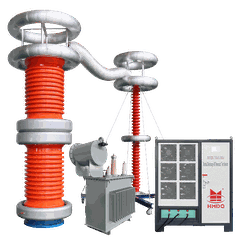



Primary Current Injection Test Set

Wuhan Goldhome Hipot Electrical Co., Ltd. was established in 2008, located in Economic and Technical Development Zone, working area more than 10000 square meters.We are professional OEM, ODM, OBM Manufacturer which is engaged in the research, development, sale and service of High Voltage Testing Equipment including: Resonant Test System, High Voltage Tester,Transformer Tester ,Primary Current Injection Tester,Circuit Beaker Tester, Relay Protection Tester, Cable Tester, SF6 Test Analyzer,Oil Testing Instruments,etc.


Why Choose Us
Wuhan Goldhome Hipot Electrical Co., Ltd. was established in 2008, located in Economic and Technical Development Zone, working area more than 10000 square meters.We are professional OEM, ODM, OBM Manufacturer which is engaged in the research, development, sale and service of High Voltage Testing Equipment including: Resonant Test System, High Voltage Tester,Transformer Tester ,Primary Current Injection Tester,Circuit Beaker Tester, Relay Protection Tester, Cable Tester, SF6 Test Analyzer,Oil Testing Instruments,etc.
Product Applications
These solutions are widely applied across power engineering, transportation, power plant construction, railway infrastructure, petrochemical, metallurgical, and coal mining industries.
Sales Markets
Cumulative exports have reached Indonesia, India, Pakistan, Vietnam, the Philippines, Saudi Arabia, the United Arab Emirates, Egypt, Turkey, Israel, Brazil, Germany, the United States, Australia, and other countries and regions. With over 150 distributors worldwide and more than 10 overseas service offices, we have successfully opened up global markets.
Honors, patents, certificates
Our production is strictly in accordance with international standards and power industry regulations. Our products are through the national, provincial power authorities testing, as well as CE certification! At present,0ur company has received ISO9001:2015 quality management system certification, ISO14001:2018 occupational health and safety management system certification, and ISO14001:2015 environmental management system certification,and also had got SGS certification. Awarded the title of National High tech Enterprise and Wuhan Science and Technology Innovation "Gazelle" Enterprise.More than 20 patented technologies,such as The utility model patent of a frequency conversion series resonance test device,The utility model patent of Lightning impulse voltage testing equipment,etc.
Our Service
We pledge to treat every client with integrity and equality, regardless of contract size or whether they are domestic or international, new or existing customers, providing professional consultation and advice. Goldhome provides professional installation, commissioning and training for users' workers, ensures that users can get familiar with operation methods and put machines into use as soon as possible.


Core Concept: “Muscle Tester” Consider it a giant portable power source capable of generating thousands of amperes. By injecting this massive current directly into the dominant line, it tests the actual operational performance of high-current electrical systems. Components of our primary current injection device:High-current generator;Voltage regulator;High-precision ammeter;Timing/recording module;Specialised test cables;Control unit.
Our test is designed to evaluate the operational performance of entire high-current circuits and equipment under real high-voltage conditions, simulating extreme scenarios such as large-scale overloads or short circuits. It primarily assesses whether circuit breakers, protective relays, current transformers (CTs), switchgear, and busbars can withstand immense electromagnetic forces and heat without sustaining damage.
Main Types of Primary Current Injection Tests
Lorem ipsum dolor sit, amet consectetur adipisicing elit.
Timing Test
Verifies the circuit breaker's total tripping time.
Characteristic Test
Verifies the correctness of protection curves for protective relays or circuit breakers.
Dynamic Resistance Measurement (DRM Test)
Assesses the health status of circuit breaker main contacts.
DC Injection
Conducts testing using direct current.
AC Injection
Conducts testing using power frequency (50/60Hz) alternating current.
Conventional High-Current Injection
Employing bulky “high-current generators” to deliver hundreds to thousands of amperes. Requires heavy-duty test leads.
Low-Frequency AC Injection
Testing with AC at lower frequencies (e.g., 5-20Hz).
Three-Phase Primary Injection
Utilizing specialized three-phase test equipment to simultaneously inject balanced high currents into all three phases of a system.


Advantage of Primary Current injection Test Set
1. Simulates Real-World Operating Conditions (Highest Authenticity)
2. Validates Full-Loop Performance (End-to-End System Reliability)
3. Accurately Verifies Thermal and Mechanical Stability.
4. Ensures Compliance with Industry Standards and Safety Regulations
5. Detects Hidden Defects Missed by Secondary Injection
6. Reduces Long-Term Maintenance Costs and Downtime


Industry-Specific Applications
Electrical Utilities
It mainly Test substation breakers and feeders,ensuring grid stability and prevent widespread outages.
Industrial Manufacturing
Testing main plant switchgear and large motor circuits, Preventing costly production downtime and equipment damage.
Data Centers
Testing critical UPS input/output breakers and backup generators, Ensuring uptime and protect sensitive IT infrastructure.
Marine & Offshore
Testing switchboards on ships and oil platforms, guaranteeing safety and reliability in harsh environments.
Rail Transportation
Testing traction power breakers and signaling power systems, Ensuring public safety and service continuity.
Aerospace
Testing ground power units and aircraft hangar distribution, guaranteeing safety for high-value assets and operations.


The main function of Primary Current Injection Test Set
Protection Relay Testing
Performs primary injection testing on protection relays to ensure accurate and timely disconnection of faulty circuits during faults.
01
Circuit Breaker Testing
Measures parameters such as rated current, overload current, and short-circuit current. Evaluates circuit breaker performance under varying currents, including operating times and synchronism.
02
Current Transformer Testing
Ensures measurement accuracy and correct polarity of current transformers. Also tests secondary current to verify compliance with performance requirements.
03
Thermal Stability Testing
Conducts thermal operation tests by applying continuous or programmable interval currents to evaluate equipment thermal stability under prolonged energization. Ensures devices remain undamaged by overheating during normal and overload current conditions.
04
Grounding System Testing
Assesses the integrity of grounding grids and safety grounding devices by injecting current to verify ground resistance compliance with standards. This ensures the grounding system effectively diverts fault currents to earth, safeguarding personnel and equipment.
05
Impedance and Resistance Measurement
Calculates parameters such as impedance and resistance of the tested equipment, aiding in the evaluation of its electrical performance.
06
Power and Power Factor Measurement
Measures the power and power factor of the circuit under test, aiding in identifying issues such as excessive power loss or low power factor in equipment.
07
Automated Testing and Report Generation
Some advanced primary current injection test equipment features automated testing programs that generate detailed test reports, significantly enhancing testing efficiency and accuracy.
08


Step-by-step User Guide
Step 1: Pre-test preparation and configuration
1. Verify test requirements
2. Deactivate and isolate the equipment under test (EUT)
3. Visually inspect and discharge
4. Configure the test set-up
5. Connect the test cables
6. Configure the test parameters
Step 2: Test execution
1. Final safety check
2. Power up and gradually increase power
3. Monitor the test
4. Interpret the results
Step 3: Post-test shutdown
1. Gradually reduce power and shut down
2. Safely discharge the system
3. Disconnect cables and reset
4. Document results


Primary injection VS Secondary Injection
|
Characteristics |
Primary Injection |
Secondary Injection |
|
Test Object |
Entire primary system including circuit breakers, busbars, CTs, connection points, and relays |
Protection relays only |
|
Injection Point |
Primary Main Circuit (e.g., circuit breaker input and output terminals) |
Secondary Terminal Block (relay current and voltage input terminals) |
|
Current Characteristics |
Actual High Current (hundreds to thousands of amperes) |
Simulated small signals (typically 1A, 5A, 100V, 67V, etc.) |
|
Test Objectives |
Verify overall system performance (interlocking, mechanical operation, contact performance) |
Verify relay logic functions (settings, logic, timing) |
|
Equipment |
Large, heavy high-current generators |
Compact, lightweight relay protection testers |
|
Identifying Defects |
Physical and systemic defects(Poor contact, CT saturation, damaged contacts) |
Internal relay defects(Setting errors, logic faults, component damage) |
|
Primary Applications |
Acceptance testing, post-overhaul verification |
Periodic calibration, fault diagnosis (for relays) |
Alternative names for a primary Injection current testing apparatus
- Protection Relay Tester
- Secondary Injection Test Set
- Relay Test Set
- Multifunction Relay Test System
- Fault Simulator
- Commissioning Test Set
- AC Test Source
- Three-Phase Relay Tester
- Current and Voltage Injection Source
- Current Transformer Ratio Tester
- CT Primary Injection Unit
- Primary-Side Current Generator
- High-voltage primary current test apparatus
FAQ
Q: 1. What is a primary current injection test?
A: It involves injecting high currents ranging from hundreds to thousands of amperes directly into the main circuit of equipment (such as circuit breakers, busbars, or cables) to assess the performance of the entire current path. This simulates a real short-circuit fault.
Q: 2. Why conduct a primary current injection test? Wouldn't a secondary injection suffice?
A: Secondary injection tests only verify the logical functionality of relays. Primary injection tests the entire system, including: circuit breaker contacts, operating mechanisms, current transformers (CTs), and the current-carrying capacity and interlocking performance of connection points. It can detect physical defects (such as poor contacts) that secondary testing cannot identify.
Q: 3. Is it the same device as a ‘high-current generator’?
A: Yes. Primary injection test equipment is typically a specialised power supply capable of delivering extremely high currents at low voltages, hence its common designation as a “high-current generator ”or “current booster”.
Q: 4. How should the rated current and capacity of the equipment be selected?
A: This depends on the test standards and the type of test specimen. For instance, testing circuit breakers requires injecting their rated short-circuit breaking current (e.g., 50kA), while testing CTs requires injecting their rated short-time thermal current (e.g., 100kA). The capacity (kVA) must ensure voltage stability at maximum current.
Q: 5. Is the output alternating current (AC) or direct current (DC)?
A: The vast majority are alternating current (AC) to simulate real power frequency short-circuit currents. Direct current (DC) equipment also exists, primarily for testing DC circuit breakers or conducting resistance measurements.
Q: 6. What are the main applications of primary injection testing?
A: Circuit breaker testing, CT (current transformer) testing, protection system calibration, busbar/connection point testing.
Q: 7. What is the basic testing procedure?
A: 1. Wiring: Securely connect the generator output to the main circuit of the test specimen using large-section cables.
2. Configuration: Select the current tap, set the current value (or ramp rate) and duration.
3. Execution: Initiate the equipment, inject current, and capture current waveforms and operating times using an oscilloscope/recorder.
4. Analysis: Assess circuit breaker operating times and determine whether CT outputs meet specifications.
Q: 8. What are the most critical safety precautions?
A: Fire and scald prevention, electrical shock protection, and protection against electrodynamic forces.
Q: 9. What should be done if connection points overheat during testing?
A: This precisely highlights the core value of primary injection testing—it directly identifies connection defects with excessive contact resistance (e.g., loose bolts, surface oxidation). Testing must cease immediately; tighten or clean the connection points.
Q: 10. What relationship exists between primary injection testing and loop resistance testing?
A: A complementary relationship. Loop resistance testing (using micro-ohmmeters) measures static contact resistance with low DC currents. Primary injection testing employs high AC currents to evaluate dynamic performance under actual short-circuit electrodynamic and thermal stresses, better simulating real-world operating conditions.
Q: 11. What ancillary equipment is required?
A: Large-cross-section test leads and clamps;
Reference-grade current measurement equipment;
Recorder/oscilloscope.
As one of the most professional primary current injection test set manufacturers in China, we're featured by quality products and good price. Welcome to buy primary current injection test set in stock here and get pricelist from our factory. Contact us for customized service.
compliance testing current injection test set, adjustable current injection test set, cable current injection test set