

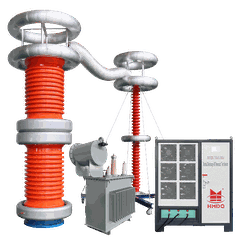



Insulation Resistance Tester
China Goldhome Wholesale Insulation Resistance Tester Manufacturer

20+
years
Goldhome has specialized in the production and manufacturing of SF6 Comprehensive Analyzer for 20
35
Patents
With 35 patents, Goldhome keeps innovating and providing advanced, reliable power testing equipment.
14
Service offices overseas.
Singapore, Malaysia,UAE, Saudi Arabia, South Africa, Nigeria, Germany, Poland, Brazil,the USA,India,the UK, Switzerland, Russia.


What is insulation resistance tester
An insulation resistance tester, also known as a megohmmeter, is a key instrument used to measure the insulation performance of electrical equipment. Its primary function is to determine whether the insulation materials in equipment such as cables, motors, and transformers pose a risk of electrical leakage due to aging, moisture, or damage, thereby preventing electrical failures and electric shock accidents.
Basic Principle
An insulation resistance tester applies a high voltage (250 V, 500 V, 1000 V, 2500 V, and even up to 5000 V or 15000 V)) between the conductors of the electrical equipment under test and ground, and then measures the leakage current through the insulation. The resistance value calculated using Ohm’s Law is the insulation resistance:
R=U/I
R: Insulation resistance (unit: Ω or MΩ)
U: Applied voltage
I: Leakage current
The higher the insulation resistance, the better the insulation performance; if the resistance is too low, there may be a risk of insulation aging, moisture, or damage.
Measuring Leakage Current: If the insulation is perfect, almost no current flows. However, if the insulation is defective, a weak leakage current will be generated. A higher insulation resistance value indicates better insulation performance.

Main Categories
|
Classification Criteria |
Main Types |
Key Features and Applications |
|
By Operation Method |
Hand-cranked (Traditional Megohmmeter) |
Powered by a hand-cranked generator; no batteries required, but voltage stability is poor. Primarily used for simple, low-voltage field testing. |
|
Electric (Digital/Battery-powered) |
Powered by a built-in battery or AC power; stable output, effortless operation, and rich functionality. This is the mainstream type today. |
|
|
By Display Type |
Analog |
Intuitive readings and strong resistance to interference, making it particularly suitable for use in field environments with strong electromagnetic interference; the damping effect of the mechanical dial ensures relatively stable readings. |
|
Digital |
High measurement accuracy and intuitive readings; often integrates data storage and upload functions; suitable for applications requiring high precision and with minimal interference. |
|
|
By Functional Level |
Basic Model |
Test voltages are primarily 500V and 1000V; measures only insulation resistance. Suitable for routine inspections and low-voltage equipment testing. |
|
Standard Model |
Voltage levels are 2500V and 5000V; measures insulation resistance, damping ratio (DAR), and polarization index (PI). Enables more effective assessment of insulation moisture and aging, suitable for preventive testing of power equipment. |
|
|
Specialized |
Designed for specific scenarios, such as specialized testers for large equipment like water-cooled generators. These typically feature higher output short-circuit currents and stronger anti-interference capabilities. |
|
|
By Test Voltage |
Low Voltage (≤1000V) |
Common voltages include 250V, 500V, and 1000V, used for testing household appliances, low-voltage cables, control circuits, and similar applications. |
|
High Voltage (≥2500V) |
Common voltages include 2500V, 5000V, 10000V, and even higher, used for measuring the insulation of large power equipment such as high-voltage power cables, transformers, and generators. |
|
|
By Design |
Handheld |
Compact and battery-powered, these are easy to carry and use in the field, making them the most widely used type. |
|
Benchtop |
These offer more powerful functionality, higher test voltages, and wider measurement ranges, and are often equipped with data logging and analysis capabilities, making them suitable for use in laboratories or R&D departments. |


Special Functions
Dielectric Absorption Ratio (DAR)
Measurement: Ratio of resistance after 60 seconds to 15 seconds
Purpose: Determines whether insulation is damp or aged
Features:
- Quickly assesses equipment health
- Suitable for preliminary on-site testing
Polarization Index (PI)
Measurement: Ratio of resistance after 10 minutes to 1 minute
Purpose: Evaluates the degree of insulation aging
Features:
- More accurate than DAR
- Commonly used for:
- Motors
- Transformers
Leakage Current Measurement
Directly displays leakage current (μA / nA)
Used to analyze insulation defects
Features:
- Can detect subtle issues
- Assists in determining insulation degradation
Automatic Testing and Timer Functions
Automatically performs 1-minute and 10-minute tests
Automatically calculates DAR / PI
Advantages:
- Eliminates human error
- Improves efficiency
Curve Recording (Trend Analysis)
Records resistance-over-time curves
Purpose:
- Assess insulation “recovery capability”
- Identify potential faults
Data Storage and Export
Built-in storage for test results
Supports USB / Bluetooth export
Advantages:
- Facilitates report generation
- Used for long-term maintenance records
Automatic Discharge Function
Automatically discharges residual voltage upon test completion
- Prevents electric shock—critical safety feature
Voltage Detection (Live Voltage Warning)
Automatically detects whether the device under test is energized
- Prevents accidental operation
Overvoltage Protection / Short-Circuit Protection
Prevents instrument damage
Enhances safety
Adjustable Test Voltage
Common settings: 250V / 500V / 1000V / 2500V / 5000V
- Adapts to different equipment requirements
Auto-Range
Automatically selects the optimal measurement range
- Simplifies operation
Backlit Display & Alarm Alerts
Readable in dark environments
Automatic alarm when limits are exceeded
Step Voltage Test
Tests insulation by incrementally increasing voltage
- Purpose:Identifies insulation weaknesses
Dielectric Discharge Test (DD)
Detects internal insulation defects
- Commonly used for high-voltage equipment
Remote Control / Wireless Connection
- Remote operation via smartphone or computer
How to Use Insulation Resistance Tester?
I. Safety Preparations
- Turn off the power to the device under test and verify that it is completely de-energized.
- Discharge any residual voltage from the device under test to prevent injury or interference with test results.
- Stay away from high-voltage live parts, and ensure that no one touches the test leads during measurement.
- If necessary, wear insulated gloves and insulated shoes to ensure personal protection.
II. Instrument Setup
- Properly install batteries or connect to an external power source to ensure a stable power supply.
- Select the appropriate test voltage based on the rated specifications of the device under test:
- Low-voltage electrical equipment (e.g., household appliances, low-voltage cables): 250V / 500V
- Motors, cables, transformers, and similar equipment: 1000V / 2500V / 5000V
- Set the measurement mode: Standard insulation test, Polarization Index (PI) test, Dielectric Absorption Ratio (DAR) test, or Timed test.
III. Wiring Connections
- Line Terminal (L): Connect to the live parts/conductors of the equipment under test.
- Ground Terminal (E): Connect to the equipment’s chassis or ground terminal.
- Shield Terminal (G): Connect to the equipment’s shielding layer or the surface of the insulator (to eliminate interference from surface leakage current and improve test accuracy).
IV. Starting the Measurement
- Press and hold the test button or turn on the test switch to start the measurement.
- The instrument outputs DC high voltage, and the insulation resistance value (unit: MΩ) is displayed on the screen.
- Maintain the test condition for the required duration (typically 60 seconds for routine tests and 10 minutes for Polarization Index tests) to ensure data stability.
V. Reading and Recording
- Read the insulation resistance value directly from the digital display.
- Record the resistance value, test voltage, test duration, ambient temperature, and information about the device under test in detail for future traceability and comparison.
- If conducting Polarization Index (PI) or Damping Ratio (DAR) tests, the instrument will automatically calculate and display the ratios.
VI. Ending the Test and Discharging
- Release the test button to stop the high-voltage output.
- The instrument will automatically discharge the test object; do not touch the test probes or the equipment under test immediately.
- Confirm that the discharge is complete before removing the test probes.
- Turn off the power to the tester and store the instrument and test probes properly.
VII. Result Evaluation Criteria
1. Absolute Value (MΩ)
Good: > 100 MΩ (new equipment, dry environment).
Acceptable: > 1 MΩ/kV (e.g., for a 10 kV cable, the insulation resistance should be greater than 10 MΩ). Standards vary by equipment; refer to the “Regulations for Preventive Testing of Power Equipment.”
Dangerous: < 0.5 MΩ (typically indicates insulation breakdown or severe moisture ingress).
2. Evaluate Trends (More Important)
Comparing historical data provides a more accurate assessment than examining absolute values alone. If last year’s measurement was 50 MΩ and this year’s is only 2 MΩ, even if 2 MΩ is considered “acceptable,” it indicates rapid insulation degradation and requires maintenance.
3. Examine the DAR and PI
Dielectric Absorption Ratio (DAR) = R60s / R15s. A value > 1.3 is acceptable, indicating dry insulation; < 1.3 indicates moisture ingress.
Polarization Index (PI) = R10min / R1min. A value > 2.0 is good; < 1.5 indicates severe moisture ingress or aging of the insulation.


Megger vs Insulation Tester
|
Comparison Dimensions |
Megger |
(Insulation Tester) |
|
Scope |
Narrow scope: Narrow definition = Megger brand products; Broad definition = hand-crank models |
Extremely broad scope: Covers all insulation testing equipment, including hand-crank, digital, high-voltage, and smart models |
|
Power Supply |
Traditional models use hand-crank power generation; modern Megger brand models also support battery or AC power |
Diverse: Hand-crank, battery, and AC power are all supported |
|
Features |
Traditional models have limited functionality, measuring only insulation resistance; modern branded models offer features comparable to standard digital models |
Rich functionality, capable of measuring insulation resistance, PI/DAR, and timed testing, with support for data storage and upload |
|
Relationship |
A type (or subcategory) of insulation resistance tester |
Includes Megger (whether referring to the brand or manual models) |
|
Usage Scenarios |
Traditional hand-crank models are suitable for field use without power sources and for quick qualitative assessments; branded models can be adapted to various scenarios |
Covers all insulation testing scenarios, including low voltage, medium and high voltage, laboratories, and on-site inspections |
Key Differences Between Meggers and Standard Insulation Testers
|
Differences |
Megger |
Standard insulation testers |
|
Brand Positioning |
Global premium brand, industry benchmark |
Value-oriented, primarily targeting the mid-to-low-end market |
|
Price |
Higher (tens of thousands to over 100,000 RMB) |
Lower (thousands to tens of thousands RMB) |
|
Interference Resistance |
Stable operation in UHV substations (765 kV) |
Good performance at 110 kV and below; prone to interference at higher voltages |
|
Functionality |
Full support for PI, DAR, DD, SV, ramp, and PDC |
Typically supports IR, DAR, and PI; limited advanced features |
|
Data Management |
Built-in storage, Bluetooth, USB, professional analysis software |
Some models have storage capabilities; accompanying software is relatively basic |
|
Applications |
Power utilities, ultra-high-voltage substations, critical asset diagnostics |
General industry, construction, routine maintenance |
Best Insulation Tester Brands
Internationally Brands
Fluke
An American brand and a global leader in the field of electrical testing. Its insulation testers are renowned for their high precision, with measurement accuracy as high as ±2% of the reading. They feature advanced intelligence, and some models support remote control via the Internet of Things (IoT). Representative models include the F1555 FC, which offers a test voltage of up to 10 kV and a range of up to 2 TΩ, making it suitable for high-end applications such as ultra-high voltage projects, GIS equipment in substations, and submarine cables. While Fluke products are relatively expensive, their mature technology and high reliability make them a common choice among professionals in the power industry.
Megger
A British brand with over a century of history, Megger possesses deep technical expertise in the high-voltage testing field. Megger’s insulation testers are renowned for their exceptional interference resistance. Utilizing 3D electric field shielding technology, they operate stably in environments with strong electromagnetic interference and feature automatic discharge protection with a response time as fast as 0.1 seconds. Representative models include the MIT5100 (10 kV/1 TΩ) and MIT6100 (25 kV/2 TΩ), which are commonly used in ultra-high-voltage transmission lines, nuclear power plant generators, and other applications with extremely high safety requirements.
HIOKI
A Japanese brand renowned for precision instruments. Its insulation testers utilize advanced digital filtering algorithms, offering strong interference resistance and measurement accuracy of ±1.5%. HIOKI products also feature user-friendly functions such as intelligent electrode cleaning alerts. The representative model, IR4056-20 (5 kV/1 TΩ), is suitable for insulation testing of precision equipment in the electronics manufacturing industry and data centers.
KYORITSU
A Japanese brand known for its outstanding industrial-grade durability. Its products typically feature an IP67 waterproof and dustproof rating, operate stably in a wide temperature range from -20°C to 50°C, and support automatic range switching. Representative models, such as the KEW 3125A (5000V/200GΩ) and KEW 3128 (12kV/35TΩ), are widely used in harsh field environments such as rail transit power supply systems and petrochemical explosion-proof equipment.
Domestic Brands
Wuhan Goldhome Hipot Electrical Equipment Co., Ltd.
Founded in 2008 and located in the Wuhan Economic and Technological Development Zone, Goldhome Hipot operates a modern factory spanning over 10,000 square meters. The company has been recognized by the government as a “Specialized, Refined, Unique, and Innovative Enterprise” and a Wuhan Municipal Science and Technology “Little Giant” enterprise, holding more than 20 national patents and over 10 software copyrights.
Goldhome’s 10kV insulation resistance tester is one of its core products. Utilizing advanced testing technology, this product features high stability, reliability, and ease of operation, with a wide measurement range and high precision. It is suitable for insulation testing of high-voltage equipment such as power cables, transformers, and generators. The product has passed rigorous quality certifications and complies with international standards such as CE. It enjoys a high reputation in the domestic market and is exported to numerous countries and regions worldwide. Goldhome maintains a comprehensive after-sales service system, capable of providing customers with timely technical support and assurance.
Wuhan Dingsheng Electric
As one of the leading enterprises in China’s power testing equipment sector and a national-level “Specialized, Refined, Unique, and Innovative” (SRIU) “Little Giant” enterprise, it holds a significant market share in the power testing field. Its DMG2671F insulation tester features 10kV high-voltage output capability and has contributed to the formulation of multiple automotive insulation testing standards. It is widely used in new energy sectors, including CATL’s battery production lines and BYD Fudi Power.
Shanghai Shengxu Electric
A technology-innovative enterprise, its insulation resistance testers utilize constant-voltage output technology, with voltage fluctuations controlled within ±1%, achieving approximately 40% higher accuracy than traditional products. The flagship model SX-3025E (5000V/2TΩ) has been deployed in major projects such as ultra-high-voltage transmission lines, nuclear power equipment, and the Three Gorges Power Station.
Click Blogs:Can a Portable Hipot Tester test the insulation of generators?
Alternative Name
- Insulation Resistance Tester
- High Voltage Insulation Tester
- 10kV Insulation Tester
- 5kV Insulation Resistance Tester
- Low Voltage Insulation Tester
- Insulation Tester with PI/DAR
- Digital Insulation Resistance Meter
- Insulation Tester with Data Logging
- Automatic Insulation Tester
- Cable Insulation Tester
- Motor Insulation Tester
- Transformer Insulation Tester
- HV Insulation Tester for GIS
- High Precision Megohmmeter
- Portable Insulation Tester / Handheld Megger
- insulation resistance tester 1000v
- high voltage megohmmeter
- megger insulation tester
- insulation resistance meter
- cable insulation resistance tester
- transformer insulation testing equipment
- hv insulation tester

FAQ
Q1: What is an insulation resistance tester? What other names does it go by?
An insulation resistance tester is a specialized instrument used to measure the insulation performance of electrical equipment. It applies a high-voltage DC output to assess whether insulation materials have aged, become damp, or are damaged. Common names include: megohmmeter, hand-crank megohmmeter (referring to the hand-cranked type), insulation resistance meter, megohmmeter, and insulation tester.
Q2: What is the difference between an insulation resistance tester and a multimeter?
Although a multimeter can also measure resistance, its test voltage is very low (typically within 9V), making it unable to simulate the actual insulation conditions of electrical equipment under high voltage. An insulation resistance tester can output DC voltages ranging from 250V to 5000V or even higher, enabling it to detect insulation defects that are only exposed under high voltage.
Q3: Why is high voltage required for insulation resistance testing?
Insulation materials may appear normal under low voltage, but when high voltage close to their operating voltage is applied, internal micro-cracks, bubbles, or moisture-affected areas will cause breakdown or leakage. Therefore, only high-voltage testing can truly reflect the reliability of the insulation.
Q4: How should the test voltage be selected?
The test voltage is generally set at 2 to 3 times the rated voltage of the equipment under test, but must not exceed the equipment’s withstand voltage rating. Common guidelines are as follows:
- Control circuits below 100V: 250V
- 220V/380V low-voltage equipment: 500V or 1000V
- 3kV to 10kV equipment: 2500V or 5000V
- 10kV to 35kV equipment: 5000V or 10000V
- Equipment above 35kV: 10000V to 15000V
Q5: What range is sufficient?
For low-voltage equipment, a range of 1 GΩ (1000 MΩ) is generally sufficient. For high-voltage cables, transformers, and similar equipment, a range of 5 TΩ to 10 TΩ or even higher is required. Generally speaking, the higher the test voltage, the greater the required range.
Q6: What are the absorption ratio and polarization index? Why are they measured?
The Damping Ratio (DAR) is the ratio of resistance at 60 seconds to that at 15 seconds, while the Polarization Index (PI) is the ratio of resistance at 10 minutes to that at 1 minute. These two metrics can assess the deep-layer condition of insulation:
- A Damping Ratio greater than 1.3 indicates dry insulation; less than 1.3 may indicate moisture ingress.
- A Polarization Index greater than 2.0 indicates good insulation; less than 1.5 indicates severe aging.
- A standard single measurement only provides the resistance value, whereas the absorption ratio and polarization index can distinguish between two different types of defects: “moisture ingress” and “aging.”
Q7: Which is better—handheld or benchtop?
Handheld units are compact, battery-powered, and portable, making them suitable for on-site inspections and routine maintenance. Benchtop units offer more powerful functionality, higher test voltages and ranges, and typically come with data management and analysis software, making them suitable for laboratory or in-depth diagnostic scenarios.
Q8: What are the most important safety precautions when using an insulation resistance tester?
Safety is the top priority. Before operation, you must disconnect the power supply, verify the absence of voltage, and ensure the equipment is fully discharged. Do not touch the equipment under test during the measurement process. After testing, wait for the instrument to complete its automatic discharge, then manually discharge it using a grounding rod. Only disconnect the leads after confirming there is no residual voltage.
Q9: Why is discharge necessary? How should it be performed?
Equipment such as cables and transformers possess capacitive properties. They become charged with high voltage during testing and retain a significant amount of charge internally after the test is complete. Removing the connections without discharging may result in electric shock or damage to the instrument. Discharge procedure: First, allow the instrument to discharge automatically (until the voltage on the screen returns to zero), then use a grounding rod to short-circuit the conductor to ground for at least 2 minutes.
Q10: Why do the readings keep rising during testing?
This is a normal phenomenon. The capacitive load of the device under test continues to charge during the test, causing the insulation resistance value to rise gradually from a lower value. It typically takes 30 seconds to several minutes for the reading to stabilize. For long cables or high-capacity transformers, the stabilization time is longer. When recording results, use the stabilized reading as the final value.
Q11: When should the Guard terminal be used?
When the surface of the device under test is damp or dirty, surface leakage current can cause the measured value to be lower than actual. In this case, wrapping a length of bare copper wire around the insulated surface and connecting it to the Guard terminal can eliminate the effect of surface leakage, ensuring that the measurement results reflect the true condition of the internal insulation.
Q12: Are there any special requirements for test leads?
Specialized high-voltage leads with a shielding layer should be used. Ordinary conductors may cause additional leakage during high-resistance measurements due to bending or moisture, which can affect the readings. Test leads should be kept dry and clean, and should not be twisted or knotted.
Q13: What insulation resistance value is considered acceptable?
There is no universally accepted standard; it depends on the type of equipment and voltage rating. Reference values:
Low-voltage motors and power distribution equipment: Greater than 1 MΩ is acceptable; greater than 100 MΩ is good
10 kV power cables: Greater than 10 MΩ is considered acceptable; greater than 1,000 MΩ is considered good
Transformers and generators: Generally require greater than 10 MΩ/kV
A more accurate method of assessment is to compare results with historical data. If a measurement drops by more than 50% compared to previous years, it should be treated with caution even if it remains within the acceptable range.
Q14: How does temperature affect insulation resistance?
Insulation resistance decreases as temperature rises, following an exponential relationship. Typically, for every 10°C increase in temperature, insulation resistance decreases by approximately 50%. Therefore, the equipment temperature should be recorded during testing, and temperature compensation should be performed when necessary to avoid misjudgment due to temperature variations.
Q15: Why do measurements of the same equipment vary significantly at different times?
Possible causes include: different temperatures, different humidity levels, different test voltages, different test times, and different surface cleanliness of the equipment. It is recommended to conduct tests under similar conditions and use relative metrics such as the absorption ratio or polarization index to mitigate some of these influencing factors.
Q16: What should I do if the display is blank or flickering after powering on?
First, check if the battery is low. Replace the battery or recharge it before retrying. If using AC power, check that the power cord is securely plugged in and that the fuse has not blown. If all of the above are normal, there may be an internal circuit failure, and the unit should be returned to the factory for repair.
Q17: What should I do if the reading is 0 or infinite during testing?
Possible causes for a reading of 0: short circuit in the device under test, damaged or shorted test leads, or a blown internal fuse. Possible causes for a reading of infinite: disconnected test leads, open circuit in the device under test, or the range setting is too high. First, check the connections, then replace the test leads and retest.
Q18: What should I do if the instrument shuts down automatically during use?
Most insulation testers are equipped with an automatic shutdown feature to conserve power; they typically shut down automatically after 15 minutes of inactivity. If frequent shutdowns interfere with use, you can disable this feature in the menu or check if the battery is low.
Q19: How should the instrument be stored when not in use for an extended period?
Store it in a dry, dust-free environment free of corrosive gases, at temperatures between 0°C and 40°C. During humid seasons, it is recommended to power on the device once a month for approximately one hour to prevent internal moisture damage. Lithium-ion battery models should be charged regularly to avoid damage from over-discharge.
Q20: How should one choose between domestic and international brands?
For routine maintenance of conventional power equipment at 110 kV and below, domestic brands such as Guodian Huamei, U-Lead, and Dingsheng Electric offer good value for money, with stable performance and prompt after-sales support. For ultra-high-voltage substations at 220 kV and above, highly interfered environments, or applications requiring in-depth diagnostic capabilities, international brands like Fluke and Megger have advantages in interference resistance and advanced features, though they come at a higher price.
Q21: What parameters should I consider when purchasing?
Key parameters include: test voltage ranges, maximum measurement range, short-circuit current, safety rating (CAT III or CAT IV), support for PI/DAR, automatic discharge function, and data storage and upload capabilities. Select the test voltage based on the voltage rating of the equipment being tested, and choose the short-circuit current based on the equipment’s capacity (for long cables and large transformers, models with a short-circuit current of ≥3mA are recommended).
Q22: Does it require regular calibration?
Yes. An insulation resistance tester is a precision measuring instrument; it is recommended to have it calibrated annually to ensure measurement accuracy. The calibration agency should possess CNAS or equivalent accreditation.
Wuhan Goldhome Hipot Electrical Co., Ltd. is one of the most professional insulation resistance tester manufacturers and suppliers in China, featured by quality products and good price. Welcome to buy insulation resistance tester in stock here and get pricelist from our factory. Contact us for customized service.