

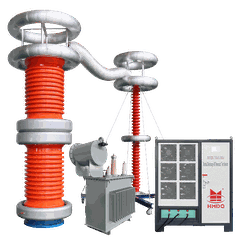



Circuit Breaker Testing Instrument
A Professional Circuit Breaker Analyzer Manufacturer
Wuhan Goldhome Hipot Electrical Co., Ltd. was established in 2008, located in Economic and Technical Development Zone, working area more than 10000 square meters.We are professional OEM, ODM, OBM Manufacturer which is engaged in the research, development, sale and service of High Voltage Testing Equipment including: Resonant Test System, High Voltage Tester,Transformer Tester ,Primary Current Injection Tester,Circuit Beaker Tester, Relay Protection Tester, Cable Tester, SF6 Test Analyzer,Oil Testing Instruments,etc.
Circuit Breaker Analyzer is a specialized device designed to measure and analyze parameters such as mechanical characteristics, electrical performance, and operating time for high-voltage and medium-voltage circuit breakers.


Why Circuit Breaker Analyzers Matter
Circuit breakers are the “last line of defense” in power systems—their failure can lead to catastrophic outages or fires. Analyzers address key risks:
Prevent Unplanned Downtime: Identify worn parts (e.g., contacts) before they fail, enabling scheduled maintenance.
Ensure Safety: Verify that breakers trip quickly during faults, protecting workers and equipment.
Compliance: Prove adherence to industry standards for audits.
Working Principle and Process of Circuit Breaker Analyzers
Its operation follows a standardized “signal generation → data capture → analysis” workflow.
Signal Generation: The analyzer outputs electrical signals to simulate real-world operating conditions.
Data Acquisition: High-precision sensors (current probes, voltage dividers, timing sensors) capture parameters like contact resistance, coil current, contact position, and timing intervals.
Data Processing: An embedded processor or software calculates key metrics and compares them to manufacturer specifications or industry standards.
Result Visualization & Reporting: The analyzer displays results as numerical values, graphs or “pass/fail” indicators. It may also generate test reports for documentation and maintenance records.

Key Advantage of Circuit Breaker Analyzer
Enhance testing efficiency and convenience: Multi-functional device eliminates the need for multiple equipment; simple wiring; automated testing.
Enable precise diagnostics and predictive maintenance: Analyzes coil current waveforms to diagnose potential faults such as electromagnetic core sticking or coil interturn short circuits.
Ensuring maintenance quality and equipment safety: High-precision measurements guarantee circuit breaker performance parameters strictly comply with manufacturing standards, preventing failures or malfunctions caused by improper commissioning.
Reducing risks and costs: Early detection of potential hazards prevents fault escalation and minimizes losses.
Traceable data management: Test data can be stored, exported, and standardized reports generated, facilitating the establishment of equipment health records.
Main Features of Circuit Breaker Analyzer
All-in-One Integration
Integrates multiple functions—mechanical property testing, electrical property testing, waveform analysis—within a single host unit.
01
High-Precision Measurement
Employs high-resolution displacement sensors (linear or rotary) and high-speed data acquisition cards.
02
Waveform Analysis
Not only provides data results but also records and displays stroke-time curves and coil current-time curves throughout the entire operation.
03
Intelligent & Automated Operation
Features an expert diagnostic system that automatically compares against standard values and provides ‘pass/fail’ judgement prompts.
04
Field Adaptability
Robustly designed and portable, suitable for complex field environments such as substations and power plants.
05
Product Specific Parameters
|
Model no. |
HM6070 |
|
Product name |
Vacuum Degree Vacuum Switch Tester |
|
Test object |
All kind of Vacuum Switches. |
|
Test Method |
Non-disassembly measurement. |
|
Use Range |
Multi-purpose, suitable for testing multi-style vacuum switches. |
|
Test Range |
10-5—10-1 Pa |
|
Test Accuracy |
0.1mA |
|
AC current accuracy |
0-5—10-4 Pa, 15% |
|
Field Voltage |
1700V |
|
Pulse Field High Voltage |
30KV |
|
Switch space required |
Normal space. |
|
Working Enviroment: |
-20℃~40℃ |
|
Host weight: |
12kg |
|
Size: |
420×320×280(mm) |
|
Sampler |
Magnetic control coil |

Time measurement:
Range: 0.1ms to 20,000ms
Accuracy: ±0.1% of reading ± 0.1ms
Synchronism measurement
Range: 0.1ms
Accuracy: ±0.1ms
Speed Measurement
Travel Measurement Range: 0 ~ 1000mm
Accuracy: ±0.5% of reading
Speed Calculation: Opening speed, closing speed, average speed
Coil Current Measurement
Sampling Rate: 100 kHz
Capable of recording current waveforms for both opening and closing coils
Main Circuit Resistance (Contact Resistance)
Measurement Range: 0 ~ 50 mΩ
Output Current: 100A, 200A or higher
Accuracy: ±0.5% of reading ± 1μΩ
Operating Voltage Test
Output voltage: 0 to 270 V DC
Accuracy: ±1% of reading
Power supply: AC 220 V ±10%, 50/60 Hz or built-in lithium battery (4–8 hours operation)
Display: 8-inch or larger colour touchscreen
Data storage: Built-in high-capacity storage, supports USB export.
Communication Interfaces: USB, Ethernet (LAN), Wi-Fi (optional)
Operating Environment: Temperature: -10°C to 50°C; Humidity: < 90% RH.
Safety Standards: Complies with IEC 61010 safety standards, featuring overcurrent and overvoltage protection.
Application of Circuit Breaker Analyzer
Commissioning of new equipment (pre-commissioning health check)
Particularly for newly constructed substations, power plants, or distribution rooms in large factories, following completion of circuit breaker installation and commissioning.
Regular preventive testing (periodic annual health check)
During spring/autumn maintenance periods for power grids or industrial facilities.
Post-fault trip inspection (post-incident performance assessment)
Following successful tripping of the circuit breaker during a line short-circuit fault.
Fault Diagnosis and Maintenance (Precision ‘Diagnosis and Treatment’)
When circuit breakers exhibit faults such as failure to trip (should trip but does not), misoperation (trips when it should not), or abnormal operation.
Core Component Condition Diagnosis (Specialised“Organ Examination’’)
Conducting in-depth inspections on ageing circuit breakers or those subject to frequent operation.
Manufacturer’s Factory Acceptance Testing (Issuing the ‘‘Certificate of Origin’’)
Conducted by the production line and quality control departments of the circuit breaker manufacturer.
Specific issues encountered during on-site installation
Numerous issues may arise during the on-site installation of circuit breakers. The following guidance may be applied when encountering such problems:
Instability or misalignment of displacement sensors: Ensure the sensor is securely mounted on the moving contact linkage, with its direction of movement perfectly aligned with that of the moving contact. Employ magnetic bases or clamps for firm fixation.
Sensor cables entangled or pulled by moving components: Route cables appropriately, allow sufficient length, and secure them to stationary parts with cable ties to prevent strain during circuit breaker operation.
Incorrect installation angle or radius for rotary (angular displacement) sensors: Accurately set the sensor's mounting radius. Calibrate the initial angle to ensure instrument readings match mechanical indications when the circuit breaker is in both the open and closed positions.
Poor contact or incorrect connection of the break contacts: Use a multimeter's resistance setting to measure auxiliary contacts, verifying normally open contacts (disengaged during tripping) and normally closed contacts (engaged during tripping).
Loose or oxidised test lead terminals: Clean terminals before connection to ensure secure, reliable contact. Use the instrument's original gold-plated test leads.
Incorrect circuit breaker type settings (voltage rating, operating mechanism type): Before testing, carefully verify and input the correct circuit breaker model, rated parameters, and operating mechanism type (e.g., spring, hydraulic).
When issues arise during post-installation testing, follow these troubleshooting steps:
Safety first: Immediately cease testing and ensure the circuit breaker is in the tripped, de-energised state.
Check wiring: Trace from the source. Verify each connection sequentially: breaker contacts → displacement sensor → current clamp → earth lead. Confirm correct and secure connections.
Validate signals: Utilise the instrument's signal preview function. Manually operate the circuit breaker and observe whether each channel displays correct signal changes (e.g., contact state switching, displacement variation, current pulses).
Verify settings: Double-check that circuit breaker parameters and sensor configurations are correct.
Simplified Testing: First perform basic closing/opening operations to confirm fundamental functionality, then execute the full test sequence.
Crucially
The vast majority of field issues stem from incorrect wiring, poor contacts, or improper settings. Patient, meticulous troubleshooting is key to resolution. Should problems persist, document anomalies (e.g., photographs, screenshots) and contact the equipment manufacturer's technical support.


Why Choose Us
Wuhan Goldhome Hipot Electrical Co., Ltd. was established in 2008, located in Economic and Technical Development Zone, working area more than 10000 square meters.We are professional OEM, ODM, OBM Manufacturer which is engaged in the research, development, sale and service of High Voltage Testing Equipment including: Resonant Test System, High Voltage Tester,Transformer Tester ,Primary Current Injection Tester,Circuit Beaker Tester, Relay Protection Tester, Cable Tester, SF6 Test Analyzer,Oil Testing Instruments,etc.
Product Applications
These solutions are widely applied across power engineering, transportation, power plant construction, railway infrastructure, petrochemical, metallurgical, and coal mining industries.
Sales Markets
Cumulative exports have reached Indonesia, India, Pakistan, Vietnam, the Philippines, Saudi Arabia, the United Arab Emirates, Egypt, Turkey, Israel, Brazil, Germany, the United States, Australia, and other countries and regions. With over 150 distributors worldwide and more than 10 overseas service offices, we have successfully opened up global markets.
Honors, Patents, Certificates
Our products have passed inspections by national and provincial energy authorities and obtained CE certification. Additionally, the company has secured ISO 9001:2015 Quality Management System, ISO 14001:2018 Occupational Health and Safety Management System, ISO 14001:2015 Environmental Management System, and SGS certifications. We have been honored with titles such as National High-Tech Enterprise. We hold over 20 patented technologies, including utility model patents for variable-frequency series resonant test equipment.
Our Service
We pledge to treat every client with integrity and equality, regardless of contract size or whether they are domestic or international, new or existing customers, providing professional consultation and advice. Goldhome provides professional installation, commissioning and training for users' workers, ensures that users can get familiar with operation methods and put machines into use as soon as possible.
Our Factory
A Manufacturer that Provides Factory Prices and Attentive After-sales Service for Circuit Breaker Testers

FAQ
Q: What types of circuit breakers can this tester assess?
A: This instrument is suitable for the vast majority of common high-voltage circuit breaker types, such as SF₆ circuit breakers, vacuum circuit breakers, and low-oil/multi-oil circuit breakers. Specific compatibility confirmation requires your circuit breaker model, voltage rating (e.g., 10kV, 35kV), and operating mechanism type.
Q: What test items can it perform?
A: Opening/closing time, synchronisation, bounce time and amplitude, travel-time curve, speed (average speed, instantaneous speed), coil current waveform.
Opening/closing coil current, motor energy storage time, contact resistance (requires additional micro-ohmmeter module).
Internal or external trigger operation, operating voltage test.
Q: Does it support simultaneous three-phase testing?
A: Yes, mainstream models support synchronous measurement of three-phase breakers and multi-circuit coil signals.
Q: What is the measurement accuracy for time, speed, and travel?
A: This is a key metric. Typically:
Time: ±0.1% ± 0.1ms (extremely high accuracy for millisecond-level signals).
Displacement: ±0.1% ± 0.1mm (depending on the accuracy of the displacement sensor used).
Velocity: Derived from displacement and time, with accuracy dependent on the former two.
Please refer to the official technical manual for the specific model as the definitive source.
Q: How are travel and speed measured? What installation is required?
A: Linear resistance sensor (universal): A sensor must be fitted to the moving contact rod of the circuit breaker to directly measure displacement.
Rotary sensor (optical encoder): Mounted on the operating mechanism's rotary shaft, it converts measured angles into travel distance. Confirm your circuit breaker has a suitable installation location.
Q: Does the instrument incorporate an operational power supply?
A: Built-in power supply: Premium models feature an integrated adjustable DC power supply (e.g., 30-250V DC), enabling direct power delivery to the circuit breaker's closing/opening coils without external power sources – offering both convenience and safety.
Non-built-in power supply: Economy models require you to connect the operating power supply from the on-site circuit breaker control cabinet. The instrument is solely responsible for measurement and triggering.
Q: Is operation complex? Is professional training required?
A: Modern testers feature large graphical interfaces and built-in help menus, significantly simplifying operation. Before first use, we recommend consulting the manual or undergoing brief supplier training (typically 1-2 hours to master basic testing), primarily to learn correct wiring and sensor installation.
Q: How is test data managed and outputted?
A: Instruments typically support: internal storage; USB export; PC software.
Q: How is personnel and equipment safety ensured during testing?
A: Instruments incorporate multiple protective measures: electrical isolation, safety alerts, and hardware safeguards.
Q: What are the after-sales service and calibration arrangements?
A: Warranty period: Typically 1-2 years(According to different product)
Calibration: Instruments require periodic (usually annual) metrological calibration. Remote technical support is provided online to assist with on-site issues.
As one of the most professional circuit breaker testing instrument manufacturers in China, we're featured by quality products and good price. Welcome to buy circuit breaker testing instrument in stock here and get pricelist from our factory. Contact us for customized service.