

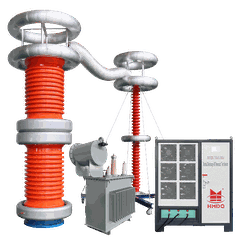



Transformer On Load Tap Changer Tester
Factory Direct Price for Transformer On Load Tap Changer Tester

15
YEARS
Goldhome has specialized in the production and manufacturing of SF6 Comprehensive Analyzer for 20 years
35
Patents
With 35 patents, Goldhome keeps innovating and providing advanced, reliable power testing equipment.
10
Service offices overseas
Singapore, Malaysia,UAE, Saudi Arabia, South Africa, Nigeria, Germany, Poland, Brazil and the USA.


The switch on a transformer that allows voltage levels to be adjusted while the system is energized is called an on-load tap changer (OLTC). It switches the winding taps without interrupting power to the transformer, thereby changing the turns ratio and stabilizing the output voltage. This switch has a complex internal structure, including transition resistors, contacts, springs, and mechanical mechanisms. It operates extremely quickly (within tens of milliseconds) during switching; if a fault occurs, it can cause the contacts to burn out and damage the transformer.
Key Functions
1. Transient Resistance
Measures the resistance value during the switching process, typically ranging from 0.4 Ω to 100 Ω. Used to assess contact wear and contact condition.
2. Transient Time
Records the time required for a switch to complete a single switching operation, generally ranging from a few milliseconds to several hundred milliseconds. Used to determine whether the mechanism operates smoothly.
3. Three-Phase Synchronization
Compares the time differences in the switching actions of a transformer’s three phases, with an accuracy of up to 0.1 ms, to ensure synchronized three-phase switching.
4. Transient Waveforms
Records the entire switching process at a high sampling rate of 20 kHz to 30 kHz, generating waveform diagrams for technicians to analyze anomalies (such as waveform breaks, oscillations, etc.).

Why must it be used?

- Resolving “Inaccurate Testing” Issues: Traditional methods filter out transient abnormal signals (such as contact bounce) that occur during switch operation, leading to misjudgments. Dedicated testers, however, use high-speed, unfiltered data acquisition to accurately and unambiguously reflect the switch’s status, thereby preventing missed detections and disputes.
- Eliminating “Untestable” Blind Spots: Traditional methods are limited by transformer connection configurations (such as delta connections), resulting in testing blind spots. Dedicated testers (particularly those using the AC method) are not subject to these limitations and are universally applicable to transformers with various connection configurations ranging from 10 kV to 500 kV, achieving full coverage of all types.
- Detecting “Early-Stage” Defects: On-load tap changers are the weakest link in transformers (with a failure rate exceeding 50%). Dedicated testers can clearly detect early-stage defects at the microsecond level (such as minor wear or poor contact), issuing early warnings before faults escalate into serious accidents like explosions or burnouts.
How It Works
1. Connect to both ends of the transformer’s tap-changing winding
2. The instrument outputs a small current to simulate load switching
3. High-speed acquisition of voltage, current, and time waveforms
4. Automatic calculation of transition resistance, switching time, synchronism, and waveforms
5. Store, print, and determine pass/fail

Principle of Operation
1. Constant Current Source Output
The instrument provides a stable DC constant current source (typically with 1A, 0.5A, and 5A settings), which is applied to the transition circuit of the tap changer.
Purpose of the constant current: To ensure the current remains essentially constant, so that changes in voltage directly reflect changes in resistance.
According to Ohm’s Law: R = U / I
2. Measurement of the Tap-Changing Process
When an on-load tap changer switches between tap positions, it undergoes the following steps:
Main contacts open
Transition resistor is engaged
Transition contacts operate
New tap position is closed
This process typically lasts only a few tens of milliseconds, requiring high-speed sampling to capture the complete waveform.
3. High-Speed Data Acquisition
The tester simultaneously acquires data at sampling rates of 10 kHz to 50 kHz or higher:
Three-phase voltages (A/B/C)
Circuit current
Time axis
This allows for the reconstruction of the complete switching waveform curve.
4. Waveform Analysis and Calculation
Based on the waveforms, the instrument automatically calculates:
1.Transition resistance
Voltage drops/transition segments in the waveform → converted to resistance values
2.Switching time / bounce time
Total time from initiation to completion of the switching operation, and durations of each phase
3.Three-phase synchronization
Time differences between phases A, B, and C during operation to determine if they are out of sync
4.Whether the operating sequence is correct
Identification of gear skipping, sticking, or contact burnout
5. Protection and Diagnosis
Overcurrent, overvoltage, and incorrect wiring protection
Automatic comparison against standard limits to provide a pass/fail conclusion
Data storage, printing, and uploading
Primary Application Areas
Electric Power Companies / Substations
- Preventive testing and periodic annual inspections of transformers
- Handover acceptance testing for newly commissioned transformers
- Post-repair retesting and qualification assessment of faulty transformers
01
Transformer Manufacturers
- Factory acceptance testing of finished products to ensure tap changer operation compliance
- Production line quality inspection and type testing
02
On-site power plants at industrial and mining enterprises / Large industrial complexes
- Maintenance of on-site transformers in metallurgy, chemical, mining, and data center facilities
- Ensuring voltage stability and safe equipment operation
03
Electrical Research Institutes, Quality Inspection, and Metrology Organizations
- Type testing, comparative testing, and third-party calibration
- Standard laboratory testing and report issuance
04
Power Engineering Construction and O&M Units
- Installation and commissioning of new substations
- Retrofitting of aging substations and testing after tap changer replacement
05
Applicable Equipment
Oil-immersed power transformers (on-load tap-changing type)
Distribution transformers, main transformers, plant service transformers
Rectifier transformers, electric furnace transformers, and other special-purpose transformers
Reactors, on-load tap-changing switchgear

Famous Brand
I. Internationally Renowned Brands
Megger (U.S. / U.K.)
- Representative Models: TTRX Series, OLTC-8000
- Advantages: A century-old brand with high sampling accuracy and strong interference resistance; suitable for ultra-high voltage systems and large transformers; high global market share
- Applications: Power grids, electric power research institutes, large transformer manufacturers, overseas projects
OMICRON (Austria)
- Representative Models: CT Analyzer, TC3000
- Advantages: Modular design, integrated multi-parameter measurement, powerful software analysis, compliant with IEC/GB standards
- Applications: High-end testing, research, export projects
SebaKMT (Germany)
- Representative Models: OTL Series
- Advantages: Portable, highly adaptable to field conditions, stable data
- Applications: On-site testing at substations, retrofitting of older substations
II. Leading Domestic Brands
Wuhan Goldhome Hipot
- Representative Models: HM5008, HM5008A
- Advantages: High cost-effectiveness, user-friendly operation, compliant with DL/T 846.8, compatible with mainstream domestic OLTCs
- Applications: Power companies, power plants, transformer manufacturers, on-site testing
Shanghai Siyuan Electric
- Representative Models: SYTC Series
- Advantages: Primary supplier for power grid centralized procurement, excellent stability, comprehensive service network
- Applications: State Grid / China Southern Power Grid tenders, large-scale projects
Wuhan Huadian High-Tech
- Representative Models: HDT-9000 Series
- Advantages: Dual-channel synchronous sampling, time accuracy of ±0.2 ms, exceeding IEC standards
- Applications: High-precision testing, scientific research comparisons
Selection Criteria
Export / Overseas Projects
Megger, OMICRON, Goldhome HM5008A
Key Reasons
English interface, high accuracy, international certifications
State Grid / China Southern Power Grid Tenders
Goldhome ,Siyuan, , Huadian Gaoke
Key Reasons
Qualified for centralized procurement, high reliability
Cost-Effective / Bulk Purchases
Goldhome HM5008, Huayi HYBYC-3000
Key Reasons
Compliant with national standards, competitive pricing
Searching Name
· On-Load Tap Changer Tester
· OLTC Tester
· Transformer Tap Changer Analyzer
· On-Load Tap Changer Analyzer
· Tap Changer Test Set
· OLTC Analyzer
· Transformer On-Load Tap Changer Tester
· Tap Switch Tester
· OLTC Test Equipment
· Resistance & Timing Tester for OLTC
· 3-Phase On-Load Tap Changer Tester
· Portable OLTC Tester / Analyzer
· Automatic Transformer Tap Changer Tester
· High Precision OLTC Analyzer
· OLTC = On-Load Tap Changer
· Tap Changer Tester
· OLTC Test Set

FAQ
Q: 1. What is an on-load tap changer tester?
A: It is used to measure parameters such as transition resistance, switching time, operating sequence, and three-phase synchronization when a transformer’s on-load tap changer (OLTC) switches between tap positions, in order to determine whether the switch’s mechanical and electrical performance is normal.
Q: 2. What are the main parameters tested?
A: Transition resistance
Three-phase / single-phase switching time
Contact bounce time
Operating waveform
Three-phase synchronization
Correctness of operating sequence
Q: 3. Does the transformer need to be de-energized during testing?
A: Yes.During testing, the transformer must be de-energized and taken out of service. The tap changer and voltage-regulating winding must be connected to the instrument for offline testing.
Q: 4. Does the test require an external high-power power supply?
A: Generally not. The instrument features a built-in constant current source and can be powered by standard 220V AC, making it convenient for on-site use.
Q: 5. Can all types of on-load switches be tested?
A: Most types can be tested:
- Resistor-type on-load tap changers
- Composite-type on-load switches
- Single-phase, three-phase, and dual-resistor transition structures
- Reactor-type on-load switches are not supported.
Q: 6. How long does the test typically take?
A: A single-tap test takes approximately 10–30 seconds,and a full-range test of the entire transformer is usually completed in 5–10 minutes.
Q: 7. Can I operate the instrument without professional experience?
A: Yes.The instrument typically operates in fully automatic mode. After connecting the wires, simply press a button to start. It automatically collects data, performs calculations, and determines whether the test passes or fails. It supports data storage, printing, and export to a USB drive.
Q: 8. What causes inaccurate transition resistance measurements?
A: Common causes:
- Poor contact in the test leads
- Dirt or oxidation inside the tap changer
- Residual charge in the windings not fully discharged
- Tap position not fully engaged
Solution: Reconnect the leads, fully discharge the windings, clean the contacts, and take multiple measurements to obtain a stable value.
Q: 9. Does the instrument require periodic calibration?
A: Yes.It is recommended to calibrate the instrument once a year to ensure that the accuracy of voltage, current, time, and resistance meets national standards.
Q: 10. Can all three phases be tested simultaneously?
A: Yes.Most mainstream models support three-phase synchronous testing, allowing measurements of phases A, B, and C to be completed with a single connection.
Q: 11. What standards does it comply with?
A: DL/T 846.8 On-Load Tap-Changer Tester
DL/T 596 Code for Preventive Testing of Power Equipment
IEC 60214 International Standard for On-Load Tap-Changers
Q: 12. What do abnormal waveforms indicate?
A: Sudden change in resistance / No transition resistance → Contact erosion, damaged transition resistance
Excessively long duration / Stuttering waveform → Mechanical jamming, mechanism wear
Excessive three-phase asynchrony → Drive mechanism issue
No signal → Wiring error or switch not actuated
Q: 13. Why does the instrument trigger incorrectly when the tap changer is not operating?
A: When the tap changer is not operating but the instrument begins measuring, try the following steps:
1. Open the transformer’s neutral grounding switch
2. Disconnect the transformer’s high- and low-voltage terminals from the busbar
3. Repeat the test
As one of the most professional transformer on load tap tester manufacturers in China, we're featured by quality products and good price. Welcome to buy transformer on load tap tester in stock here and get pricelist from our factory. Contact us for customized service.