

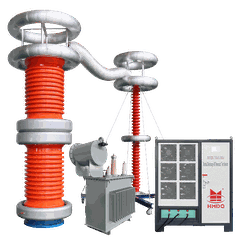



Reactive Power Compensation/Generator Detection Instruments
20-Year Professional Manufacturer of Reactive Power Compensation Generator Detectors in China
Our company has specialized in the production and manufacturing of Reactive Power Compensation Generator Detector for 20 years, with a modern intelligent factory covering an area of over 10000 square meters, staffed by 51 professional technicians, and hold CE certification. 35 patents, 10+ software copyrights,Currently, we have over 150 stable distributors worldwide and established more than 10 service offices overseas.
A Reactive Power Compensation Generator Detector is a sophisticated portable instrument used to test, analyze, and verify the performance of capacitor banks and other devices used for power factor correction in electrical systems.


Why Choose Us
Product Applications
These solutions are widely applied across power engineering, transportation, power plant construction, railway infrastructure, petrochemical, metallurgical, and coal mining industries.
Sales Markets
Cumulative exports have reached Indonesia, India, Pakistan, Vietnam, the Philippines, Saudi Arabia, the United Arab Emirates, Egypt, Turkey, Israel, Brazil, Germany, the United States, Australia, and other countries and regions. With over 150 distributors worldwide and more than 10 overseas service offices, we have successfully opened up global markets.
Honors, Patents, Certificates
Our products have passed inspections by national and provincial energy authorities and obtained CE certification. Additionally, the company has secured ISO 9001:2015 Quality Management System, and SGS certifications. We have been honored with titles such as National High-Tech Enterprise. We hold over 20 patented technologies, including utility model patents for variable-frequency series resonant test equipment.
Our Service
We pledge to treat every client with integrity and equality, regardless of contract size or whether they are domestic or international, new or existing customers, providing professional consultation and advice. Goldhome provides professional installation, commissioning and training for users’ workers, ensures that users can get familiar with operation methods and put machines into use as soon as possible.
Why It Is Important in Reactive Power Compensation Generator Detector?
Financial Importance: It Saves Money by Verifying Savings
Power factor correction (using capacitor banks) is installed to reduce electricity bills by eliminating utility penalties for poor power factor.
The Detector's Role:This instrument is the only way to provethat the compensation system is working correctly. It provides the data needed to:
● Verify the power factor has improved to the target level
● Document this improvement for utility billing audits.
● Identify underperforming systems so they can be repaired, ensuring maximum financial return on investment.
Safety Importance: It Prevents Catastrophic Failure
This is arguably the most critical importance.
The Detector’s Role:It measures harmonic distortion beforeand afterthe capacitors are switched on. This allows engineers to:
● Detect if the compensation is causing a dangerous resonance condition.
● Take corrective action (installing detuned reactors) to ensure the system operates safely.
Reliability & Maintenance Importance: It Enables Predictive Maintenance
The Detector's Role:it allows for condition-based monitoring. Technicians can:
● Test the capacitance and internal resistance of each capacitor.
● Identify weak or failing units beforethey cause a total system shutdown.
● Schedule repairs during a planned outage, avoiding unplanned production downtime.
Performance Optimization Importance: It Ensures System Integrity
The Detector's Role:It provides a comprehensive analysis of the entire system's electrical health (voltage, current, power factor, harmonics). This data is essential to:
● Re-tune and re-configure the compensation system for current operational needs.
● Ensure voltage stability and power quality for sensitive equipment.

The Main Parts of Reactive Power Compensation Generator Detector

1. Main Unit / Display: Used to control tests, display measurement results and configure menu settings.
2. Voltage Test Leads (H.V. Probes): Used to connect to the circuit under test for voltage measurement.
3. Current Clamp / Current Transformer (CT): Clamped onto the conductor under test to safely measure current without interrupting the circuit.
4. Capacitor Test Clips / Probes: Specifically designed for direct connection to both terminals of a capacitor to accurately measure its capacitance value (C) and equivalent series resistance (ESR).
5. Power Cable / Charger: Supplies power to the instrument or charges the internal battery.
6. Internal Battery: Provides portable power, enabling the instrument to operate independently in the field.
7. Control Buttons / Keypad: Used for powering on, selecting test modes, setting parameters, and navigating menus.
8. Communication Port (USB, Bluetooth): Used to transfer test data to a computer or printer for further analysis and report generation.
9. Carrying Case: Used for the secure storage and transport of the main unit and all accessories.
The Core Principle of Reactive Power Compensation Generator Detector
Core Principle: Measure, Compare, and Diagnose
The instrument’s fundamental principle is to measure key electrical parameters before and after the compensation device (capacitor bank) is activated. By comparing these two states, it determines the health and effectiveness of the entire compensation system.
This is the primary function, which relies on simultaneous voltage and current measurement and advanced calculation.
Operation:

Data Acquisition:
The instrument is connected to the power line, typically using a voltage reference and a current clamp.
● It simultaneously samples the voltage waveform and current waveform at a very high speed.
Waveform Analysis & Phase Calculation:
● The instrument's processor analyzes the two waveforms to calculate the phase angle (φ) between them.
● In an inductive circuit (with motors), the current waveform lags behind the voltage waveform.
Power Factor Calculation:
● The Power Factor (PF)is calculated as the cosine of this phase angle (cos φ).
● A large phase angle (high lagging current) results in a low power factor (0.75).
● A small phase angle results in a high power factor (close to 1.0, or “unity”).
The “Before and After” Test (The Key Principle):
● Step1 (Without Compensation):The instrument measures the system's natural, lagging power factor with the capacitor bank switched OFF.
● Step 2 (With Compensation):The capacitor bank is switched ON. The capacitors provide leading current that cancels out the lagging current from the inductive loads.
● Step3 (Comparison):The instrument immediately measures the new power factor. If the compensation is working, the phase angle shrinks, and the power factor value increases significantly (from 0.75 to 0.98).
The Main Function of Reactive Power Compensation Generator Detector
To Diagnose System-Wide Effectiveness
This is the primary function.
● Operation: It performs a "Before and After" test.
● It measures the system’s power factor, voltage, current, and reactive power (kVAR) with the capacitor bank switched OFF.
● It then measures the same parameters with the capacitor bank switched ON.
● The Outcome: It provides a clear pass/fail assessment. A correctly working system will show a significant increase in power factor( from 0.75 to 0.95) and a decrease in reactive power (kVAR). This proves the system is effective and eliminating utility penalties.
To Ensure Safety and Prevent Damage
This function is crucial for preventing catastrophic failure. Capacitor banks can create dangerous conditions if not properly managed.
● Operation:It tests for harmonic resonance and assesses overall power quality.
● Capacitors can dangerously amplify harmonic distortions from non-linear loads (like variable-speed drives), leading to overheating and equipment failure.
● The detector measures Total Harmonic Distortion (THD)to identify if the compensation is causing a resonant condition.
● The Outcome: It alerts operators to unsafe conditions, allowing them to install protective devices (like detuned reactors) before damage occurs.
To Perform Predictive Maintenance on Components
This function ensures the individual components of the system are in good condition. A single failed capacitor can cripple the entire bank.
● Operation:It tests the health of individual capacitors.
● It measures the capacitance (μF)of each capacitor and compares it to its nameplate rating to find failed or weakened units.
● It can also measure Equivalent Series Resistance (ESR), which indicates internal degradation.
● The Outcome: It enables predictive maintenance, allowing technicians to replace failing capacitors during a planned outage, thus avoiding unexpected system failure and costly downtime.

6.The Alternative Name of Reactive Power Compensation Generator Detector

VAR compensation system monitoring
Power factor correction generator testing
Reactive load compensation detection
Generator VAR capability assessment
Power quality compensation monitoring
Reactive power management system
Generator compensation unit verification
Electrical system VAR control testing
Reactive power compensation equipment validation
Power factor optimization detection system
Capacitor Bank Tester
Power Factor Correction (PFC) Tester
Capacitor Tester
LCI / LCR Meter
Power Quality Analyzer
Best Benefits of Reactive Power Compensation Generator Detector
Maximising Economic Benefits: Visualising Savings to Ensure Return on Investment
This represents the most direct and significant advantage.
After investing in capacitor compensation cabinets, enterprises often lack precise insight into their actual operational efficiency.
Advantages:
● Through precise “before-and-after”comparative testing, it directly quantifies compensation effectiveness.
● It clearly demonstrates the power factor improving from penalty-level to incentive-level standards, making energy-saving benefits quantifiable and visual. This ensures every penny invested yields a return.
Safety and Risk Prevention: Transitioning from “Reactive Maintenance” to “Proactive Early Warning”
Compensation cabinets may fail, or in worst-case scenarios, experience capacitor bulging or explosions due to harmonic amplification (resonance), potentially triggering fires or broader system failures.
Advantages:
● It features harmonic analysis and capacitor health diagnostics.
● It issues early warnings before resonance occurs, guiding the installation of suitable reactors for protection.
● It precisely locates individual capacitors nearing failure, enabling their replacement during planned downtime to avoid production interruptions from sudden failures. This prevents catastrophic incidents, delivering immense value.
Enhanced Operational Efficiency: Achieving Precise Predictive Maintenance
Advantages:
● It elevates maintenance to a “predictive maintenance” model.
● Operations personnel can swiftly scan entire capacitor cabinets with the detector, pinpointing problematic components precisely (without dismantling each unit for inspection).
● Scientific maintenance plans based on test data (such as capacitance values and ESR) transform reactive emergency repairs into proactive optimisation, substantially reducing unplanned downtime. This significantly enhances the efficiency and value of maintenance operations.

The Main Application of Reactive Power Compensation Generator Detector
Scenario Description: In continuous production lines such as automotive manufacturing, food processing, and textiles, numerous motors operate simultaneously.
Application Methods:
- Regular Inspections: Engineers measure the power factor at the main incoming feed of the entire production line monthly or quarterly using test equipment, ensuring compensation cabinets function correctly and avoiding electricity penalty charges due to insufficient compensation.
- Load Analysis: Analyse reactive power fluctuations across different production modes ( start-up, full speed, standby) to optimize capacitor switching strategies.
Scenario Description:
Large high-voltage motors power applications such as blast furnaces in steelworks, crushers in mining operations, and pumping stations in water treatment plants.
Application Methods:
- Inrush Current Testing: Utilise testers to capture current surges (inrush currents) during the engagement of compensation capacitor banks for large motors. This ensures switchgear (contactors or circuit breakers) can withstand such impacts, preventing contact welding.
- Harmonic Impact Assessment: Detect harmonic generation during motor start-up and operation. Evaluate whether capacitor banks amplify these harmonics to determine the necessity of installing filter reactors.
Scenario Description: Automated warehouses, plastic injection moulding machines, data centre UPS systems, and other equipment extensively utilising variable frequency drives constitute primary harmonic sources.
Application Method:
- Safety Compliance Testing (Critical Application): Measure the system’s voltage and current total harmonic distortion ratio using a tester both before and after capacitor bank engagement. This prevents parallel resonance between capacitors and line reactors, which could amplify harmonics, leading to capacitor overheating, fuse blowouts, or even explosions.
- Filter-type compensation device verification: Validate whether the filtering effect of “anti-harmonic” compensation cabinets (with built-in reactors) meets design targets.
Scenario Description: Conduct scheduled maintenance on capacitor compensation cabinets across all industrial enterprises.
Application Method:
- Capacitor Health Screening: Measure capacitance values and equivalent series resistance for each cabinet capacitor to swiftly identify faulty units exhibiting bulging, leakage, or capacity degradation. This represents the most effective method for preventing entire cabinet failures.
- Connection Point Inspection: Utilize thermal imaging or the micro-ohmmeter function of instruments to examine capacitor terminal connections for loosening and overheating risks.
Scenario Description: Capacitor cabinet failure occurs, such as capacitor explosion or fuse burnout.
Application Method:
- Fault Localisation:Swiftly measure parameters of capacitors in each branch circuit to identify damaged components with breakdown or open circuits.
- Root Cause Analysis:Determine whether failure resulted from simple end-of-life or external factors like harmonics or overvoltage, preventing recurrence after component replacement.
How to Use a Reactive Power Compensation Generator Detector?
Core Principles: Safety First, Process Specification.
A. Preparations Before Use
Safety Preparations:
1. Power Disconnection and Isolation: Disconnect power to the capacitor cabinet under test and implement the ‘Tagging and Lockout’ procedure to prevent accidental energisation.
2. Discharge: Thoroughly discharge capacitors using a dedicated discharge rod until residual voltage is confirmed absent. Discharge via resistor first, then proceed with direct short-circuit discharge.
3. Personal Protective Equipment (PPE): Wear insulated gloves, safety goggles, and insulated footwear.
Instrument Preparation:
● Inspect Equipment: Check the tester, test leads, and probes for damage or cracks.
● Power-On Self-Test: Switch on the instrument and allow it to complete its self-test.
● Select Function: Choose the appropriate measurement mode based on the test objective (capacitance measurement, resistance measurement, power factor analysis).
B. Operational Procedures
Scenario One: Testing a Single Capacitor’s Condition
1. Disconnect: Fully disconnect the capacitor under test from the circuit of the capacitor compensation cabinet (remove at least one connection terminal).
2. Connect Probes: Securely attach the tester's test leads to the capacitor terminals.
3. Select Mode: Choose either ‘Capacitance Measurement’ or ‘LCR Measurement’ mode.
4. Read Result: Obtain the reading. Key Parameters:
● Capacitance Value: Compare with the rated value on the capacitor's nameplate. Deviations typically within -5% to +10% are acceptable. Significant attenuation indicates failure.
● Equivalent Series Resistance (ESR): Excessively high values indicate poor internal connections or drying out within the capacitor, signalling impending failure.
5. Assessment: The instrument will typically display ‘Good/Warning/Failure’. Record the result.
Scenario Two: Assessing the Performance of the Entire
Compensation System
1. Connection: Utilise voltage probes and current clamps. Connect the voltage lead to the main input terminal of the capacitor cabinet, and clamp the current clamp around the main input current.
2. Mode Selection: Select either ‘Power Analysis’ or ‘Power Quality’ mode.
3. ‘Before/After’ Testing Method:
Step 1 (Pre-Compensation): Measure the system's natural power factor (PF), reactive power (kVAR), and other parameters whilst the capacitor cabinet is de-energised.
Step 2 (Post-Compensation): Energise the capacitor cabinet and re-measure the aforementioned parameters.
The Maintenance of A Reactive Power Compensation Generator Detector
Proper maintenance of the tester itself is crucial for ensuring measurement accuracy and extending its service life.
A. Routine Maintenance (After Each Use)
1. Cleaning: Wipe the instrument casing and screen with a soft, dry cloth. For stubborn stains, dampen the cloth with a small amount of water or neutral detergent and gently wipe. Never use chemical solvents.
2. Accessory Inspection: Examine test leads, probes, and current clamps for wear or damage. Replace damaged cables immediately.
3. Proper Storage: Return the instrument and all accessories to their original carrying case. Store in a cool, dry, dust-free environment.
B. Periodic Maintenance
1. Calibration:
● Frequency: Follow manufacturer’s recommendations, typically annually.
● Purpose: To ensure accuracy and traceability of all measurement parameters. Must be performed by an authorised or accredited body.
2. Functional Verification:
● Frequency: Monthly or quarterly.
● Method: Test the instrument using a known, stable reference component ( a standard capacitor or resistor) to confirm readings fall within expected error margins.
3. Battery Maintenance:
● For rechargeable batteries, avoid complete discharge. When stored long-term, charge to approximately 50% capacity.
● For alkaline batteries, remove them during extended storage to prevent leakage and corrosion of the instrument.
FAQ
Q: What precisely does a reactive power compensation generator detector accomplish?
A: Its core function is to diagnose the health status and efficacy of reactive power compensation devices (capacitor cabinets).
It primarily performs two tasks:
System-level testing: Measures the power factor before and after the compensation device is engaged, verifying its energy-saving effect.
Component-level testing: Measures the capacitance and internal resistance of each capacitor to determine if they are ageing or damaged.
Q: Why is it necessary? Can't we rely on experience?
A: No. Experience cannot quantify data. Its importance lies in:
Avoiding electricity penalty charges: When compensation cabinets fail, reduced power factor leads to substantial fines from the power supply authority. The instrument can detect this issue in advance.
Preventing safety incidents: Detects potential hazards like harmonic resonance that could cause capacitor explosions.
Precision maintenance: Upgrades from ‘repairing after failure’ to ‘predictive maintenance’, avoiding sudden shutdowns.
Q: Why do I need it? Can I manage without it?
A: Yes, but at considerable risk. Its core value lies in ‘avoiding hidden costs’ and ‘preventing catastrophic failures’.
● Cost savings: After a compensation cabinet fails, you continue to silently pay hefty electricity penalty charges, whereas the instrument can immediately detect this issue.
● Safety: It can detect potential hazards that may cause capacitor overheating and explosions (such as harmonic resonance).
Q: What precautions should be taken during testing?
A: The two most critical points:
Safety first: Capacitors must be fully discharged before testing, with power disconnection, tagging, and locking procedures strictly enforced.
‘Before/After’ comparison: Measurements must be taken both before and after the compensation cabinet is engaged to demonstrate effectiveness.
Q: How to interpret the test results?
A: Key indicators include:
Power factor: Should exceed 0.95 post-compensation (higher is preferable).
Capacitor capacity: Deviation from rated value must remain within -5% to +10%.
Harmonic content: Harmonic levels should not increase significantly after capacitor engagement, as this risks resonance.
Q: What is harmonic resonance? Why is it hazardous?
A: Harmonic resonance occurs when the capacitive reactance of the capacitor matches the inductive reactance of the grid, causing a specific harmonic current to be dramatically amplified. This leads to a sudden surge in current, resulting in capacitor overheating, bulging, or even explosion – posing significant danger.
Q: Is the operation of active power compensation generator detectors complex?
A: Modern instruments feature straightforward operational procedures (connection, configuration, testing), though data interpretation requires specialised training.
Q: How should one select the appropriate model?
A: Choose based on requirements:
Basic model: Measures capacitance and power factor only, suitable for routine inspections.
Professional model: Includes harmonic analysis functionality, designed for complex conditions involving equipment such as variable frequency drives.
Diagnostic model: Includes current clamps and data analysis software for fault diagnosis and energy efficiency management.
As one of the most professional reactive power compensation/generator detection instruments manufacturers in China, we're featured by quality products and good price. Welcome to buy reactive power compensation/generator detection instruments in stock here and get pricelist from our factory. Contact us for customized service.