
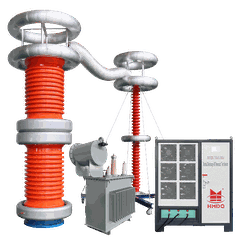


Wuhan Goldhome Hipot Electrical Co., Ltd. is one of the leading manufacturers and suppliers of fault waveform recorder for power system in China. With abundant experience, our factory offer high quality customized products made in China with competitive price. Welcome to contact us for quotation.
Product Overview
Overview
Goldhome is an innovative manufacturer of Fault waveform recorders, consistently adhering to high-quality standards as its production principle.
The PRA1201J Fault Waveform Recorder is a transient signal recording instrument developed for power system applications. Its internal software includes pre-programmed test templates for generator commissioning, enabling users to conveniently perform the following tests using the recorder: short-circuit characteristic testing, no-load characteristic testing, excitation system disturbance testing, 10% step excitation system testing, demagnetization constant measurement, self-aligning synchronizing device calibration, and unit load shedding recording. It is widely used in power system maintenance, equipment debugging, and fault diagnosis. With built - in generator debugging test templates and integrated software components, it can collect, analyze, store data, and generate reports, making it an essential tool for on - site power engineers.
Functions
1. Real-time plotting of test curves with multiple curve analysis tools provided.
2. Edit graphics within the current oscilloscope display, including free labeling and color transformation.
3. Spectrum analysis tools enable users to conveniently obtain signal spectrum plots.
4. Arbitrarily select signals as X-axis or Y-axis to plot relationship curves.
5. Provides harmonic analysis tools to perform harmonic analysis on acquired signals, supporting up to the 1024th harmonic order.
6. Combination operation tools enable users to perform addition, subtraction, multiplication, division, and integration on acquired signals.
7. Calculates the RMS value and power of selected channel signals.
8. Performs power and symmetry analysis on selected three-phase signals.
9. Plots phasor diagrams for selected signals.
10. Software-selectable channel signal types: DC instantaneous value or AC RMS value
11. Built-in standard test templates for generator three-phase short-circuit characteristic curves, no-load characteristic curves, excitation system disturbance tests, demagnetization time constants, frequency-voltage characteristics, load shedding tests, and self-synchronization tests. Software automatically calculates test result parameters.
12. Instrument automatically generates test reports in WORD and Excel formats
13 Test reports automatically label curves, achieving fully automated report generation
14 All channel names and units are re-definable
15 Test environment settings and instrument configurations for various tests are automatically saved
16 Automatically calculates test parameters for various test templates
17 Simple and convenient channel filtering methods
18 Convenient export of test data using storage devices like USB drives or portable hard disks
19 Windows XPE operating system enables software self-protection and recovery, preventing virus intrusion and corruption
20 Anti-jitter processing prevents user errors
Technical Parameter and Features
Features:
1. 12-channel low-voltage/current analog acquisition:
Voltage input range: -10V to 10V, -200V to 200V, -400V to 400V - Current input range: -20mA to 20mA ;
1 analog channel: -100mV to 100mV input (maximum allowable input voltage for 100mV channel < 10V)
2. Voltage channel input range and voltage/current signal type selection via software
3. Signal acquisition error:
-400V to 400V: Error < 0.5V
-200V to 200V: Error < 0.2V
-10V to 10V: Error < 0.01V
-20mA to 20mA Error < 0.02mA
-100mV to 100mV Error < 0.2mV
Frequency measurement 30-170Hz Error < 0.1Hz
4.12 active node digital input channels, digital signal range DC12-220V
5. 3 digital output channels, maximum switching capacity AC220V/1A
6. Modular chassis design; operation terminal enables convenient control of tests and data analysis
7. 2 USB ports for data download or keyboard/mouse input
8. 12.1-inch large color display with touchscreen for human-machine interaction
9. Built-in 8GB data storage capacity
10. Sampling Channel Input Impedance
-10V~10V Voltage Range Input Impedance 820kΩ
-200V~200V Voltage Range Input Impedance 820kΩ
-400V to 400V voltage range Input impedance: 820 kΩ
-20mA to 20mA current range Input impedance: 50 Ω
-100mV to 100mV voltage range Input impedance: >10 MΩ
Signal Acquisition
Analog Inputs: 12 channels, including 2 low voltage/current channels. Voltage ranges: - 10V~10V, - 200V~200V, - 400V~400V. Current range: - 20mA~20mA.
Switch Inputs: 12 source node channels.
Output Signals: 3 channels.
Sampling Frequency: 100KHZ.
Signal Acquisition Error:
Voltage: <0.5V (- 400V~400V), <0.2V (- 200V~200V), <0.01V (- 10V~10V).
Current: <0.02mA (- 20mA~20mA).
System Configuration
Chassis:Split chassis, equipped with operation terminal, convenient to control the test and analyze the data.
Interfaces: 2 USB ports for data download or keyboard/mouse input.
Display: 12.1-inch large color screen, touch screen operation, to achieve efficient human-machine interaction.
Storage: 32G built - in.
Power: AC220V 50HZ ±10%, <90W.
Weight: <15KG.
Products Description
I.Panel Details:

1) Zone 1 is the test wiring area where all test connections are completed. The corresponding primary channels are:
Group 1 Analog Channel CH1 corresponds to U1, COM1, I1
Group 2 Analog Channel CH2 corresponds to U2, COM2, I2
Group 3 Analog Channel CH3 corresponds to U3, COM3, I3
Analog Channel Group 4 CH4 corresponds to U4, COM4, I4
Analog Channel Group 5 CH5 corresponds to U5, COM5, I5
Analog Channel Group 6 CH6 corresponds to U6, COM6, I6
Analog Channel Group 7 CH7 corresponds to U7, COM7, I7
Analog Channel Group 8 CH8 corresponds to U8, COM8, I8
9th analog channel group CH9 corresponds to U9, COM9, I9
10th analog channel group CH10 corresponds to U10, COM10, I10
Analog Channel Group 11 CH11 corresponds to U11, COM11, I11
Analog Channel Group 12 CH12 corresponds to U12, COM12, I12
2) Zone 2 houses current channel fuses, with each current channel equipped with a 0.2A fuse
3) The right side of the panel features a 12.1-inch touchscreen display, enabling full instrument control via the touchscreen.
The instrument's keypad is shown in the lower right corner. The keypad layout is as illustrated, with detailed key functions as follows:
1. 0~9 Numeric input keys
2. "." Decimal point input key
3. ∧ Up arrow key, ∨ Down arrow key
4. < Backspace, Delete key
5. ESC Exit key
6.OK Enter, Confirm key

II.Main Interface for Test Selection

The instrument software system consists of two main components: the test selection main program and the test program. The test selection main interface of the instrument is shown in Figure 4. The functions of the test selection main interface include:
1) Test program switching
2) Instrument basic settings
3) Instrument user help documentation
4) Instrument software upgrade interface
5) System time settings
Additional Information
1 AC5A/AC5V and AC1A/AC5V Converters
The AC1A/AC5V (AC5A/AC5V) converter transforms AC 1A (5A) signals into AC 5V signals. The converter error is <0.1%, with a phase angle deviation <10 minutes. The internal electrical principle of the converter is shown in Figure 1. When connecting the converter to a fault recorder, select the corresponding recorder channel range of 10V. Set the channel calibration as follows:
For AC1A/AC5V converters:
0V ≥ 0A 5V ≥ 1A
For AC5A/AC5V converters:
0V ≥ 0A 5V ≥5A
2 DC1500V/DC10V Transformer
The DC1500V/DC10V transformer converts DC -1000V to 1000V into DC -10V to 10V with an error <0.3%. The maximum allowable AC input voltage signal is AC 1060V. The internal principle and wiring of the transformer are shown in Figure 1. The converter features an input impedance of 2MΩ and a voltage conversion ratio of 149.537.
When connecting the converter to a fault recorder, select the corresponding recorder channel range as 10V. Set the channel calibration as follows:
0V ≥ 0V 10V≥1495.37V

Figure 1
Maintenance & FAQs
Hot Tags: Fault Waveform Recorder For Power System, China Fault Waveform Recorder For Power System manufacturers, factory, Portable Waveform Analyzer
Technical Specifications
Signal Acquisition
Analog Inputs: 12 channels, including 2 low voltage/current channels. Voltage ranges: - 10V~10V, - 200V~200V, - 400V~400V. Current range: - 20mA~20mA.
Switch Inputs: 12 source node channels.
Output Signals: 3 channels.
Sampling Frequency: 100KHZ.
Signal Acquisition Error:
Voltage: <0.5V (- 400V~400V), <0.2V (- 200V~200V), <0.01V (- 10V~10V).
Current: <0.02mA (- 20mA~20mA).
System Configuration
Chassis:Split chassis, equipped with operation terminal, convenient to control the test and analyze the data.
Interfaces: 2 USB ports for data download or keyboard/mouse input.
Display: 12.1-inch large color screen, touch screen operation, to achieve efficient human-machine interaction.
Storage: 32G built - in.
Power: AC220V 50HZ ±10%, <90W.
Weight: <15KG.