

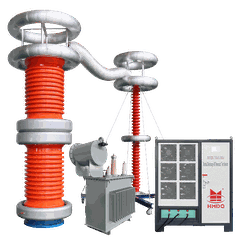



Cable Fault Locator Instruments
A Chinese Manufacturer Producing Outstanding Cable Fault Locators, Providing Reasonable Price!
Wuhan Goldhome Hipot Electrical Co., Ltd. was established in 2008, located in Economic and Technical Development Zone, working area more than 10000 square meters.We are professional OEM, ODM, OBM Manufacturer which is engaged in the research, development, sale and service of High Voltage Testing Equipment including: Resonant Test System, High Voltage Tester,Transformer Tester ,Primary Current Injection Tester,Circuit Beaker Tester, Relay Protection Tester, Cable Tester, SF6 Test Analyzer,Oil Testing Instruments,etc.
Cable fault locators are specialised equipment assemblies integrating multiple technologies, designed to rapidly and precisely pinpoint the physical location of faults (such as short circuits, open circuits, or earth faults) in buried or concealed cables.


Why is Cable Fault Locator needed?
Cable Concealment
The vast majority of power and communication cables are buried within underground conduits, tunnels, or walls, rendering them invisible to the naked eye.
Rapid Power Restoration
Traditional manual fault-finding methods are extremely time-consuming and costly. Fault locators significantly reduce outage duration, enhancing power supply reliability.
Reduced Economic Losses
Rapid fault location enables faster restoration of production and services, minimising substantial economic losses caused by power outages.
Core Components of Cable Fault Locator

A complete cable fault location system typically comprises:
High-voltage generator: Provides the energy to break down the fault point.
Distance meter: Provides an initial estimate of the fault distance.
Locator: Precisely pinpoints the fault location.
Trace locator: Tracks the cable route.
Three-Step Method for Cable Fault Locator
Transmit test pulses, receive reflected waves, calculate approximate distance to determine a range of tens of metres.
Inject path signals into the cable, scan the ground with a receiver, locate the precise route of the cable.
Apply an impulse to the cable using a high-voltage generator. The fault point generates acoustic/magnetic signals.
The acoustic-magnetic locator synchronously receives these signals. The precise fault location is where the loudest sound coincides with the electromagnetic pulse.
Finally, mark the position and prepare for excavation.


Core Advantages of Cable Fault Locators
High Efficiency, Time Savings
Rapidly pinpoints faults within cables spanning several kilometres, significantly reducing power outage duration.
High Precision, Cost-Effective
Pinpoints faults within one metre for ‘precision excavation’, avoiding substantial economic losses and repair costs associated with extensive road excavation.
Broad Applicability
Handles diverse fault types including high-resistance faults, low-resistance faults, and open-circuit faults, compatible with multiple cable media and voltage ratings.
Technologically Advanced, Reliable Results
Integrates modern electronics with acoustic-magnetic synchronous localisation technology to effectively suppress environmental noise interference, delivering accurate and dependable positioning outcomes.
Relatively Safe Operation
The entire methodology is specifically designed for cable maintenance, adhering to strict operational procedures to safely complete fault detection and eliminate risks associated with unguided operations.
Portability and Integration
The equipment features a lightweight, modular design for easy transport to sites. Its highly integrated functionality allows a single main unit to perform multiple tasks such as distance measurement and precise fault location.
Primary Functions of Cable Fault Locators
Fault Distance Measurement (Rough Estimation)
Preliminarily determines the approximate distance of the fault point from the test end, narrowing the fault range from several kilometres to within tens of metres.
Precise Localisation (Accurate Positioning)
Accurately pinpoints the actual location of the fault point within the rough estimation range (achieving accuracy of 0.1 to 0.5 metres).
Path Detection
Traces the buried route of underground cables to prevent accidental excavation of non-target cables.
Fault Type Identification
Determines the nature of the fault (e.g., low resistance, high resistance, short circuit, open circuit) to guide subsequent handling methods.
Cable Identification
Accurately identifies the target cable among multiple cables to prevent misoperation.
Insulation Assessment
Certain high-end devices can measure cable insulation resistance, providing an initial evaluation of cable condition.
How to maintain a cable fault locator during daily use?
Shock and moisture protection
Handle with care, avoiding exposure to rain or damp conditions.
Cleaning accessories
Regularly clean dirt from high-voltage leads, earth leads, and probes.
Check connections
Inspect all terminals before and after use for integrity and tightness.
Battery management
Recharge promptly after use; charge periodically even during prolonged storage.

Alternative Names of Cable Fault Locator
Cable fault locators have multiple alternative names:
Cable Fault Detector
Pulse Reflection Fault Locator
Cable Fault Tester
Power Cable Fault Locator
Telecom Cable Fault Locator:
Buried Cable Fault Locator
Underground Cable Fault Detector:
Cable Fault Locator & Pathfinder
Multi-Function Cable Fault Tester
High-Voltage Cable Fault Locator
Why Choose Us
- Professional Consultation – Respond technical enquiries within one hours;
- Detailed Documentation – Dispatch requested technical materials within one hour;
- Competitive Quotation – Provide a reasonable quotation within two hours.
- Product demonstration videos
- 20 Years Of Specialization industry
- Deep Cooperation With 8.000 Enterprises
- Provide Technical Professional Technical Service And Team Guidance And Support For Life
- Certificated By CE, lSO9001,SGS, BV,TUV.
- Trust And RecognitionFrom 180 Countries And Regions
- High-Level Professional Factory With Over 45.000 m
- 35 patents
- 10+ software copyrights
- Authorized as a National-Level “High-Tech Enterprise”
- Wuhan Technology Innovation "Gazelle" Enterprise.
- Strict contract requirements
- Select the most optimal mode of transport
- Respect customer arrangements
- Timely production progress updates synchronization
- On-time delivery
- 12-month warranty
- Overseas training support
- Regular follow-ups by professionals
- Extended warranty (optional)
- Factory testing available

FAQ
Q: What is a cable fault locator used for?
A: It is a specialised equipment suite designed to rapidly and precisely pinpoint the exact location of faults in underground cables. It resolves the question of ‘where the cable is faulty’, thereby avoiding extensive blind excavation.
Q: What components typically comprise a locator?
A: It usually consists of three main parts:
- Distance measuring device (flash tester)
- Path tracing device (tracking instrument)
- Pinpointing device (probe + headphones)
Q: What fault types does the locator primarily detect?
A: These are categorised as:
High-resistance faults;
Low-resistance and short-circuit faults;
Open-circuit faults (broken conductors).
Q: What are the fundamental steps for locating cable faults?
A: Follow the principle of ‘distance measurement first, precise location second’:
Fault distance measurement (rough measurement);
Path tracing (optional);
Precise location determination (fine measurement).
Q: Why is “acoustic-magnetic synchronisation” always emphasised during precise location?
A: “Acoustic-magnetic synchronisation” is crucial for eliminating environmental noise interference and ensuring accurate location. Only when both are synchronised does the true fault point discharge occur.
Q: What are the most common reasons for failing to locate a fault?
A: Ranked by frequency:
1. Incorrect cable path
2. Poor grounding
3. Insufficient high voltage
4. Significant environmental noise
Q: Does this equipment require frequent calibration?
A: Yes, regular calibration is recommended.
Q: How are test data and reports stored?
A: Internal memory; USB export; Bluetooth/Wi-Fi transmission.
Q: What should be prioritised when selecting a locator?
A: Personal requirements: What voltage levels and cable materials do you primarily test? Are high-resistance faults common?
Performance metrics: Distance measurement accuracy, interference resistance (filtering capability), maximum output energy.
Integration and portability: Separate components or integrated unit? Is it convenient for on-site transport and operation?
As one of the most professional cable fault locartor instruments manufacturers in China, we're featured by quality products and good price. Welcome to buy cable fault locartor instruments in stock here and get pricelist from our factory. Contact us for customized service.