

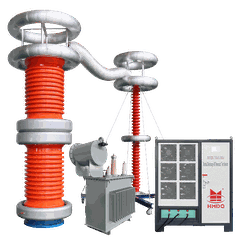



Contact Resistance Test Kit
Goldhome Hot Sales Product: Contact Resistance Test Kit
Our company has specialized in the production and manufacturing of Contact Resistance Test Kit for 20 years, with a modern intelligent factory covering an area of over 10000 square meters, staffed by 51 professional technicians, and hold CE certification. 35 patents, 10+ software copyrights,Currently, we have over 150 stable distributors worldwide and established more than 10 service offices overseas.

35+
National patents
20+
Years Experience
51
Technical Staff
10305
Active Members


What Is It Used For?
A contact resistance tester is a precision instrument specifically designed to measure the contact resistance of conductive circuits in electrical equipment. In power systems, it is often referred to as a loop resistance tester; it is an instrument specifically used to measure the contact resistance values of conductive connection points such as high-voltage switches, circuit breakers, disconnect switches, busbars, and cable joints.
The purpose is to determine:
- Whether there is poor contact at the joints
- Whether there are potential hazards such as overheating or burning
- Whether the connection can safely carry high currents
Why Measure Contact Resistance?
1. Prevent Overheating: Excessive contact resistance → severe heating when current flows; heating → accelerated oxidation, leading to even higher resistance → a vicious cycle, ultimately resulting in: burnout, welding, short circuits, fires, and power outages
2. Identifying loose contacts: Only by applying a high current of 100A or more can the surface oxide layer be penetrated, revealing the actual contact condition during equipment operation. A standard multimeter’s low current cannot detect the hidden risk of “loose contacts.”
3. Assessing service life: For equipment such as circuit breakers and isolating switches, the resistance value directly reflects the degree of wear on the contact surfaces and the spring compression force, serving as a hard metric for determining whether mechanical performance has deteriorated.
4.Early Warning of Trends: Examining absolute values alone is insufficient; the key lies in comparing them with historical data (initial values). If the resistance increases by more than 20%, even if it remains within specifications, it indicates that the equipment has entered a period of deterioration and requires timely maintenance.


Operating Principle
The DC voltage drop method (four-wire measurement) is employed:
1. Independent Circuits: The instrument contains separate current and voltage circuits.
Current Circuit: A stable, high-current DC signal (a constant current of ≥100 A or 200 A) is output through the C1 and C2 terminals and flows through the resistance under test.
Voltage Circuit: The voltage drop is directly sampled at the test point via the P1 and P2 terminals.
2. Error Elimination: Since virtually no current flows through the voltage sampling circuit, the resistance of the test leads themselves and the contact resistance at the terminals do not affect the measurement results.
3. Calculation Logic: Based on Ohm’s Law
R = U/I, the instrument divides the acquired voltage value by the constant output current value to directly calculate the precise contact resistance value in the microohm range.
Advantages of the Loop Resistance Tester
1. High test current for accurate and reliable results
Utilizing constant currents of 100A, 200A, 300A, and 600A, the device effectively breaks through the oxide film on contact surfaces, ensuring measurement results closely reflect actual operating conditions without overestimation or underestimation.
2. Four-wire measurement for high accuracy
Utilizing the Kelvin four-wire method, it completely eliminates the influence of test lead resistance and contact resistance, enabling precise measurement of minute resistances in the μΩ range.
3. Simple operation and fully automatic testing
One-button startup with automatic current stabilization, measurement, and calculation—no manual adjustment required. On-site electricians can quickly master its use.
4. Strong anti-interference capability
Features filtering and anti-electromagnetic interference design, enabling stable testing in strong electric field environments such as substations and switchgear, with no data drift or fluctuations.
5. Compact, lightweight, and portable
The main unit features a lightweight, integrated design, making it suitable for field inspections, on-site emergency repairs, and preventive testing in substations.


6. Fast Measurement Speed
Each test takes only 3–10 seconds, ensuring high efficiency and making it suitable for batch maintenance.
7. Comprehensive Data Management
Supports data storage, USB export, and report printing, facilitating archiving, acceptance, and the issuance of test reports.
8. Comprehensive Safety Protection
Features overcurrent, overvoltage, overheat, and reverse connection protection, ensuring a safe testing process that will not damage switches or the instrument.
9. Wide Range of Applications
Can test virtually all conductive connection points, including vacuum circuit breakers, isolating switches, GIS, busbars, cable joints, copper busbar joints, and contactor contacts.
10. Early Detection of Hidden Hazards to Prevent Accidents
Quickly identifies potential hazards such as poor contact, hot spots, burn marks, and loose connections, effectively preventing equipment overheating, burnout, and short-circuit power outages.
What equipment can be tested?
Switchgear: High-voltage circuit breakers (vacuum circuit breakers, SF6 circuit breakers), isolating switches, main contacts of high- and low-voltage switches; knife switches, GIS grounding switches
Connection components: Cable joints, copper busbar joints, bus ducts,
Welding and contacts: Switch contacts, relay contacts, contactors, fuse contacts
Other equipment: Conductive circuits in transformers and other equipment

Operation Steps
Pre-Test Preparation
- The equipment under test must be de-energized, tested for voltage, and grounded to ensure safety.
- The switch must be in the closed position (to measure contact resistance, the switch must be closed).
- Clean the terminals and remove any oxidation or oil residue.
- Place the instrument on a stable surface and connect it to a 220 V AC power source.
Wiring (Four-Wire Connection)
- Two current leads (thick wires):
Connect to the far ends on both sides of the circuit breaker/knife switch.
- Two voltage leads (thin wires):
Connect to the near ends on both sides of the contacts.
- Ensure the voltage clamps are positioned inside the current clamps to avoid measurement errors.
Power-On and Setup
Turn on the power switch; the instrument will perform a self-test and enter the main interface.
Select the test current:
Common: 100A / 200A / 300A
No complex settings are required; the instrument automatically maintains a constant current.
Start Testing
Press the “Test” button.
The instrument automatically outputs a high constant current and displays the real-time resistance value.
Wait 3–10 seconds; the value will stabilize and indicate the result.
Recording and Saving
The screen directly displays: Resistance value (μΩ)
Press “Store/Print” to save data or print a report.
If multiple tests are required, press “Test” repeatedly.
End of Test
Press “Reset” and wait for the current to return to zero and the high voltage to discharge completely.
Turn off the instrument’s power first, then disconnect the test leads.
Clean up the work area and return the equipment to its original state.

Important Notes
The test must be performed with the circuit closed; opening the circuit will not yield accurate contact resistance readings.
Do not reverse the connections between the current and voltage leads, and do not short-circuit them.
Do not touch the terminals during the test to avoid burns from heat.
Tighten the current leads securely to prevent poor contact and overheating.
Do not use in damp conditions, during rain, or in flammable or explosive environments.
Typical Applications
1. High-Voltage Circuit Breaker Testing
Contact resistance testing of moving and stationary contacts in vacuum circuit breakers and SF₆ circuit breakers
Mandatory test items for maintenance, handover, and preventive testing
2. Isolating Switch / Disconnect Switch Testing
Contact resistance of contacts in outdoor disconnect switches and indoor isolating switches at substations
To determine whether there is poor contact, overheating, or burnout
3. Internal Testing of High-Voltage Switchgear
Contact resistance of draw-out switch contacts
Contact resistance testing at busbar joints and plug-in connection points


4. Cable Joints and Busbar Connections
Cable terminations and intermediate joints
Copper/aluminum busbar joints and busbar trunking connection points
5. GIS (Gas-Insulated Switchgear) Testing
Loop resistance testing of internal circuit breakers, isolating switches, and grounding switches in GIS
6. Factory Acceptance Testing of Switchgear
Quality control at the factory for circuit breakers, load switches, and contactors
7. Electrical Equipment Testing in Industrial and Mining Enterprises
Critical power distribution equipment in steel mills, power plants, mines, petrochemical facilities, data centers, etc.
Prevent overheating, tripping, and fire hazards in high-current connections
8. Handover and Acceptance Testing for New Construction Projects
Pre-commissioning acceptance tests for substations and distribution rooms
Ensure reliable electrical connections and eliminate safety hazards
Leading Domestic Manufacturers
1. Beijing Kanggaote (KGT)
- Positioning: High-end in-house R&D + international brand distribution (Megger, OMICRON)
- Core Product: BaiJu Pro Handheld High-Current Micro-Ohmmeter (100A–600A)
- Advantages: Strong anti-interference capabilities, DSP + adaptive filtering, accuracy of ±0.5%, suitable for 500kV substations
- Suitable for: Power grids, ultra-high voltage applications, and sites with strong electromagnetic environments
2. Wuhan Goldhome Hipot(HMDQ)
- Positioning: Specialized manufacturer of power testing equipment, offering high cost-effectiveness
- Core Models: HM200A / HM300A / HM600A Loop Resistance Testers
- Advantages: High-current constant current, four-wire method, color display, data storage/printing, portable
- Suitable for: Substations, industrial and mining sites, factory acceptance testing and maintenance at switchgear manufacturers
3. Wuhan Wugao Xigao / Wugao Research Institute
- Positioning: A long-established brand in the power system sector with deep technical expertise
- Products: 100A–600A loop resistance testers, compliant with State Grid standards
- Advantages: Excellent stability, mature after-sales support, compliant with power system maintenance specifications


Hot Searching Name
· Contact Resistance Tester
· Loop Resistance Tester
· Circuit Breaker Contact Resistance Tester
· Micro Ohm Meter
· Low Resistance Ohmmeter
· VCB Contact Resistance Tester
· 100A Contact Resistance Tester
· 200A Loop Resistance Tester
· 300A Contact Resistance Tester
· 4-Wire Kelvin Measurement
· High Current Constant Power Supply
· Anti-Interference Contact Tester
· Switchgear Contact Resistance Tester
· Isolating Switch Loop Resistance Tester
· Busbar Contact Resistance Tester
· Cable Joint Resistance Tester
· GIS Circuit Resistance Tester
· HV Circuit Breaker Tester
· Portable Contact Resistance Tester
· Automatic Contact Resistance Tester
· Digital Micro Ohmmeter
FAQ
Q: 1. What is a contact resistance tester? What other names does it go by?
A: A contact resistance tester is a precision instrument specifically designed to measure the contact resistance in the conductive circuits of electrical equipment. It employs a four-wire measurement method and high-current output technology. Common alternative names include: loop resistance tester, micro-ohmmeter, and switch loop resistance tester.
Q: 2. Is there a difference between a contact resistance tester and a standard multimeter?
A: There is a fundamental difference. Standard multimeters have low current output (milliamperes), which is insufficient to break through the oxide layer on contacts, resulting in significant measurement errors. Contact resistance testers, on the other hand, deliver high current (100 A or more) and use a four-wire measurement method, enabling precise measurement of resistance in the micro-ohm range in accordance with power testing standards.
Q: 3. Why is it necessary to measure contact resistance?
A: When contact resistance is too high, the passage of current causes severe heating, which accelerates contact oxidation, creating a vicious cycle of “heating → increased resistance.” This ultimately leads to contact erosion, welding, short circuits, and may even cause power outages or fires. It is a mandatory test item in power system preventive testing.
Q: 4. Does the equipment under test need to be de-energized during testing?
A: It must be de-energized! Strictly follow the procedures for de-energization, voltage verification, and grounding. Confirm that the equipment is completely de-energized before testing. Live testing is strictly prohibited to avoid electric shock or equipment damage.
Q: 5. When testing a circuit breaker, should it be closed or open?
A: It must be closed! Contact resistance testing evaluates the contact condition between the moving and stationary contacts of the circuit breaker. In the open position, the contacts are separated, making it impossible to measure the true contact resistance and potentially damaging the instrument.
Q: 6. How should the four-wire connection be made? What precautions should be taken?
A: Connect the two thick wires (current leads) to the far ends of the device under test, and the two thin wires (voltage leads) to the near ends of the contacts being tested. Ensure that the voltage clamps are positioned inside the current clamps to prevent wire resistance from affecting measurement accuracy. When connecting the wires, tighten the clamps securely and remove any oxidation or oil residue from the contacts.
Q: 7. How long does a single test take?
A: With fully automatic testing, a single test takes only 3–10 seconds. The instrument automatically displays the result once the value stabilizes, offering high efficiency and making it suitable for batch inspections.
Q: 8. What should I do if the data on the instrument fluctuates during testing?
A: This is most likely caused by loose connections, oxidation on the contacts, or excessive electromagnetic interference at the site. You can retighten the clamps, clean the contacts, or reposition the instrument away from equipment with strong electromagnetic fields (such as switchgear or transformers).
Q: 9. Should I select a test current of 100A, 200A, or 300A?
A: For standard applications (10kV/35kV circuit breakers and knife switches), 100A or 200A is sufficient; for large-cross-section busbars, GIS switchgear, and large circuit breakers, we recommend 300A or 600A to more thoroughly break through the oxide layer and ensure more accurate measurements.
Q: 10. What are the requirements for measurement range and accuracy?
A: A standard measurement range of 0–1999.9 μΩ is sufficient to meet most needs; for accuracy, prioritize ±(0.5% of reading + 2 digits). Power grids and critical equipment testing must meet this accuracy standard, while routine maintenance may allow for some flexibility, though accuracy should not fall below ±1%.
Q: 11. How should I choose between portable and benchtop models?
A: For frequent field inspections and emergency repairs, choose a portable model (weight ≤ 10 kg, carryable by hand); for fixed use in laboratories or factory testing at switchgear manufacturers, choose a benchtop model (higher current capacity and greater stability).
Q: 12. What types of equipment can a contact resistance tester measure?
A: It has a wide range of applications and can test all conductive connection points, including vacuum circuit breakers, SF6 circuit breakers, isolating switches, GIS switchgear, busbars, cable joints, copper busbar joints, and contactor contacts.
Q: 13. What should I do if the fan does not spin after powering on and there is no display when pressing the test button?
A: Cause: No 220V AC power supply; fuse not installed or blown.
Solution:
Check if the power cord is connected; the fuse for a 100A instrument should not be less than 6A. If the fuse blows again, contact the manufacturer for assistance. Never connect the device to DC power or 380V AC power.
As one of the most professional contact resistance test kit manufacturers in China, we're featured by quality products and good price. Welcome to buy contact resistance test kit in stock here and get pricelist from our factory. Contact us for customized service.