

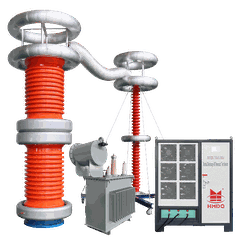



GIS Simulation Tester
China Professional Manufacturer of GIS Simulation Tester
Our company has specialized in the production and manufacturing of GIS Simulation Tester for 20 years, with a modern intelligent factory covering an area of over 10000 square meters, staffed by 51 professional technicians, and hold CE certification. 35 patents, 10+ software copyrights,Currently, we have over 150 stable distributors worldwide and established more than 10 service offices overseas.

35+
National patents
20+
Years Experience
51
Technical Staff
31064
Active Members


A GIS simulation tester, specifically referring to a partial discharge simulation test system for gas-insulated switchgear (GIS) in the power industry, is a specialized high-voltage device designed to simulate internal insulation defects in GIS and generate standard partial discharge signals. It is used to verify, calibrate, and test various GIS partial discharge detection instruments and sensors.
Working Principle
- Simulates the structure of a real GIS enclosure, filled with standard SF6 insulating gas to replicate the on-site GIS electric field and electromagnetic wave propagation environment;
- The enclosure contains pre-installed models of typical insulation defects (corona discharge, floating potential, metal particles, air gaps, surface discharge, etc.);
- Features a built-in controllable high-voltage generator that applies adjustable power-frequency high voltage to the defect models;
- Under high-voltage conditions, the defect locations consistently generate repeatable partial discharges (PD);
- During discharge, signals such as UHF (ultra-high frequency) electromagnetic waves, ultrasonic waves, and pulsed currents are emitted;
- The system interfaces with external UHF sensors, ultrasonic probes, and partial discharge detectors to collect signals for verification, calibration, sensitivity testing, and spectrum comparison.
1. High-Voltage Boost Module
Autotransformer voltage regulation → boost transformer → coupling capacitor; outputs continuously adjustable power-frequency high voltage to precisely control the electric field strength applied to the GIS simulation chamber, simulating rated and overvoltage operating conditions of the equipment.
2. SF6 Sealed Chamber Module
Features a coaxial chamber made of the same material and dimensions as on-site GIS units. After vacuuming, it is filled with SF6 gas at rated pressure to replicate the actual insulating medium, electric field distribution, and signal attenuation characteristics.
3. Artificial Defect Simulation Module
Plug-in standard defect modules, with each defect corresponding to a real-world fault:
Tip defects: Simulate conductor burrs and sharp edges
Suspended defects: Simulate loose internal metal components
Free metal particles: Simulate residual metal debris from assembly
Air gaps / surface defects: Simulate insulator aging and internal air gaps
Upon pressurization, each defect generates a characteristic partial discharge spectrum that is fixed and reproducible.
4. Partial Discharge Signal Radiation and Propagation
Generated instantaneously upon defect discharge:
UHF (Ultra-High Frequency) signals: Propagate as electromagnetic waves within the GIS cavity and are received by external/internal UHF sensors
Ultrasonic signals: Propagate as sound waves through SF6 gas and the enclosure and are picked up by ultrasonic probes
Pulse current signals: Conducted via grounding and coupling loops
5. Measurement, Control, and Calibration Module
The host control system adjusts voltage, switches between defect types, and sets the discharge magnitude;
It also incorporates a built-in reference partial discharge calibration unit that provides a standard pC discharge value to calibrate the accuracy, error, and sensitivity of the instrument under test.
Main Features

1. Highly Realistic Simulation of Actual GIS Operating Conditions
Utilizes a GIS chamber with the same structure and materials to accurately reproduce real-world electric field distribution, electromagnetic wave propagation, and signal attenuation characteristics.
Capable of evacuating the chamber and filling it with SF6 at rated gas pressure, fully simulating the on-site GIS insulation operating environment.
2. Integrated Simulation of Multiple Typical Defects
Built-in switchable standard defects: corona discharge, floating potential, free metal particles, insulator air gaps, and surface discharge
One-click switching between fault types; discharge characteristics are stable, repeatable, and reproducible
3. Continuously Adjustable High-Voltage Output
Smooth voltage regulation of power-frequency high voltage; capable of simulating various operating conditions such as rated voltage and overvoltage
High voltage control accuracy ensures stable, drift-free partial discharge excitation
4. Multi-dimensional synchronized partial discharge signal output
Simultaneously generates standard detectable signals:
UHF (Ultra-High Frequency) signal + Ultrasonic signal + Pulse current signal
Compatible with all commercially available GIS partial discharge detectors and sensor calibration
5. Precise, quantitative, and traceable calibration
Built-in reference partial discharge generation unit with continuously adjustable discharge quantity in the pC range
Complies with IEC 60270 and GB/T 7354 standards; suitable for instrument calibration, verification, and accuracy comparison
6. Comprehensive safety protection
Fully enclosed high-voltage chamber, electrical interlocks, and overvoltage/overcurrent/leakage protection
Remote control operation with human-machine isolation ensures safe and reliable testing
7. Versatile multi-functional design
Supports four primary applications:
Partial discharge instrument calibration + Sensor performance testing + Maintenance personnel training + Fault spectrum database acquisition
8. Compact Structure and Simple Operation
Modular integrated design, small footprint, convenient for laboratory and field deployment
Intelligent measurement and control system with an intuitive interface, allowing quick operation even without specialized personnel
9. Long-Term Stable Operation
Consistent discharge spectrum characteristics, capable of prolonged continuous testing, suitable for batch verification, algorithm training, and educational demonstrations
Click News:Goldhome Hipot Enhances Power Grid Reliability With DC GIS Test System
Specific Types
Classification by Function and Application
● GIS Partial Discharge Simulation Tester
The most commonly used type, simulating various insulation defects within GIS systems and generating standard partial discharge signals for calibrating UHF/ultrasonic partial discharge detectors and sensors.
● GIS Withstand Voltage and Insulation Simulation Test System
Simulates GIS power frequency withstand voltage, induced voltage, and lightning impulse conditions to evaluate high-voltage insulation coordination performance.
● GIS SF6 Gas Condition Simulation Equipment
Simulates trace moisture, decomposition products, gas leakage, and gas pressure changes in SF6, used for calibrating SF6 gas detectors.
● GIS Fault Simulation Training System
For educational purposes, simulates ground faults, insulation breakdown, abnormal partial discharge, and mechanical faults during switching operations, supporting operation and maintenance training.
● Dedicated Simulator for GIS Sensor Calibration
Specifically calibrates the sensitivity and positioning accuracy of built-in/external UHF sensors, ultrasonic sensors, and HFCT current sensors.
Classification by Simulation Signal Principle
● Ultra-High Frequency (UHF) Signal Simulation Type
Simulates only the UHF electromagnetic wave signals from internal GIS partial discharges, used for calibrating various UHF partial discharge detectors.
● Ultrasonic AE Signal Simulator
Simulates the acoustic vibration signals generated by GIS partial discharges, compatible with ultrasonic partial discharge detectors.
● Pulse Current Method Simulator
Simulates high-frequency pulse current signals, performing pC-level quantitative calibration in accordance with the IEC 60270 standard.
● Multi-Signal Integrated Simulator
Simultaneously outputs UHF, ultrasonic, and pulse current signals, providing full compatibility with all brands of partial discharge detection equipment.
Classification by Structural Type
● Enclosure-Type Physical GIS Simulator
Features a real SF6 sealed enclosure, coaxial GIS cylinder, and interchangeable defect models, providing the closest approximation to actual field conditions and the highest accuracy.
● Portable Signal Generator (Virtual Simulator)
No physical GIS chamber; built-in circuitry simulates partial discharge and UHF waveforms. Compact and portable, suitable for on-site inspection and calibration.
● Modular Combination Simulation Equipment
Separate high-voltage unit, chamber unit, and measurement/control unit that can be freely combined; commonly used in laboratories.
Classification by Simulated Defect Type
● Corona Discharge Simulation Equipment
Simulates conductor burrs and sharp-edged electric field concentration defects.
● Floating Potential Discharge Simulation Equipment
Simulates internal loose metal shielding and floating components.
● Free Metal Particle Simulation Equipment
Simulates assembly-residual metal debris and micro-movement particle defects.
● Insulator Surface/Air Gap Discharge Simulation Equipment
Simulates insulator aging, internal air gaps, and surface creepage faults.
Classification by Application Scenario
● Standard Laboratory Benchtop Model
Used for quality inspection, metrological verification, and factory calibration of instruments.
● Mobile Vehicle-Mounted Simulation Model
Can be transported to substation sites for on-site calibration of partial discharge equipment.
● Cabinet-Style Educational Training Model
Simplified GIS simulation bench designed specifically for power engineering colleges and training centers.
GIS Simulation Testing Equipment:Standard Testing Procedure
Pre-Test Preparation
- Position the equipment and inspect the main unit, GIS simulation chamber, high-voltage unit, control system, and connecting cables to ensure they are intact and undamaged.
- Ensure reliable grounding, verifying that high-voltage safety grounding and protective grounding are properly in place.
- Check that the chamber’s airtightness, SF6 gas pressure, and vacuum level are within the rated range.
- Connect the test equipment: UHF sensors, ultrasonic probes, partial discharge detectors, HFCTs, etc., and install and secure them at their designated locations.
- Turn on the power supply, perform a warm-up, and verify that the control system and high-voltage circuits show no alarms.
System Parameter Configuration
- Set the test voltage levels in the test and control software, and configure the voltage ramp-up limits from zero according to the simulated operating conditions.
- Select defect types: tip discharge / flashover / metal particle / insulator gap / surface discharge.
- Set partial discharge output parameters: pC amplitude, signal frequency, and sampling duration.
- Set protection parameters: overvoltage, overcurrent, and timeout protection thresholds.
Evacuation & SF6 Gas Charging
- Start the vacuum pump and evacuate the GIS simulation chamber to the standard negative pressure value.
- Charge SF6 gas to the rated pressure, allow it to settle and stabilize, ensuring the gas environment matches that of an actual GIS.
- After stabilization, verify that there are no gas leaks and that all parameters meet specifications.
Slow Voltage Rise Test
- Use a zero-start voltage rise method to steadily and slowly increase the power-frequency high voltage.
- Once the preset test voltage is reached, stabilize the voltage to maintain a stable electric field environment.
- Observe that the system exhibits no abnormal noises, breakdowns, or leakage alarms.
Partial Discharge Signal Acquisition and Testing
- Defects inside the simulation chamber generate standard partial discharges under high-voltage excitation.
- The UHF, ultrasonic, and pulse current devices under test simultaneously acquire partial discharge signals.
- Record partial discharge spectra, discharge quantities, signal amplitudes, and waveform characteristics.
- Switch between different defect models and repeat the acquisition of characteristic data for each fault type.
- Compare standard reference values with the readings from the instruments under test to perform calibration for accuracy, sensitivity, and error.
Voltage Reduction and Shutdown Procedure
- After the test is complete, slowly reduce the voltage to zero; it is strictly prohibited to shut off the power while the system is still energized.
- Turn off the high-voltage output and disconnect the power supply to the voltage-boosting unit.
- Wait for the residual pressure and electric field in the chamber to be completely dissipated, and allow for a safety dwell time.
- Save test data, spectra, and test reports.
Post-Test Procedures
- If long-term storage is required, recover the SF6 gas in accordance with regulations or maintain the rated storage pressure.
- Remove the sensor under test and its connecting cables, and organize the equipment cables.
- Shut down the equipment and disconnect the power supply, clean the work area, and file the test data reports.
Precautions for Using GIS Simulation Testing Equipment
I. High-Voltage Safety Precautions
The equipment must be reliably and independently grounded, with grounding resistance meeting standards. Powering on or applying voltage is strictly prohibited if the equipment is not grounded.
Safety barriers and warning signs must be installed in the test area; non-operators are prohibited from entering the high-voltage zone.
During the voltage-rising process, do not touch the high-voltage chamber, high-voltage cables, sensor interfaces, or the enclosure cover.
Strictly adhere to zero-voltage start-up, gradual voltage increase, and gradual voltage reduction. Sudden application or removal of high voltage is prohibited, and operation above the rated voltage is strictly forbidden.
If unusual noises, arcing sounds, strange odors, or smoke are detected during operation, immediately shut down the equipment and cut off the power supply. Allow the equipment to stand until it has fully discharged before troubleshooting.
Do not open the cover, disconnect cables, or replace defective models until the high voltage has been completely discharged.
The equipment’s protective doors and electrical interlocks must be in good working order; testing is prohibited if the interlocks are faulty.
II. Precautions for SF6 Gas Use
Use only high-purity, certified SF6 gas; the use of impure, expired, or non-compliant gas is strictly prohibited.
Vacuuming, charging, and venting operations must be performed in a well-ventilated environment to prevent gas accumulation and suffocation in low-lying areas.
The indiscriminate direct discharge of large quantities of SF6 gas is strictly prohibited; prioritize recovery and reuse in accordance with environmental regulations.
Inspect piping, valves, and connectors before each test; use only if there are no gas leaks or damage.
Strictly follow the rated pressure for charging and venting; overpressurization is prohibited to prevent chamber deformation and leakage.
For long-term storage, maintain the chamber at the rated pressure and perform regular leak checks.
III. Operational Guidelines
Operators must undergo professional training before operating the equipment; unauthorized personnel are prohibited from operating the equipment.
Before starting the unit, check that power cables, signal lines, and high-voltage connections are secure and free of loose connections.
Switching defect models, installing or removing sensors, or performing equipment maintenance must only be done after power has been disconnected, pressure has been released, and the system has been fully discharged.
Upon startup, perform a warm-up and self-test; proceed with parameter settings and testing only after confirming no alarms or faults.
It is strictly prohibited to plug in or unplug communication cables, high-voltage cables, or sensor cables while the equipment is running.
Upon completion of testing, the following sequence must be followed: reduce voltage to zero → turn off high voltage → disconnect power → allow the equipment to stand and discharge, before performing any final shutdown procedures.
IV. Environmental and Storage Precautions
Operating Environment: Temperature 0°C to 40°C, humidity ≤85%, free from condensation, rain, and direct sunlight.
Keep the equipment away from sources of strong electromagnetic interference, such as arc welders, variable frequency drives, and large motors, to avoid affecting the accuracy of partial discharge detection.
Place the equipment on a level and stable surface, away from flammable, explosive, or corrosive gas environments.
Ensure protection against dust and moisture; if the equipment is not used for an extended period, periodically power it on to prevent moisture buildup.
V. Maintenance and Instrument Calibration Precautions
Clean dust from the unit after each use, and inspect terminals and wiring for looseness or oxidation.
Periodically calibrate the pressure gauge, voltmeter, and partial discharge calibration unit to ensure accurate and traceable test results.
Do not disassemble the high-voltage unit or the internal structure of the chamber without authorization; repairs must be performed by qualified personnel.
Periodically inspect the sealing performance of the vacuum pump and pipeline valves, and promptly replace aged components.
Famous Brands
1.International Brands
Megger (Sweden): GIS partial discharge calibration sources and SF6 gas insulation testing systems, featuring high accuracy and compliance with IEC/ANSI standards.
Omicron (Austria): Integrated GIS simulation and PD detection equipment, supporting multi-sensor fusion, commonly used for laboratory calibration.
Doble (USA): High-end GIS insulation diagnostic and simulation platform, compatible with UHV DC GIS, widely used in global power grid operations and maintenance.
2.Domestic Brands
Goldhome Hipot (Wuhan)
Core Products: GIS discharge model simulation test apparatus, PD-free test system (Partial discharge level ≤ 1 PC).
Features: One-click switching between 6 defect types (tip / suspension / metal particle / surface / air gap / insulator); no need for venting or venting to change models; compatible with 110–1000 kV; proven application cases in high-altitude projects.
Tianwei Xinyu (Beijing)
Core Product: GIS partial discharge simulation and verification platform.
Features: Built-in multi-defect switching device; no need to vent or change modules; supports UHF, ultrasonic, and current detection; equipped with internal high-definition cameras.
State Grid NARI (Nanjing)
Core Products: GIS Partial Discharge Simulation Test System, Intelligent O&M Calibration Device.
Features: Mainstream solution within the State Grid system; compatible with smart substations; compliant with IEC 61869 standards; supports remote monitoring and data traceability.
Shanghai Lanqi Electric
Core Products: LHVIW Series GIS Partial Discharge Fault Simulator.
Features: Supports over 10 controllable defects; built-in UHF sensors and infrared imaging; voltage resolution of 0.1 kV; compatible with 110–500 kV systems.

Alternative Name
· GIS Simulation Tester
· GIS Partial Discharge Simulator
· GIS PD Simulation Test Device
· GIS Simulation Test Equipment
· GIS Partial Discharge Simulation Tester
· SF6 GIS Fault Simulation Device
· GIS Insulation Performance Simulator
· GIS UHF Partial Discharge Calibrator
· GIS Ultrasonic PD Simulation Tester
· GIS Defect Simulation Test System
· Gas Insulated Switchgear Simulation Tester
· GIS PD Calibration Equipment
· GIS Artificial Defect Simulation Device
· Substation GIS Simulation Test Set
· SF6 Gas Insulated GIS Simulator
· GIS PD Simulation Tester
· GIS Fault Simulation Equipment
· GIS Partial Discharge Test Simulator
· SF6 GIS Defect Simulator
· GIS simulation test system
· GIS test equipment
· Three Phase GIS simulation test device
· GIS control panel simulator
·GIS timing test

Click News:DC GIS Test Platform: Goldhome Hipot Advances High Voltage Testing Solutions
FAQ
Q: 1: What is a GIS simulation and testing device?
A: It is a specialized high-voltage testing device designed to simulate the actual GIS cavity, SF6 gas environment, and artificial insulation defects. By applying high-voltage excitation, it generates standard partial discharge signals for calibrating GIS partial discharge detectors and sensors, as well as for operational and maintenance training and fault spectrum acquisition.
Q: 2: What are the main GIS faults and defects simulated by the device?
A: The standard configuration includes five classic defects: corona discharge, floating potential discharge, free metal particles, insulator gap discharge, and surface discharge. Additional defect modules can be added as needed.
Q: 3: What voltage levels of GIS is the equipment compatible with?
A: It is universally compatible with GIS equipment across all voltage levels: 110 kV, 220 kV, 500 kV, 750 kV, and 1,000 kV.
Q: 4: What test signals can the device output?
A: It simultaneously outputs UHF (ultra-high frequency) signals, ultrasonic AE (acoustic emission) signals, and pulsed current PD (partial discharge) signals, and is compatible with all brands of GIS partial discharge detection equipment on the market.
Q: 5: Does the test require SF6 gas to be charged into the system?
A: Yes. It uses a real, sealed GIS chamber, which must be evacuated and then charged with SF6 to the rated pressure to replicate the on-site insulation and signal propagation characteristics.
Q: 6: Is the discharge level adjustable, and can it be calibrated quantitatively?
A: It supports pC-level continuous adjustment and features a built-in standard traceability unit. It complies with IEC 60270 and GB/T 7354, enabling calibration and verification of instrument accuracy and sensitivity.
Q: 7: Does changing the fault model require venting?
A: The high-end model supports quick model changes without venting or pressure relief; the standard model requires pressure relief before replacing the fault module.
Q: 8: Is operation complicated? Does it require specialized personnel?
A: The system features a modular design and an intelligent industrial control interface, making the process user-friendly; however, as this is high-voltage testing equipment, it must be operated by professionally trained personnel. Unauthorized operation is strictly prohibited.
Q: 9: Can it be used outdoors on-site?
A: Indoor use in a well-ventilated, dry environment is recommended. A mobile, vehicle-mounted version is available to meet on-site calibration needs at substations; however, exposure to rain or direct sunlight is prohibited.
Q: 10: What are the safety risks associated with its use?
A: The primary risks include high-voltage electric shock, SF6 gas asphyxiation, and overpressure leakage from the chamber. These risks can be completely avoided by ensuring reliable grounding, establishing a safety zone, following proper gas filling and venting procedures, and never opening the cover in violation of safety protocols.
Q: 11: What are the operating temperature and humidity requirements?
A: Ambient temperature: 0°C to 40°C; relative humidity: ≤85%; no condensation, no strong electromagnetic interference, and no corrosive dust.
Q: 12: Can SF6 gas be released directly into the atmosphere?
A: No, it must be recovered and recycled. Direct release in large quantities is prohibited to comply with environmental protection and power industry regulations.
Q: 13: Which brands of PD detectors and sensors can be calibrated?
A: Compatible with all domestic and international UHF / ultrasonic / HFCT PD detection equipment and sensors, including Omicron, Megger, Doble, Goldhome, NARI, and Tianwei Xinyu.
Q: 14: What are the main applications of the equipment?
A: ① Calibration and verification of GIS partial discharge instruments ② Performance testing of UHF/ultrasonic sensors ③ Practical training for power grid operation and maintenance personnel ④ Sample collection for partial discharge AI algorithms ⑤ Laboratory quality control and metrology.
Q: 15: Does the equipment require regular maintenance?
A: Yes. Regular leak detection, calibration of pressure gauges and high-voltage meters, inspection of sealed piping, power-on dehumidification, and annual full-unit accuracy calibration are required.
Q: 16. How can this equipment be used to test the performance of online monitoring devices?
A: This platform serves as a core tool for evaluating the performance of online monitoring devices. Through built-in or external standardized test interfaces:
It is possible to systematically evaluate the sensitivity, accuracy, stability, and immunity to interference of various sensors and partial discharge detection units under realistic and reproducible signal conditions.
SF₆ decomposition component testing can be utilized, combined with relevant principles, to assess the type, severity, and location of insulation defects.
It is capable of evaluating the detection system’s localization capability and verifying its actual effectiveness in precisely locating the source of partial discharge in space.
As one of the most professional gis simulation tester manufacturers in China, we're featured by quality products and good price. Welcome to buy gis simulation tester in stock here and get pricelist from our factory. Contact us for customized service.