

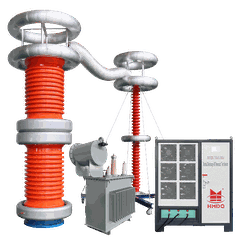



Insulator Tester

Wuhan Goldhome Hipot Electrical Co., Ltd. has specialized in the production and manufacturing of Insulator Tester for 20 years, with a modern intelligent factory covering an area of over 10000 square meters, staffed by 51 professional technicians, and hold CE certification. 35 patents, 10+ software copyrights,Currently, we have over 150 stable distributors worldwide and established more than 10 service offices overseas.


Why Choose US
- Professional Consultation – Respond technical enquiries within one hours;
- Detailed Documentation – Dispatch requested technical materials within one hour;
- Competitive Quotation – Provide a reasonable quotation within two hours.
- 20 Years Of Specialization industry
- Deep Cooperation With 8.000 Enterprises
- Certificated By CE, lSO9001,SGS, BV,TUV.
- Provide Technical Professional Technical Service And Team Guidance And Support For Life
- Trust And RecognitionFrom 180 Countries And Regions
- High-Level Professional Factory With Over 45.000 m
- 35 patents
- 10+ software copyrights
- Authorized as a National-Level “High-Tech Enterprise”
- Wuhan Technology Innovation "Gazelle" Enterprise.
- Strict contract requirements
- Select the most optimal mode of transport
- Respect customer arrangements
- Timely production progress updates synchronization
- On-time delivery
- 12-month warranty
- Overseas training support
- Regular follow-ups by professionals
- Extended warranty (optional)
- Factory testing available
What is an Insulator Tester?
Insulator testers are specialized instruments used in the power industry to assess the insulation performance and operational status of insulators in high-voltage transmission lines and substations. Their core function is to rapidly determine whether insulators are degraded, have zero resistance, exhibit low resistance, or are faulty—both during energized and de-energized conditions—thereby ensuring grid safety. These devices primarily evaluate an insulator's insulation resistance, contamination level, and presence of cracks or internal defects to determine its ability to operate safely and reliably.
Key Function of an Insulator Tester

1. Zero-Value / Low-Value Insulator Detection
Rapidly determines whether an insulator has failed, exhibits zero voltage, or has low voltage—the core functionality.
2. Voltage Distribution Measurement
Measures voltage distribution across each insulator to assess uniformity and degradation within the entire string.
3. Live / Non-Power-Interruption Testing
Performs inspections during live operation without power interruption, ensuring uninterrupted power supply while enhancing safety and efficiency.
4. Insulation Resistance Testing
Outputs high-voltage DC to measure insulation resistance, identifying aging, moisture ingress, or damage.
5. Real-Time Data Display & Storage
Displays voltage/resistance values in real time and automatically saves data for subsequent queries, reporting, and traceability.
6. Audible/Visual Alarms
Automatically alerts upon detecting zero values, low readings, or failed insulation tests for immediate, intuitive detection.
7. Wireless Transmission / Remote Operation
Wireless probe-to-host communication enables safe operation at heights or long distances.
8. Strong Anti-Interference Capability
Operates reliably in strong electric field environments at substations and line sites without false alarms.
9. High-Capacity Battery, Extended Runtime
Supports continuous operation throughout field inspections and line patrols.
10. Wide Voltage Range Compatibility
Covers mainstream line voltages including 10kV, 35kV, 110kV, 220kV, and 500kV.

Main Function of Insulator Tester

- Transmission Lines: 10kV–1000kV overhead line insulator patrol inspection, zero-value/low-value detection
- Substations: On-site pillar insulator and suspension insulator condition monitoring and preventive testing
- Power Supply Companies/Bureaus: Routine line patrols, fault troubleshooting, maintenance acceptance
- Power Engineering Companies: Insulator handover testing for new lines and expansion/renovation projects
- Power Plants: Insulator inspection in step-up substations and outgoing line bays
- Railways / Rail Transit: Condition monitoring of insulators in traction power supply systems
- Industrial & Mining Enterprises: Inspection of self-owned power plants, high-voltage switchgear rooms, and on-site power distribution lines
- Power Testing Institutes / Quality Inspection Agencies: Insulator type testing and quality inspection
The Use of an Insulator Tester

I. Preparatory Work
Check the instrument's battery level, probes, insulated rod, and main unit for proper functioning.
Put on safety gear including insulated shoes, insulated gloves, and safety helmet.
Confirm the voltage level of the line under test and select the corresponding measurement mode.
II. Power-Up and Setup
Turn on the probes and main unit; they will automatically pair and connect.
Set parameters such as voltage level and alarm threshold.
III. Field Measurement
Mount the probe at the top of the insulated operating rod.
Operators must stand in a safe position and sequentially contact each insulator with the probe.
The main unit displays real-time voltage values and distribution status for each insulator.
IV. Fault Diagnosis
Voltage approaching 0 → Zero-value insulator
Significantly low voltage → Low-value / degraded insulator
Instrument automatically triggers audible and visual alarms for non-compliant readings
V. Data Processing
Test data is automatically saved for review and retrieval.
Power off after testing and organize the instrument and tools.
VI. Safety Precautions
Strictly adhere to live-line work safety regulations.
Maintain sufficient safety distances; unauthorized operations are prohibited.
Do not conduct testing during severe weather such as thunderstorms or high winds.
Designate a dedicated supervisor and follow standard operating procedures.

Alternative Name of An Insulator Tester
Insulator Detector
Insulator Measuring Instrument
Insulator Live Tester
Insulator Voltage Distribution Tester
Inferior Insulator Tester
Digital High-voltage Insulator Tester
Insulator String Low-zero Value Porcelain Bottle Detector
Intelligent Zero-value Insulator Tester
Porcelain Insulator Zero-value Detector
Composite Insulator Live Detector
Insulator Salt and Dust Density Tester
Insulator Contamination Tester
Insulator Pollution Degree Tester
Insulator Hydrophobicity Tester
FAQ
Q: 1. What is an insulator tester?
A: An insulator tester is a specialized instrument used to test the insulation performance, degree of degradation, and zero/low-value insulators in power lines and substations, ensuring the safe operation of the power grid.
Q: 2. What are the uses of an insulator tester?
A: Quickly identify zero-value, low-value, and damaged insulators.
Reduce manual inspection by climbing poles, improving efficiency.
Prevent line flashover, tripping, and leakage accidents.
Meet the requirements of power line inspection, acceptance, and maintenance.
Q: 3. What are the classifications of insulator testers?
A: By usage: Handheld, Online, Vehicle-mounted
By principle: Resistance type, Voltage distribution type, Ultrasonic/Infrared type
By voltage level: 10kV, 35kV, 110kV, 220kV, 500kV, etc.
Q: 4. What problems can be detected?
A: Detectable: Zero-value insulators, low-value insulators, decreased insulation resistance, internal cracks and deterioration, abnormal distributed voltage.
Q: 5. How accurate is the measurement?
A: The accuracy meets power industry standards and can accurately distinguish between:
Good insulators
Low-value insulators
Zero-value insulators
Meets State Grid and China Southern Power Grid inspection standards.
Q: 6. Does the testing require a power outage?
A: Types:
Online/Live-line testing: No power outage required
Some offline testing equipment: Power outage required
You can choose according to your needs before purchasing.
Q: 7. Can it be used on 10kV lines? What about 35kV/110kV/220kV?
A: Standard models support:
10kV, 35kV, 110kV, 220kV, and 500kV line insulator testing.
Different voltage levels are compatible/optional probes are available.
Q: 8.Can it test tempered glass insulators?
A: Yes.Supports: Porcelain insulators, tempered glass insulators, and composite insulators (some models support composite insulator testing).
Q: 9. Can it be used directly at heights?
A: Most are lightweight handheld models, suitable for pole climbing/high-altitude work. They feature insulated poles, drop protection, and waterproof design, making them suitable for field lines.
Q: 10. How long does the battery last?
A: 4–8 hours of continuous operation.
Q: 11. How long is the warranty?
A: 1-year warranty with lifetime maintenance.
Q: 12. Are zero-value insulator detectors and insulator testers the same?
A: They are essentially the same device.
They are just called different things: zero-value detector, insulator resistance tester, distributed voltage tester.
As one of the most professional insulator tester manufacturers in China, we're featured by quality products and good price. Welcome to buy insulator tester in stock here and get pricelist from our factory. Contact us for customized service.