

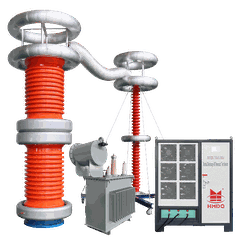



Relay Protection Testing Instrument
A Prominent Manufacturer of Relay Protecting Testing Instrument in 20 years, Professional Quality Technology, Supply Manufacture Price.
Our company has specialized in the production and manufacturing of Relay Protection Tester for 20 years, with a modern intelligent factory covering an area of over 10000 square meters, staffed by 51 professional technicians, and hold CE certification. 35 patents, 10+ software copyrights,Currently, we have over 150 stable distributors worldwide and established more than 10 service offices overseas.
Relay protection test equipment is a precision instrument specifically designed to test and validate the performance of relay protection devices and power system automation equipment (such as smart terminals and merging units).


Why is so important?
1. For electrical equipment: Acting as a “bodyguard”to prevent damage.
2. For grid stability: Acting as a “surgeon” to prevent accidents from escalating.
3. For personal safety: Acting as a “guardian angel” to prevent electrocution injuries.
4. For power quality: Monitoring anomalies to enhance supply reliability.
The Principle of Relay Protection Tester
The core principle is: by continuously monitoring electrical parameters (such as current and voltage) in power lines or equipment, and comparing these with pre-set safety thresholds (setting values), faults (such as short circuits or overloads) are identified. The system then rapidly isolates the fault point, safeguarding primary equipment and preventing the escalation of incidents.
Workflow
Monitoring: (Instrument Transformers) responsible for gathering information.
Judgement: (Protection Device CPU) responsible for analyzing information and making diagnoses.
Execution: (Output Relays and Circuit Breakers) responsible for carrying out the brain's commands.
The Advantage of Relay Protection Tester

1. Speed
Minimises damage to faulty equipment and prevents fault propagation, maintaining power system stability.
2. Selectivity
Precisely locates and isolates only the faulty component, ensuring minimal power outage.
Unfected sections continue supplying power, enhancing supply reliability.
3. Sensitivity
Accurate tripping even during minor faults, without ‘numbness’ or ‘sluggishness’.
4. Reliability
Absolute reliability when tripping is required; absolute non-operation when not required.
5. Integration and Multifunctionality
A single unit integrates multiple protection functions (e.g., overcurrent, overvoltage, differential protection), alongside measurement, control, fault recording, and communication capabilities. This reduces equipment quantity while simplifying design and wiring.
6. Robust Data Handling and Storage
Capable of recording fault waveforms (fault recording), sequence of events (SOE), and operational logs, providing invaluable data for accident analysis and equipment diagnostics.
7. High Flexibility
Protection logic and settings can be adapted to varying requirements through software modifications without hardware replacement, greatly facilitating operation, maintenance, and upgrades.
8. Advanced Communication Capabilities
Supports digital communication protocols (e.g., IEC 61850) to exchange information with other protection devices and control systems (e.g., SCADA), enabling system interconnection and supporting smart grid infrastructure.

Main Function of Relay Protection Tester

1. Overcurrent Protection: Monitors whether current exceeds safe setpoints.
2. Differential Protection: Compares incoming and outgoing currents of protected equipment; operates upon detection of imbalance.
3. Distance Protection: Estimates fault location distance by measuring impedance to determine fault extent.
4. Undervoltage/Overvoltage Protection: Monitors for abnormal voltage conditions.
5. Directional Protection: Assesses both magnitude and direction of fault currents.
6. Abnormal Alarm: Detects non-standard conditions below trip thresholds and issues signals.
7. Fault Recording (Waveform Recording): Captures current and voltage waveforms before and after faults for post-event analysis.
8. Automatic Reclosing: Attempts automatic reclosing after line fault trips, following a delay.
9. Automatic Standby Power Switchover: Automatically switches to the standby power source when the main supply fails.
Application of Relay Protection Tester
Application in Power Plants: Safeguarding the ‘Power Source’
Primarily covers generators, plant transformers, and excitation systems. Generator differential protection is deployed as the primary defence against internal short-circuit faults; stator grounding protection and rotor grounding protection monitor insulation conditions; demagnetisation protection prevents generator instability.
Application in Transmission Networks: Safeguarding the “Electricity Highway”
Primarily high-voltage and extra-high-voltage transmission lines employ distance protection and longitudinal differential protection as primary safeguards. Integrated with automatic reclosing devices, these systems automatically attempt to restore power after line tripping (as most overhead line faults are transient events caused by lightning strikes).
Substation Applications: Safeguarding the “Transport Hub”
Primary protection for main transformers, busbars, and shunt capacitors/reactors.
For transformers: Employ differential protection and gas-based protection (non-electrical quantity) as primary safeguards.
For busbars: Implement busbar differential protection.
For reactive power compensation equipment: Configure overcurrent, overvoltage, and unbalanced protection.
Applications in Distribution Networks and Customer Premises: Safeguarding the “Last Mile”
Distribution lines, distribution transformers, and large electric motors. Extensive use of cost-effective and reliable overcurrent protection schemes (such as three-stage current protection); implementation of selective fault-location protection for faults in low-current grounding systems; provision of differential protection, thermal overload protection, and stall protection for large motors.
The maintenance of Relay Protection Tester
Visual & Physical Check:
- Inspect the tester’s exterior for damage (cracks, dents) on the casing, display screen, and control buttons—damaged housing may expose internal components to dust/moisture.
- Check all cables, probes, and terminals: Ensure no fraying, insulation damage, or loose connections (current/voltage test leads, power cords). Replace damaged cables immediately (exposed conductors risk electric shock or short circuits).
Power & Safety Verification:
- Confirm the power supply matches the tester’s rated input (110–240V AC) to avoid overvoltage damage.
- Check the grounding connection: Ensure the tester’s ground terminal is securely connected to a valid earth ground (loose grounding increases electrocution risk and electromagnetic interference).
Verify indicator lights: Power on the tester briefly—ensure power, status, and fault lights illuminate correctly (no abnormal blinking or dark lights, which may signal internal component failure).
Post-Test Cleaning & Storage
Clean the Tester:
- Wipe the exterior with a dry, lint-free cloth to remove dust, oil, or debris (avoid water or chemical cleaners, which can damage the screen or insulation).
- Clean test terminals and cable connectors with a soft brush (e.g., a small paintbrush) to remove oxidation or dirt—build-up here can cause poor contact and test inaccuracies.
Proper Storage:
- Store the tester in a dry, temperature-controlled environment: Ideal conditions are 5–40℃ temperature and <75% relative humidity (avoid damp areas, direct sunlight, or extreme temperatures, which degrade internal circuits and batteries).
- Coil test cables neatly (do not bend or twist them sharply) and store them with the tester in its original case (to prevent cable damage and loss).
- For battery-powered portable testers: Ensure the battery is charged to ~50% (not fully charged or empty) during long-term storage—this extends battery lifespan (overcharging or deep discharge damages lithium-ion batteries).
Monthly Maintenance
Battery Health Check (Portable Testers):
Fully charge the battery, then run a test (e.g., a 30-minute simulated relay test) to verify battery life—if runtime drops by >20% compared to new, replace the battery (old batteries cause unexpected shutdowns during field tests).
Internal Fan & Ventilation Check:
- Inspect ventilation grilles for dust blockage—use compressed air (low pressure, ~30 PSI) to blow out dust (blocked vents cause overheating of internal components like power modules).
- Test the cooling fan: Run the tester at maximum current output for 10 minutes—ensure the fan activates and runs smoothly (no unusual noise, which indicates a failing fan).
Quarterly Maintenance
Connection Terminal Resistance Test:
- Use a digital multimeter to measure the resistance of test terminals (e.g., current output terminals, voltage input terminals)—resistance should be <10mΩ (higher resistance indicates oxidation or loose internal connections, which skew test results).
- Tighten terminal screws gently (use a torque wrench per the manual) to avoid stripping threads—over-tightening damages terminals.
Software/ Firmware Update:
Check the manufacturer’s website for firmware updates—updates often fix bugs, improve test accuracy, or add support for new relay types (follow the update guide carefully to avoid bricking the device).
Annual Maintenance: Mandatory Calibration
Professional Calibration:
Send the tester to a certified calibration laboratory (e.g., ISO 17025-accredited labs) to verify accuracy against national standards. Calibration covers:
- Current/voltage output accuracy (e.g., ensuring a 10A output is actually 10±0.01A).
- Timing measurement accuracy (e.g., verifying trip time measurements are within ±1μs).
- Signal waveform distortion (ensuring sine waves have <1% total harmonic distortion).
- Keep the calibration certificate on file—this is required for compliance with industry standards (e.g., IEC 60255, GB 50150) and audits.
Component Aging Check:
A calibration lab can also inspect internal components (e.g., capacitors, resistors) for aging—replace components like electrolytic capacitors (which degrade after 3–5 years) to prevent sudden failures.
Monthly Power-Up: Power on the tester for 30 minutes monthly to activate internal circuits—this prevents capacitor leakage and keeps electrical contacts from oxidizing.
Battery Maintenance: For lithium-ion batteries, charge to 50% every 3 months—store the battery separately if the tester is not used (avoid storing the battery in the tester for >3 months).
Environmental Protection:
- Use a moisture-absorbing desiccant pack in the storage case (replace every 3 months) to prevent humidity damage.
- Cover the tester with a dust cover to avoid accumulation of dirt on sensitive components.
How to use a Relay Protection Tester?
Pre-use Preparation
Equipment and Safety Check:
Appearance and Accessory Inspection: Check if the tester's case is cracked or dented, and if the display screen and buttons are in good condition. Also, confirm that accessories such as test leads, power cords, and probes are intact without fraying of the insulation layer or loose connectors.
Safety Measure Preparation: Wear insulating gloves and insulating shoes, and prepare insulating tools. Clear the test site of flammable and explosive materials to ensure good ventilation. Disconnect the trip outlet plate of the protected device to prevent misoperation, and reliably ground the casings of the tester and the device under test.
Compatibility Confirmation and Connection:
Compatibility Check: Verify that the tester's model is compatible with the protected device in terms of voltage/current level and interface type.
Wiring Operation: Connect the voltage (Ux, Uy, Uz) and current (Ix, Iy, Iz) output terminals of the tester to the corresponding sampling terminals of the protected device using test leads. Connect the switch input (such as circuit breaker position) and output (such as trip signal) terminals of the tester to the protected device. If control via upper computer software is required, connect the RS232/USB/Ethernet interface. During the wiring process, pay attention to polarity and phase to avoid incorrect wiring.
Parameter Setting:
Test Item Selection: Choose the test type according to requirements, such as overcurrent protection, differential protection, distance protection, zero-sequence protection, etc.
Parameter Configuration:
Voltage/Current Amplitude: Set the normal value before the fault and the sudden change value during the fault. For example, for overcurrent protection, set the rated current and operating current.
Phase Angle: Adjust the phase difference between voltage and current. For example, for power direction protection, set the angle range.
Frequency: Simulate frequency deviation, such as for underfrequency load shedding protection.
Fault Type: Select single-phase grounding, two-phase short circuit, three-phase short circuit, etc.
Operating Time: Set the fault duration or protection operation delay.
Trigger Mode: Choose manual triggering or automatic triggering, such as timed triggering or conditional triggering.
Test Execution and Monitoring:
Test Startup: After confirming that the parameters are correct, click the "Start" or "Run" button, and the tester will start outputting analog signals.
Process Monitoring: Closely observe the operation of the protected device, such as indicator lights, display prompts, and outlet relay actions. At the same time, monitor the data displayed by the tester to ensure that all readings are within the expected range. If abnormal phenomena such as abnormal sounds from the tester, error messages on the display, or misoperation of the device under test are found, stop the test immediately, cut off the power supply, and conduct an inspection.
Post-test Processing:
Data Recording and Analysis: The tester automatically records data such as operating time, operating value, and return time. Compare the operating value of the protected device with the setting value to judge whether it is qualified. Save the test report, which can be printed or exported to a USB flash drive/computer.
Shutdown and Storage:
Power-off and Wire Removal: After the test is completed, first adjust the output voltage and current of the tester to zero, then turn off the power switch. Wait for a period of time to ensure that the capacitor inside the tester is completely discharged before removing the test leads.
Cleaning and Storage: Wipe the tester and test leads clean, organize them, and store them properly. The storage environment should be dry and ventilated to prevent the instrument from getting damp and damaged.
Precautions:
- It is strictly forbidden to test directly on live equipment; the trip outlet plate must be disconnected.
- Do not plug or unplug data cables with the power on; turn off the computer and the tester host before connecting data cables.
- Do not apply external voltage and current to the voltage and current output terminals of the tester to avoid damaging the tester.
- Do not repair the equipment without authorization; in case of abnormal operation, contact the manufacturer in a timely manner.
- Strictly test within the rated output power, current, and voltage range of the tester to avoid overload operation.
Our Factory

Our company has evolved from a specialized technical team focused on power testing equipment R&D into a high-tech enterprise engaged in the R&D, production, sales, and service of high-voltage testing equipment. Our product portfolio encompasses: resonant test systems, high-voltage testers, transformer testers, circuit breaker testers, relay protection testers, cable testers, oil testers, DC battery testers, generator testers, lightning impulse voltage generators, and other power testing equipment. These solutions are widely applied across power engineering, transportation, power plant construction, railway infrastructure, petrochemical, metallurgical, and coal mining industries. The company holds multiple certifications including CE certification and ISO9001 Quality Management System certification. Its products are not only popular in mainland China but also exported to Indonesia, India, Pakistan, Vietnam, the Philippines, Saudi Arabia, the United Arab Emirates, Egypt, Turkey, Israel, Brazil, Germany, the United States, Australia, and other countries and regions. With exceptional product quality and robust technical support, the company has earned widespread trust and acclaim from its customers.
If you have any needs, please feel free to contact us and we will be happy to serve you. Adhering to the concept of “integrity management, quality-oriented”, we are committed to providing our customers with high-quality products and efficient and comprehensive after-sales service.
Our Advantages
Professional Consultation – Respond technical enquiries within one hours;
Detailed Documentation – Dispatch requested technical materials within one hour;
Competitive Quotation – Provide a reasonable quotation within two hours.
Certificated By CE, lSO9001,SGS, BV,TUV.
Trust And RecognitionFrom 180 Countries And Regions
High-Level Professional Factory With Over 45.000 m
Product demonstration videos
Strict contract requirements
Timely production progress updates synchronization
On-time delivery
12-month warranty
Overseas training support
Regular follow-ups by professionals
Extended warranty (optional)
Factory testing available
CE certification
35 patents
10+ software copyrights
Customization available
Professional after-sales Team
Product Innovation
Quality Control
Authorized calibration (optional)
Authorized as a National-Level “High-Tech Enterprise”
Wuhan Technology Innovation "Gazelle" Enterprise.
FAQ
Q: What is a relay protector? What is its primary function?
A: It serves as the "automatic safety guardian" of power systems. Its main role is to automatically, rapidly, and selectively isolate faulty equipment from the system during faults (such as short circuits or overloads) or abnormal operating conditions, thereby safeguarding the integrity of primary equipment (such as generators, transformers, and transmission lines).
Q: What are the fundamental requirements for relay protection devices?
A: Reliability; Selectivity; Speed; Sensitivity.
Q: What are the common types of protection?
A: Primary Protection: Rapidly clears faults at the first opportunity, such as differential protection and instantaneous overcurrent protection.
Backup Protection: Serves as a backup when primary protection or circuit breakers fail to operate, such as overcurrent protection.
Auxiliary Protection: Complements primary and backup protection, such as circuit breaker failure protection.
Q: What protections are typically configured for a line or transformer?
A: Line: Current protection (instantaneous, overcurrent), distance protection, zero-sequence current protection (for ground faults), etc.
Transformer: Differential protection (primary protection), gas protection (for internal faults), overcurrent protection, temperature protection, etc.
Q: How should a protection trip be handled?
A: Follow the principle of “investigate first, restore power later.”
Record information, conduct preliminary investigation, perform insulation testing, report findings, and initiate maintenance.
Q: What are protection “failure to operate” and “malfunction”?
A: Failure to operate: When a protection device fails to activate as required during a power system fault.
Malfunction: When a protection device activates erroneously during normal power system operation.
Q: Who is responsible for setting protection values?
A: Professional protection setting engineers determine values through rigorous calculations based on grid parameters, equipment characteristics, and operating modes. Field personnel must strictly configure settings according to the setting sheet and must not alter them arbitrarily.
Q: What advantages does microprocessor-based protection offer over traditional electromagnetic protection?
A: Function integration; high accuracy and flexibility; self-diagnostics and communication capabilities; compact size and easy maintenance.
Q: What is “Relay Protection + IOT” Intelligent Operation and Maintenance?
A: By equipping protection devices with smart sensors and communication modules, their operational status, temperature, contact operation counts, etc., are monitored in real-time and uploaded to a cloud platform. Big data analytics enable condition-based alerts, fault prediction, and intelligent operation and maintenance, shifting from “scheduled maintenance” to “condition-based maintenance.”
As one of the most professional relay protection testing instrument manufacturers in China, we're featured by quality products and good price. Welcome to buy relay protection testing instrument in stock here and get pricelist from our factory. Contact us for customized service.