

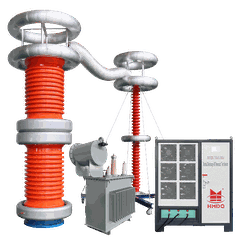



Circuit Breaker Analyzer
High-Quality Factory Label: Goldhome Hipot

Company Profile
Wuhan Goldhome Hipot Electrical Co., Ltd. was established in 2008, located in Economic and Technical Development Zone, working area more than 10000 square meters.We are professional OEM, ODM, OBM Manufacturer which is engaged in the research, development, sale and service of High Voltage Testing Equipment including: Resonant Test System, High Voltage Tester,Transformer Tester, Primary Current Injection Tester,Circuit Beaker Tester, Relay Protection Tester, Cable Tester, SF6 Test Analyzer,Oil Testing Instruments,etc.


What is circuit breaker analyzer?
A circuit breaker tester (also known as a high-voltage switch characteristic tester or switch mechanical characteristic tester) is a comprehensive testing instrument specifically designed to evaluate the mechanical operating performance of high-voltage circuit breakers, vacuum switches, and SF₆ switches. It is standard equipment for power system maintenance and preventive testing. A circuit breaker tester is a general term for a class of specialized instruments used to test and evaluate the performance of circuit breakers. Depending on the testing objectives, they are primarily divided into three categories: mechanical characteristic testers, primary injection testers, and circuit breaker analyzers.
Key Parameters Tested
- Mechanical Characteristics Tester: Primarily measures closing/opening times, synchronism, bounce time, travel, speed, coil current, and operating voltage
- Primary Injection Tester: Primarily measures the operating time of the trip unit at different currents, as well as overload/short-circuit tripping characteristics
- Circuit Breaker Analyzer: Primarily measures main contact timing, coil current, motion parameters, dynamic resistance, and travel-speed curves


Why use it?
- Out-of-sync switching operations → Three-phase imbalance → Tripping, equipment burnout
- Incorrect closing and opening speeds → Inadequate arc quenching → Risk of explosion
- Excessive contact bounce → Ablation, overheating, reduced service life
- Mechanical sticking → Failure to open or close → Serious safety incidents
Core Measurement Principles
(1) Time Measurement Principle
Internal high-precision clock source (microsecond level)
Independent sampling for each phase, with no mutual interference
Records the precise time from coil energization to completion of contact operation
(2) Speed and Travel Principle
Displacement sensor outputs a continuous position signal
The instrument calculates based on sampling points:
Speed = Change in displacement ÷ Change in time
Directly generates a travel-time curve (S-t curve)
(3) Coil Current Monitoring (Optional)
Connect a current clamp or sampling resistor in series
Records the current waveform of the closing and opening coils
Detects whether the coil is stuck, short-circuited, or experiencing abnormal voltage

Workflow
Instrument Outputs Operating Power
The instrument provides adjustable operating voltages (e.g., 220 V, 110 V, 48 V DC) internally to drive the circuit breaker’s closing and opening operations.
Synchronous Acquisition of Time Signals
The instrument’s internal high-precision clock starts timing, while simultaneously acquiring the on/off status changes of each phase’s contacts via the contact signal lines.
Determining Contact Operation Timing
Closing: Contacts transition from open → closed
Opening: Contacts transition from closed → open
The instrument captures the start and end times of each phase’s operation.
Calculating Mechanical Characteristic Parameters
Automatically calculates the following based on time differences:
Closing time / Opening time
Three-phase asynchronism (phase difference)
Bouncing time, number of bounces
Metal short-circuit duration, arcing duration, etc.
Measuring Speed and Travel Using Travel Sensors
An external linear displacement sensor (resistive scale / optical grating) is connected to collect real-time data on the moving contact’s displacement:
Travel = Total distance moved
Over-travel = Excess clamping distance
Initial opening speed, initial closing speed = Derivative of displacement with respect to time.
Core Advantage
High measurement accuracy and resolution
- High time measurement accuracy: Resolution ranges from 0.01 ms to 0.1 ms, enabling precise capture of millisecond-level differences in contact movement
- Wide speed measurement range: Speed measurement range covers 0 to 25.00 m/s, suitable for circuit breakers of various voltage ratings
- Precise travel measurement: Linear sensor resolution of 0.1 mm; angular sensor resolution of 0.1°
Multi-Channel Synchronous Testing
- Supports up to 12 contact channels: Simultaneously captures closing/opening signals from multiple contacts, completing all parameter measurements in a single test
- Reduces repetitive wiring: 12 independent metal contact time channels eliminate the need for repeated disconnection and reconnection
Strong Interference Resistance
- Patented active interference suppression technology: Accurately measures all parameters, including pre-insertion resistance (PIR), even in the noisy electromagnetic environment of 765 kV ultra-high-voltage substations
- Resistant to 15 kV induced voltage: Ensures stable and reliable on-site test data
Intelligence and Ease of Use
- One-button operation: Built-in speed definitions for 21 common circuit breaker types; simply select the switch type and measure with a single button
- Single-Screen Display: Time, travel, speed, and waveforms are displayed on the same screen, eliminating the need to switch pages to view data
- Chinese and English Interfaces: Menu-driven operation with support for both Chinese and English input, facilitating use both domestically and internationally
Built-in Power Supply for On-Site Convenience
- Integrated DC Power Supply: Features a built-in adjustable DC power supply (20–270 V) with a current of 20 A, eliminating the need for an external secondary power source on-site
- Short-Circuit Protection: Output stops and an alarm sounds within 1 ms in the event of a short circuit, ensuring equipment and personnel safety
- Dual-Circuit Power Design: If one circuit fails, testing can continue using the other
Comprehensive Data Management Features
- Large Storage Capacity: The main unit can store 100 sets of test data, supporting export to USB drives and upload via the RS232 interface
- One-Click Report Generation: After testing is complete, quickly download a PDF report or print directly
- Built-in database: Supports electronic document management for circuit breakers, facilitating long-term tracking
Safety Test Mode
- DualGround™ dual-end grounding technology: Allows testing to be performed with both ends of the circuit breaker grounded, avoiding the risk of induced high voltage and significantly enhancing operational safety
- First-trip capture: Captures data from the first operation after a circuit breaker has been out of service for an extended period, enabling timely detection of potential defects such as insufficient lubrication or bearing corrosion
Specific Applications
Maintenance of High-Voltage Equipment in Substations
Conduct preventive tests and post-overhaul tests on vacuum circuit breakers and SF6 circuit breakers rated at 10 kV, 35 kV, 110 kV, and higher, to verify that their mechanical characteristics meet specifications.
01
Factory Testing and Acceptance of High-Voltage Switchgear
Used by switchgear manufacturers for factory inspections and quality control; used by electrical contractors for handover acceptance in new construction projects.
02
GIS (Gas-Insulated Switchgear) Testing
Test the closing and opening times, synchronism, and operating speed of internal circuit breakers and fast-acting earthing switches within GIS to ensure the reliable operation of gas-insulated switchgear.
03
Operation and Maintenance of On-site Power Stations in Industrial and Mining Enterprises
Used in distribution rooms of steel mills, coal mines, petrochemical plants, metallurgical facilities, data centers, and other enterprises for annual switch inspections, fault troubleshooting, and elimination of potential causes of failure to open or close.
04
Emergency Power Repairs and Fault Diagnosis
When switches experience failure to operate, misoperation, abnormal noises, or three-phase imbalance, the tester is used to quickly pinpoint the cause of the fault (such as sticking, coil damage, or mechanical fatigue).
05
Testing of Outdoor Pole-Mounted Switches
On-site characteristic testing of outdoor vacuum circuit breakers, reclosers, and sectionalizers to ensure the safety of distribution networks.
06
Testing by Research and Quality Inspection Institutions
Used by metrology institutes, quality inspection centers, and third-party laboratories for switch type testing, accuracy calibration, and performance comparisons.
07
Operation and Maintenance of Renewable Energy Power Plants
Periodic testing of switches within transformer substations at photovoltaic power plants and wind farms to ensure the stability of renewable energy grid-connected equipment.
08
- High-voltage circuit breakers
- GIS (Gas-Insulated Switchgear)
- Vacuum circuit breakers (VCB)
- SF6 circuit breakers
- Low-oil circuit breakers
- High-voltage load switches
- GIS-integrated circuit breakers
- Indoor/outdoor switches
- Current transformers (CT)
- Contactors
- Relays
- Disconnect switches

Which Tester to Choose for Which Equipment?
|
Equipment Type |
Recommended Tester Type |
Main Test Items |
|
High-Voltage Circuit Breakers (SF6/Vacuum/Oil) |
Mechanical Characteristics Tester / Circuit Breaker Analyzer |
Closing and opening times, synchronism, speed, travel, coil current |
|
GIS Switchgear |
Mechanical Characteristics Tester |
Operating Characteristics of Circuit Breakers and Grounding Switches |
|
Molded-case/frame circuit breakers |
Primary injection tester |
Overload protection, short-circuit instantaneous protection, trip time |
|
Motor overload relays |
Primary injection testers |
Operating characteristics and time delay curves of thermal/electromagnetic elements |
|
Closing/opening coils/trip units |
Circuit breaker analyzers |
Operating voltage thresholds, coil current waveforms |
|
Current transformers |
Primary injection testers |
Transformation ratio accuracy, polarity verification |
Searching Name
· Circuit Breaker Analyzer
· Circuit Breaker Tester
· High Voltage Switch Tester
· Switchgear Tester
· Circuit Breaker Characteristic Tester
· HV Switch Dynamic Characteristic Tester
· Breaker Timing Tester
· Circuit Breaker Timing Test Set
· Breaker Speed Tester
· Switch Stroke Tester
· Circuit Breaker Trip Tester
· Breaker Coil Current Tester
· Circuit Breaker Bounce Tester
· Three Phase Synchronism Tester
· VCB Tester
· SF6 Circuit Breaker Tester
· GIS Circuit Breaker Tester
· Vacuum Circuit Breaker Tester
· Outdoor Circuit Breaker Tester
· Portable Circuit Breaker Tester
· Automatic Circuit Breaker Analyzer
· Touch Screen Circuit Breaker Tester
· High Precision Breaker Tester
· Multi-function Circuit Breaker Tester
Manufacturer Recommendations
Domestic
1. Goldhome Hipot Electrical
Core Advantages: A professional power testing equipment manufacturer based in Wuhan, specializing in high-precision, portable, and cost-effective circuit breaker testers. Compatible with vacuum, SF6, GIS, and low-oil circuit breakers, these devices feature a built-in adjustable DC power supply and support multi-channel synchronous testing, delivering stable data and strong interference resistance.
Applications: Substation maintenance, switchgear factory testing, distribution network field operations, and O&M for industrial and mining enterprises.
Keywords: Goldhome Hipot Wuhan, circuit breaker tester, high-voltage switch characteristic tester.
2. Guoke Electric Research
Core Advantages: Multi-sensor fusion technology, measurement deviation ≤0.1%, supports 4 trigger modes, capable of performing circuit breaker running-in life tests, weighs only 2 kg, and is extremely portable.
Applications: High-precision testing, research institutions, and quality inspection at switchgear manufacturers.
3. Wuhan Dingsheng Electric Power
Core Advantages: Specializes in DC/high-voltage circuit breaker testing; the ampere-second characteristic tester (DAS series) has an outstanding reputation; supports high-current output; suitable for DC systems and industrial applications.
Applications: DC distribution networks, rail transit, data centers, and industrial DC switchgear.
4. Wuhan Longdian Electric
Core Advantages: 17 years of experience in power testing; circuit breaker testers support multi-station synchronous testing, intelligent alarms, and automatic report generation, suitable for switch aging and batch testing.
Applications: Switch manufacturers, power testing centers, and batch factory acceptance testing.
International:
1. Megger (UK)
Representative Models: TM1700/TM1800, EGIL200
Advantages: A global benchmark in power testing, featuring **DualGround™** safety testing technology, supporting full-parameter testing of GIS and high-voltage switches, with strong data traceability.
Applications: High-end substations, overseas projects, third-party testing, type testing.
2. SMC (Switzerland / Germany)
Representative Models: PME-500-TR
Advantages: Integrates contact resistance, coil current, and travel/speed testing; suitable for condition assessment of medium- and high-voltage circuit breakers; outstanding stability.
Applications: Industrial power grids, overseas power companies, precision testing scenarios.
3. Wrindu (Shanghai)
Advantages: A leading exporter, offering customized high-voltage testing solutions; products comply with IEC/ANSI standards; specializes in OEM/ODM and global wholesale.
Applications: Export trade, international engineering projects, and overseas power markets.
FAQ
Q: 1. What is a circuit breaker tester?
A: Also known as a high-voltage switch characteristic tester, it primarily measures the mechanical characteristics of high-voltage circuit breakers, such as closing and opening times, speed, travel, bounce, and three-phase synchronization, to determine whether the switch operates normally and identify any potential faults.
Q: 2. What types of switches can a circuit breaker tester measure?
A: It can test various high-voltage switches, including vacuum circuit breakers, SF6 circuit breakers, GIS circuit breakers, low-oil circuit breakers, load switches, isolating switches, and pole-mounted switches.
Q: 3. Does the equipment need to be de-energized during testing?
A: The power must be turned off, the presence of voltage verified, and the equipment reliably grounded. Live testing is strictly prohibited to prevent electric shock and equipment damage.
Q: 4. Does the test require an external operating power source?
A: Most models feature a built-in adjustable DC power supply (0–260 V DC), eliminating the need for an external power source. The instrument can directly drive the switch to open and close.
Q: 5. What are the main parameters that can be measured?
A: Opening/closing time, three-phase asynchronism, bounce time, initial opening/closing speed, travel, over-travel, coil current, operating waveforms, etc.
Q: 6. Can speed be measured without a travel sensor?
A: No. Speed and travel can only be measured with an external linear displacement sensor (resistive scale or optical scale); connecting only to the contact points allows only time parameters to be measured.
Q: 7. How long does a single test take?
A: With fully automatic testing, a single opening or closing test takes only 3–10 seconds, making the operation very fast.
Q: 8. Can data be saved and printed?
A: Yes. The system supports data storage, USB export, and direct printing of test reports, facilitating engineering acceptance and archiving.
Q: 9. Can it be used outdoors?
A: It can be used in dry environments without rain or snow; however, use is not recommended in rainy, humid, or dusty conditions to avoid affecting accuracy and safety.
Q: 10. Does the instrument require periodic calibration?
A: Annual calibration is recommended to ensure the accuracy of time, speed, and travel measurements and to meet power testing standards.
Q: 11. Can it test six-pole circuit breakers simultaneously?
A: Standard models support 12-pole full-channel testing and can measure three-phase six-pole breakers simultaneously, meeting the testing requirements for the vast majority of high-voltage switches.
Q: 12. What do out-of-specification test results indicate?
A: Excessive time, excessive phase-to-phase difference, or severe bounce generally indicate mechanical sticking, spring fatigue, contact wear, or mechanism deformation, requiring maintenance or replacement.
Q: 13. Is the instrument bulky? Is it portable?
A: Most models feature an integrated, portable chassis and are lightweight, making them suitable for use at substation sites, during emergency repairs, and for routine inspections.
Q: 14. Can the instrument measure the current waveform of a circuit breaker coil?
A: High-end models support coil current acquisition, enabling the detection of faults such as coil short circuits, stalling, and abnormal voltages.
As one of the most professional circuit breaker analyzer manufacturers in China, we're featured by quality products and good price. Welcome to buy circuit breaker analyzer in stock here and get pricelist from our factory. Contact us for customized service.