

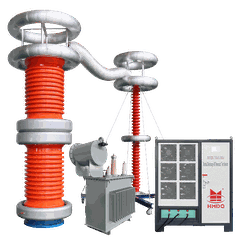



Transformer Turns Ratio Tester
China TTR Tester Manufacturer-----Goldhome
Goldhome has evolved from a specialized technical team focused on power testing equipment R&D into a high-tech enterprise engaged in the R&D, production, sales, and service of high-voltage testing equipment. Our product portfolio encompasses: AC Resonant test system, High-voltage testers, Transformer turns ratio tester, Circuit breaker testers, relay protection testers, cable testers, Transformer oil testers, DC battery testers, Primary current injection tester, lightning impulse voltage generators, Transformer test bench,Insulation resistance tester, Power quality analyzer, These solutions are widely applied across power engineering, transportation, power plant construction, railway infrastructure, petrochemical, metallurgical, and coal mining industries.


A Transformer Turns Ratio Tester (TTR) is a portable electrical testing device specifically designed to accurately measure the turns ratio, connection group, polarity, and error of transformer windings. It is an essential instrument for factory acceptance, handover, major overhaul, and preventive testing of transformers.
A transformer turns ratio tester is a specialized electrical testing instrument used to measure the voltage ratio (turns ratio) of transformers (including power transformers, instrument transformers, etc.) and automatically determine their connection group, polarity, and turns ratio error. Its primary function is to apply low-voltage test signals to verify potential issues such as inter-turn short circuits in transformer windings, connection errors, or tap changer faults. It serves as a critical testing device in transformer manufacturing, installation, and preventive testing.
Based on low-voltage excitation and dual-channel synchronous sampling:
Applying the test voltage: The instrument generates a low-voltage, highly stable AC test signal (typically ≤10 V, 50/60 Hz) internally and applies it to the high-voltage side of the transformer.
Synchronous Voltage Acquisition: The instrument simultaneously and synchronously measures the high-voltage side voltage U₁ and the induced low-voltage side voltage U₂.
Automatic Calculation and Analysis:
Turns Ratio Calculation: K = U₁/U₂ (under ideal conditions, this equals the turns ratio N₁/N₂).
Error calculation: Compares the calculated ratio with the nameplate rated ratio to calculate the percentage deviation (ΔK%).
Connection group / polarity determination: By detecting the phase difference between U₁ and U₂ (an integer multiple of 30°), the instrument automatically identifies the connection group (e.g., Yyn0, Dyn11) and winding polarity.


1.Turns Ratio Measurement and Error Analysis
Verifies whether the measured turns ratio matches the nameplate value and determines whether the number of winding turns is correct.
The standard allowable error is typically ±0.5%; deviations from this range often indicate inter-turn short circuits, winding deformation, or tap changer faults.
2.Connection Group and Polarity Detection
Automatically identifies the connection group of three-phase transformers (Yy, Dd, Yd, Dy, etc.).
Verifies the correct polarity of the windings to prevent massive circulating currents from damaging equipment during parallel operation.
3.Tap Switch Testing
Performs turns ratio tests on all tap positions of the transformer to verify that the tap position indication corresponds to the actual turns ratio and to check for proper switch contact.
4.Three-Phase Balance Check
Simultaneously measure the voltage ratios of the AB, BC, and CA phases, calculate the imbalance ratio, and quickly locate internal faults in a specific phase.
5.Applicable Equipment
Power transformers, voltage transformers (PTs), rectifier transformers, Z-type grounding transformers, etc.
TTR of Key Features
Fully Automatic Measurement
Completes turns ratio, connection group, polarity, error, and tap changer tests with a single button press, eliminating the need for manual calculations.
High Measurement Accuracy
Turns ratio measurement accuracy is typically ±0.1% or higher, with a wide measurement range covering everything from small distribution transformers to high-power main transformers.
Automatic Connection Group Identification
Automatically identifies various connection groups such as Yy, Dd, Yd, and Dy, and directly displays the group designation (e.g., Dyn11).
Supports Rapid Tap Changer Testing
Tests the turns ratio step by step and automatically determines whether the error at each tap position is within specifications, making it suitable for maintenance and handover tests.
Simultaneous Three-Phase Testing with High Speed
Completes three-phase measurements with a single connection and automatically calculates unbalance, offering significantly higher efficiency than manual single-phase testing.
Simple Operation with Chinese/English Interface
Features a large LCD screen and intuitive menus, allowing field personnel to quickly get up to speed.
Comprehensive Protection Functions
Includes high/low voltage reverse connection protection, overcurrent protection, and short-circuit protection to prevent damage to the instrument or transformer caused by operational errors.
Data Storage, Printing, and Export
Stores large volumes of test data and supports printing and USB export, facilitating the generation of test reports.
Compact, Lightweight, and High Interference Resistance
Portable design suitable for use in substations, field sites, and construction sites, with strong resistance to electromagnetic interference.
Wide Range of Applications
Capable of testing various equipment, including power transformers, voltage transformers, rectifier transformers, and prefabricated substations.

Click News:Goldhome Hipot Enhances Transformer Testing Capabilities With Advanced TTR Test Equipment
Specific Types
I. By Number of Phases Measured
- Single-Phase Turns Ratio Tester
- Measures only single-phase transformers and voltage transformers (PT)
- Simple structure, low cost
- Three-Phase Turns Ratio Tester
- Can simultaneously measure all three phases (A, B, C) of a three-phase transformer
- Automatically measures turns ratio, tap position, polarity, and three-phase imbalance
- The mainstream model for on-site power applications
II. By Operating Method
- Manual Type (Old-Style Analog)
- Requires manual adjustment, reading, and error calculation
- Now largely obsolete
- Fully Automatic Intelligent Type
- One-button testing; automatically displays turns ratio, error, tap position, and polarity
- Features storage, printing, and USB export
- Currently the mainstream choice
III. Classification by Function and Accuracy Grade
- Standard Portable Turns Ratio Tester
- Accuracy generally around ±0.2%
- Suitable for distribution transformers and rapid on-site testing
- High-Precision Turns Ratio and Tap Position Tester
- Accuracy of ±0.1% or higher
- Suitable for high-demand applications such as main transformers, rectifier transformers, and instrument transformers
- Multifunctional Comprehensive Testers (Turns Ratio + DC Resistance + Polarity, etc.)
- Integrated with multiple testing functions
- Commonly used in maintenance test vehicles and laboratories
IV. Classification by Applicable Transformer Type
- Conventional Distribution Turns Ratio Testers
- Suitable for standard distribution transformers such as Yy and Dyn11
- Specialized Rectifier Transformer Turns Ratio Testers
- Supports Z-type transformers, rectifier transformers, and phase-shifting transformers
- Capable of measuring high turns ratios and special connection groups
- Dedicated Voltage Transformer (PT) Type
- High turns ratio range, high accuracy
- Suitable for PTs such as 10kV/0.1kV and 35kV/0.1kV
V. By Form Factor and Application Scenario
- Handheld / Portable
- Compact, lightweight, battery-powered
- Field use, utility poles, and substation sites
- Benchtop / Laboratory Models
- More advanced features, comprehensive interfaces
- Factory acceptance testing, laboratory calibration
Final Solution
I. Pre-Test Preparation
- Ensure that the transformer is completely de-energized, discharged, and grounded, and that the leads on both the high-voltage and low-voltage sides are disconnected.
- Place the instrument on a stable surface and connect it to a 220V AC power source or activate the built-in battery.
- Verify that the instrument display is normal, with no alarms or error codes.
II. Wiring
- Connect the instrument’s high-voltage test leads (H, A, B, C) to the transformer’s high-voltage winding.
- Connect the instrument’s low-voltage test leads (L, a, b, c) to the transformer’s low-voltage windings.
- Ensure the ground lead is securely connected to prevent interference and electric shock.
III. Parameter Settings
- Power on the instrument to enter the main interface.
- Select the transformer type: single-phase / three-phase.
- Enter the rated voltage ratio or voltage level (e.g., 10kV/0.4kV).
- Select the tap switch position, or set it to automatic scanning mode.
- Confirm the connection group (some instruments can automatically identify this).
IV. Start Testing
- Press the **Start Test** button.
- The instrument automatically applies the test voltage and simultaneously measures the high-voltage and low-voltage levels.
- Automatically calculates:
- Actual transformation ratio
- Transformation ratio error (%)
- Polarity
- Connection group
- Three-phase imbalance
V. View and Save Results
- The results are displayed directly on the screen upon completion of the test.
- Determine whether the error is within the allowable range (generally ≤±0.5%).
- Press the Save/Print button to store the data or print the report directly.
VI. Ending the Test
- First press Stop and wait for the instrument to complete discharging.
- Remove the test leads, disconnecting the low-voltage side first, followed by the high-voltage side.
- Restore on-site safety measures for the transformer.

Operating Precautions
1.Safety First
Before testing, ensure that the transformer is completely de-energized, checked for voltage, discharged, and grounded. Under no circumstances should wiring or disconnection be performed while the transformer is energized.
2.Never Reverse the Wiring
- The instrument’s high-voltage terminals (H/A/B/C) must be connected to the high-voltage side of the transformer, and the low-voltage terminals (X/a/b/c) must be connected to the low-voltage side.
- Reversing the high- and low-voltage connections can easily damage the instrument.
- Ensure Secure and Reliable Connections
- Clamps and terminals must make good contact to prevent loose or faulty connections, which can lead to inaccurate measurements or alarms.
3.Do Not Short-Circuit Test Leads
During testing, high- and low-voltage test leads must not touch each other or short-circuit to prevent damage to internal circuits.
4.Set Parameters Correctly
Before testing, verify the transformer’s rated turns ratio, tap position, number of phases, and connection group. Incorrect parameters will lead to misinterpretation of results.
5.Do Not Touch Terminals During Testing
The instrument outputs test voltage while operating; touching the terminals poses an electric shock hazard. Do not shake or disconnect the test leads.
6.Wait for Discharge to Complete Before Disconnecting Leads
After testing is complete, wait until the instrument displays “Discharge Complete” or “Test Ended” before disconnecting the test leads.
7.Avoid Environments with Strong Interference
Stay away from high-voltage live equipment, large motors, inverters, and other strong electromagnetic sources, as these can affect measurement accuracy.
8.Stop the test immediately if abnormalities occur
If display abnormalities, alarms, unusual odors, or overheating occur, stop the test immediately and check the wiring and equipment status.
9.Environmental requirements for instrument use
Avoid exposure to rain, moisture, and direct sunlight; keep the instrument clean to prevent dust from entering the unit.
10.Notes on Tap Changer Testing
When switching tap positions, stop the test first. Resume testing only after the tap has been fully engaged to prevent misjudgment due to poor switch contact.
11.Ensure Reliable Grounding
Both the instrument and the transformer under test must be reliably grounded to enhance interference resistance and ensure personal safety.
Prominent Brands
International Brands
- Megger (U.S.): Representative models include the TTR300 series and TTRU3. As an industry benchmark, these instruments offer accuracy as high as ±0.1%, comprehensive functionality, and rugged durability, making them suitable for large power transformers and critical applications requiring extremely high precision.
- DV Power (Sweden/U.S.): Representative models include the TRT series (TRT03/33/63) . Featuring true three-phase testing and a built-in power supply, it excels at testing complex equipment such as phase-shifting transformers and is primarily used in power plants, transmission and distribution systems, and for testing special-purpose transformers.
- Vanguard (USA): Representative model is the ATRT-03. This fourth-generation classic product offers high reliability, supports PC software control, and facilitates convenient data management; it is commonly used in the quality assurance departments of transformer manufacturing plants.
- HAEFELY (Switzerland): Representative model is the TTR2795 series. It can measure excitation current and winding phase angles, offers strong diagnostic capabilities, and is suitable for in-depth on-site diagnostics of power transformers.
- OMICRON (Germany): Representative model is the CPC 100 with TTR module. Featuring a modular design, it serves multiple purposes with a single unit and offers strong expandability, making it suitable for comprehensive power testing laboratories and R&D institutions.
Leading Domestic Brands
1. Goldhome Hipot HMDQ (Wuhan)
Positioning: A leading domestic brand in power testing, with strong presence in both export and domestic markets. Wuhan Guodian Huamei Electrical Equipment Co., Ltd.
Representative Models:
HM5001A: General-purpose model, accuracy ±0.1%, turns ratio 0.9–10,000
HM5001Z: Dedicated for special transformers (Z-type, rectifier, Scott, and reverse Scott)
HM5050: Comprehensive transformer test bench (includes turns ratio, DC resistance, no-load/load tests, and withstand voltage)
Core Advantages (Export / Technical Highlights) Wuhan Guodian Huamei Electrical Equipment Co., Ltd.:
Accuracy ±0.1%, range 0–10,000
Supports blind testing, Z-type/rectifier transformers, and PT/CT-specific applications
Built-in three-phase standard power supply, 10-second three-phase rapid testing
Dual power supply (lithium battery / AC 220V), portable for field use
High/low voltage reverse connection protection, short-circuit protection, data storage/printing
High cost-performance ratio, suitable for export to Asia, Africa, Latin America, the Middle East, and Europe
2. Shanghai Shengxu Electric
Representative Models: SXDB-D, SXDB-C Series
Advantages: Established domestic brand; supports Z-type / high-turns-ratio transformers; blind testing
3. Wuhan Ultra-High Voltage Power
Advantages: AI calibration; strong anti-interference; wide temperature range; IP54 rating; accuracy ±0.05%
4. Dongying Nanke Electric
Advantages: Transformer factory assembly line testing; fully automated integrated system
Alternative Name

· Transformer Turns Ratio Tester
· Transformer TTR Meter
· TTR Tester
· Transformer Ratio Tester
· Transformer Turns Ratio Meter
· 3 Phase Transformer Tester
· Automatic Transformer Turns Ratio Tester
· ransformer Vector Group Tester
· Transformer Polarity Tester
· Transformer Ratio Error Tester
· Transformer Tap Changer Tester
· Z Type Transformer Tester
· Rectifier Transformer Tester
· PT Ratio Tester
· Voltage Transformer Ratio Tester
· Portable Transformer Tester
· Handheld TTR Meter
· Field Transformer Test Equipment
· Substation Test Equipment
· Power Transformer Tester
· Distribution Transformer Tester
· High Accuracy TTR Tester
· 0.1% Accuracy Transformer Tester
· Wide Range Ratio Tester
· Auto Recognition Vector Group
· Battery Operated Transformer Tester
· 120V 60Hz TTR Tester
· Low Cost TTR Meter
· Automatic 3 Phase Transformer Turns Ratio Tester with USB
· Portable TTR Meter for Substation Maintenance
· Transformer Turns Ratio Tester for Rectifier & Z-Type Transformer
· Factory Price High Precision TTR Tester
· CE Certified Transformer Ratio Tester
· Portable Automatic 3 Phase Transformer Turns Ratio Tester
· High Accuracy Transformer TTR Meter with Vector Group Testing
· Transformer Ratio Tester for Rectifier & Z-Type Transformer
· Battery Powered Field Use Transformer Turns Ratio Tester
· CE Certified 0.1% Accuracy Transformer TTR Tester
· DV Power TTR Tester
· Megger TTR Tester
· Vanguard TTR Tester
· CT Turns Ratio Tester
· PT Turns Ratio Tester
· 3 Phase Transformer Turns Ratio Tester
· Single Phase Transformer Turns Ratio Tester
· Automatic Transformer Turns Ratio Tester
· Digital Transformer Turns Ratio Tester
FAQ
Q: 1. What is a transformer ratio tester? What does it measure?
A: It measures transformer turns ratio, turns ratio error, connection group, polarity, and three-phase imbalance.
It checks for inter-turn short circuits, incorrect number of turns, tap changer faults, and wiring errors.
Q: 2. What is the accuracy of Guodian Huamei transformer ratio testers?
A: Standard models: ±0.1%
High-precision models can achieve: ±0.05%
Fully compliant with power system preventive testing standards
Q: 3. Can it test three-phase transformers? Can it automatically identify connection groups?
A: Yes, it supports simultaneous testing of true three-phase transformers
Automatically identifies all connection groups, including Yy, Dd, Yd, Dy, Z-type, and rectifier transformers
Directly displays connection group codes such as Dyn11, Yyn0
Q: 4. Can it test voltage transformers (PT), rectifier transformers, and Z-type transformers?
A: Yes. Guodian Huamei models support:
Voltage transformers (PT)
Rectifier transformers
Z-type grounding transformers
Phase-shifting transformers and Scott transformers
Q: 5. Does testing require a 220V power supply? Does it have a built-in battery?
A: Some models support dual power supply: AC 220V + built-in lithium battery
The lithium battery provides 6–8 hours of continuous operation, suitable for field use without power sources
Q: 6. Will the instrument be damaged if the high- and low-voltage clamps are connected in reverse during testing?
A: No. The instrument features reverse connection protection, overcurrent protection, and short-circuit protection
Reverse connection will only trigger an alarm; it will not damage the instrument or the transformer
Q: 7. Is discharge required before testing? Is the operation safe?
A: The transformer must be de-energized, discharged, and grounded before testing.
The instrument outputs a low-voltage, low-amplitude signal, making it safe and non-hazardous.
It automatically discharges upon test completion; wait for the completion prompt before disconnecting the wires.
Q: 8. What is the voltage ratio test range?
A: Standard: 0.9 to 10,000
Custom options available up to 0.1 to 50,000
It can test everything from small distribution transformers to high-power main transformers and high-voltage current transformers
Q: 9. Can it test all tap positions of a tap changer?
A: Yes, it supports single-tap testing and continuous step-by-step testing.
It automatically records the error for each tap position to determine whether the tap changer contacts are in good condition.
Q: 10. Can data be saved, printed, or exported?
A: It can store hundreds of sets of test data.
It supports printing via a micro printer.
It supports exporting Excel or PDF reports to a USB drive.
Q: 11. What are the instrument’s dimensions and weight? Is it easy to carry to job sites?
A: Portable design, weighing approximately 3–5 kg
Integrated carrying case, suitable for use in substations, construction sites, and field locations
Q: 12. What are the advantages of the Guodian Huamei Turns Ratio Tester compared to foreign brands?
A: Accuracy comparable to international brands (±0.1%)
Priced at only 1/3 to 1/5 of OMICRON and Megger
Supports Chinese/English interfaces
Supports testing of special-purpose transformers
Suitable for export, power plant O&M, and batch testing at transformer factories
Fast after-sales response; parameters can be quickly customized
Q: 13. What error margin is considered acceptable?
A: National standards generally require: ≤±0.5%
Three-phase imbalance: ≤1%
The instrument’s accuracy far exceeds the acceptance criteria, ensuring reliable results
Q: 14. Can a 120V/60Hz input version be provided?
A: Yes. Goldhome supports customization for 110V/120V 60Hz overseas voltages
Suitable for use in regions such as North America, the Middle East, and Southeast Asia
Q: 15. How to Choose the Right Turns Ratio Tester?
A: Focus on the following key points:
- Accuracy and Range: Class 0.2 (±0.2%) is typically sufficient; choose Class 0.1 for high-precision requirements. The recommended measurement range should cover 1 to 10,000.
- Testing Functions: Do you need support for special-purpose transformers (e.g., Z-type, rectifier transformers)? Is simultaneous measurement of short-circuit impedance required?
- Portability: If field work is frequent, prioritize handheld or portable models with built-in batteries.
Q: 16: What is the “blind test” function?
A: This refers to the instrument’s ability to automatically complete testing and determine the tap position and turns ratio even when the transformer’s nameplate parameters (such as turns ratio and tap position) are completely unknown. This is particularly useful for transformers with missing or illegible nameplates.
Q: 17: What are the features of Goldhome’s turns ratio testers?
A: As a well-known domestic brand, Goldhome’s products feature a wide measurement range (supporting turn ratios up to 10,000), a built-in three-phase digital power supply, and fast testing speeds (capable of completing three-phase testing within 10 seconds). They also support Z-type transformer testing and blind testing functions. In addition to turn ratio testers, their product line includes various high-voltage testing equipment such as series resonance and power frequency withstand voltage testers.
As one of the most professional transformer turns ratio tester manufacturers in China, we're featured by quality products and good price. Welcome to buy transformer turns ratio tester in stock here and get pricelist from our factory. Contact us for customized service.