

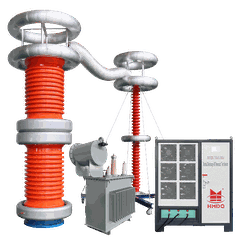



Transformer Oil Testing Instrument
A High Quality Supplier of Transformer Oil Tester
Wuhan Goldhome Hipot Electrical Co., Ltd. was established in 2008, located in Economic and Technical Development Zone, working area more than 10000 square meters. Our company has evolved from a specialized technical team focused on power testing equipment R&D into a high-tech enterprise engaged in the R&D, production, sales, and service of Transformer Oil testing equipment. Our product portfolio encompasses: resonant test systems, high-voltage testers, transformer testers, circuit breaker testers, relay protection testers, cable testers, oil testers, DC battery testers, generator testers, lightning impulse voltage generators, and other power testing equipment. These solutions are widely applied across power engineering, transportation, power plant construction, railway infrastructure, petrochemical, metallurgical, and coal mining industries. The company holds multiple certifications including CE certification and ISO9001 Quality Management System certification. Its products are not only popular in mainland China but also exported to Indonesia, India, Pakistan, Vietnam, the Philippines, Saudi Arabia, the United Arab Emirates, Egypt, Turkey, Israel, Brazil, Germany, the United States, Australia, and other countries and regions. With exceptional product quality and robust technical support, the company has earned widespread trust and acclaim from its customers.


What is a Transformer Oil Tester?
A transformer oil tester is a portable or benchtop instrument, or a suite of instruments, used to analyze the dielectric insulating oil inside electrical transformers. Its primary purpose is to assess the condition of the oil and, by extension, diagnose the health of the transformer itself.
Why is This Testing So Important?
Prevent Catastrophic Failure
A failed transformer can cause massive power outages and cost millions to replace. Regular oil testing provides early warning of problems.
01
Predictive Maintenance
Allows utilities to schedule maintenance based on the actual condition of the asset, not just a calendar (“condition-based maintenance”).
02
Extend Equipment Life
Identifying and remedying issues (e.g., by filtering the oil) can extend a transformer's operational life by decades.
03
Ensure Grid Reliability
Healthy transformers are the backbone of a stable and reliable electrical grid.
04
The Primary Principle of Transformer Oil Tester
Overarching Principle: Transformer oil must maintain high dielectric strength and chemical purity to insulate and cool the transformer. Deterioration, contamination, and internal faults alter the oil's properties. Testers use various technologies to measure these deviations, providing a diagnostic window into the transformer's health.
1. Dielectric Strength Test (Breakdown Voltage Test)
Principle: Place the oil sample between standard electrodes and apply a uniformly ramped AC voltage until breakdown occurs in the oil gap.
Measurement: Record the breakdown voltage value (unit: kV).
Significance: Breakdown voltage directly reflects the oil's insulating capability. A lower value indicates higher levels of contaminants such as water and impurities, resulting in poorer insulation performance.
2. Dielectric Loss Factor (tanδ) Test
Principle: Measures the phase difference of current caused by insulation loss in oil under an alternating electric field.
Measurement: A higher tanδ value indicates more polar impurities (e.g., water, oxidation products) in the oil, leading to degraded insulation performance.
Significance: Evaluates the overall aging and contamination level of the oil.
3. Water Content Test
Principle:
Capacitance Method: Water in oil alters the sensor's capacitance value; moisture content is calculated from this change (unit: ppm).
Karl Fischer Method: Quantitatively detects moisture through an electrolytic reaction.
Significance: Water significantly reduces oil's dielectric strength and accelerates aging of solid insulating materials (paper/cardboard).
4. Acid Number Test
Principle: Employing potentiometric titration, an alkaline solution titrates the oil sample. pH changes are monitored via electrodes to determine the alkali quantity required to neutralize acidic substances in the oil (unit: mg KOH/g).
Significance: Elevated acid numbers indicate severe oil oxidation, which generates sludge that corrodes internal transformer components.
5. Dissolved Gas Analysis (DGA)
Principle: Gas chromatography (GC). Extract dissolved gases from the oil, separate different gas components ( H₂, CH₄, C₂H₂, C₂H₄, CO) using a chromatographic column, and quantitatively analyze them via detectors (FID, TCD).
Significance: A key diagnostic tool for identifying internal transformer faults. Different gas combinations correlate with specific fault types (partial discharge, overheating, arcing), such as:
Acetylene (C₂H₂): Indicates high-temperature arcing.
Hydrogen (H₂): Indicates partial discharge or moisture.
Ethylene (C₂H₄): Indicates overheating.
6. Trace Water and Gas Content Testing
Principle: Separates dissolved gases and moisture in oil via oscillation, heating, or vacuum degassing, then measures their concentration using sensors (e.g., thermal conductivity, capacitance).
Significance: Gases and moisture reduce insulation strength, leading to partial discharge.
The Core Component of Transformer Oil Tester
Vacuum Dehydration Unit
Core role: Remove water from oil.
01
Precision Filter
Core role: Filter out dirt/impurities.
02
Oil Pump
Core role: Move oil through the tester.
03
Sensor & Display Panel
Core role: Monitor oil quality in real time.
04
Control Module
Core role: Keep the tester safe and stable.
05
The Key Feature of Transformer Oil Tester
Multi-Parameter Analysis
Tests key properties like Dielectric Strength (BDV), Water Content, Acid Number, and Dissolved Gases (DGA)in one system.
- Multi-Parameter Analysis:The best testers integrate the ability to measure key parameters in one unit or a coordinated system:
- Dielectric Breakdown Voltage (BDV):The fundamental test for insulation strength.
- Water Content (Moisture): In ppm or dew point.
- Acid Number (Neutralization Number):To measure oil oxidation.
- Dissolved Gas Analysis (DGA):The most powerful feature for fault detection.
High Accuracy
Uses precision sensors and follows international standards (ASTM/IEC)for reliable results.
- High-Precision Sensors: Utilizes advanced sensors (capacitive for moisture, high-voltage generator for BDV, gas chromatograph for DGA) to ensure measurements are accurate and repeatable.
- Compliance with International Standards:Built-in test methods adhere to ASTM (D877, D924), IEC (60156, 60247, 60422) and other standards, ensuring results are globally recognized and valid for compliance.
Automated Operation
- Features one-touch testing, auto-stirring, and pre-set programs to minimize human error.
- Automated Sequencing: Fully automatic test sequences (automatic oil stirring, voltage ramp-up, and arc quenching for BDV tests) minimize operator error and ensure consistency.
- Intuitive Interface:Large color touchscreen with guided menus, on-screen prompts, and clear instructions make complex tests simple to perform.
- Preconfigured Test Profiles:Save settings for different types of transformers or oil, allowing for one-touch operation.
Data Management
Stores results, generates PDF reports, and allows data export via USB/Wi-Fi for analysis.
- Onboard Storage: Capacity to store thousands of test results with timestamps and transformer identification tags.
- Report Generation:Ability to generate and print PDF reports directly on the device, complete with pass/fail indications based on pre-programmed limits.
- Data Connectivity:USB, Wi-Fi, or Bluetooth for easy transfer of data to centralized asset management systems or maintenance software for trend analysis and predictive maintenance.
Safety & Durability
Includes safety interlocks and a rugged design for lab and field use.
- Built-in Safety Features:Includes safety interlocks, automatic discharge of stored energy after a test, and secure connectors to protect the operator.
- Robust and Portable Design:Durable casing and portable form factor for use both in the field and in the laboratory.
- Low Maintenance:Self-diagnostic functions and easily cleanable test cells reduce downtime and upkeep.
Advanced Diagnostics
DGA models automatically analyze gases to predict faults (overheating, arcing) using methods like Duval Triangles.
- Fault Gas Ratio Analysis:Software that automatically applies Duval Triangles, Rogers Ratios, or Key Gas methods to interpret DGA results and provide a diagnosis of the fault type (partial discharge, thermal overheating, arcing).
- Trending and Forecasting:Tracks changes in gas concentrations and other parameters over time, alerting users to developing problems before they become critical.
User-Friendly Interface
Simple touchscreen menus with guided steps for easy operation.
- Automated Sequencing:Fully automatic test sequences ( automatic oil stirring, voltage ramp-up, and arc quenching for BDV tests) minimize operator error and ensure consistency.
- Intuitive Interface:Large color touchscreen with guided menus, on-screen prompts, and clear instructions make complex tests simple to perform.
- Preconfigured Test Profiles:Save settings for different types of transformers or oil, allowing for one-touch operation.
The Primary Type of Transformer Oil Tester
Core Testing Indicator: Dielectric loss factor (tanδ), volume resistivity (ρ).
Purpose: To evaluate oil's insulating capability: Higher dielectric loss and lower resistivity indicate increased impurities/moisture content, poorer insulation properties, and heightened risk of breakdown.
Applicable Standards: GB/T 5654-2022 (China), IEC 60247 (International).
Core Testing Indicator: Breakdown Voltage (kV)
Purpose: Directly assesses oil's electrical breakdown resistance: Lower breakdown voltage signifies greater moisture and impurity content, posing increased insulation risks.
Applicable Standards: GB/T 507-2017 (China), IEC 60156 (International).
Core Testing Indicator: Moisture Content (typically in parts per million)
Detects water content in oil: Moisture significantly reduces oil's insulating properties and is a primary cause of transformer insulation breakdown.
Applicable Standards: GB/T 7600-2014 (China), IEC 60814 (International).
Core Testing Indicator: Dielectric Loss Factor (tanδ), Volume Resistivity (ρ)
Purpose: Evaluates oil's insulating capability: Higher loss factor and lower resistivity indicate increased impurities/moisture, poorer insulation, and heightened breakdown risk.
Core Testing Indicator: Dissolved Gas Content (e.g., H₂, CH₄, C₂H₂)
Purpose: Diagnosing internal transformer faults: Characteristic gases are produced during internal overheating or partial discharge. The type and concentration of these gases help identify fault types (e.g., interturn short circuits, multiple ground faults in the core).
Core Testing indicator: Acid value (mgKOH/g)
Purpose: Assesses oil oxidation and ageing: Higher acid values indicate more severe oxidation, which corrodes internal metal components and generates sludge that can block cooling passages.
Applicable Standards: GB/T 264-2019 (China), IEC 62021-1 (International).
Core Testing indicator: Flash point (°C)
purpose: Assesses oil's fire safety: The flash point is the minimum temperature at which oil vapour ignites. A reduced flash point indicates contamination with light, flammable hydrocarbons (petrol, diesel), posing a fire hazard.
Applicable Standards: GB/T 261-2021 (China), IEC 6156 (International).


The Main Application of Transformer Oil Tester
Routine operation and maintenance of power systems
Grid companies and power supply bureaus regularly test transformer oil quality at substations using analysers to detect early signs of degradation, preventing equipment from operating with faults.
Equipment Fault Diagnosis
When transformers exhibit Abnormal temperatures or unusual noises, dissolved gas analysers examine characteristic gases (e.g., acetylene, ethylene) dissolved in the oil. This enables rapid identification of faults such as internal overheating or partial discharge, pinpointing root causes to minimise outage losses.
Production and Quality Control
Transformer Manufacturers employ testers to verify new oil quality (dielectric loss, flash point) prior to shipment, ensuring compliance with standards. Petrochemical enterprises monitor refining processes with testers during transformer oil production, guaranteeing finished product specifications (acid value, insulation properties) meet requirements while providing quality inspection reports to clients.
Industrial Equipment Protection
Enterprises with Self-owned substations, such as steel mills and data centres, employ testers for regular transformer oil inspections. For instance, flash point analysers mitigate fire hazards, while dielectric loss testers maintain insulation stability, preventing equipment failures that could disrupt production or compromise data security. Concurrently, oil quality data guides timely oil replacement, thereby reducing maintenance costs.
The Maintenance and Precaution of Transformer oil Tester
Daily/Pre-Use Precautions (Before Testing)
- Personal Safety (PPE): Always wear appropriate safety gloves (nitrile or rubber) and safety glasses.
- Sample Handling: Only use clean, dry glass syringes or bottles specifically meant for oil sampling.
- Instrument Inspection: Before powering on, visually inspect the tester for any cracks, damaged cables, or loose connectors.
- Environment: Perform tests in a clean, dry, and well-ventilated area, away from direct sunlight and drafts.
Maintenance Procedures (To Keep It Accurate)
- Regular Cleaning: After each use, clean the test cell(where the oil sample is placed) and electrodes with a pure solvent (naptha or hexane) and lint-free cloth.
- Calibration: Follow the manufacturer's schedule for annual calibration by an accredited service provider.
- Functional Checks: Use a reference oil sample with a known value (e.g., a known breakdown voltage) to periodically verify the instrument's performance between calibrations.
- Battery Care: For portable units, avoid fully draining the lithium-ion battery. Recharge it after use.
- Proper Storage: Store the tester in its original case in a dry, temperature-controlled environment.
Operational Precautions (During Testing)
- Power Safety: Ensure the instrument is properly grounded(3-pin plug) before starting.
- Follow the Procedure: Never skip the steps in the manufacturer's manual, especially the “Purge” or “Flush” function.
- Use the Right Settings: Select the correct test standard (ASTM D1816 or IEC 60156) as specified in your procedures.
- Handle Samples Quickly: Perform the test immediately after drawing the oil sample from the transformer.
Our Service
We pledge to treat every client with integrity and equality, regardless of contract size or whether they are domestic or international, new or existing customers, providing professional consultation and advice. Goldhome provides professional installation, commissioning and training for users' workers, ensures that users can get familiar with operation methods and put machines into use as soon as possible.
1.Technical Consultation: Free support for product selection, test plan design, and standard compliance guidance.
2.Scenario Customization: Engineer teams deliver tailored solutions within 48 hours, based on client-specific conditions (e.g., high-altitude, high-humidity environments).
3,Trial Experience: Device trial testing and data validation to ensure product compatibility.
1.Transparent Delivery: Real-time updates on production progress, including factory test reports, operation videos, and global logistics tracking.
2.Installation & Training: On-site guidance for device commissioning and high-voltage safety training (theory + hands-on practice).
3.Acceptance Assurance: Support for equipment acceptance and issuance of third-party calibration certificates.
1.Warranty: 2-year warranty for entire systems.
Lifetime maintenance for core components (e.g., frequency converters, high-voltage dividers).
2.Rapid Response: 400 service hotline: Domestic on-site support within 24 hours; overseas remote diagnosis within 72 hours.
3.Proactive Care: Quarterly proactive inspections to monitor equipment performance and provide preventive maintenance recommendations.
4.Emergency Support: Priority dispatch of spare parts for urgent needs (e.g., power grid repairs) to minimize downtime.
5.Value-Added Services: Smart upgrades (e.g., IoT data integration).
Lab construction planning and long-term partnership support.
Guaranteeing safety, efficiency, and seamless collaboration at every stage.
FAQ
Q: What specific parameters can a transformer oil tester measure?
A: Electrical properties: Dielectric strength (breakdown voltage) – directly reflects the oil's insulating capability.
Chemical properties: Acid value, moisture content – assesses the degree of oil oxidation, ageing, and moisture ingress.
Fault diagnosis: Dissolved gas analysis (DGA) – diagnoses latent faults within the transformer (such as overheating, discharge, or arcing).
Comprehensive performance: Dielectric loss factor (tanδ) – Assesses overall oil purity.
Q: Why are these tests necessary?
A: To evaluate insulation health; enable predictive maintenance; extend equipment lifespan.
Q: Is the transformer oil tester complicated to operate?
A: The process is straightforward, typically involving ‘connecting leads - setting parameters - one-button testing’. The screen features a guided menu.
Q: Does the transformer oil tester require specialised training?
A: Although operation is simple, interpreting data and diagnosing faults necessitates professional knowledge and training.
Q: Does testing require power disconnection?
A: Partial power disconnection or safety precautions are required when taking oil samples.
Q: How are results interpreted?
A: Strict international/national standards (e.g. GB, IEC, ASTM) apply. The instrument automatically provides conclusions of ‘Pass’, “Warning”, or ‘Fail’.
Q: What can DGA testing detect?
A: It serves as the most potent diagnostic tool. By analysing key gas concentrations and ratios—including hydrogen (H₂), methane (CH₄), acetylene (C₂H₂), and ethylene (C₂H₄).
Q: Can data be stored and exported?
A: Yes. Supports extensive data storage with searchable filters by equipment ID and time. Data can also be exported via USB drives to generate standardised PDF inspection reports for archiving and analysis.
Q: How to select the appropriate model?
A: Choose based on requirements and budget:
Basic model: Measures dielectric strength and moisture only, suitable for routine inspections.
Professional model: Adds acid value, tanδ, etc., for comprehensive oil quality analysis.
Diagnostic model: Integrates DGA functionality for fault diagnosis, representing the highest price point.
Q: What about after-sales support and calibration?
A: Calibration: Requires periodic (typically annual) return to the manufacturer or authorised centre for metrological calibration to ensure accuracy.
Service: Prior to purchase, verify the supplier's technical support capabilities and after-sales response times.
As one of the most professional transformer oil testing instrument manufacturers in China, we're featured by quality products and good price. Welcome to buy transformer oil testing instrument in stock here and get pricelist from our factory. Contact us for customized service.