

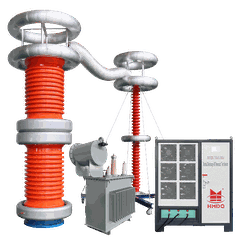



High Voltage Divider
Goldhome Manufacture Price for High Voltage Divider
Wuhan Goldhome Hipot Electrical Co., Ltd. was established in 2008, located in Economic and Technical Development Zone, working area more than 10000 square meters.We are professional OEM, ODM, OBM Manufacturer which is engaged in the research, development, sale and service of High Voltage Testing Equipment including: AC Series Resonant Test Systems, AC DC Hipot Testers, Lightning Impulse Voltage Generator, Primary Current Injection Testers, High Voltage Divider, CT PT Analyzer, Transformer Turns Ratio, Insulation Resistance Tester,Circuit Breaker Testers, Relay Protection Testers, Cable Fault Locator, SF6 Comprehensive Analyzers, Transformer Oil Test Device, etc.

01
High Quality
Reliable Quality for Safe Power.
02
Advanced Equipment
Precision Equipment,Superior Performance
03
Professional Team
51 professional technicians, Advanced Solutions
04
Custom Service
Technical Consultation:≤1 H
Quotation:≤2 H


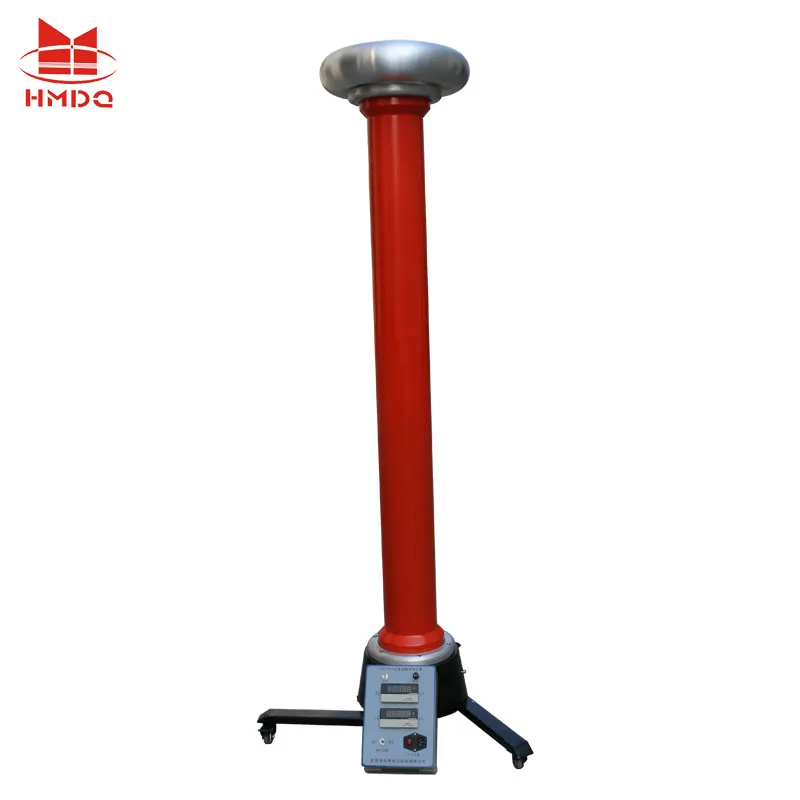
A high-voltage divider is a precision voltage conversion and measurement device. Its core function is to attenuate high-voltage signals—ranging from thousands to millions of volts—to safe, measurable low-voltage signals at a strict ratio (such as 1000:1), which are then processed by low-voltage instruments (such as voltmeters or oscilloscopes). It provides a high-precision foundation for electrical measurement in the condition monitoring, acceptance testing, and troubleshooting of high-voltage equipment.
Modern high-voltage dividers typically consist of two parts: the divider unit itself and a low-voltage display meter. High-quality products employ balanced equipotential shielding and a fully sealed insulated housing, which not only ensures measurement accuracy but also guarantees safety during on-site operation.
Core Functions
Safe Voltage Reduction
Utilizing a high-precision resistor/capacitor network, high voltages are reduced by a fixed ratio (e.g., 1000:1) to typical volt levels, enabling safe measurement by standard instruments.
Precise Measurement
Acting as the “eyes” of high-voltage testing, it displays the reduced voltage values in real time and with precision on the control panel instruments, helping engineers assess insulation quality.
Signal Conversion
Converts high-voltage signals proportionally and without distortion into low-voltage signals, while preserving the original voltage’s waveform, frequency, and phase characteristics, enabling waveform capture and analysis by instruments such as oscilloscopes.
Isolation Protection
Establishes a safety barrier between the high-voltage circuit and measurement equipment, ensuring that expensive measuring instruments are not damaged by breakdown in the event of a fault.
Real-Time Voltage Sampling and Monitoring
Continuously acquires high-voltage waveforms and numerical values during power frequency, variable frequency, DC, and impulse tests, displaying voltage in real time.
Fidelity Waveform Transmission
RC and capacitive voltage dividers fully preserve the original voltage waveform without distortion, making them suitable for partial discharge (PD) testing and impulse test waveform analysis.
System Closed-Loop Control Feedback
Provides voltage feedback signals to withstand voltage resonance systems and PD-free testing systems, enabling automatic voltage stabilization and regulation.
Partial Discharge Testing Support
An essential accessory for the PD Free partial discharge-free high-voltage system, it stabilizes voltage and electric fields, reduces interference, and ensures the accuracy of partial discharge detection data.
Calibration and Metrological Verification
Can serve as a reference instrument for standard high-voltage sources, used to calibrate other high-voltage measurement equipment.
Compatibility with Multiple Voltage Types
Compatible with: AC, DC, variable frequency, lightning impulse, and switching impulse high-voltage measurements.


Main Features
Precise Voltage Division Ratio
The voltage division ratio is stable and highly linear, resulting in minimal measurement error and accurate conversion of high-voltage values.
High Measurement Accuracy
Utilizes high-quality high-voltage capacitors and resistors with low temperature drift and excellent stability, making it suitable for both precision laboratory measurements and field testing.
Minimal Waveform Distortion
With a wide frequency response range, it can fully reproduce power frequency, variable frequency, and impulse voltage waveforms without distortion or distortion.
High Insulation Strength
Constructed with high-strength insulating materials throughout, it features a high voltage withstand rating and sufficient creepage distance, ensuring no surface discharge or partial discharge under high voltage.
Extremely Low Intrinsic Partial Discharge
With high-quality insulation and shielding structures, it exhibits low background partial discharge (PD), making it suitable for use with partial discharge-free test systems and in partial discharge detection scenarios.
High- and Low-Voltage Electrical Isolation
The high-voltage side is completely isolated from the low-voltage measurement side, ensuring the safety of downstream instruments, oscilloscopes, and operators.
Compact, Lightweight, and Portable
The vertical, integrated design facilitates easy transport and allows for rapid setup and use in both field testing and laboratory environments.
Excellent Temperature Drift Characteristics
Resistant to high and low temperatures with a low temperature drift coefficient; measurement values remain stable during prolonged pressurized operation.
Strong Interference Immunity
Built-in shielding structure suppresses external electromagnetic interference, ensuring stable measurements even in complex field environments.
Wide Compatibility
Compatible with various high-voltage tests, including AC, DC, variable-frequency resonance, lightning impulse, and switching impulse tests, and adapts to a wide range of withstand voltage, partial discharge, and impulse test equipment.

Working Principle
The working principle of a high-voltage voltage divider is essentially a “voltage-reducing safety valve” based on circuit theory.
This process can be viewed as converting a high voltage (V_in) to be measured into a lower voltage (V_out) at a fixed ratio (R).
1. Resistive Voltage Divider
- Core Principle: Based on voltage division via series resistors, with the formula V_out = V_in × [R2 / (R1+R2)].
- Advantages: Simple and intuitive structure, high measurement accuracy, good stability, and capable of measuring both DC and AC.
- Limitations: Issues with resistance drift caused by heat generation; limited high-frequency response; not suitable for measuring steep-rising waves.
Typical Applications: High-voltage DC measurement, power-frequency AC voltage measurement.
2. Capacitive Voltage Divider
- Core Principle: Based on voltage division via series-connected capacitors, with the formula V_out = V_in × [C1 / (C1+C2)].
- Advantages: Good frequency response, no thermal loss, high voltage withstand capability, and relatively compact size.
- Limitations: Output oscillations may occur due to loop inductance, and response to steep-front waves is inferior to that of resistive dividers.
- Typical Applications: Power-frequency AC high-voltage measurement, series resonance testing.
3. Parallel RC Voltage Divider
- Core Principle: Based on the resistive voltage divider, a capacitor is connected in parallel to the high-voltage arm to increase the series capacitance.
- Advantages: Significantly reduces the impact of stray capacitance to ground, offers high accuracy, and provides a more uniform potential distribution.
- Limitations: Demands high design and manufacturing precision.
- Typical Applications: Precision measurement of AC and DC high voltage.
4. RC Series Voltage Divider
- Core Principle: A resistor is connected in series with the high-voltage arm of a capacitive voltage divider to provide damping.
- Advantages: Suppresses output oscillations that may occur in the capacitive circuit; response characteristics are superior to those of a pure capacitive divider.
- Limitations: Response time is affected by the resistance value; precise parameter setting is required.
- Typical Applications: Measurement of AC, lightning impulse, and switching impulse voltages.

Operating Procedure for the High-Voltage Divider
Pre-Operation Preparation
Inspect the voltage divider to ensure there are no external damages, cracks, or signs of moisture.
Verify that the rated voltage rating and voltage division ratio match the test voltage for this operation.
Select a flat, dry, and debris-free location for placement.
Prepare the grounding wire, signal cables, and measuring instruments.
Installation and Wiring Procedures
Place the high-voltage divider vertically and securely, ensuring it remains upright and does not tilt.
Connect the grounding terminal reliably; the ground connection must be firm and secure.
Connect the signal cable from the divider’s low-voltage output terminal to the measuring instrument, oscilloscope, or control system.
Connect the high-voltage terminal of the divider to the test high-voltage source via bare copper wire or an equalizing ball.
Maintain a sufficient safety distance; ensure all personnel in the vicinity have evacuated the high-voltage area.
Voltage Rise Test Procedure
After confirming correct wiring and ensuring personnel have retreated to the safety zone, start the voltage-raising equipment.
Raise the voltage slowly and at a constant rate; sudden voltage increases or rapid surges are strictly prohibited.
Observe the voltage display on the voltage divider and measuring instruments, and record the stable reading.
Monitor throughout the process for any abnormal noises, flashes, odors, or surface discharge; immediately reduce the voltage and shut down the equipment if any abnormalities occur.
Post-Test Procedures
Slowly reduce the voltage to zero and shut down the voltage-raising equipment.
Wait for the high voltage to fully discharge and confirm there is no residual voltage.
First disconnect the high-voltage connections, then remove the signal cables, and finally remove the grounding wires.
Wipe down the equipment, coil the cables, and transport and store it carefully.
Safety Precautions
Ensure reliable grounding; never operate the equipment without grounding.
Do not use outdoors in damp, thunderstorm, or high-wind conditions.
Never operate the equipment for extended periods at voltages exceeding the rated withstand voltage.
Do not approach or touch the voltage divider or leads during the voltage-application process.
When not in use for extended periods, store the equipment in a dry, well-ventilated area to prevent moisture damage and insulation degradation.
High Voltage Divider Industry Analysis
1. Industry Overview
High voltage dividers are core devices for high-voltage measurement and insulation testing. By utilizing resistive, capacitive, or RC voltage-dividing principles, they attenuate high voltages to low-voltage signals at precise ratios for acquisition and conversion by instruments and oscilloscopes, while also providing electrical isolation between high and low voltages. They are widely used in the power, new energy, industrial testing, and scientific research and metrology sectors.
Product Categories
Capacitive: Power frequency / variable frequency / partial discharge (PD) testing; low partial discharge and low loss.
Resistive: DC / power frequency steady-state measurement; simple structure, no capacitive effects.
RC: Lightning / operational surges, transient high voltage; wide frequency band, high waveform fidelity.
Fiber-optic (OVT): Ultra-high voltage DC, smart grids; strong anti-interference capability, digital output.
2. China Market and Regional Landscape
China is one of the fastest-growing regional markets for high-voltage dividers globally. In terms of regional distribution:
The North American market leads globally with a 34% share, primarily driven by demand for upgrades to advanced power infrastructure.
The European market accounts for 29% of the market share, mainly driven by safety compliance standards and the integration of renewable energy.
The Asia-Pacific market accounts for 27% of the market share due to rapid industrialization, with China serving as the core engine of growth in the region.
Latin America, the Middle East, and Africa collectively account for approximately 10%, with accelerating grid modernization driving market demand.
Based on conversion rates, the market size for capacitive high-voltage dividers in China is projected to reach 4.596 billion RMB by 2025. The growth rate of the Chinese market is significantly faster than the global average, primarily benefiting from national power sector reform policies, support for smart grid construction, and sustained demand from new energy power generation projects.
Regional Differentiating Drivers:
North American Market: Over 38% of growth stems from utility companies upgrading high-voltage systems. Meanwhile, demand from testing laboratories for precision voltage dividers with enhanced insulation resistance has increased by 33%, and on-site applications of portable high-voltage voltage dividers have grown by more than 24%.
European Market: Due to strict enforcement of electrical safety standards across European countries, demand for high-end products with high standards and stability accounts for a significant proportion of the market, directly driving steady growth.
3. Market Competitive Landscape
3.1 Key Players
The competitive landscape of the high-voltage divider industry is characterized by a dual-track approach: “international brands dominate the high-end market, while domestic companies are rapidly catching up.”
Major global market players include:
Testing instrument giants: Fluke Corporation, Keysight, Megger, Yokogawa Electric, Hioki, etc. These companies have strong brand influence, comprehensive product lines, and sales channels spanning the globe.
Specialized high-voltage testing companies: Haefely Test AG, HIGH VOLTAGE (HVI), Phenix Technologies, HIGHVOLT Prüftechnik Dresden, HILO-TEST, PFIFFNER Group, CONDIS SA, etc. With decades of deep expertise in high-voltage testing segments, these companies possess substantial technical expertise and globally leading strategic capabilities, particularly in niche markets such as partial discharge testing and high-voltage voltage dividers.
Precision Component Manufacturers: Vishay, TT Electronics, KOA Corporation, Metallux AG, Elektronische Bauelemente GmbH (EBG), and others. These companies extend their operations upstream from the manufacturing of core resistors and capacitors to the supply of modular devices, providing core material technologies for high-end voltage dividers.
Domestic Chinese Companies: Wuhan Goldhome(HMDQ), Wuhan Kaidi Zhengda Electric, Wuhan Huada Electric, Wuhan Guoshi Electric, Wuhan Nari Electric, PRBTEK (high-voltage probes comparable to Tektronix), etc. These companies have established strong competitiveness in the low-to-mid-end market and are gradually transitioning to mid-to-high-end products, accelerating the pace of domestic substitution.
3.2 Key Characteristics of the Competitive Landscape
Market Positioning: International brands dominate the high-end market; Chinese domestic enterprises lead the low-to-mid-end market and are expanding into the high-end segment.
Technological Advantages: International brands have mastered the independent R&D of core components, possess mature multi-physics simulation platforms, and lead globally in high-precision areas such as ultra-thin film resistors and stepped capacitor banks; domestic enterprises primarily rely on imported core components but excel in integration and finished product manufacturing, having demonstrated the capability for domestic substitution in the mid-range segment through technological breakthroughs in frequency bands above 300 MHz.
Brand Awareness: International brands enjoy high global recognition and strong trust among power industry clients; domestic brands are gradually increasing their visibility, with some reaching the same level as their overseas counterparts.
Sales Channels: International brands possess a global network covering over 160 countries; domestic enterprises focus on the domestic market and demonstrate strong capabilities in penetrating lower-tier markets.
Competitive Strategies: International brands primarily focus on product differentiation, providing comprehensive solutions, and high-value-added services; domestic enterprises center on a cost-effective strategy while enhancing localized services and responsiveness.
Market Size: International brands collectively account for over 60%–70% of the global market share, particularly in high-reliability application areas; domestic enterprises’ market share continues to rise, benefiting significantly from the trend toward domestic substitution.
3.3 Industry Concentration
The global market is relatively fragmented, with international brands collectively holding the majority share. However, in recent years, rapid growth in the Chinese market and the swift development of local enterprises have driven a year-on-year increase in the global production and sales shares of suppliers in the Asia-Pacific region. In the Chinese market, due to high regional customer service requirements and rapid market response times, some leading Chinese manufacturers have achieved significant increases in market share across various voltage-level segments. Industry concentration (as measured by CR4, etc.) varies significantly across different voltage levels and application areas; sectors such as high-end industrial automation remain dominated by international brands.
4. Competitive Landscape (Chinese Market, 2025)
First Tier (CR4 = 58.5%)
State Grid Nari: 19.8%, leader in UHV, closely tied to State Grid, and a benchmark for domestic substitution in ±1100 kV projects.
Xuji Electric: 14.2%, strong support for power grid infrastructure, and stable performance in medium- and high-voltage measurement.
China XD Electric: 12.9%, strengths in UHV AC and GIS, leading insulation technology.
TBEA: 11.6%, synergy between UHV DC and new energy, high cost-effectiveness.
Second Tier (10%–20%)
Goldhome Hipot, Wuhan Kaidi Zhengda, Dingsheng Electric, Keli Electronics, etc., focusing on medium- and low-voltage, smart, and export markets.
Third Tier (Foreign-Owned / High-End Segments)
Global Giants: ABB, Siemens, HIOKI, dominate top-tier R&D / metering / high-end industrial applications, with high prices (20%-30% higher than domestic brands).
Domestic Specialists: Wuhan Kemei, Beijing Zhixin, have achieved breakthroughs in 1000kV/±1100kV technology, filling the high-end market gap.
Concentration Trends
CR4 is projected to rise from 54.3% in 2024 to 58.5% in 2025, with the head-tail effect intensifying and SMEs transitioning toward niche markets and exports.
5. Technology Trends (Core Upgrade Directions)
Intelligentization (Mainstream): Digital displays + RS485/Modbus/IEC 61850 communication, edge computing, AI-driven self-calibration, remote calibration, and full lifecycle traceability.
Wide-Bandwidth and High-Stability: RC matching + nanomaterials, frequency response covering DC to MHz levels, temperature drift < 5 ppm/°C, partial discharge < 5 pC, suitable for new energy applications and surge testing.
Fiber Optics (OVT): Accelerated replacement in UHV DC (±800 kV+); application share to exceed 45% by 2026; offers interference resistance, calibration-free operation, and easy integration into digital grids.
Miniaturization / Lightweight Design: Compact models for 10 kV–35 kV distribution networks; portable and easy to install; suitable for distributed PV and energy storage scenarios.
Green and Low-Consumption: Partial discharge-free insulation, low dielectric loss, and recyclable materials, meeting “Dual Carbon” requirements.
6. Driving Factors
Policy Drivers
“Dual Carbon” + New Power System: The UHV “19 AC and 16 DC” projects, totaling 35 initiatives with a combined length of 48,000 km, are driving high-end demand.
Made in China 2025 / Smart Testing Equipment Plan: Supports localization of core sensors and addresses bottlenecks such as high-stability materials and weak signal processing.
Market Drivers
- Grid Upgrades: Replacement of aging equipment (10+ years old), with demand for Class 0.05 high-precision products up 23% year-over-year.
- Renewable Energy Boom: Photovoltaic / Wind Power / Energy Storage / 800V High-Voltage DC, creating urgent demand for wide-bandwidth, high-linearity voltage dividers.
- Computing Infrastructure: High-voltage DC power distribution in data centers, driving growth in miniaturized, high-response products.
Technology-Driven
- Material Breakthroughs: Nano-composite resistors / capacitors, offering improved stability and reduced size.
- Digital Convergence: IoT + AI + Digital Twins, enabling predictive maintenance and reducing O&M costs.
Famous Brands
Internationally Renowned Brands
- ABB (Switzerland): A global leader in high-voltage measurement, with cutting-edge technology in UHV DC/AC voltage dividers covering the ±1100 kV range and achieving a accuracy class of 0.02. Widely used in State Grid’s UHV projects.
- Siemens (Germany): A benchmark in industrial-grade high-voltage measurement, with RC voltage dividers offering a frequency response range of DC to 10 MHz, suitable for impulse and operational overvoltage testing, and featuring high reliability.
- Hioki (Japan): A leader in precision measurement, featuring resistive voltage dividers with temperature drift < 5 ppm/°C and a portable design suitable for both laboratory and field calibration.
- HIGHVOLT (Austria): An authority on partial discharge-free voltage dividers, with partial discharge < 1 pC, suitable for GIS and transformer insulation testing, and holding a high market share in Europe.
Well-Known Chinese Brands
- Goldhome(Wuhan): A leading domestic manufacturer of high-voltage testing equipment. The HMFRC series AC/DC voltage dividers (50 kV–500 kV) are flagship products, utilizing DuPont dry-type dielectric material, with accuracy of Class 1.5 for AC and DC Class 1.0, with a voltage division ratio of 1000:1. It combines high-voltage sampling and no-load rise compensation functions, is compatible with series resonance systems, and is widely used in power grids, new energy, and rail transit sectors, offering better value for money than imported brands.
- State Grid Nari: A leader in UHV technology with strong ties to State Grid Corporation of China. It serves as a benchmark for the domestic substitution of ±1100kV DC voltage dividers and leads the market in smart (IEC 61850) solutions.
- Xuji Electric: Strong in power grid support, with stable medium- and high-voltage measurement capabilities. Its RC voltage dividers are suitable for distribution network automation scenarios, and the company has a clear advantage in mass production.
- China XD Electric: Strengths in UHV AC and GIS systems; leading insulation technology; partial discharge-free capacitive voltage dividers (≤1.5 pC) used for factory testing of high-voltage equipment.

Selecting Name
· High Voltage Divider
· HV Voltage Divider
· High Voltage Potential Divider
· Capacitive High Voltage Divider
· Resistive High Voltage Divider
· RC High Voltage Divider
· Dry Type High Voltage Divider
· High Voltage Measuring Divider
· High Voltage Test Divider
· Partial Discharge Test Voltage Divider
· Withstand Test High Voltage Divider
· Impulse Voltage Divider
· Portable High Voltage Divider
· Potential Divider
· Digital High Voltage Divider
· High Voltage Divider with Display
· HV Divider
· Voltage Divider High Voltage
· Portable Dry Type High Voltage Divider For HV Withstand Test
· Capacitive High Voltage Divider For Partial Discharge Test
· Digital Display HV Voltage Divider 50kV 100kV 200kV
· AC DC High Voltage Divider
· Digital High Voltage Meter
· Kilovoltmeter
· Capacitive Voltage Divider
· Resistive Voltage Divider
· RC Divider / Damped Capacitive Divider
· Electronic Voltage Divider
· Standard Voltage Divider
· High Voltage Measurement
·High Voltage Divider for Oscilloscope
·HV Divider Meter / Digital Kilovoltmeter
·FRC Series AC DC High Voltage Divider
·Ultra-Precision High Voltage Divider
·High Voltage Probe
·HVD Series High Voltage Dividers
FAQ
Q: 1: What is a high-voltage divider?
A: A high-voltage divider is a specialized device for high-voltage measurement. It reduces high voltage to low voltage at a precise ratio for instrument measurement and conversion, while also providing electrical isolation between the high- and low-voltage circuits.
Q: 2: What types of high-voltage dividers are available?
A: Capacitive, resistive, and RC types, as well as dry-type, portable, and surge-specific models.
Q: 3: What is the purpose of a capacitive voltage divider?
A: It is used for power frequency withstand voltage, variable frequency resonance, and partial discharge-free testing. It features low dielectric loss and extremely low internal partial discharge.
Q: 4: What is the purpose of a resistive voltage divider?
A: It is primarily used for measuring DC high voltage and steady-state AC high voltage. It has a simple and stable structure.
Q: 5: What is the purpose of a RC voltage divider?
A: It has a wide frequency band and is used for measuring lightning impulse and switching impulse voltages, with no waveform distortion.
Q: 6: What are the common voltage ratings?
A: 50 kV, 100 kV, 150 kV, 200 kV, 300 kV, 500 kV; customization is available.
Q: 7: Can it be used for partial discharge testing?
A: Yes. The dry-type capacitive voltage divider has an extremely low background partial discharge level and is specifically designed for use in partial discharge-free test systems.
Q: 8: Is it convenient to carry and use on-site?
A: With its integrated dry-type structure, light weight, and vertical design, it is easy to transport and install in both laboratories and field locations.
Q: 9: What are the advantages of Goldhome high-voltage voltage dividers?
A: High accuracy, stable voltage division ratio, low temperature drift, low inherent partial discharge, dry-type insulation, and safe isolation; they offer far better value for money than imported brands.
Q: 10: What are the key safety points for operating a high-voltage voltage divider?
A: Place vertically, ensure reliable grounding, connect the low-voltage signal lines properly, increase voltage slowly, maintain a safe distance, and fully discharge the unit after testing before disconnecting the lines.
Q: 11: What are the accuracy classes available?
A: Standard classes include 0.5, 1.0, and 1.5; high-precision models can reach Class 0.2.
Q: 12: Can the unit be operated under continuous voltage for extended periods?
A: Yes. With excellent insulation and shielding, the unit maintains stable readings without drift during long-term operation.
Q: 13: If a low-voltage display meter is not required, can the high-voltage divider be used independently?
A: Yes. The high-voltage divider can be used independently; a standard multimeter available on the market can be used in place of the low-voltage display meter. The voltage division ratio of the high-voltage divider is 1000:1; multiplying the multimeter reading by 1000 equals the measured high-voltage value (convert the multimeter reading units to kV).
Q: 14. Why does the meter return to zero slowly when measuring AC voltage?
A: Due to the presence of filter capacitors in the divider and the inherent capacitance of the measurement circuit, the meter will return to zero slowly during AC testing. This is a normal phenomenon, and the zero-return time is typically 10–15 minutes. Important Note: After the high-voltage power supply is disconnected, the voltage applied to the high-voltage terminal of the voltage divider has already disappeared, even if the meter has not yet returned to zero. However, this differs from DC measurements; you must first discharge the system and confirm that the meter has returned to zero before approaching it.
15. What safety precautions should be observed when using a high-voltage divider?
High-voltage dividers are classified as high-voltage testing equipment; the following safety regulations must be strictly adhered to:
- Prioritize Grounding: Before each use, the grounding terminal must be reliably grounded (0 potential, grounding resistance ≤ 4 Ω). Failure to do so may cause high voltage to be conducted to the meter housing, resulting in an electric shock accident.
- Safety Distance: Maintain a distance of ≥3 meters from the high-voltage zone during operation (for 100 kV class); no debris is allowed within 2 meters of voltage dividers rated below 100 kV, 3 meters for 100–200 kV, and 4 meters for voltage dividers rated above 300 kV
- Strictly Prohibit Overvoltage: The operating voltage must not exceed the voltage divider’s rated voltage. Ensure the surface is clean.
- DC Discharge Required: After completing DC high-voltage measurements, the instrument must be fully discharged using a discharge rod. Do not enter the site until the low-voltage display returns to zero. During AC testing, the meter will return to zero slowly, which is normal; however, even after the high-voltage power supply is disconnected, the main circuit may still retain a charge.
- Wiring Standards: High-voltage test leads must be made of high-voltage-rated wire and must be suspended; they must not be dragged on the ground or placed too close to the ground.
- Site Clearance: The test site must be free of debris to avoid affecting measurement accuracy.
- Handle with Care: The voltage divider is a precision instrument; it must not be subjected to impact, compression, or similar forces.
As one of the most professional high voltage divider manufacturers in China, we're featured by quality products and good price. Welcome to buy high voltage divider in stock here and get pricelist from our factory. Contact us for customized service.