

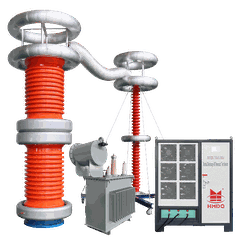



Vacuum Switch Tester
Goldhome Supplier of Reasonable Price with Vacuum Switch Tester
Goldhome has evolved from a specialized technical team focused on power testing equipment R&D into a high-tech enterprise engaged in the R&D, production, sales, and service of high-voltage testing equipment. Our product portfolio encompasses: resonant test systems, high-voltage testers, transformer testers, circuit breaker testers, relay protection testers, cable testers, oil testers, DC battery testers, Primary Current Injection Tester, lightning impulse voltage generators, and other power testing equipment. These solutions are widely applied across power engineering, transportation, power plant construction, railway infrastructure, petrochemical, metallurgical, and coal mining industries.


What is vacuum switch tester?
A vacuum switch tester, commonly known as a vacuum switch vacuum tester, is a specialized instrument designed to measure the vacuum level inside the vacuum arc-extinguishing chamber of a vacuum circuit breaker (also known as a vacuum switch). Its primary function is to determine whether the “vacuum” inside the vacuum switch is still maintained.

Why is it essential to use a Vacuum Switch Tester?
Because vacuum arc chambers gradually lose vacuum:
- Seal aging
- Metal fatigue
- Transportation vibrations and operational shocks
- Extended service life
Once a leak occurs, the vacuum level deteriorates → insulation capability decreases → with very serious consequences:
Potential issues
1.Failure to interrupt current upon tripping
Failure to interrupt power when required, leading to short circuits and tripping at higher levels.
2.Arcs burning through the arc-extinguishing chamber
Direct explosion of the switch, damaging the switchgear.
3.Phase-to-phase short circuits, busbar short circuits
Resulting in widespread power outages in substations and distribution rooms.
4.Personal safety risks
Explosions and arc flashes can cause injury.

Working Principle
Traditional destructive testing cannot directly measure internal gas pressure. Most mainstream testers currently use the electromagnetic excitation method (also known as the Penning discharge method):
- Apply a pulsed magnetic field and a high-voltage pulse to the vacuum arc chamber.
- The residual gas inside the arc chamber is ionized, generating a weak current.
- The instrument calculates the vacuum level (Pa) based on the magnitude of the current.
- It automatically determines whether the result is Pass or Fail.

What are its main measurement capabilities?
- Quantitative measurement: Directly displays the vacuum level of the vacuum arc extinguishing chamber to determine whether it falls within the acceptable range (typically required to be less than 6.6×10⁶ Pa).
- Qualitative assessment: For older switches that cannot be measured quantitatively, it can perform leak trend analysis.
- Interference resistance: Modern testers typically feature resistance to strong electric field interference, allowing testing to be conducted in live substation environments or during power-off maintenance without the need to disassemble the arc chamber.

Key Features
Non-contact measurement; no need to disassemble the arc chamber
Tests are performed directly on the exterior of the switchgear cabinet without removing tubes or opening covers, enabling rapid on-site testing.
Uses the magnetron discharge method for accurate measurement
Residual gas is ionized using pulsed high voltage and a magnetic field to directly measure vacuum levels, ensuring good repeatability.
Wide measurement range covering both pass and fail thresholds
Standard range: 10-5 Pa to 10-1 Pa
Accurately determines whether the arc chamber is leaking or needs to be scrapped.
Fully automatic testing with simple operation
One-button start after wiring; automatically applies pressure, collects data, calculates, and displays results.
No manual conversion required; directly displays vacuum level and pass/fail judgment.
Strong anti-interference capability, suitable for substation field use
Power supply designed with anti-interference features, ensuring stable operation in strong electric field environments.
Not affected by switchgear structure or distance.
Compact size, lightweight, and portable
Handheld / portable case, suitable for field inspections and preventive testing.
Data storage, printing, and upload functions
Can store multiple test records; supports printing or exporting test reports to a USB drive.
Built-in excitation coil, compatible with most vacuum arc chambers
The universal coil can be fitted onto vacuum chambers of different sizes and from different manufacturers.
Safe and reliable, with overvoltage and overcurrent protection
Features protection against high-voltage overload, short circuits, and incorrect wiring to ensure personnel and equipment safety.
Wide Range of Applications
Can test the arc-extinguishing chambers of vacuum circuit breakers, vacuum load switches, and vacuum contactors.
Complies with preventive testing standards for the power industry.
Common Applications of Vacuum Circuit Breaker Testers
1. Preventive testing in substations and distribution rooms
2. Factory acceptance testing of switchgear
3. On-site testing by power maintenance companies
4. Safety assessments of aging equipment
5. Acceptance testing of new equipment upon delivery
6. Fault analysis and troubleshooting
7. On-site power plants at industrial and mining enterprises

Equipment Testable by the Vacuum Switch Tester
Indoor high-voltage vacuum circuit breakers
ZN series vacuum circuit breakers commonly used in 10 kV and 35 kV switchgear
Outdoor high-voltage vacuum circuit breakers
Pole-mounted vacuum switches, ZW series outdoor vacuum circuit breakers
Vacuum load switches
Vacuum load switches in ring main units, prefabricated substations, and switching stations
Vacuum contactors
High-voltage vacuum contactors for industrial, mining, metallurgical, and power systems
Vacuum arc extinguishing chambers (vacuum bulbs)
Standalone arc extinguishing tubes, as well as new or replaced vacuum bulbs
Vacuum reclosers
Automatic reclosers for distribution lines
Integrated vacuum switchgear
Compact and modular vacuum switchgear
Operating Procedures
Pre-Test Preparation
- Ensure the switch is in the open position.
- The vacuum circuit breaker must be in the open position; testing with the breaker closed is strictly prohibited.
- De-energize the circuit, verify absence of voltage, and connect grounding leads.
- Strictly follow safety procedures; ensure the equipment is completely de-energized to ensure safety.
Instrument Wiring
- Connect the high-voltage output lead to the upper terminal of the arc-extinguishing chamber.
- Securely connect the grounding lead to the cabinet or grounding busbar.
- Place the excitation coil around the exterior of the vacuum arc-extinguishing chamber.
Instrument Setup
- Turn on the instrument power and enter the test interface.
- Select the corresponding voltage rating: 10 kV / 35 kV.
- Confirm the parameters; no manual adjustment is required as the instrument configures settings automatically.
Start Testing
- Press the “Test / Start” button.
- The instrument automatically outputs a high-voltage pulse and magnetic field.
- Wait 10–30 seconds; the test will complete automatically.
Viewing Results
- After the test, the screen displays:
- Vacuum level (unit: Pa)
- Pass/Fail determination
- You may choose to save, print, or export data to a USB drive.
End of Test
- Press “Reset” and wait for the high voltage to discharge completely.
- Remove the test leads and coil.
- Restore the equipment to its original state and clean up the work area.
Searching Name
· Vacuum Switch Tester
· Vacuum Degree Tester
· Vacuum Circuit Breaker Tester
· Vacuum Interrupter Tester
· Vacuum Bottle Tester
· Vacuity Tester
· VCB Tester
· Magnetron Discharge Vacuum Tester
· Non-disassembly Vacuum Tester
· Portable Vacuum Interrupter Tester
· Quantitative Vacuum Degree Tester
· Automatic Vacuum Switch Tester
· 10kV Vacuum Breaker Tester
· 35kV Vacuum Switch Tester
· HV Vacuum Degree Tester
· Outdoor Vacuum Switch Tester
· Indoor Vacuum Circuit Breaker Tester
FAQ
Q: 1. What types of switches can the vacuum switch tester measure? What cannot it measure?
A: It can measure all switchgear that uses a vacuum arc-extinguishing chamber (vacuum bulb) as the core arc-extinguishing component, including vacuum circuit breakers, vacuum contactors, and vacuum load switches. The voltage ratings typically cover 6 kV, 10 kV, 35 kV, and others. It cannot test switches that use other arc-quenching principles, such as SF6 switches, oil-filled switches, and air circuit breakers. If tested incorrectly, the instrument may malfunction or produce invalid data.
Q: 2. Is it necessary to disassemble the vacuum switch during testing?
A: No. This is one of the core advantages of the vacuum switch tester—non-disassembly measurement. During testing, simply place the excitation coil around the outer wall of the arc-extinguishing chamber and connect the high-voltage and signal cables; there is no need to remove the vacuum bulb from the switch mechanism.
Q: 3. Under what weather conditions is testing recommended?
A: It is recommended to conduct testing on clear, dry days. During rainy weather or high humidity, the surface of the arc-extinguishing chamber is prone to moisture, which can increase surface leakage current and severely affect measurement accuracy.
Q: 4. What safety distances should be observed during testing?
A: High-voltage output terminal (approx. 20 kV): Maintain a distance of at least 0.5 meters from the human body.
Magnetic field voltage output terminal (approx. 1600 V): Similarly, ensure proper insulation distance.
The instrument housing must be reliably grounded.
Q: 5. Can the same switch be tested repeatedly?
A: Yes, but please note:The interval between each test should be at least 10 minutes to allow the ionized air inside the tube to recover. It is recommended not to exceed three tests per day.
Q: 6. How long does a single test take?
A: Fully automatic testing completes one measurement in approximately 20–40 seconds.
Q: 7. Is it necessary to shut off the power before testing?
A: Power must be shut off, the circuit must be tested for voltage, and the switch must be confirmed to be in the open position. Testing under live conditions is strictly prohibited.
Q: 8. Can the instrument store and print data?
A: It supports data storage, USB export, and report printing to meet testing documentation requirements.
Q: 9. What vacuum level is considered acceptable?
A: Generally, a vacuum level better than 6×10⁻² Pa is considered acceptable; a value below this indicates a decline in the arc-extinguishing chamber’s performance, and replacement is recommended.
Q: 10. What are the instrument’s power specifications?
A: AC 220V, 50Hz. The portable design is suitable for on-site use.
Q: 11. What should I do if an abnormality occurs during measurement (e.g., unusual noise, no current output, etc.)?
A: ● Immediately turn off the power.
● Check if the wiring is correct and secure.
● Confirm that the magnetron coil is properly connected.
If you cannot resolve the issue yourself, contact the manufacturer’s technical support; do not open the unit’s casing.
Q: 12. What are the possible causes of abnormally high current readings or display errors during testing?
A: ● Contaminated arc chamber surface (the most common cause)
● Wiring errors (e.g., high-voltage and signal lines not separated)
● Incorrect tube type selected
As one of the most professional vacuum switch interrupter tester manufacturers in China, we're featured by quality products and good price. Welcome to buy vacuum switch interrupter tester in stock here and get pricelist from our factory. Contact us for customized service.