

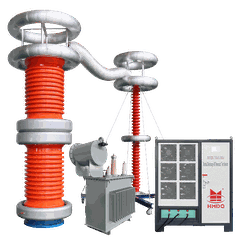



Transformer Load And No Load Loss Tester
Goldhome Wholesale Transformer Loss Tester | No-Load & Load Testing Equipment
Our company has specialized in the production and manufacturing of Transformer Load And No Load Loss Tester for 20 years, with a modern intelligent factory covering an area of over 10000 square meters, staffed by 51 professional technicians, and hold CE certification. 35 patents, 10+ software copyrights,Currently, we have over 150 stable distributors worldwide and established more than 10 service offices overseas.

35+
National patents
20+
Years Experience
51
Technical Staff
22482
Active Members


The transformer no-load and load loss tester is a precision instrument specifically designed to measure the loss parameters of transformers under no-load and load conditions. It integrates modern digital signal processing technology to comprehensively measure core parameters such as no-load loss, no-load current, load loss, impedance voltage, short-circuit impedance, and zero-sequence impedance. Additionally, it analyzes voltage waveform distortion rates and harmonic content, providing a scientific basis for transformer energy efficiency evaluation and condition diagnosis. This equipment is widely applicable for factory acceptance testing at transformer manufacturing plants, handover acceptance tests by power utilities, and energy efficiency verification during on-site operation and maintenance.
Core Functions and Testing Principles
It accurately measures the two primary types of transformer losses through two standard electrical tests:
1. No-load Test (Open-circuit Test)
Procedure: Apply the rated voltage to one winding while the other winding is completely open-circuited.
Measured Parameters:
No-load Loss (P₀): Commonly known as iron loss. Primarily composed of hysteresis loss and eddy current loss in the core, this is a fixed loss present as soon as the transformer is energized and is independent of the load size.
No-load Current (I₀): The excitation current used to establish the core’s magnetic field, reflecting the core’s magnetization performance.
Purpose: To inspect core quality, verify the rationality of the design, and detect defects such as core short circuits or poor lamination.
2. Load Test (Load Test / Short-Circuit Test)
Procedure: Short-circuit one side of the winding and apply a low voltage to the other side to allow the rated current to flow through the winding.
Measured Parameters:
Load Loss (Load Loss / Pk): Commonly known as copper loss. This is the heat loss generated by current flowing through the winding resistance (I²R) and varies in proportion to the square of the load current.
Impedance Voltage (Uk%): Also known as short-circuit voltage, this is a key indicator of the transformer’s voltage regulation under load.
Purpose: To inspect winding quality, calculate load loss, and verify the transformer’s impedance and voltage regulation.
- All-in-One Integration: A single instrument integrates multiple functions, including capacitance testing and no-load/load loss measurement, replacing traditional multi-meter measurement methods.
- Portability and Intelligence: Equipped with a high-capacity built-in lithium battery, it eliminates the need for an external power source, making it ideal for fieldwork. Operation is intuitive thanks to a large display and menu prompts; some models also feature touchscreen functionality.
- Precise Calibration: Capable of automatically performing waveform distortion correction, temperature compensation, and non-rated voltage/current correction, ensuring accurate results even under non-ideal operating conditions.
- Data Analysis: Some high-end models also feature harmonic analysis capabilities, enabling assessment of power quality, and support vector diagram display for efficient troubleshooting.
- Data Management: The instruments offer robust storage capacity (capable of storing hundreds of data sets) and support USB export and backend management software, making it easy to maintain equipment records.
- Safety Design: The instruments typically feature built-in protection against overvoltage, overcurrent, and overheating, ensuring safety during the testing process.


Although models vary, the core workflow for this type of tester is essentially the same:
1.Wiring Preparation:
2.No-Load Test: Connect the tester to the low-voltage side of the transformer, ensuring that the high-voltage side is open-circuited.
3.Load Test: Artificially short-circuit the low-voltage side of the transformer and connect the tester to the high-voltage side.
4.Parameter Setup: Enter the transformer’s nameplate information (such as rated voltage and capacity) into the instrument and set the current ambient temperature.
5.Start Test: The instrument automatically (or in conjunction with an external voltage regulator) applies voltage or current and quickly and accurately collects data.
6.Intelligent Analysis: Using digital signal processing technology, the instrument automatically calculates and corrects results. This technology effectively addresses measurement challenges caused by extremely low power factors (which can be below 0.01) during no-load tests.
7.Result Presentation: Various loss values are displayed on the LCD screen. Reports can be printed on-site via the built-in printer, or data can be exported via interfaces such as a USB drive.
1.Application Scenarios:
- Field Operations: We recommend choosing portable models, prioritizing lightweight design, battery life, and ease of wiring.
- Laboratories/Factories: It is advisable to select high-precision benchtop models, emphasizing comprehensive functionality, data processing capabilities, and large-capacity data storage.
2.Key Technical Specifications:
- Measurement Accuracy: A core parameter; generally requires an error margin of ≤±0.2% for no-load and load losses.
- Measurement Range: Must cover the voltage and current ranges of the transformer under test, or allow for easy connection of current transformers (CTs) or potential transformers (PTs) to extend the range.
3.Performance Considerations: Ensure the instrument has precise measurement capabilities at low power factors and comprehensive automatic calibration functions, as these directly impact the accuracy of on-site testing.
4.Standards and Compliance: Genuine products must comply with relevant national standards, such as the “General Technical Requirements for Transformer No-Load and Load Loss Testers” (DL/T 1256-2013), which serves as a fundamental guarantee of quality.
5.Safety Precautions: Ensure the instrument is reliably grounded during operation. Verify that the power is disconnected before connecting wires, and avoid touching metal parts during testing to prevent electric shock.

Primary Applications
Transformer Manufacturers
- Factory acceptance testing and type testing of transformers
- Energy efficiency testing, energy-saving rating determination, and energy efficiency certification
- Quality inspection of cores and windings, and production quality control
Power Grid Companies, Power Supply Bureaus, and Substations
- Handover acceptance testing for newly commissioned transformers
- Periodic preventive testing of in-service transformers
- Energy efficiency assessment and phase-out determination for aging, high-energy-consumption transformers
Industrial and Mining Enterprises, Large Factories, and On-site Power Plants
- Routine maintenance, inspection, and testing of on-site transformers
- Energy consumption statistics, energy-saving retrofits, and energy efficiency diagnostics
- Identification of potential transformer overloads, overheating, and internal faults
Electrical installation and construction contractors
- On-site commissioning after transformer installation
- Project completion acceptance and issuance of test reports
Third-party testing agencies and quality inspection institutes
- Random sampling and arbitration testing of transformer energy efficiency
- Energy-saving assessments, government spot checks
Transformer repair and overhaul service providers
- Performance comparison testing before and after transformer repairs
- Verification of post-overhaul compliance with parameters such as losses and impedance
Famous Brand
I. Overseas Brands:
1.Megger (UK)
A global leader in electrical testing, known for high-precision, stable, and reliable products. Targeting the high-end market, its products are widely used in power grids, industry, and third-party testing.
2.Doble Engineering (USA)
A leading authority in high-voltage testing and transformer diagnostics. Its products are primarily used in large substations, laboratories, and high-end manufacturing.
3.DV Power (Sweden)
Specializes in transformer testing, offering both portable and automated systems, with a high market share in Europe and the Middle East.
4.Vanguard Instruments (USA)
A leading brand in North America, with mature product lines including portable field units and comprehensive test benches.
5.Omicron (Austria)
Provides high-end relay protection and transformer testing solutions, featuring comprehensive accuracy and functionality, though at a higher price point.
II. Domestic Brands
1.Goldhome ( Wuhan Goldhome Hipot)
The brand you mentioned, with over 20 years of high-voltage testing experience, ISO 9001 certification, and CE export certification.
Representative Models: HM5003, HM305D, HM5050 (no-load/load, capacitance, and comprehensive test benches).
Advantages: High cost-effectiveness, English language support for international trade, overseas service, built-in power supply, and portability for on-site use.
2.Wuhan Huatian Electric
A long-established domestic brand with stable portable models and high market penetration in power grids and industrial facilities.
3.Suzhou Huadian Electric
Strong in comprehensive test benches and system integration, suitable for manufacturing production lines and laboratories.
4.Beijing Guancai Jingdian
High-precision laboratory-grade measurement, widely used in metrology institutes and high-end manufacturing applications.
5.Hangzhou Gaodian, Wuhan Musen, Guodian Zhongxing
Mainstream mid-range domestic brands, featuring comprehensive functionality, moderate pricing, and extensive service coverage.
Alternative Name
· Transformer No Load and Load Loss Tester
· Transformer Load and No Load Loss Tester
· Transformer Loss Tester
· Transformer No-Load Loss Tester
· Transformer Load Loss Tester
· Transformer Capacity and Loss Tester
· Transformer Characteristic Tester
· Transformer Efficiency Tester
· Transformer Iron Loss and Copper Loss Tester
· Transformer No Load Current Tester
· Transformer Impedance Voltage Tester
· Portable Transformer Loss Tester
· Transformer Test Set for No-load & Load Loss
· Transformer No Load and Load Loss Test Equipment
· Three Phase Transformer Loss Tester
· Transformer Energy Efficiency Tester
· Transformer Power Loss Tester
· Transformer No Load and Load Loss Analyzer
· Transformer Loss Analyzer
· Transformer Tester
· Transformer Loss Test Set

FAQ
Q: What is a transformer no-load and load loss tester? What is its primary function?
A: This is a portable testing instrument specifically designed for the power industry. Its core function is to accurately measure the two key types of transformer losses—no-load loss (iron loss) and load loss (copper loss)—in the field, in workshops, and at substations. It also measures a full set of parameters, including no-load current, impedance, voltage, actual capacity, and energy efficiency rating, to quickly determine whether a transformer meets specifications, exceeds energy consumption limits, or has hidden internal faults.
Q: What is the difference between no-load testing and load testing? Is it necessary to perform both tests?
A: No-load testing evaluates the condition of the transformer’s core, identifying issues such as damaged core laminations or magnetic circuit abnormalities; load testing evaluates the condition of the coil windings, verifying winding resistance and voltage-carrying capacity. Under standard conditions for routine acceptance, annual inspections, and factory quality control, both tests must be completed simultaneously, and the data must be archived to meet compliance standards.
Q: What additional supporting data can this instrument measure?
A: In addition to core losses, it can fully automatically measure and calculate the transformer’s rated capacity, three-phase imbalance, power factor, and short-circuit impedance. It can also automatically match and determine energy efficiency ratings for the entire series, including S11, S13, and S20, eliminating the need for manual recalculation or conversion. .
Q: Can it be used directly at outdoor substations? Does it require an external high-power voltage regulator?
A: The dedicated portable field model features a built-in test excitation power supply. It is compact and lightweight, allowing for direct operation in outdoor pits, older substations, and temporary construction sites. No external high-power voltage regulators or reactive power compensation units are required, and a single operator can complete the wiring setup.
Q: What types of transformers can be tested? Are there any restrictions on size or capacity?
A: Universal compatibility across all categories, covering oil-immersed, dry-type, prefabricated, amorphous alloy, and high/low-voltage distribution transformers. Standard models fully cover the entire range of common capacities from 20 kVA to 100,000 kVA, suitable for testing residential, industrial, and utility main transformers.
Q: Can this equipment be used for factory quality inspections and third-party testing in compliance with regulations?
A: It fully complies with national standards and on-site testing procedures for the power industry. Measurement accuracy meets regulatory standards, and the issued paper and electronic test reports can be directly used for factory filing, power grid handover acceptance, third-party energy efficiency spot checks, and energy-saving filing and archiving. They are universally valid across all scenarios.
Q: Is it difficult to operate? How long does it take for a beginner to get the hang of it?
A: Fully automated one-button operation with a large-screen Chinese touchscreen interface. It features built-in intelligent anti-misconnection programs and voice prompts guiding wiring steps. No professional high-voltage operation certification is required; after reviewing the simple manual, you can independently complete the full test in just 10 minutes.
Q: Are there any safety hazards during on-site wiring? Is there a risk of high-voltage injury?
A: The entire testing process operates in a low-voltage closed-loop environment with no external high-voltage output. It features multiple safety protections: automatic shutdown upon wire disconnection, wiring error alarms, overcurrent and overload interlock protection, and electromagnetic interference shielding. This ensures maximum safety during on-site operations and adapts to complex live-line environments.
Q: Given the high level of harmonic interference in the on-site power grid, will the data be inaccurate or fluctuate?
A: The device features built-in high-order digital filtering algorithms and synchronous sampling anti-interference modules, specifically designed for high-interference environments such as those near substation frequency conversion equipment and high-power motors. The data remains stable and real-time without fluctuations, and retest consistency is extremely high, ensuring that environmental conditions do not affect the test results.
Q: What is the instrument’s measurement accuracy? Does it meet the acceptance standards for power grid tenders?
A: Voltage and current accuracy are Class 0.2, and power loss accuracy is Class 0.5. This fully complies with the on-site preventive testing standards of State Grid and China Southern Power Grid, and meets all requirements for factory type tests by transformer manufacturers. It passes tender project acceptance inspections directly, with unquestionable accuracy.
Q: Can test data be saved, printed, or exported for archiving?
A: Standard configuration includes a full suite of data archiving functions: the device can store hundreds of sets of test log data; it features a built-in thermal printer for on-site generation of compliant test reports in seconds; it supports one-click export of Excel data and original PDF reports via USB, allowing direct backup to computers or USB drives for convenient long-term archiving of test logs.
Q: Can the system automatically determine whether a transformer is energy-efficient or outdated and exceeds standards?
A: The instrument features a built-in database of all versions of energy efficiency standards. Upon completion of the test, it automatically compares the results against national standard limits and instantly determines whether the transformer’s losses exceed the threshold or if it qualifies as an energy-inefficient, outdated device. It then provides direct recommendations—such as “compliant,” “downgrade for use,” or “phase out and replace”—eliminating the need for manual verification against records.
Q: What power source does the instrument use? Can it perform tests in the field without access to 220V power?
A: Dual power supply modes adapt to all scenarios: Connect directly to 220V AC mains power indoors; for outdoor locations without power outlets, choose the model with a built-in high-capacity lithium battery, which can perform a full set of tests on multiple transformers on a single charge, ensuring reliable operation even in the event of a power outage in the field.
Q: Is the instrument durable? Is the failure rate high? Is it suitable for long-term, high-frequency use?
A: The entire unit features an industrial-grade, triple-proof housing that is dustproof, moisture-proof, and impact-resistant, making it suitable for high-frequency fieldwork at construction sites, outdoors, and at substations. Core components are carefully selected from leading brands and undergo comprehensive aging tests before shipment. Under normal operating conditions, the instrument is virtually failure-free, making it ideal for long-term, high-frequency field use by engineering teams and O&M crews.
Q: What is the warranty period? What is the after-sales service if it breaks? Is on-site technical support available?
A: The standard warranty for the entire unit is 1 year, with free lifetime maintenance for the core unit. We provide complimentary remote video technical guidance, remote wiring instruction, and remote instrument calibration and debugging. Customers making bulk purchases can schedule on-site training, ensuring a worry-free experience throughout.
Wuhan Goldhome Hipot Electrical Co., Ltd. is one of the most professional transformer load and no load loss tester manufacturers and suppliers in China, featured by quality products and good price. Welcome to buy transformer load and no load loss tester in stock here and get pricelist from our factory. Contact us for customized service.