

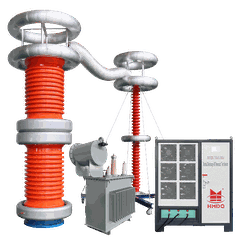



Oil Tan Delta Tester
Goldhome Automatic Transformer Oil Dielectric Loss Tester | Oil Tan Delta Tester Manufacturer
Company Profile
Our company has specialized in the production and manufacturing of Oil Tan Delta Tester for 20 years, with a modern intelligent factory covering an area of over 10000 square meters, staffed by 51 professional technicians, and hold CE certification. 35 patents, 10+ software copyrights,Currently, we have over 150 stable distributors worldwide and established more than 10 service offices overseas.


1.What is Oil Tan Delta Tester?
The transformer oil dielectric loss tester (Oil Dielectric Loss Tester / Oil Tan Delta Tester) is a high-precision, fully automatic specialised instrument designed primarily to measure the dielectric loss factor (tanδ) of transformer oil. This enables the assessment of whether the oil has deteriorated, become damp or been contaminated, making it a crucial piece of testing equipment for ensuring the safe operation of power transformers.
This instrument primarily measures two key parameters:
- Dielectric loss tangent (tanδ): This is the most critical parameter. It can be understood as a measure of the degree of ‘energy loss’ in insulating oil. If the oil is pure, the loss is minimal; if the oil contains water, impurities or ageing by-products, the leakage current increases and the tanδ value rises significantly. This is a sensitive indicator for determining whether insulating oil has deteriorated.
- Volume resistivity (ρ): This measures the insulation resistance of the oil. The better the oil, the higher the resistivity (typically, >1×10¹³Ω*m )the resistivity drops significantly once the oil becomes damp or contaminated).

Why Use it?
In power systems, high-voltage equipment such as transformers, current transformers and bushings all rely on insulating oil for insulation and heat dissipation. If the insulating properties of the oil deteriorate, this may lead to internal breakdowns and short circuits in the equipment, or even cause power outages.
An oil dielectric loss tester is the tool used by power maintenance personnel to carry out regular ‘health checks’ on the oil. Through regular testing, it is possible to:
- Determine whether new oil meets the required standards.
- Monitor the ageing trends of oil in service.
- Determine whether oil filtration, regeneration treatment or replacement is required.

Working Principle
1. Basic Physical Principles
Transformer oil acts as an insulating medium; under an alternating electric field, two types of current are generated:
- Capacitive current: Normal charging and discharging current that does not result in energy loss
- Loss current: Leakage current caused by poor insulation, the presence of water or impurities, which generates heat and results in energy loss
The core measurement performed by the instrument is:
- Dielectric loss factor tanδ = Loss current / Capacitive current
- The higher the tanδ value, the poorer the oil quality and the poorer the insulation.
2. Measurement Principle (Cyril Bridge / Variable-Frequency Dielectric Loss Principle)
Current mainstream instruments utilise a fully automatic, variable-frequency, anti-interference dielectric loss measurement principle:
A stable high voltage is generated internally (typically 2 kV at power frequency or variable frequency)
which is applied to the oil sample in a three-electrode standard oil cup
A high-precision sampling circuit simultaneously measures:
- The applied voltage
- The total current flowing through the oil sample
- Digital algorithms are used to separate the capacitive and loss components
- Directly calculating:
- Dielectric loss tanδ
- Volume resistivity ρv
- Relative permittivity εr
Measurement of volume resistivity (DC method)
- Apply a DC voltage to the oil cup (typically 500V or 1000V).
- Measure the leakage current I flowing through the oil cup.
- Calculate the resistivity using Ohm’s law and the oil cup’s electrical constant.
ρ=U/IS * K (where K is the oil cup’s electrical constant)
The lower the resistivity, the greater the amount of conductive impurities in the oil and the poorer the insulation performance.
3. Principle of Temperature Control
Since tanδ is highly sensitive to temperature, a constant temperature must be maintained:
- The instrument incorporates a built-in heating and temperature control system
- The oil sample is typically stabilised at 90°C (the standard test temperature)
- Temperature control accuracy is usually ±0.1°C to ±0.5°C
- This ensures that results obtained at different times and on different instruments are comparable.
Main Structure
The system comprises five main components: the host control system, the high-voltage generation system, the oil cup testing system, the temperature-controlled heating system, and the auxiliary interface.
Host Structure (Core Control)
Main control board (MCU / microcontroller)
LCD display (touchscreen / keypad)
Control buttons and menu system
Data storage and print interface
01
High-Voltage Measurement System
High-precision high-voltage power supply module
Precision current/voltage sampling circuit
Dielectric loss measurement bridge (digital frequency conversion measurement)
Overload, overcurrent and short-circuit protection circuits
02
Oil Cup Testing System (Core Detection Component)
Three-electrode standard oil cup (high-voltage electrode, measurement electrode, shielding electrode)
Oil cup mounting bracket
Insulated support structure
Function: To create a standard, uniform electric field, ensuring measurement accuracy.
03
Temperature-Controlled Heating System
Heating module (induction / heating element)
High-precision temperature sensor (Pt100, etc.)
Temperature control unit
Ensures the oil sample remains stable at the test temperature (typically 90°C).
04
Enclosure and Auxiliary Structure
Metal enclosure, heat dissipation structure
Power switch, fuses
RS232/USB/Bluetooth communication interfaces
Built-in thermal printer (on some models)
Safety earthing terminal
05
Key Functions
1. Measurement of the dielectric loss tangent (tanδ)
Core function, providing a direct indication of the degree of moisture ingress, ageing and contamination in insulating oil.
2. Measurement of sample capacitance (Cx)
Simultaneous display of the oil sample’s capacitance value, aiding in the assessment of changes in oil quality.
3. High-precision temperature control
Automatic heating and temperature maintenance; standard operating temperature of 90°C, meeting national standard test requirements.
4. Fully Automatic Test Procedure
One-button operation: oil filling → heating → pressurisation → measurement → calculation → printing.
5. Data storage and printing
Built-in memory for storing historical data; supports on-site report printing.
6. Volume resistivity testing (high-specification models)
Simultaneous measurement of ρv for a more comprehensive evaluation of insulation performance.
7. Measurement of relative permittivity εr
Some models can automatically calculate and display this value.
8. Multiple safety protections
Automatic protection against overvoltage, overcurrent, overheating, short circuits and incorrect operation.

Main Features
1.High measurement accuracy
tanδ resolution up to 1×10⁻⁵, suitable for precision testing of low-loss insulating oil.
2.Strong interference resistance
Utilises frequency-modulated measurement technology to ensure stable and accurate results even in strong electromagnetic environments on-site.
3.Precise and stable temperature control
Temperature control accuracy of ±0.1℃ to ±0.5℃, with rapid heating and uniform temperature distribution.
4.Simple and Convenient Operation
Large Chinese display screen with a straightforward menu; no complex wiring required.
5.Fast Testing Speed
Rapid heating and short measurement times ensure high efficiency for single oil sample testing.
6.Compact and Portable Design
Integrated design combining the oil cup and main unit, suitable for both on-site and laboratory use.
7.Safe and Reliable
Automatic high-voltage reset and power-off protection upon lid opening ensure safer operation.
8.Compliant with national and industry standards
Meets the requirements of power industry standards such as GB/T 5654 and DL/T.

Test Procedure
I. Preparations Before Testing
1.1 Instrument Preparation
- Place the instrument on a stable surface, connect it to the mains supply and ensure it is earthed.
- Power on the instrument and perform a self-test to confirm that the display, heating system and high-voltage system are functioning correctly.
1.2 Oil Sample Preparation
- Take a sample of transformer oil of at least 100 mL, ensuring it is free from bubbles and impurities.
- Prevent the oil sample from becoming damp or contaminated; operate in a dry environment where possible.
1.3 Cleaning and Drying the Oil Cup
- First, clean the three-electrode oil cup with anhydrous ethanol or petroleum ether.
- Dry using hot air or in an oven to ensure there is no residual oil or moisture between the electrodes.
II. Instrument Operating Procedures
1.Filling with Oil
- Slowly pour the oil sample into the oil cup to avoid creating bubbles.
- Once the liquid level reaches the standard mark, secure the oil cup lid.
2.Placing the Oil Cup
- Place the oil cup into the instrument’s heating chamber, ensuring good contact and central positioning.
- Close the chamber door securely (some models feature door-lock protection).
3.Parameter Settings
- Set the test temperature: 90°C (commonly used in national standards).
- Set the test voltage: generally 2000 V (1000 V or 1500 V may also be selected according to standards).
- Select test parameters: tanδ, Cx, resistivity (if supported).
4.Automatic heating
- Start heating; the instrument will automatically heat up and maintain a constant temperature.
- Once the temperature has stabilised, the system will prompt you to proceed with the test.
5.Start testing
- Press the ‘Start/Test’ button; the instrument will automatically apply voltage and take measurements.
- The process requires no manual intervention and is completed automatically:
- Apply voltage → Sampling → Calculation → De-energise → Display results.
6.Record Results
- The instrument automatically displays:
- Dielectric loss tangent tanδ
- Capacitance Cx
- Test conditions such as temperature and voltage
- Data can be saved and reports printed.
7.End of Test
- The instrument automatically reduces the voltage and resets, ensuring the high voltage is completely discharged.
- Once the oil cup has cooled, remove it, dispose of the oil sample and clean the oil cup.
III. Interpretation of Results
- Very low tanδ (<0.001): Good oil quality, excellent insulation.
- Significant increase in tanδ: The oil is damp, aged or contaminated, and insulation performance has deteriorated.
- Specific pass/fail criteria shall be determined in accordance with relevant standards such as GB/T 5654 and DL/T.
Application Field
Electricity Sector
- Regular testing of transformer oil, instrument transformer oil and switchgear oil at substations and electricity supply authorities
- Acceptance testing of new oil upon arrival and monitoring of oil quality during operation
- Comparison of results before and after major equipment overhauls, oil filtration and oil changes
Power Stations
- Routine monitoring of insulation oil in main transformers and plant service transformers
- Ensuring the safe operation of generator set insulation systems
Petroleum and Lubricant Industry
- Quality control and factory acceptance testing for insulation oil manufacturers
- Oil product R&D, formulation improvements and ageing tests
Industrial and Mining Enterprises
- Operation and maintenance of large transformers and on-site power plants at steelworks, cement plants, mines, etc.
- In-house oil testing by corporate laboratories
Research and Quality Inspection Institutions
- Quality Inspection Institutes, Electric Power Research Institutes and third-party testing bodies
- Experimental studies on insulation oil ageing, moisture ingress and contamination

Precautions
1. The instrument must be properly earthed to prevent electric shock and electromagnetic interference.
2. Under no circumstances should the oil cup door be opened or the electrodes touched during testing; do not operate the instrument until the high voltage has been fully discharged.
3. If any unusual noises, odours or smoke are detected, switch off the power immediately and cease use.
4. Testing must not be carried out in damp or flammable/explosive environments; oil samples must not be allowed to spill.
5. Non-professionals must not dismantle the instrument or repair high-voltage components.
6. The oil cup electrodes must be thoroughly cleaned and dried; otherwise, the results will be significantly inflated.
7. When filling the oil cup, pour the oil slowly to avoid creating air bubbles, as these will cause measurement errors.
8. Oil samples should be stored in sealed containers to prevent moisture absorption and tested as soon as possible after sampling.
9. The oil cup must be cleaned again before testing different oil samples to prevent cross-contamination.
10. Handle the oil cup electrodes with care to prevent scratches or deformation, which may affect accuracy.
11. Testing must only commence once the temperature has stabilised and reached a constant level, as temperature has a significant impact on tanδ.
12. Set the test voltage strictly in accordance with the standard; do not exceed the specified voltage arbitrarily.
13. Do not move or subject the instrument to vibration whilst it is heating up or during testing.
14. Ensure the testing environment is protected from direct strong draughts and direct sunlight, as these can affect temperature control accuracy.
15. It is recommended to use a voltage stabiliser when mains voltage fluctuations are significant.
Alternative Name
· Transformer Oil Dielectric Loss Tester
· Oil Tan Delta Tester
· Insulation Oil Dielectric Loss Tester
· Automatic Oil Dielectric Loss Tester
· Oil Dissipation Factor Tester
· Oil Tan Delta Meter
· Oil Tan δ Tester
· Dielectric Loss Tester for Transformer Oil
· Transformer Oil Tan Delta Test Set
· Automatic Transformer Oil Tan Delta Tester
· Oil Dielectric Loss and Resistivity Tester
· Portable Oil Tan Delta Tester
· Fully Automatic Oil Dissipation Factor Meter
· High Precision Oil Dielectric Loss Tester
· Oil Tan Delta Tester ASTM D924
· Oil Dielectric Loss Tester IEC 60247
· Transformer Oil Test Equipment
· Insulation Oil Analysis Equipment

FAQ
Q: 1. What is an oil dielectric loss tester? What does it primarily measure?
A: An oil dielectric loss tester is used to measure the dielectric loss factor tanδ (loss factor) and capacitance Cx of transformer oil and insulating oil. Some models can simultaneously measure volume resistivity and dielectric constant. It is used to determine whether insulating oil has become damp, aged, or contaminated, and to evaluate its insulation performance.
Q: 2. What temperature should be set during testing? Why is temperature control necessary?
A: Common test temperature per national standards: 90°C
Temperature has a significant impact on tanδ; results vary greatly at different temperatures. Temperature control is essential to ensure data comparability and accuracy.
Q: 3. What is the typical test voltage?
A: Common test voltage: 2000 V
Alternatively, 1000 V, 1500 V, etc., can be selected according to standards; the instrument generally supports multiple adjustable voltage levels.
Q: 4. What causes measurement results to be too high (excessively high tanδ)?
A: Common causes:
The oil cup was not cleaned thoroughly or dried properly
The oil sample is damp, contains impurities, or is severely aged
There are air bubbles in the oil sample
Testing began before the temperature had stabilized
Poor instrument grounding or significant environmental interference
Q: 5. How should the oil cup be cleaned properly?
A: First, clean with anhydrous ethanol or petroleum ether
Wipe the electrodes with a clean silk cloth or lint-free paper
Dry thoroughly by baking or blowing air to ensure complete dryness
Clean the cup again for each new oil sample to prevent cross-contamination
Q: 6. What types of oil can the instrument test?
A: Testable:
Transformer oil
Instrument transformer oil
Switchgear oil
Capacitor oil
Other insulating oils, cable oil
Q: 7. How long does a single test take?
A: Heating + temperature stabilization + testing: approx. 15–25 minutes
Retest only (when temperature is already stable): 2–3 minutes
Q: 8. Is the instrument fully automatic?
A: Yes, mainstream models operate as follows:
One-button start → Automatic heating → Automatic pressurization → Automatic measurement → Automatic depressurization → Display and print results
No manual supervision is required throughout the process.
Q: 9. Does the instrument have printing and data storage functions?
A: Standard features:
Built-in thermal printer
Data storage (capacity: tens to thousands of sets)
Supports USB export and computer communication
Q: 10. Which standards does it comply with?
A: Common standards:
GB/T 5654
DL/T series power standards
IEC 60247
ASTM D924
Q: 11. Does the instrument require periodic calibration?
A: Recommendations:
Laboratory use: Calibrate once a year
Field use: Calibrate every 1–2 years
Calibration can be performed using standard oil or by sending the instrument to a metrology institute.
Q: 12. Is it safe to operate? What safety features are included?
A: Equipped with multiple safety protections:
High-voltage automatic reset
Power-off protection when the lid is opened
Overvoltage, overcurrent, and overheat protection
Automatic shutdown and alarm in case of malfunction
Q: 13. Can resistivity be measured simultaneously?
A: Mid-to-high-end models support integrated testing of dielectric loss and volume resistivity, eliminating the need to change oil cups or reconfigure wiring.
Q: 14. Is the instrument desktop or portable?
A: It generally features an integrated desktop design that is compact and lightweight, suitable for both fixed laboratory use and on-site testing.
Q: 15. What is the difference between dielectric loss testing and volume resistivity testing?
A: Dielectric loss (tanδ): Applies an AC voltage to reflect the overall loss caused by polar impurities (moisture, aging products) in the oil; it is highly sensitive to trace moisture and polar substances.
Volume resistivity (ρ): Applies a DC voltage to reflect the amount of conductive impurities (ions, metal particles) in the oil; it is sensitive to ionic contamination.
Combining both measurements allows for a comprehensive evaluation of the overall performance of insulating oil.
As one of the most professional oil tan delta tester manufacturers in China, we're featured by quality products and good price. Welcome to buy oil tan delta tester in stock here and get pricelist from our factory. Contact us for customized service.