

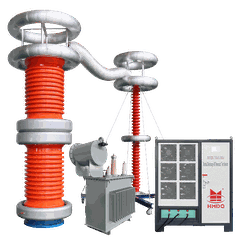



Arrester And Insulator Testing Instruments
A manufacturer specializing in Arrester And Insulator Testing Instruments for 20 years, A Reliable Supplier in China, Offering Factory-Direct Pricing.
Wuhan Goldhome Hipot Electrical Co., Ltd. was established in 2008, located in Economic and Technical Development Zone, working area more than 10000 square meters.We are professional OEM, ODM, OBM Manufacturer which is engaged in the research, development, sale and service of High Voltage Testing Equipment including: Resonant Test System, High Voltage Tester,Transformer Tester ,Primary Current Injection Tester,Circuit Beaker Tester, Relay Protection Tester, Cable Tester, SF6 Test Analyzer,Oil Testing Instruments,etc.
A arrester tester is a precision instrument specifically designed to assess the performance status of metal oxide arresters (MOA). Its core function involves measuring critical parameters such as the arrester's resistive leakage current to determine whether the varistors are aged, dampened, or exhibit internal defects, thereby providing early warning before failures occur.
An insulator tester is a specialized device used to assess the insulation performance of insulators in power lines and substations. Its primary purpose is to rapidly identify zero-value or low-value insulators—those with degraded or failed insulation—thereby preventing line failures or power outages.


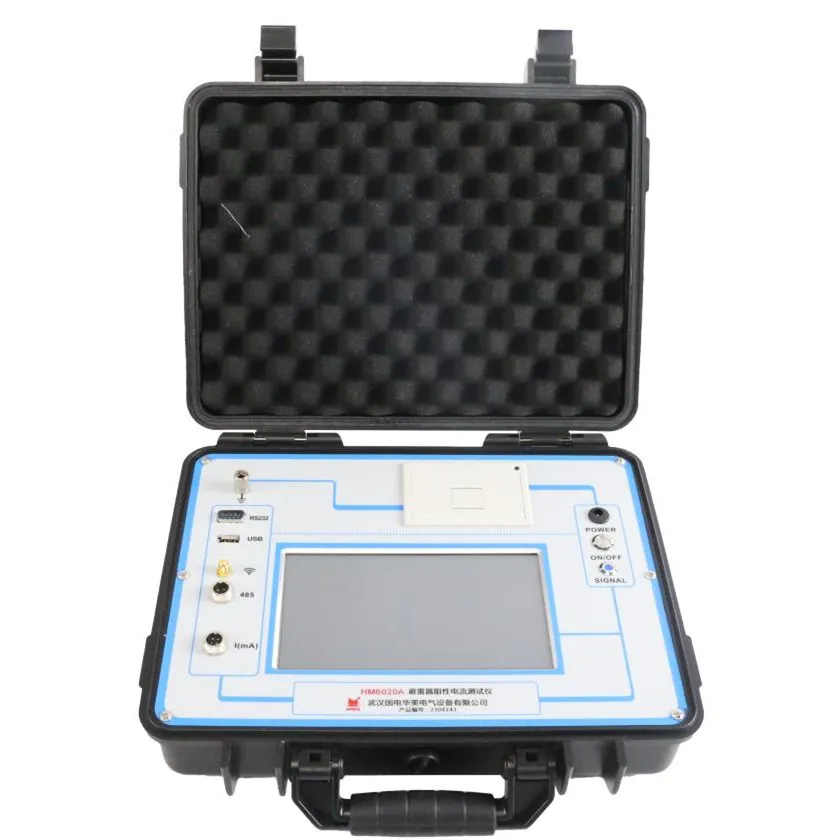
Key Features of Arrester Tester
- High-precision measurement of resistive leakage current
- Three-phase vector calculation and display, effectively resisting on-site interference
- Live (online) detection capability
- Data storage, management, and analysis
- User-friendly operation, portable and easy to use with simple controls
- Strong anti-interference capability, multiple voltage sampling methods
The Advantages of Arrester Tester
- Enables predictive maintenance to prevent issues before they occur.
- Eliminates power outages, enhances power supply reliability, and reduces outage costs.
- Provides scientific data support for equipment condition assessment, enabling intelligent management.
- Adaptable to complex field environments, ensuring accurate and reliable measurement results.
- Improves field operational efficiency while lowering technical expertise requirements for operators.
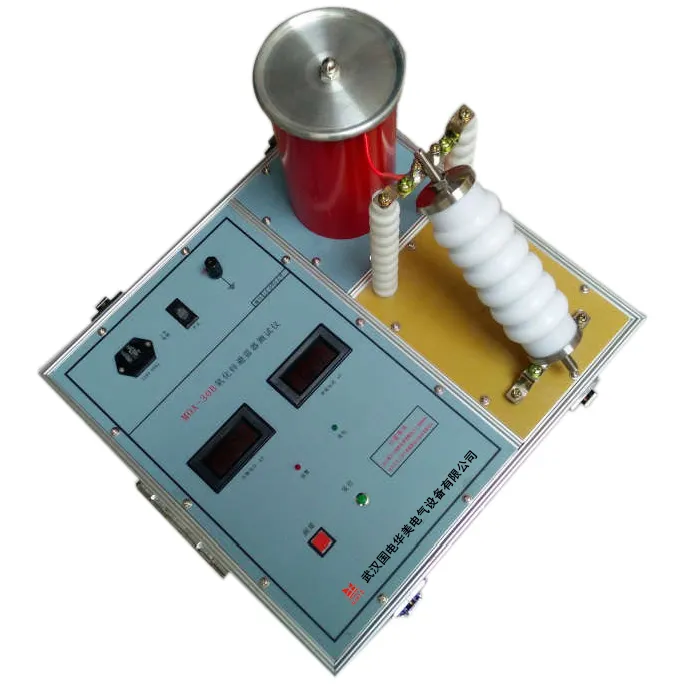
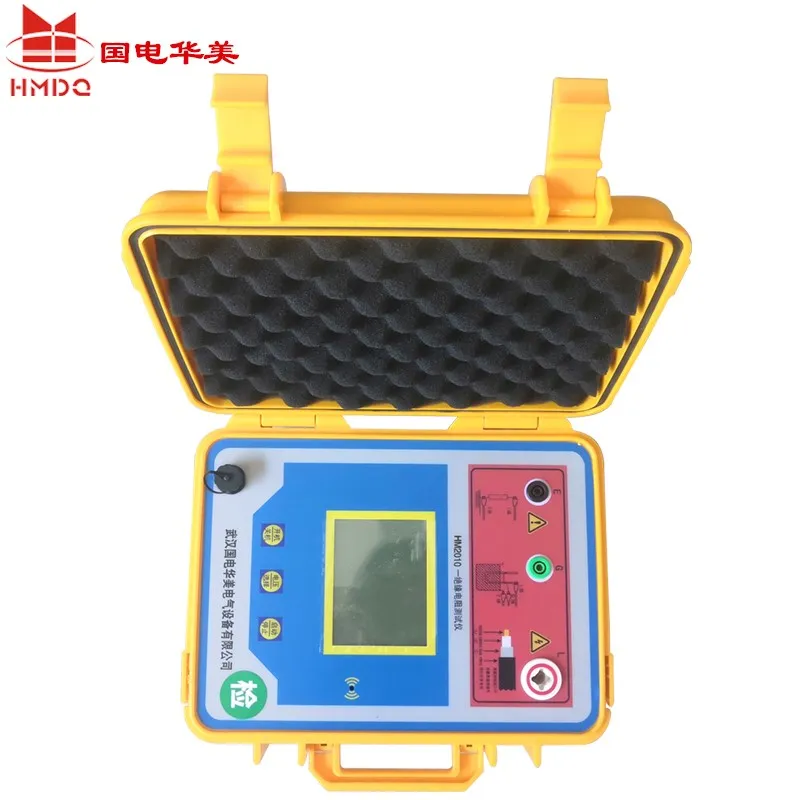
The Primary Features of the Insulator Tester
The core features of the insulator tester lie in its diverse detection methods and robust environmental adaptability:
- Multiple detection principles (voltage, ultrasonic, infrared, etc.) address different fault types.
- Live (online) detection ensures no disruption to normal grid operations.
- High precision and anti-interference capability.
- Compact design with simple operation.
- Data recording and management facilitate subsequent analysis and equipment archiving.
Advantages of Insulator Testers
- Accurately pinpoint fault types to handle diverse complex scenarios.
- Eliminate power outages, enhancing supply reliability while saving substantial downtime costs.
- Deliver precise and reliable measurement results, effectively reducing misdiagnosis and missed faults.
- Boost fieldwork efficiency by providing scientific data support for equipment condition assessment.
- Ensure operator safety, particularly suited for ultra-high voltage environments.
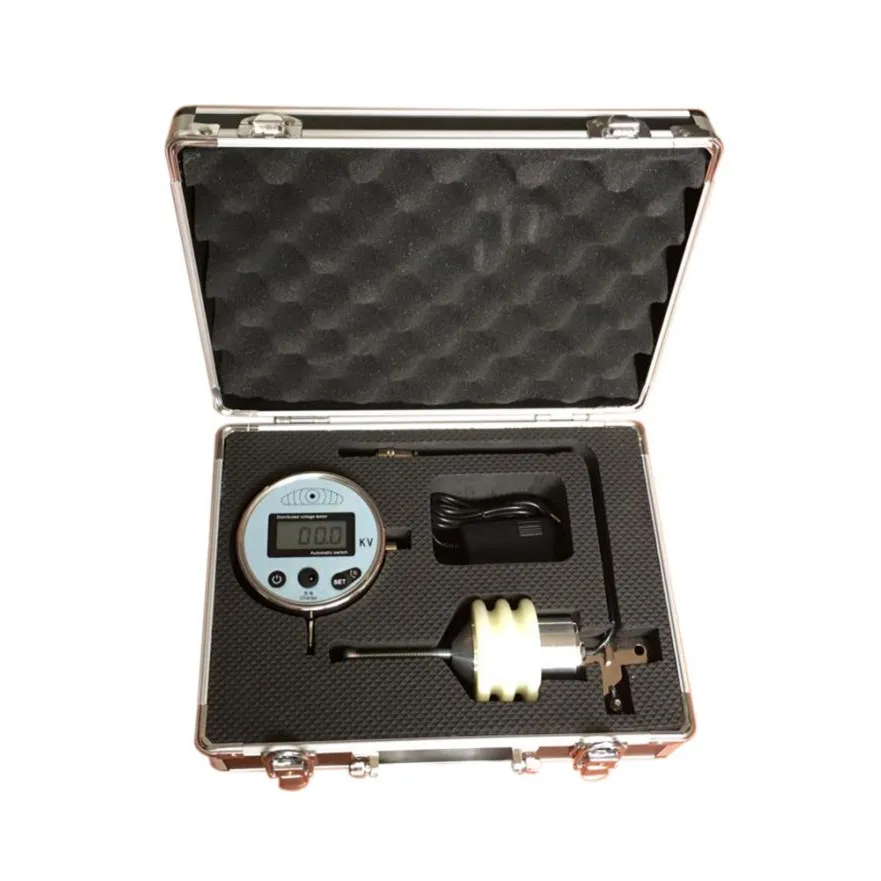
Main Types of Arrester Testers
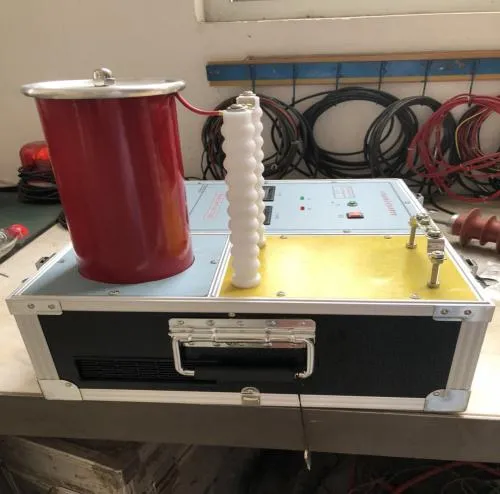
Resistive Current Tester
Function: Measures total current, resistive leakage current, and capacitive current of operational arresters online without power interruption.
Features: Utilizes clamp-on current sensors for sampling, ensuring safety and efficiency as the primary tool for condition-based maintenance.
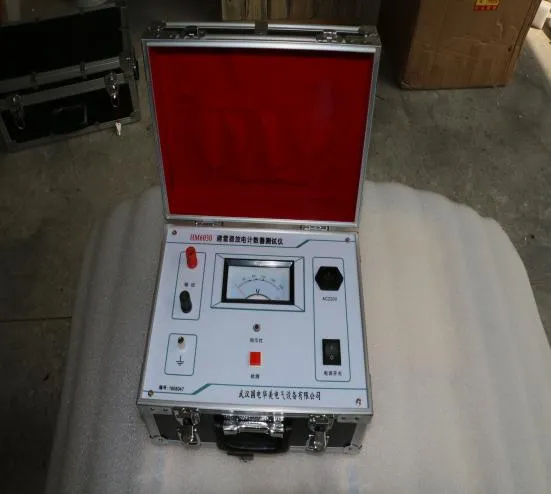
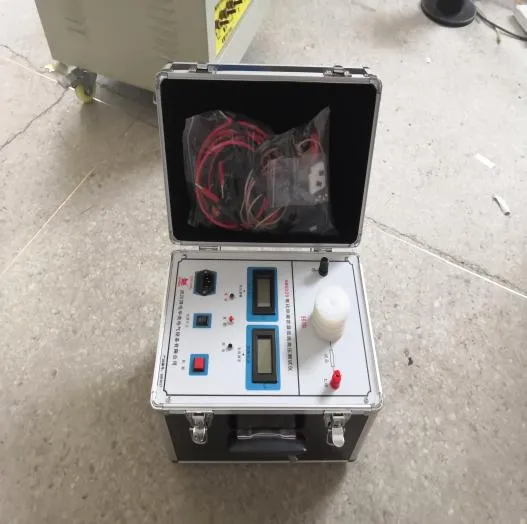
DC High-Voltage Generator
Function: Used for de-energized testing to measure the surge arrester's DC reference voltage (U1mA) and leakage current at 75% reference voltage.
Features: Adheres to stringent testing standards, commonly employed for new arrester acceptance, handover tests, and auxiliary verification of energized test results.
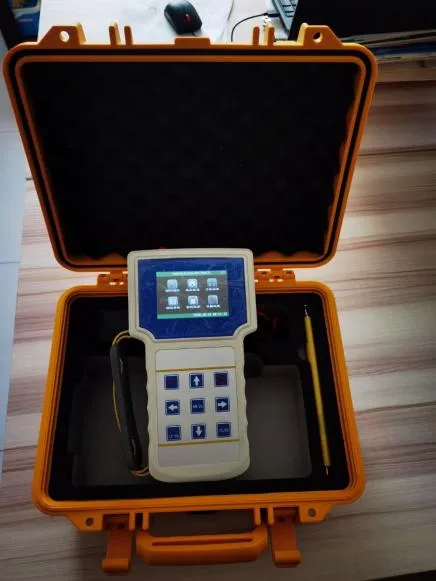
Three-Phase Simultaneous Testing Instrument
Function: Simultaneously measures all three phases of an arrester. By comparing current differences between phases, it accurately identifies single-phase faults.
Features: Strong anti-interference capability, particularly suitable for substations with complex electromagnetic environments.
Online Monitoring System
Function: Not a portable instrument, but a fixed sensor installed on the arrester's grounding wire paired with a backend system, enabling 24/7 real-time continuous monitoring and data tracking.
Features: Capable of automatic data analysis, trend-based early warnings, and remote monitoring, serving as a vital component of smart grids.
The Main Types of Insulator Testers
Insulation Resistance Tester (Megohmmeter)
Function: The most fundamental method. Measures the insulation resistance value of insulators (unit: megohms - MΩ).
Method: Power-off testing. Requires de-energizing the line before sequentially measuring each insulator.
Judgment: Resistance values below the standard (e.g., 500 MΩ) indicate deterioration, necessitating replacement.
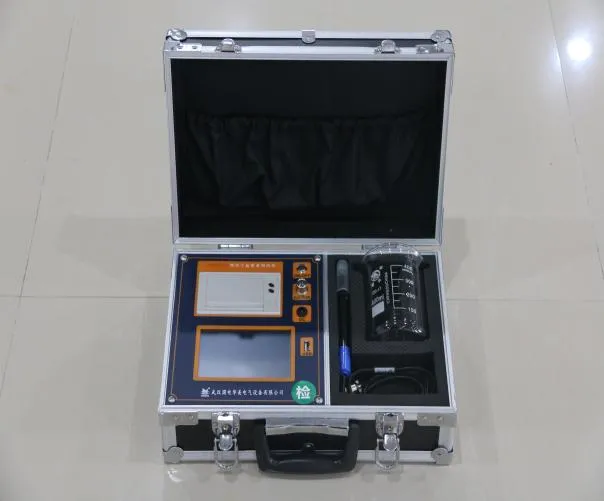
Partial Discharge Tester
Function: The most common and effective live-line testing method. Measures the distributed voltage across each insulator in an insulator string during operation.
Method: Live-line testing. Directly measures voltage by contacting the metal parts at both ends of the insulator with a probe.
Judgment: If the voltage value of a particular insulator is significantly lower than normal (approaching zero), it is judged as a zero-value insulator.
Ultrasonic Flaw Detector
Function: Detects partial discharge activity on insulator surfaces.
Method: Live-line testing. Assesses contamination levels or internal cracks by listening to or analyzing ultrasonic signals generated by discharges.
Application: Prevents flashover accidents caused by contamination.
Infrared Thermal Imager
Function: Detects abnormal hot spots on degraded insulators.
Method: Remote, non-contact live scanning.
Principle: Degraded insulators exhibit significantly higher temperatures than normal insulators due to increased leakage current, appearing as “hot spots” on thermal images.
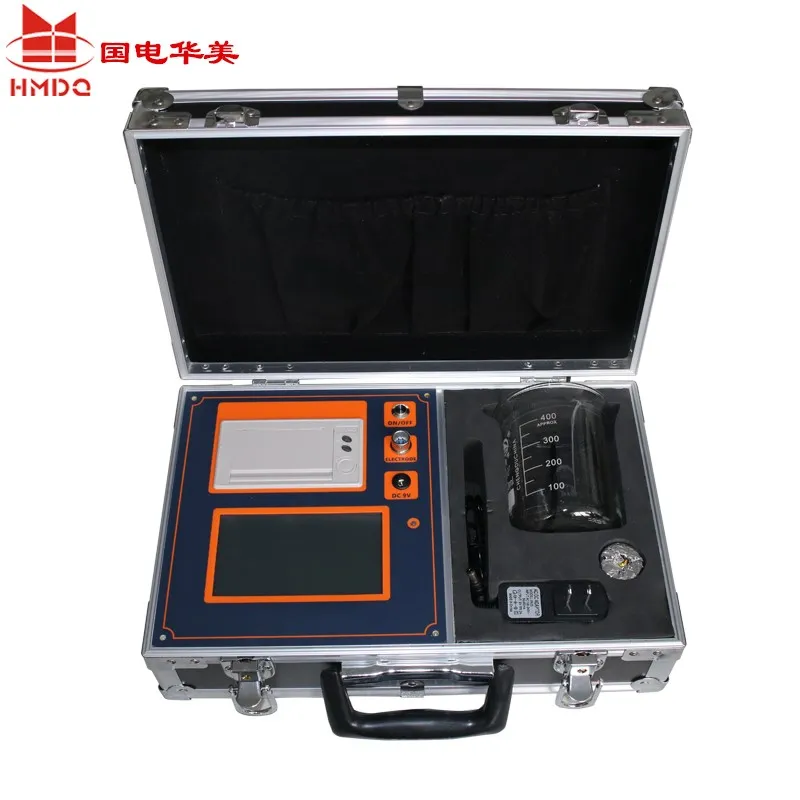
Main Functions of the Arrester Tester
Measurement of Resistive Leakage Current (Core Function): Directly determines whether the valve disc is aged or damp;
Measurement of Total Current (Ix): Provides a basis for analysis, combined with resistive current analysis;
Measurement of Power Frequency Reference Voltage: Provides a calculation benchmark to ensure accuracy in current decomposition;
Calculate capacitive current (Ic) and power consumption (P): Provides supplementary assessment criteria to further confirm equipment status
Data analysis and trend evaluation: Automatically generates pass/fail conclusions to guide maintenance
Data storage and transmission: Establishes equipment archives for trend tracking and intelligent management.
The Primary Function of Insulator Tester
1. Measure resistance/voltage distribution: Directly identify low-value or zero-value insulators to prevent accidents.
2. Measure insulation resistance: Provide quantitative evidence to determine insulation performance compliance.
3. Measure voltage distribution: Evaluate operational insulator status online without power outages.
4. Ultrasonic detection: Prevent flashover and ensure grid safety during severe weather.
5. Infrared temperature measurement: Rapidly locates overheating defects remotely and non-invasively.
6. Data logging and analysis: Enables condition-based maintenance and intelligent operation management.
How to use a Arrester Tester?
Step 1: Safety Preparation and Instrument Setup
Safety Measures: Confirm on-site safety measures are complete. Operators must wear insulated gloves and insulated shoes.
Instrument Grounding: Securely ground the tester's main unit.
Parameter Setup: Power on the device and input basic parameters such as the surge arrester under test and system voltage.
Step 2: Correct Sensor Connection
Connect Voltage Reference: Connect the voltage reference lead to the secondary side of the voltage transformer (PT) in phase with the arrester (most accurate), or use an induction plate.
Clamp Current Clamp: Clamp the high-precision current clamp onto the arrester's grounding lead, ensuring the clamp head arrow points toward the ground (current direction).
Step 3: Execute Test and Read Data
Start Test: After verifying correct wiring, press the “Start” button. The instrument will automatically collect data and perform calculations.
Record Results: The screen directly displays key data such as total current (Ix) and resistive current (Ir). Record or save results, noting the instrument's automatically determined “Pass” status.
Step 4: Test Completion and Wrap-Up
Safe Disconnection: After testing, press “Stop” first, then disconnect all connections following the sequence: “test leads first, then ground lead.”
Data Analysis: Export data for trend comparison analysis against historical records.
How to use a Insulator Tester?
Insulator Testers primarily employ two testing methods: live-line testing (distribution voltage method) and Power Outage testing (insulation resistance method).
Live-Line Testing
Process Purpose: To locate zero-value insulators in live circuits without interrupting power supply.
1. Safety Preparation:
● Verify line name and tower number to ensure accuracy.
● Properly wear personal protective equipment (PPE) including insulated gloves and insulated boots.
● Inspect instrument appearance and battery charge level.
2. Instrument Configuration:
● Power on the device and select “Distributed Voltage Test” mode.
● Input or select the line voltage level.
3. Measurement Procedure:
● Using the instrument's probes, sequentially contact both metal parts of each insulator in the string, proceeding either from bottom to top or top to bottom.
● Initiate measurement and record or save the voltage value displayed on the instrument screen.
● Complete measurement for the entire insulator string.
4. Data Analysis:
● Review the voltage distribution curve for the entire string. A normal curve typically exhibits an asymmetrical “U” or “C” shape (high at both ends, low in the middle).
● Identify the insulator with a voltage value significantly below normal (usually near zero) as the zero-value insulator.
5. Final Steps:
● Power off the instrument and clear the work area.
Power Outage Testing
Process Purpose: Directly measure the insulation resistance value of each insulator after the line is de-energized.
1.Safety Preparations:
● Confirm the line is completely de-energized and grounding wires are properly installed.
● Wear personal protective equipment (PPE).
2.Instrument Connection:
● Connect the high-voltage output lead (L terminal) of the insulation resistance tester (megohmmeter) to the high-voltage end of the insulator.
● Connect the instrument's ground terminal (E terminal) to the low-voltage end of the insulator (or tower grounding point).
3.Measurement Procedure:
● Select the test voltage .
● Initiate measurement. Once the reading stabilizes, record the insulation resistance value (unit: MΩ).
● Repeat this process for each insulator.
4.Data Analysis:
● Evaluate results according to regulations
● Mark non-compliant insulators.
The Application of Arrester and Insulator Tester
These two types of testers are almost exclusively applied in the power energy industry, spanning the entire process from power generation, transmission, distribution, to consumption.
Power Generation Enterprises
Thermal power plants, hydroelectric stations, wind farms, photovoltaic power stations, etc. Used to inspect surge arresters within power plant step-up substations and insulators on output lines, ensuring the safe transmission of electricity from the generation end.
Large Industrial Enterprises
Companies with proprietary substations and critical power facilities—such as petrochemical plants, steel mills, rail transit systems (subways, railways), and data centers—ensure the reliability and continuity of their internal power supply systems, preventing production interruptions caused by lightning strikes or insulation failures.
Power Engineering and Maintenance Services
Various power engineering companies, equipment installation firms, and third-party maintenance service providers utilize these solutions for acceptance testing of newly installed equipment and to deliver outsourced preventive testing services to clients.
Equipment Manufacturers
Producers of power equipment such as surge arresters, insulators, and switchgear employ these solutions for factory acceptance testing and quality control of their products.
The Alternative Name of Arrester and Insulator Tester
Resistive Current Tester
MOA Tester / Analyzer
Surge Arrester Leakage Current Tester
Surge Arrester Online Monitoring Instrument
Zero-Value Insulator Detector
Insulator Distribution Voltage Measuring Instrument
Insulation Resistance Tester (Megohmmeter)
Insulator Fault Locator
Why Choose Us
Our company has specialized in the production and manufacturing of high-voltage testing equipment for 20 years, with a modern intelligent factory covering an area of over 10000 square meters, staffed by 51 professional technicians, and hold CE certification. 35 patents, 10+ software copyrights,Currently, we have over 150 stable distributors worldwide and established more than 10 service offices overseas.
Professional Consultation – Respond technical enquiries within one hours;
Detailed Documentation – Dispatch requested technical materials within one hour;
Competitive Quotation – Provide a reasonable quotation within two hours.
Product demonstration videos
20 Years Of Specialization industry
Deep Cooperation With 8.000 Enterprises
Provide Technical Professional Technical Service And Team Guidance And Support For Life
Certificated By CE, lSO9001, SGS, BV, TUV.
Trust And RecognitionFrom 180 Countries And Regions
High-Level Professional Factory With Over 45.000 m
35 patents
10+ software copyrights
Authorized as a National-Level “High-Tech Enterprise”
Wuhan Technology Innovation "Gazelle" Enterprise.
Strict contract requirements
Select the most optimal mode of transport
Respect customer arrangements
Timely production progress updates synchronization
On-time delivery
12-month warranty
Overseas training support
Regular follow-ups by professionals
Extended warranty (optional)
Factory testing available
FAQ
Q: Do both instruments require power outage for operation?
A: Not entirely.
Arrester tester: Primarily employs live testing (resistive current method), requiring no power outage. However, DC reference voltage testing necessitates power disconnection.
Insulator tester: Most methods support live testing (e.g., distributed voltage method, ultrasonic, infrared). Yet the most fundamental insulation resistance test (megohmmeter) absolutely requires power disconnection.
Q: What constitutes acceptable test data?
A: There is no “absolute” value. Judgment is based on two criteria:
Absolute value assessment: Comparison against regulatory standards or manufacturer-provided reference values.
Trend assessment: Comparison with the equipment's historical test data.
Q: How often should testing be conducted?
A: This depends on the equipment's criticality and operating environment.
Standard interval: Preventive testing is typically recommended annually.
Q: Which is more critical: resistive current or total current?
A: Resistive current (Ir) is absolutely more critical, as it directly reflects the degradation level of zinc oxide varistors.
Q: How can you quickly identify a faulty insulator?
A: Use a distribution voltage tester (live testing). Sequentially measure the distribution voltage across each insulator in a string.
Q: Why use ultrasonic equipment to inspect insulators?
A: To prevent flashover.
Q: What is the greatest risk during operation? How can it be avoided?
A: The greatest risks are electric shock to personnel and equipment short circuits.
Prevention methods: Strictly follow safety procedures: Wear insulating gear and maintain safe distances;
Ensure reliable grounding: Before testing, securely ground the main unit of the instrument;
Verify connections: Confirm correct connections of voltage leads and current clamps before starting the test;
Prohibit operation in adverse weather: Testing is strictly forbidden during thunderstorms or heavy fog.
Q: What are the primary considerations when purchasing?
A: Ranked by importance:
● Functionality matching requirements
● Measurement accuracy and interference resistance
● Safety and certification
● Usability and data management
As one of the most professional arrester and insulator testing instruments manufacturers in China, we're featured by quality products and good price. Welcome to buy arrester and insulator testing instruments in stock here and get pricelist from our factory. Contact us for customized service.
dc high voltage tester, primary current injection test set, lightning impulse voltage generator