

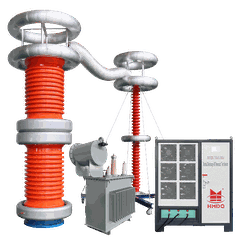


Transformer Capacity Loss Tester
Goldhome (HMDQ) High-Accuracy Transformer Capacity Loss Tester | Factory Price

20
years
Goldhome has specialized in the production and manufacturing of SF6 Comprehensive Analyzer for 20 years
35
Patents
With 35 patents, Goldhome keeps innovating and providing advanced, reliable power testing equipment.
15
Service offices overseas.
Singapore, Malaysia,UAE, Saudi Arabia, South Africa, Nigeria, Germany, Poland, Brazil,the USA,India,the UK, Switzerland, Russia,Mexico.


Definition: A transformer capacity and loss tester (also known as a transformer capacity tester or transformer capacity characteristic tester) is a high-precision, multifunctional measuring instrument used to measure a transformer’s rated capacity and loss parameters.
It combines the functions of a capacity tester and a loss parameter tester, capable of measuring parameters such as capacity, no-load current, no-load loss, load loss, and impedance voltage.
Applications: This instrument is primarily used for factory acceptance testing, on-site operational testing, and calibration of distribution or power transformers. It is particularly valuable in electricity metering and utility billing audits to verify whether a transformer’s nameplate capacity matches its actual capacity and to detect instances of unauthorized capacity increases by users.
For example, by measuring a transformer’s short-circuit impedance and losses, the actual capacity can be calculated and compared with the nameplate value, thereby identifying issues such as tampered capacity ratings
. The device is typically handheld or portable, equipped with a high-capacity battery that supports offline on-site testing. Its application scope covers distribution transformers (such as 10kV/0.4kV models with rated capacities ranging from tens to thousands of kVA) as well as small and medium-sized power transformers.
Key Features
Automatic Capacity (kVA) Measurement
Tests the actual capacity of a transformer on-site without disassembling the equipment
Automatically determines whether there are issues such as “mislabeled capacity” or capacity degradation
Suitable for acceptance testing and routine inspections of distribution transformers
No-Load Loss (Iron Loss) Measurement
Measures power loss in the transformer under no-load conditions
Used to evaluate core quality and manufacturing standards
Identifies issues such as aging or material degradation
Load Loss (Copper Loss) Measurement
Measures the losses in the windings under load conditions
Reflects winding resistance and contact conditions
Can detect potential hazards such as winding deformation and poor contacts
Impedance Voltage / Short-Circuit Impedance Test
Measures short-circuit impedance (Uk%)
Used to analyze transformer operational performance and short-circuit withstand capability
An important indicator for factory testing and operational maintenance evaluation
Automatic Three-Phase Parameter Measurement
Simultaneously measures three-phase voltage, current, power, and power factor
Automatically calculates the imbalance ratio
Suitable for comprehensive analysis of three-phase transformers
Automatic Connection Identification and Vector Group Recognition
Automatically identifies connection configurations (e.g., Y/Y, Y/Δ, Δ/Y, etc.)
Determines vector groups (e.g., Dyn11)
Reduces human wiring errors
Data Correction and Standard Conversion
Automatically performs temperature correction (typically converted to 75°C or 20°C)
Outputs test results according to national or IEC standards
Facilitates comparison with nameplate data
Data Storage and Report Generation
Built-in storage for test data
Supports export (USB/Bluetooth/PC software)
Automatically generates test reports
On-site Rapid Testing Capability
One-button testing, simple operation
Suitable for testing during live-line operations or brief power outages
Improves O&M efficiency
Working Principle
The core function of a transformer capacity and loss tester (also known as a no-load and short-circuit tester) is to simultaneously measure voltage, current, and phase, calculate power and losses through digital signal processing, and then determine capacity and derived parameters by analyzing no-load and short-circuit test data in conjunction with standard models.
1. Signal Acquisition and Conversion
Voltage Sampling: High-precision voltage transformers (PTs) or voltage dividers are used to convert high voltage into a 0–100 V low-level signal.
Current Sampling: Current transformers (CTs), Rogowski coils, or Hall sensors are used to capture high currents and convert them into low-level signals in the mA range.
Synchronous Sampling: Six-channel synchronous AC sampling captures three-phase voltage and current within the same cycle to eliminate phase errors.
Analog-to-Digital Conversion: A high-speed ADC converts analog signals into digital data, which is then sent to a DSP or MCU for processing.
Principle of Capacity Determination
The instrument incorporates national standard databases for S9, S11, S13, SCB, and other types. It compares the measured no-load loss P0, load loss Pk, and impedance voltage Uk% with standard values, and uses an equivalent circuit model to calculate the rated capacity Sn.
2.Measurement Methods
1. No-load Test (Measure no-load loss P0 and no-load current I0%)
Wiring: Apply rated voltage Un to the low-voltage side; leave the high-voltage side open-circuited
Procedure:
The instrument outputs a 50 Hz three-phase sine wave, adjusted to the low-voltage rated voltage
Measure input voltage U, current I0, and power P0
Calculate I0% = (I0 / In) × 100%
Physical Meaning: P0 = Core Losses (Hysteresis + Eddy Current), reflecting core quality
2. Short-Circuit (Load) Test (Measure Load Loss Pk and Impedance Voltage Uk%)
Wiring: Short-circuit the three phases on the low-voltage side; apply voltage to the high-voltage side
Procedure:
Increase voltage until the high-voltage side reaches rated current In
Measure short-circuit voltage Uk and loss Pk
Calculate Uk% = (Uk / Un) × 100%, and convert to 75°C
Physical significance: Pk ≈ winding copper loss; Uk% reflects short-circuit impedance and voltage drop
Core Functions
Integrated Core Functions
All-in-one: A single device can replace the traditional “active transformer capacity tester” and “transformer loss parameter tester.”
Multi-parameter measurement: Capable of accurately measuring core indicators such as transformer capacity, no-load current/loss, short-circuit (load) loss, impedance voltage, and zero-sequence impedance.
Power Supply and Portability Features
Built-in High-Capacity Battery: Equipped with a high-capacity lithium battery, it eliminates the need for an external three-phase power supply, voltage regulator, or current booster during capacity testing and short-circuit loss measurement. A single charge typically allows for continuous testing of 100 to 500 transformers.
Excellent Portability: Compared to traditional testing systems, this instrument is compact and lightweight (typically under 10 kg), making it ideal for single-person operations in remote areas or complex field environments.
Data Processing and Intelligent Features
Fully Automatic Data Correction: For non-standard environments, the instrument automatically performs waveform distortion correction, temperature correction (e.g., automatic conversion to standard losses at 75°C), voltage correction, and current correction.
Analytical Support: Supports harmonic analysis (up to the 31st harmonic) and vector diagram display, helping technicians quickly verify wiring correctness through voltage and current vector diagrams.
High-Precision Detection: Features a built-in database of standard transformer characteristics, ensuring extremely high accuracy in capacity determination and effectively identifying unauthorized capacity increases or nameplate tampering.
Operation and Management
User-Friendly Interface: Equipped with a large LCD screen (some models feature a touchscreen), supports full Chinese/English menus, and includes a real-time electronic clock and data storage capabilities (typically capable of storing over 500 sets of data).
Instant Results: Typically integrated with a panel-mounted thermal printer, allowing for immediate printing of a complete test report upon test completion.

Main Types
Portable Active Capacity Tester
- Features: Outputs three-phase simulated power without external power supply, automatically measuring transformer capacity and no-load/load losses.
- Main Uses: On-site inspection (investigating unauthorized capacity increases), handover and periodic testing of distribution transformers.
- Advantages: Extremely portable, independent of on-site power conditions.
Precision Loss Parameter Analyzer
- Features: Must be used with an external voltage regulator or current booster; its accuracy level (e.g., 0.2 class or higher) is typically higher than portable analyzers.
- Main Uses: Factory testing of transformers, laboratory type testing, precise loss analysis of large-capacity power transformers (main transformers).
- Advantages: Wide measurement range; can be used with CT/PT to handle ultra-high voltage and current.
Multifunctional Integrated Characteristic Tester
- Features: In addition to capacity and loss, it integrates functions for turns ratio group, DC resistance, insulation resistance, and even material determination (copper core or aluminum core).
- Main Applications: Comprehensive power installation and commissioning units, third-party testing agencies.
- Advantages: Reduces the types of instruments carried, significantly improving on-site work efficiency.
Intelligent/Energy Efficiency Assessment Tester
- Features: Internally stores the most comprehensive energy efficiency level database (such as comparison of old and new national standards, determination of models S11, S13, S20, S22, etc.).
- Main Applications: Power grid energy-saving renovation assessment, general survey of high-energy-consuming transformer elimination.
- Advantages: Powerful software algorithm, can directly determine the energy efficiency level of the transformer.

Specific operating instructions
1. Capacity Test: Verifying the Authenticity of the Transformer Nameplate Capacity
- Wiring Preparation: Connect the thick and thin test leads according to their colors. Clamp three test clamps (yellow/green/red) to the corresponding terminals on the high-voltage side of the transformer. Use dedicated shorting wires to properly short-circuit phases A, B, and C on the low-voltage side.
- Parameter Setting: Select "Capacity Test" from the main menu and accurately enter the transformer nameplate information.
- Measurement Start: After starting the test, the instrument will automatically complete the test and display the measured capacity, which can be used to compare with the nameplate value to determine its authenticity.
2. No-Load Test: Measuring Transformer Core Loss
- Wiring Preparation: Connect the test leads to the low-voltage side of the transformer according to the wiring diagram, while ensuring that the high-voltage side remains open.
- Setting and Voltage Increase: Select "No-Load Test" from the main menu. Slowly increase the voltage from the low-voltage side to the rated voltage using an external voltage regulator.
- Measurement Recording: After stabilization, read and record the no-load loss (P0) and no-load current percentage (I0%).
3. Load Test: Measuring Transformer Winding Losses
- Wiring Preparation: Connect the test leads to the high-voltage side of the transformer. Ensure the low-voltage side is properly shorted using dedicated jumper wires.
- Settings and Voltage Increase: Select "Load Test" from the main menu. Slowly increase the voltage from the high-voltage side using an external voltage regulator until the current reaches the rated value. At this point, the voltage will be significantly lower than the rated voltage.
- Measurement Recording: After stabilization, read and record the load loss (Pk) and impedance voltage (Uk%).
4. Instrument Operation Interface and Functions
- Main Menu: Core options typically include "Capacity Test," "No-Load Loss," "Load Loss," and data management.
- Parameter Settings: Key parameters for capacity testing include current temperature, high-voltage side rated voltage, transformer type, and tap position. Ensure these values match the nameplate values.
- Data Processing: After testing, data can be saved to the instrument's internal memory or a report can be printed by connecting a printer.
Famous Brands
Oversea Brand
1. Megger (UK)
- Industry Position: Global leader in power testing
- Features: Extremely complete product line (full transformer diagnostics)
- Supports power factor, winding, resistance, ratio, frequency response, and other tests
- Representative Areas:
- Multi-functional test systems (TRAX)
- Power loss/dielectric loss testing (DELTA series)
- Advantages: High brand trust, IEC/IEEE standard compliance
- Disadvantages: High price, complex system
2. OMICRON (Austria)
- Industry Position: High-end intelligent testing expert
- Features: Extremely high degree of automation
- Integrated testing (capacity + loss + impedance + frequency response)
- Typical Product:
- TESTRANO 600 (fully automated transformer test platform)
- Advantages: Automation, high efficiency
- Disadvantages: Expensive
3. DV Power (Europe)
Features:
- Multi-functional analyzer (CT/PT/transformer)
- Multiple tests completed with a single connection (automatic switching)
Testing Capabilities:
Ratio, load, impedance, resistance, insulation, etc.
- Advantages: Better price-performance ratio than major European and American brands
- Disadvantages: Slightly lower brand influence
4. Vanguard Instruments (USA)
- Features: Focused on transformer testing (ratio, loss, capacity)
Durable equipment, wide range of field applications
- Advantages: High acceptance in engineering projects
- Disadvantages: Moderate level of automation
Domestic Brand
1. Goldhome Hipot
Positioning: Mid-to-high-end domestic brand
Core Product: Transformer capacity and loss tester (dedicated equipment)
Main Features: Specifically designed for determining the capacity of distribution transformers
Detects no-load loss, load loss, and short-circuit impedance
Automatically calculates capacity rating
Advantages: High cost-performance ratio
Easy to operate (suitable for rapid on-site testing)
2. Wuhan Gaodian
Features: Leading domestic manufacturer of power testing equipment
Products cover capacity and loss testing
Advantages: Mature technology
3. Huatian Power
Features: Focuses on transformer and high-voltage testing equipment
Advantages: Good cost control
Wiring method
1. Capacity and Load Loss Testing Wiring
This test determines the actual capacity and load-carrying capacity of the transformer.
High Voltage Side Wiring (Applied Voltage Side):
Tools Used: Three test clamps (yellow, green, red).
Wiring Steps: Connect the thicker wire from each test clamp to the corresponding color-coded Ia, Ib, Ic current terminals on the instrument panel.
Connect the thinner wire from each test clamp to the corresponding color-coded Ua, Ub, Uc voltage terminals on the instrument panel.
Clamp the test clamps to the A, B, and C phase terminals on the high voltage side of the transformer under test, according to their colors (yellow-green-red).
Low Voltage Side Wiring (Unapplied Voltage Side):
Operation: Use dedicated jumper wires to reliably short-circuit the A, B, and C phase terminals on the low voltage side of the transformer together.
Important Difference:
When performing a capacity test, the instrument's test power is provided internally.
When performing a load loss test, an external voltage regulator or power supply is required to power the instrument.
2. No-Load Loss Test Wiring
This test measures the core loss of a transformer.
Low-Voltage Side Wiring (Applied Voltage Side):
Wiring Steps: Clamp the three test clamps to the a, b, and c terminals of the transformer's low-voltage side according to their colors (yellow-green-red). Connect the thick and thin wires of the test clamps to the corresponding current and voltage terminals of the instrument, using the same method as described above.
High-Voltage Side Wiring (Unapplied Voltage Side):
Requirements: The high-voltage side of the transformer must be completely open; all terminals must be unconnected.
Power Supply: The no-load test requires an external voltage regulator to power the instrument, providing an adjustable sine wave power supply.
Alternative Name
transformer capacity tester
transformer loss tester
transformer capacity and loss tester
transformer testing equipment
transformer test set
transformer analyzer
portable transformer capacity tester
transformer load loss test equipment
transformer no load loss tester
on-site transformer testing device
3 phase transformer tester
transformer capacity measurement device
Megger transformer tester
DV Power transformer test
OMICRON transformer testing
portable transformer capacity and loss tester
high accuracy transformer tester
digital transformer loss analyzer
automatic transformer testing equipment
Transformer Capacity and Characteristic Tester
Transformer Loss Parameter Tester
ransformer No-load and Load Characteristics Tester
Transformer Capacity & Loss Tester
Transformer No-Load & Load Tester
Transformer Capacity and Loss Tester
Transformer Capacity Characteristic Tester
Transformer Loss Parameter Tester
Transformer No-Load Loss Tester
Transformer Load Loss Tester
Transformer Capacity Determination Tester
Transformer Impedance Voltage Tester
Transformer No-Load Current Tester
Transformer Energy Efficiency Tester
Transformer Short-Circuit Impedance Tester
Transformer Anti-Stealing Capacity Tester
Three-Phase Transformer Capacity Tester
Single-Phase Transformer Capacity Tester
High Capacity Transformer Loss Tester
High Precision Transformer Capacity Tester

FAQ
Q: 1. What is a Transformer Capacity & Loss Tester?
A: A Transformer Capacity & Loss Tester is a professional instrument used to measure a transformer’s actual capacity (kVA), no-load loss, load loss, and impedance voltage directly on-site.
It helps determine whether a transformer meets its rated performance and efficiency requirements.
Q: 2. How does the tester measure transformer capacity?
A: The tester does not measure capacity directly. Instead, it:
Measures voltage, current, and phase angle
Calculates power using electrical formulas
Analyzes no-load and load conditions
Uses an internal equivalent circuit model to estimate actual kVA capacity
This allows accurate capacity evaluation without full-load testing.
Q: 3. What losses can be measured?
A: The tester can measure:
- No-load loss (iron loss)
- Load loss (copper loss)
- Total power loss
- Short-circuit impedance voltage
Q: 4. Do I need to fully load the transformer for testing?
A: No. Modern testers use low-voltage injection and algorithm-based calculation, meaning:
- No full-load equipment is required
- Testing can be completed safely on-site
- Only a small excitation signal is needed
Q: 5. How long does a test take?
A: 3 to 5 minutes per transformer
Including:
- Wiring
- Automatic measurement
- Result calculation
Q: 6. Is the operation complicated?
A: No. The device is designed for field engineers:
- Automatic wiring detection
- One-button testing
- Real-time result display
Minimal training is required.
Q: 7. What types of transformers can it test?
A: It is suitable for:
- Distribution transformers
- Power transformers
- Three-phase transformers
- Utility substation transformers
Q: 8. How accurate is the measurement?
A: High-end models typically achieve:
Accuracy up to ±0.5%
This is ensured by:
- Synchronous sampling
- DSP digital processing
- Harmonic filtering algorithms
Q: 9. Can it detect transformer faults?
A: Yes. It can help identify:
- Reduced or fake capacity
- Winding deformation
- Abnormal losses
- Poor electrical connections
Q: 10. What is the difference compared to traditional testing methods?
A: Traditional method:
- Requires separate no-load and short-circuit tests
- Needs heavy load equipment
- Time-consuming
Modern tester:
- Fully integrated measurement
- No full-load required
- Fast, automated testing
Q: 11. Is it portable for field use?
A: Yes. The device is:
- Lightweight
- Rugged design
- Suitable for substations and outdoor environments
Q: 12. Who typically uses this equipment?
A: Power utilities
Transformer manufacturers
Substation maintenance teams
Electrical testing companies
Energy inspection engineers
Q: 13. Can test data be saved or exported?
A: Yes. The device supports:
- Internal data storage
- USB export
- PC software report generation
Q: 14. Does it comply with international standards?
A: Yes. Testing procedures are generally designed according to:
IEC standards;National power testing standards
Q: 15. Why is this tester better than traditional equipment?
A: Faster testing (3–5 minutes)
No need for full-load conditions
Higher field efficiency
Lower operational cost
Easy operation
Wuhan Goldhome Hipot Electrical Co., Ltd. is one of the most professional transformer capacity loss tester manufacturers and suppliers in China, featured by quality products and good price. Welcome to buy transformer capacity loss tester in stock here and get pricelist from our factory. Contact us for customized service.