

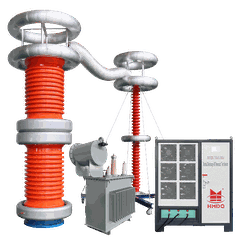



High Voltage Testing Equipment
A Prominent Manufacturer of High-Voltage Testing Equipment in 20 years, Professional Quality Technology, Supply Manufacture Price
Our company has specialized in the production and manufacturing of high-voltage testing equipment for 20 years, with a modern intelligent factory covering an area of over 10000 square meters, staffed by 51 professional technicians, and hold CE certification. 35 patents, 10+ software copyrights,Currently, we have over 150 stable distributors worldwide and established more than 10 service offices overseas.
A high - voltage tester is designed to generate high - voltage signals and apply them to electrical products, components, or insulating materials. By measuring parameters such as leakage current and insulation resistance, it can determine whether the insulation performance of the test object meets the requirements. This helps to identify potential insulation defects, ensuring the safety and reliability of electrical equipment.


Our Advantages
- Professional Consultation – Respond technical enquiries within one hours;
- Detailed Documentation – Dispatch requested technical materials within one hour;
- Competitive Quotation – Provide a reasonable quotation within two hours.
- Product demonstration videos
- 20 Years Of Specialization industry
- Deep Cooperation With 8.000 Enterprises
- Provide Technical Professional Technical Service And Team Guidance And Support For Life
- Certificated By CE, lSO9001,SGS, BV,TUV.
- Trust And RecognitionFrom 180 Countries And Regions
- High-Level Professional Factory With Over 45.000 m
- 35 patents
- 10+ software copyrights
- Authorized as a National-Level “High-Tech Enterprise”
- Wuhan Technology Innovation "Gazelle" Enterprise.
- Strict contract requirements
- Select the most optimal mode of transport
- Respect customer arrangements
- Timely production progress updates synchronization
- On-time delivery
- 12-month warranty
- Overseas training support
- Regular follow-ups by professionals
- Extended warranty (optional)
- Factory testing available
Feature of High Voltage Tester
High - voltage Output: It can generate various high - voltage levels, ranging from a few kilovolts to several hundred kilovolts, or even higher, to meet different test requirements

(1)Core Output Features
- Adjustable Voltage Output: Allows the user to precisely set the desired test voltage (AC, DC, or sometimes both) up to the instrument's maximum rating (e.g., 5 kV, 15 kV, 30 kV, 100 kV).
- Variable Ramp Rate: Allows the user to control how quickly the voltage increases from zero to the target setpoint. A slow, controlled ramp is crucial for testing delicate components and for observing the voltage vs. leakage current.
- Voltage Stability & Regulation:High-quality testers provide a stable, ripple-free output voltage even as the load (the equipment under test) changes, ensuring accurate and repeatable results.
- Selectable Test Duration (Dwell Time):The ability to set how long the voltage is applied at the target level (e.g., 60 seconds, 5 minutes, or continuous). A timer automatically holds the voltage and then ramps it down or signals when the test is complete.

(2). Measurement & Diagnostic Features
- Leakage Current Measurement: Precisely measures the tiny current that flows through the insulation during the test. This is a critical diagnostic measurement—a rising leakage current can indicate impending insulation breakdown long before it happens.
- Programmable Current Trip Threshold:The user can set a maximum allowable leakage current. If this threshold is exceeded, the tester will instantly shut down (trip), safely failing the unit under test and preventing damage.
- Arc Detection:Advanced circuitry can detect sudden, brief current spikes caused by arcing or partial discharges, which indicate insulation flaws, and can trip the test accordingly.
- Data Logging & Trend Analysis: Modern testers can record voltage, current, and time data throughout the test. This data can be graphed to analyze insulation performance and spot trends over time, which is vital for predictive maintenance.
- Pass/Fail Indication: Clear visual and audible signals to immediately indicate the test result.

(3). Safety Features (The Most Critical Category)
- Zero-Start Interlock: Ensures the output voltage is always zero when the test is initiated, preventing a sudden high-voltage surge.
- High-Voltage Enable Interlock:Requires a physical key or a secure button press (often with a two-hand operation) to activate the high-voltage output, preventing accidental activation.
- Remote Interlock Connector: A port for connecting an external safety switch or a door interlock from a test cage. If the circuit is broken (e.g., someone opens the cage door), the high voltage is instantly disabled.
- Emergency Off (E-Stop) Button:A large, prominent, red button that immediately cuts power to the high-voltage output when pressed.
- Automatic Discharge & Grounding:Upon test completion or a trip, the tester automatically discharges any stored capacitive energy in the unit under test and grounds the output terminal to protect the operator.
- Flashover Protection:Built-in circuits to protect the tester itself from damage in the event of a sudden insulation breakdown (flashover) on the device under test.
- Real-Time Ground Continuity Monitoring: Continuously checks that the ground connection to the unit under test is secure. If the ground is lost, the test is aborted

(4).Operational & User Interface Features
- Digital Display:Clear LCD or LED screens showing set voltage, actual output voltage, leakage current, test time, and status messages.
- Intuitive Control Interface:Keypads, knobs, and menus that make complex settings easy to navigate.
- Remote Control & PC Interface:USB, Ethernet, or GPIB ports to control the tester from a safe distance via a computer. This is essential for operator safety during very high-voltage tests.
- Portability:Many modern testers, especially for field use (like VLF testers for cables), are designed to be rugged and portable with carrying handles.
- Modular Design:High-end systems may have a separate control unit and a high-voltage output tank, allowing the operator to be far away from the dangerous high-voltage source.

(5). Specialized Testing Modes
- AC Hipot Mode: Standard for applying an AC withstand test.
- DC Hipot Mode:Used for testing capacitive loads like long power cables, where an AC test would require too much power.
- Insulation Resistance (IR) Mode:Often combined with Hipot testers as a "Megohmmeter" function to measure resistance in Megohms (MΩ).
- Step Voltage Test: Automatically applies a series of increasing voltage steps, holding at each to analyze how the insulation resistance changes with stress.
- Ramp Test:Automatically ramps the voltage up until a breakdown occurs, useful for finding the exact dielectric breakdown strength of a material.

The Type of High Voltage Tester

AC Hipot Tester
Applies a high AC voltage at power frequency (50/60 Hz) to stress the insulation. It is the most direct simulation of real-world operating stress.

DC Hipot Tester
Applies a high DC voltage. It requires less power than an AC test, making the equipment smaller.

VLF (Very Low Frequency) Tester
A type of AC tester that operates at a very low frequency (0.1 Hz or 0.05 Hz). This reduces the power requirement by a factor of 500-1000.

Impulse Tester
Applies a very short, high-voltage, high-energy pulse or surge (simulating lightning or switching surges.

Insulation Resistance Tester
Applies a DC voltage(e.g., 250V, 500V, 1kV, 5kV, 10kV) and measures the resistance of the insulation in Megohms (MΩ).

Partial Discharge Tester
Detects and measures tiny electrical sparks (partial discharges) within small voids in insulation. These discharges erode insulation over time and are a key indicator of impending failure.

Tan Delta / Loss Angle Tester
Applies an AC voltage and measures the dielectric loss or power factor of the insulation. A high tan delta value indicates aging or wet insulation that is generating significant heat under AC stress.

Step Voltage Test
A test mode (often on advanced IR or Hipot testers) that applies increasing steps of DC voltage and measures the IR at each step. A significant drop in IR with increasing voltage indicates insulation weakness.

Cable Fault Locators
A system that combines a thumper (surge generator) to create a visible or audible fault and a locator to find the physical point of failure along a buried cable.

Automatic Test Equipment (ATE) Systems
Computer-controlled "rack and stack" systems that automate a sequence of tests (e.g., Hipot, IR, Ground Bond, Functional Test) on a production line.
Ground Resistance Testers
Measures the resistance of a ground electrode to the surrounding earth. While not a "high-voltage" tester in the traditional sense, some models use higher voltages for specific methods.
Applications of High voltage Tester
(1).Withstand Testers
|
Type |
Description |
Key Application |
|
AC Hipot (Dielectric Withstand) Tester |
Applies a high AC voltage at power frequency (50/60 Hz) to stress the insulation. It is the most direct simulation of real-world operating stress. |
Factory acceptance testing for appliances, cables, transformers, and switchgear. The standard for most safety agency certifications. |
|
DC Hipot Tester |
Applies a high DC voltage. It requires less power than an AC test, making the equipment smaller. |
Testing long power cables (high capacitance loads) and components like diodes and capacitors where AC could cause damage. Traditionally used for field testing. |
|
VLF (Very Low Frequency) Tester |
A type of AC tester that operates at a very low frequency (0.1 Hz or 0.05 Hz). This reduces the power requirement by a factor of 500-1000 compared to 50/60 Hz, making it portable for field use. |
Field testing of medium-voltage and high-voltage power cables.The modern standard for cable withstand testing, replacing DC for most cable types. |
|
Impulse Tester |
Applies a very short, high-voltage, high-energy pulse or surge (simulating lightning or switching surges). |
Testing the turn-to-turn insulation of motor and generator windings, which other test types cannot effectively stress. |
(2).Diagnostic Testers
|
Type |
Description |
Key Application & Measurement |
|
Insulation Resistance (IR) Tester (Megohmmeter / Megger®) |
Applies a DC voltage (e.g., 250V, 500V, 1kV, 5kV, 10kV) and measures the resistance of the insulation in Megohms (MΩ). |
General insulation health.Detects moisture, contamination, and overall quality. The most common preventive maintenance test. |
|
Dielectric Absorption Testers (PI & DAR) |
A advanced form of IR testing that takes measurements over time (e.g., 1 minute and 10 minutes) to calculate a Polarization Index (PI) or Dielectric Absorption Ratio. |
Assesses the quality of insulation in large windings (e.g., transformers, motors). A good PI indicates clean, dry insulation. |
|
Partial Discharge (PD) Tester |
Detects and measures tiny electrical sparks (partial discharges) within small voids in insulation. These discharges erode insulation over time and are a key indicator of impending failure. |
Advanced predictive maintenance.Used on critical assets like HV cables, transformers, and gas-insulated switchgear to find hidden flaws long before breakdown. |
|
Tan Delta / Loss Angle Tester |
Applies an AC voltage and measures the dielectric loss or power factor of the insulation. A high tan delta value indicates aging or wet insulation that is generating significant heat under AC stress. |
Diagnostic testing of cable insulation, transformer bushings, and other assets to assess overall condition and aging. Often integrated into VLF testers. |
|
Step Voltage Test |
A test mode (often on advanced IR or Hipot testers) that applies increasing steps of DC voltage and measures the IR at each step. A significant drop in IR with increasing voltage indicates insulation weakness. |
Pinpointing the nature of an insulation problem, such as moisture ingress or cracking. |
(3).Specialized & Application-Specific Testers
|
Type |
Description |
Key Application |
|
Cable Fault Locators |
A system that combines a thumper(surge generator) to create a visible or audible fault and a locator to find the physical point of failure along a buried cable. |
Pinpointing the exact location of a break or fault in an underground power cable to minimize excavation and repair time. |
|
Automatic Test Equipment (ATE) Systems |
Computer-controlled "rack and stack" systems that automate a sequence of tests (e.g., Hipot, IR, Ground Bond, Functional Test) on a production line. |
High-volume manufacturingof products like power supplies, PCBs, and appliances to ensure every unit meets safety standards. |
|
Ground Resistance Testers |
Measures the resistance of a ground electrode to the surrounding earth. While not a "high-voltage" tester in the traditional sense, some models use higher voltages for specific methods. |
Ensuring safety by verifying that electrical systems are properly grounded to protect people and equipment. |
Working Principle of High Voltage Tester
The core principle of all high-voltage testers is to apply a controlled, high-voltage stress to an electrical component and measure its response to evaluate the integrity of its insulation.
High-Voltage Generator
The mainly responsible for generating high voltage and providing the energy required for testing. The high-voltage generator usually adopts a voltage-multiplying rectifier circuit or an oscillating circuit to boost low-voltage direct current or alternating current to the voltage level required for testing.
High-Voltage Output End
It is responsible for outputting the high-voltage signal to the insulated part of the device under test. The high-voltage output end is generally equipped with a high-voltage probe and high-voltage wire for connection with the device under test.
Detection Circuit
This part is mainly used to detect the leakage current or breakdown current of the insulation layer of the device under test. The detection circuit usually includes components such as a current sensor, amplifier, and display.
Control Circuit
This part is responsible for controlling the entire testing process, including functions such as voltage setting, test time setting, and test result display.
How Different Testers Implement This Principle
|
Tester Type |
Implementation of the Core Principle |
|
Dielectric Withstand (Hipot) Tester |
1. Apply a high AC/DC voltage. |
|
Insulation Resistance (Megger) |
1. Apply a stable DC voltage. |
|
VLF Hipot Tester |
1. Applyan AC voltage at a very low frequency (0.1 Hz) to minimize the power needed for capacitive loads like long cables. |
|
Partial Discharge (PD) Tester |
1. Apply a high AC voltage. |
Usage of High Voltage Tester
Operating a HV tester requires strict adherence to safety protocols. The following is a general procedure.
A. Pre-Test Preparation
1.Review Standards:Understand the test parameters (test voltage, duration, pass/fail limits) specified by the equipment manufacturer or relevant standard (e.g., IEC, IEEE, UL).
2.Visual Inspection:Inspect the tester, test leads, and accessories for any signs of damage, cracks, or wear.
3.Verify Calibration:Ensure the tester has a valid calibration certificate.
4.Prepare the Test Object:
•De-energize:Ensure the equipment under test (EUT) is completely disconnected from all power sources.
•Discharge:Ground all parts of the EUT to discharge any stored capacitive energy.
•Isolate:Disconnect or bypass any components that could be damaged by the high voltage (e.g., surge protectors, electronic boards, meters).
5.Set Up a Safe Zone:Barricade the test area with warning signs and safety tape. Ensure only authorized personnel are present.
6.Personal Protective Equipment (PPE):Wear appropriate PPE, including voltage-rated gloves, safety glasses, and arc-flash clothing as needed.
B. Connection and Test Execution
1.Connect Leads:Connect the HIGH VOLTAGE output lead to the conductor being tested.
Connect the RETURN or GROUND lead to the grounded outer surface or chassis of the EUT.
*Caution: Ensure connections are secure and the ground connection is impeccable.
2.Power On the Tester:Turn on the instrument.
3.Set Parameters: Program the test voltage, ramp rate (time to reach full voltage), and dwell time (hold time at full voltage).
4.Set Trip Threshold:Set the leakage current trip level. This should be based on the acceptable limit for the EUT.
5.Initiate Test:Start the test. Most modern testers will automatically ramp the voltage up, hold it, and then ramp it down.
6.Monitor:Observe the test for any abnormal sounds (arcing/clicking) or readings. Stand clear of the setup.
7.Record Results:Note the outcome (Pass/Fail) and any relevant measurements (leakage current, insulation resistance value).
C. Post-Test Procedure
1.Automatic Discharge:Allow the tester to complete its cycle and automatically discharge the EUT.
2.Manual Grounding:VERIFY DISCHARGE WITH A PROPER GROUNDING DEVICE. After the test, manually apply a grounding stick to the tested conductor to ensure it is fully discharged. This is the most critical safety step.
3.Disconnect: Remove the test leads, starting with the high-voltage lead first.
4.Reconnect:Reconnect any components that were disconnected or bypassed before the test.
Maintenance of High Voltage Tester
Proper maintenance ensures accuracy, reliability, and operator safety.
|
Maintenance Activity |
Frequency |
Details |
|
Visual Inspection |
Before each use |
Check cables, probes, and connectors for cuts, abrasions, or cracks. Inspect the case for damage. |
|
Functional Verification |
Daily/Before use |
Perform a quick self-test or a known-good test on a verified test sample to ensure the unit is operating. |
|
Cleaning |
As needed |
Wipe the exterior with a clean, dry cloth. Use a mild detergent if necessary. Ensure vents are not clogged. |
|
Calibration |
Annually (or per mfr. schedule) |
Send the unit to an accredited lab or the manufacturer for full calibration. This verifies voltage and current measurements are accurate to specification. This is mandatory. |
|
Software/Firmware Updates |
As released |
Check the manufacturer's website for updates that may improve functionality or fix bugs. |
|
Proper Storage |
N/A |
Store in a clean, dry, climate-controlled environment. Coil cables neatly to prevent damage. Use protective caps on connectors. |
|
Record Keeping |
N/A |
Maintain a logbook for calibration dates, repair history, and any issues encountered during use. |
Client Visits and On-Site Acceptance Inspections
The HMBBT high current temperature rise test device required by Russian customers has been produced and is currently being packaged.


Russian customers conduct on-site inspections of factory in the Wuhan Goldhome Hipot Electrical Co., Ltd and conduct product acceptance.


A Prominent Manufacturer of High-Voltage Testing Equipment in 20 years, Professional Quality Technology, Supply Manufacture Price
FAQ
Q: 1.What is the High Voltage Tester?
A: A high-voltage tester is a specialized instrument used to apply high voltage to electrical equipment, components, or materials to evaluate their insulation strength and safety performance.
Q: 2.What are the primary applications of high-voltage testers?
A: Primary application scenarios include:
•Manufacturing: Mandatory safety certification for household appliances and electronic products prior to shipment.
•Power industry: Preventive maintenance for substation equipment and power cables.
•Scientific research and quality inspection: Performance verification of insulating materials, transformers, and other components.
Q: 3.What are the features of a high-voltage tester?
A: A high-voltage tester is a specialized instrument used to evaluate the insulation performance and withstand voltage strength of electrical equipment. Its primary features include:
1. High-voltage output
2. Precise measurement
3. Multiple safety protections
4. Automation and intelligence
5. Dedicated design
Q: 4.What is the Usage Steps of High-Voltage Tester?
A: 1. Preparatory Work
• Power isolation
• Discharge and grounding
• Connect circuits
• Set parameters
2. Execute Testing
• Initiate test
• Maintain observation
• Evaluate results
3. Post-test Procedures
• Automatic discharge
• Manual discharge
• Disconnect wiring
Please refer to the product manual for specific details
Q: 5.Does the high-voltage tester have environmental requirements?
A: Yes. The high-voltage tester has specific environmental requirements:
See the manual for specific details.
Q: 6.Can one person operate a high-voltage tester?
A: No. A minimum of two personnel must be present at all times.
Q: 7. What are the primary types of high-voltage testing?
A: AC withstand voltage testing;
DC withstand voltage testing;
Impulse withstand voltage testing;
Q: 8.What distinguishes withstand voltage testing from insulation resistance testing?
A: Insulation resistance testing (megohmmeter): Applies a lower DC voltage (e.g., 500V, 2500V) to measure insulation resistance (MΩ), serving as a non-destructive preliminary screening method.
Withstand voltage testing (high-voltage tester):Applies very high AC/DC voltage to assess insulation strength, constituting a destructive strength verification.
Q: 9. How should leakage current limits (Trip Level) be set?
A: There is no absolute standard. Common references include: values specified in product standards; historical data or empirical values from similar products; the value should effectively distinguish normal capacitive charging current from abnormal insulation leakage current.
Q: 10. What are the most critical safety operating procedures?
A: Reliable earthing; safe isolation; ‘one person operating, one person supervising’; after DC testing, the test specimen must be fully discharged using a discharge rod!
As one of the most professional high voltage testing equipment manufacturers in China, we're featured by quality products and good price. Welcome to buy high voltage testing equipment in stock here and get pricelist from our factory. Contact us for customized service.