

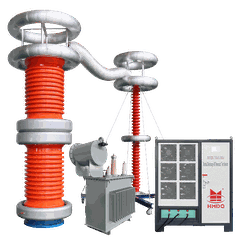



Current Transformer Test Bench
High Accuracy CT Test Bench Supplier----Goldhome
Our company has specialized in the production and manufacturing of Current Transformer Test Bench for 20 years, with a modern intelligent factory covering an area of over 10000 square meters, staffed by 51 professional technicians, and hold CE certification. 35 patents, 10+ software copyrights,Currently, we have over 150 stable distributors worldwide and established more than 10 service offices overseas.

35+
National patents
20+
Years Experience
51
Technical Staff
29991
Active Members


A current transformer test bench is a specialized, integrated device designed for the comprehensive calibration and testing of current transformers (CTs) to verify their performance and accuracy.
As an industrialized, automated testing system, it is widely used for factory acceptance testing by transformer manufacturers, periodic calibration in power systems, and laboratory testing at research institutions. Its primary purpose is to ensure the metrological accuracy of current transformers, the reliability of relay protection operations, and the safe and stable operation of the entire power system.Unlike handheld or portable single-parameter testers, a test bench is typically a complete platform comprising a core test unit, standard devices, precision power supplies, load boxes, and a control system.
Main Functions
Ratio and Polarity Testing
This verifies whether the ratio between the primary and secondary currents is correct and checks whether the polarity markings on the windings are accurate. This constitutes the most basic functional verification of a transformer.
Excitation/Saturation Testing
This is critical for evaluating the performance of a current transformer’s core. By plotting the relationship between excitation current and secondary voltage (the I-V characteristic curve), the knee point voltage can be accurately determined. This voltage value serves as a key indicator for assessing whether a protection-grade CT will prematurely enter saturation during a system fault, thereby affecting the correct operation of the protection system.
Accuracy and Error Testing
This evaluates the ratio error (current error) and phase error (phase angle error) of the CT under rated load. This is critical for metering CTs, as it directly affects the accuracy of electricity billing.
Secondary Winding DC Resistance Test
Measures the DC resistance of the CT’s secondary winding to check for potential hazards such as turn-to-turn short circuits, open circuits, or poor contacts.
Secondary Circuit Burden Test
Measures the actual impedance of the CT’s secondary circuit to ensure it remains within the design-allowed load range; otherwise, the CT’s accuracy and performance will be compromised.
Insulation and Withstand Test
Applies high voltage between the CT’s primary and secondary windings, as well as between the windings and ground, to verify insulation strength and electrical safety reliability.
The current transformer test bench consists of the following core components
- Core Control and Measurement Unit: A high-performance digital transformer calibrator that integrates high-precision measurement modules and a microprocessor, responsible for controlling the entire testing process and collecting data.
- Reference Standards Unit: High-precision standard current transformers and standard voltage transformers serve as measurement references. Their accuracy class is typically 2–3 grades higher than that of the CT under test to ensure testing accuracy.
- Test Power Supply Unit: Programmable, high-stability current boosters and voltage regulators that provide precise and variable test currents and voltages for the CTs.
- Load Box Unit: Used to simulate the various secondary loads (expressed in VA) that the CTs bear during actual operation.
- Automation and Software System: Works in conjunction with host computer software to enable fully or semi-automatic testing, intelligent data analysis, and one-click generation of test reports.

Key Advantages of CT Test Bench
Integrated All-in-One Design
By integrating current boosting, voltage regulation, standard CTs, load adjustment, and measurement/control analysis modules, this single unit performs all CT tests, eliminating the need to connect multiple instruments. This simplifies wiring and saves space.
Comprehensive Test Coverage
Single-session testing: turns ratio, polarity, phase angle error/ratio error, V-A characteristic, winding DC resistance, secondary load, demagnetization, and power frequency withstand voltage. Meets all testing standards for factory, type, and grid acceptance.
High Testing Accuracy and Stable Data
Equipped with a built-in high-precision standard current transformer and a digital data acquisition unit, it achieves a high accuracy class. Test data is precise and reproducible, complying with IEC/GB power metering standards.
Fully Automatic Intelligent Operation
One-button testing, automatic voltage ramp-up, automatic data calculation, curve generation, and report saving/printing significantly reduce human error and improve testing efficiency.
Wide Compatibility Range
Capable of testing various types of current transformers across different voltage levels, turns ratios, and accuracy classes. Highly versatile, suitable for production lines, quality control laboratories, and third-party testing organizations.
Comprehensive Safety Protection
Equipped with overcurrent, overvoltage, short-circuit, leakage, and emergency shutdown protection. Features an isolated high-voltage circuit design to eliminate testing safety hazards.
Energy-Efficient, Durable, and Reliable
Features a dedicated voltage regulation and current boosting unit with low power loss and minimal temperature rise, ensuring stable operation during prolonged continuous use and making it suitable for high-volume batch testing on assembly lines.
Traceable Data Management
Includes built-in storage, export, and upload functions. Test reports are standardized, facilitating quality inspection archiving, acceptance audits, and quality traceability.

Main Types
Lorem ipsum dolor sit, amet consectetur adipisicing elit.
Classification by Structural Configuration
- Integrated Comprehensive CT Test Bench
The entire unit integrates control, current-boosting, standard transformers, and load units, featuring a compact footprint and simple wiring.
- Modular CT Test Bench
Control console + independent current-boosting transformer + external load cabinet; suitable for high-current, high-capacity testing.
Classification by Test Functions
- Single-Function Current Transformer Test Bench
Performs only: turns ratio, polarity, and error testing; a basic model offering high cost-effectiveness.
- CT/PT Comprehensive Transformer Test Bench
Simultaneously tests current transformers and voltage transformers; offers the most comprehensive functionality and is the standard factory configuration.
Classification by Control Method
- Manual Voltage Adjustment Type
Knob operation with purely manual voltage increase; suitable for small-batch, simple testing.
- Fully Automatic Intelligent Type
Touchscreen + microcomputer control; one-button testing, automatic graphing, and automatic report generation; the mainstream choice in industrial applications.
Classification by Output Current Rating
- Low-current Bench
- Medium-current Bench
- High-current Bench (2000A / 3000A / 5000A)
Test Procedure
Step 1: Pre-Test Preparation
Safety First: This is the most critical step.
- Ensure Reliable Grounding: Reliably ground both the tester and the secondary terminals of the current transformer under test. This is a fundamental requirement for ensuring personal and equipment safety and must be strictly followed.
- Inspect the CT Under Test: Verify that there are no grounding points on the secondary side of the current transformer. Additionally, disconnect the transformer from the circuit before testing to ensure its terminals carry no external potential.
Equipment and Environmental Checks:
- Inspect the Tester: Check for any physical damage to the exterior, ensure the test leads are intact, and verify that all connections are secure.
- Select the testing environment: Conduct the test in a dry, well-ventilated area free from strong electromagnetic interference. Ensure the work area is clean, and keep power cords and test leads separate to avoid interference.
- Familiarize yourself with the device under test: Carefully verify the parameters on the current transformer’s nameplate (such as turns ratio, rated secondary current, accuracy class, and rated load). This information serves as the core basis for setting subsequent test parameters.
Step 2: Perform the Test
- Power on and select mode: Turn on the tester and select the appropriate function mode (such as “CT Test” or “Current Transformer Test”) from the main interface.
- Connect wires according to on-screen instructions: This is the most critical step. Most modern devices display intuitive wiring diagrams on the screen. Be sure to strictly connect the corresponding terminals on the primary and secondary sides. It is recommended to use the device’s original dedicated test leads to ensure good contact and accurate measurements.
- Set Test Parameters: Based on the information on the transformer nameplate, accurately enter all parameters on the device’s operating interface.
- Basic Parameters: Transformer type, primary/secondary rated current, and rated turns ratio.
- Accuracy and Load: Accuracy class, rated load, and minimum load, etc.
- Protection Limits: To protect the equipment, be sure to set the maximum secondary voltage and current limits.
- Verify and Start Testing: After double-checking that the wiring and parameters are correct, select the test items to be performed (such as excitation, turns ratio, error, DC resistance, etc.), then click the “Start” or “Run” button. The test will proceed automatically; do not touch the test clamps or terminals during this time.
Step 3: Test Conclusion
Properly handling the data and equipment after the test is the final step in generating a valid report.
- Recording and Analyzing Data: Upon completion of the test, the instrument will automatically calculate and display various results (such as ratio error, phase angle error, excitation curve, and inflection point voltage). Modern instruments can automatically determine whether the data meets specifications.
- Saving and Exporting Reports: Save the test data to the instrument’s internal memory or export it to a PC via the USB port. Most devices support one-click generation of test reports in Excel or PDF format.
- Shutdown and Return to Storage: Turn off the instrument’s power, carefully disconnect all test leads and ground wires, and verify that all accessories are accounted for.
- Cleaning and Maintenance: Wipe the instrument’s exterior with a dry cloth to keep it clean, and store the instrument and cables in a dry place.
Famous Brand
Oversea Brand
Megger (UK)
Featured Products: MRCT, MVCT, and CTER series
Features:
High degree of automation; multiple tests completed with a single button press
High accuracy; suitable for metrology-grade CTs
Widely used in power grids worldwide
OMICRON (Austria)
Featured Products: CT Analyzer + Test Universe system
Features:
Robust excitation curve analysis capabilities
Comprehensive software ecosystem
Applications: Relay protection, power grid commissioning
Vanguard Instruments (USA)
Representative Products: EZCT-2000C, EZCT-2KA
Features:
Automatic testing of excitation, turns ratio, polarity, etc.
Suitable for both field and laboratory use
Domestic Brand
Goldhome Hipot(HMDQ)
Typical Products: CT/PT Integrated Test Benches, Transformer Calibration Systems
Features:
Supports IEC, IEEE, and Chinese National Standards
Capable of fully automated calibration (laboratory-grade)
Strong customization capabilities (for power grid and metrology institute projects)
Advantages: Class 0.05 high precision, fully automatic testing, one-click report generation, modular design; covers all CT/PT test items (turns ratio, polarity, I-V characteristics, error curves).
Positioning: High-end standard equipment for power plants, electric power research institutes, and third-party testing organizations.
GFUVE
Flagship Product: GF1060 CT Test Bench
Features:
0.02S standard CT + automated testing system
Supports IEC 61869 / IEEE standards
Automatic report generation
Wuhan GDZX
Flagship Product: ZX-BCT Test Bench
Features:
Fully automated test bench
Supports high-current testing
Alternative Name
· Current Transformer Test Bench
· CT Test Bench
· CT Testing Equipment
· Current Transformer Tester
· CT Test System
· CT Test Equipment
· Current Transformer Ratio Test Bench
· CT Polarity Test Equipment
· CT Excitation Test System
· CT Burden Test Bench
· CT Accuracy Test System
· CT Calibration Bench
· CT Error Test Equipment
· Automatic CT Test Bench
· High Accuracy CT Test System
· 0.02 Class CT Test Bench
· IEC 61869 CT Test Equipment
· IEEE C57 CT Test System
· Multi-function CT Analyzer Bench
· Digital CT Test Bench
· CT PT Comprehensive Test Bench
· CT Ratio Test Equipment
· CT Excitation Characteristic Test Bench
· Current Transformer Error Testing Device
· CT Ratio & Phase Angle Test
· CT Burden Test
· CT Excitation Curve Test
· CT Winding Resistance Test
· CT Polarity Test
· CT Demagnetization Function
· Transformer Accuracy Test System
· Automatic CT Test Bench
· Integrated CT Test Bench
· High Current CT Test Bench
· High Precision CT Tester
· Indoor Type CT Test Bench
· Industrial Current Transformer Test Equipment
FAQ
Q: 1: What is a current transformer (CT) test bench?
A: It is an integrated, specialized testing device used to measure various performance parameters of current transformers (CTs). It can perform comprehensive testing of all parameters, including transformation ratio, polarity, error, voltage-current characteristics, winding resistance, and secondary load, and is widely used in transformer manufacturing, power operation and maintenance, and quality inspection.
Q: 2: What test items can this equipment perform?
A: It can primarily perform the following tests: ① CT transformation ratio and phase angle error testing; ② Voltage-current (excitation) characteristic testing; ③ Secondary winding DC resistance testing; ④ Secondary load testing; ⑤ Polarity verification; ⑥ Automatic demagnetization testing; ⑦ Power frequency withstand voltage testing.
Q: 3: Is this equipment suitable for indoor or outdoor use?
A: It is primarily designed for use in indoor laboratories and workshops and must be operated in a dry, dust-free, and well-ventilated environment. It is not suitable for outdoor use in humid or harsh conditions.
Q: 4: What types of current transformers (CTs) can be tested?
A: It supports both protection-grade and metering-grade current transformers, accommodating low- and high-voltage CTs with various turns ratios and accuracy classes, offering high versatility.
Q: 5: What are the core advantages of the fully automatic CT test bench?
A: The core advantage is one-button fully automatic testing, which offers high accuracy and speed. It can automatically plot test curves, store test data, and support automatic printing of test reports, significantly reducing manual labor and errors.
Q: 6: Why is it necessary to demagnetize the CT before testing?
A: Residual magnetism in the CT core can cause significant deviations in test data such as the transformation ratio and error. The built-in demagnetization function removes residual magnetism from the core, ensuring accurate and stable test data.
Q: 7: Can this equipment test both CTs and PTs (voltage transformers) simultaneously?
A: The CT/PT combined test bench can test both current transformers (CTs) and voltage transformers (PTs) simultaneously; the single-function test bench can only test current transformers.
Q: 8: What safety precautions should be observed during operation?
A: Three core safety requirements must be observed: ① Ensure reliable grounding protection; ② Under no circumstances should the CT secondary circuit be opened while the equipment is powered on; ③ Before changing connections or shutting down the equipment, the output current must be reduced to zero.
Q: 9: Does Goldhome offer CT test benches?
A: Yes. Goldhome provides a full range of CT test benches, including both integrated and split-type models. These feature high precision and fully automatic testing capabilities, support customization to meet specific specifications, and are suitable for various application scenarios.
Q: 10: Can test reports be exported and printed?
A: Yes. The device automatically saves test data and allows for the export of reports in PDF format. It can also be connected to an external printer for on-site report printing, facilitating archiving and acceptance inspections.
Q: 11. Why won’t the instrument power on?
A: Common causes include: the power plug not being properly inserted, a faulty power switch, a blown internal fuse, or a depleted battery. We recommend checking the following in order: Ensure the power cord is securely connected; check if the fuse (typically 2A) has blown (replace with a fuse of the same specification if blown); if battery-powered, check the battery charge level and attempt to recharge it.
Q: 12: What should I do if a “Wiring Error” or “Polarity Error” message appears during testing?
A: This usually indicates incorrect wiring or incorrect settings on the test bench. Please troubleshoot by following these steps: Check whether the wiring positions on the primary and secondary sides are correct, paying special attention to terminal markings (e.g., whether P1/P2 and S1/S2 correspond). Also, confirm the measurement object setting on the test bench (CT should be selected instead of PT or other options). After checking, run the test again.
Q: 13: Why does an “overcurrent trip” occur? How should it be handled?
A: An “overcurrent trip” is usually caused by a short circuit in the external wiring connected to the unit or by an overcurrent protection threshold set too low. First, check the external wiring for short circuits. If no abnormalities are found, you can appropriately increase the overcurrent trip setting. However, please note that it is generally not recommended to set the overcurrent trip value too high (e.g., 50A), as this increases potential risks to personnel and equipment.
Q: 14: What should I do if the current cannot be boosted to the required level when testing a CT with a high turns ratio?
A: When testing current transformers with high turns ratios, the equipment may sometimes fail to reach 120% of the rated current or voltage even when set to the maximum. In such cases, it is recommended to select a current booster or voltage booster with a higher capacity to minimize the load on the primary-side current and voltage as much as possible. It is important to note that when this occurs, the test bench may automatically return to zero without displaying any warning, so users must monitor the situation themselves.
Wuhan Goldhome Hipot Electrical Co., Ltd. is one of the most professional current transformer test bench manufacturers and suppliers in China, featured by quality products and good price. Welcome to buy current transformer test bench in stock here and get pricelist from our factory. Contact us for customized service.