

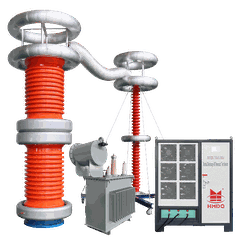



Electrical Testing Instruments
A manufacturer specializing in Electrical Testing Instruments Equipment for 20 years, A reliable supplier in China, Offering Factory-Direct Pricing.
Wuhan Goldhome Hipot Electrical Co., Ltd. was established in 2008, located in Economic and Technical Development Zone, working area more than 10000 square meters.We are professional OEM, ODM, OBM Manufacturer which is engaged in the research, development, sale and service of High Voltage Testing Equipment including: Resonant Test System, High Voltage Tester,Transformer Tester, Primary Current Injection Tester, Circuit Beaker Tester, Relay Protection Tester, Cable Tester, SF6 Test Analyzer, Oil Testing Instruments,etc.
Electrical Test Equipment & Instrumentation constitutes a comprehensive range of precision instruments specifically designed for testing, measuring, diagnosing, and analysing electrical equipment, power systems, and electrical products.Its fundamental purpose is to ensure the safe, stable, and reliable operation of power systems, whilst verifying that electrical equipment performance complies with design standards and safety regulations.


Why Choose Us
- Professional Consultation – Respond technical enquiries within one hours;
- Detailed Documentation – Dispatch requested technical materials within one hour;
- Competitive Quotation – Provide a reasonable quotation within two hours.
- Product demonstration videos
- 20 Years Of Specialization industry
- Provide Technical Professional Technical Service And Team Guidance And Support For Life
- Certificated By CE, lSO9001,SGS, BV,TUV.
- Trust And RecognitionFrom 180 Countries And Regions
- High-Level Professional Factory With Over 45.000 m
- 35 patents
- 10+ software copyrights
- Authorized as a National-Level “High-Tech Enterprise”
- Wuhan Technology Innovation "Gazelle" Enterprise.
- Strict contract requirements
- Select the most optimal mode of transport
- Respect customer arrangements
- Timely production progress updates synchronization
- On-time delivery
- 12-month warranty
- Overseas training support
- Regular follow-ups by professionals
- Extended warranty (optional)
- Factory testing available
Working Principle
All electrical test instruments operate on a common principle: evaluating a device's electrical characteristics or insulation status by applying some form of “stimulus” (voltage, current) and measuring its “response.”
Insulation Resistance Measurement
Principle: Apply DC high voltage, measure minute current, calculate resistance. Representative instruments include megohmmeters (shake meters) and insulation resistance testers. Primarily reflects the insulation material's ability to prevent current leakage.
01
Dielectric Loss Factor Measurement
Principle: Apply AC high voltage, measure current phase, calculate Tanδ. Representative instruments include dielectric loss testers. The Tanδ value directly reflects the insulation's power loss and the degree of aging, moisture ingress, or contamination.
02
High Voltage Withstand Test
Principle: Apply high voltage, monitor leakage current, and make a final determination. Representative instruments include AC/DC withstand voltage testers. This is a strength test/destructive test designed to evaluate the insulation material's ability to withstand extreme overvoltage and verify its safety margin.
03
Partial Discharge Measurement
Principle: Apply voltage, couple signals, detect pulses, analyze and evaluate. Representative instruments include partial discharge detection systems. This is the most sensitive insulation diagnostic technique, capable of detecting extremely minor insulation defects and assessing their progression.
04
Contact Resistance Measurement
Principle: Apply high DC current, measure voltage drop, calculate resistance. Representative instruments include contact resistance testers. This reflects the connection quality of conductive circuits.
05
The Main function of Electrical Instrument
Safety Verification: Inspects whether the insulation strength of equipment can withstand operating voltages and overvoltages (such as lightning strikes), preventing accidents like electric shock and fire.
Performance Evaluation: Measures various electrical parameters of equipment (such as resistance, capacitance, loss, transformation ratio, etc.) to determine if its performance meets specifications.
Condition Diagnosis: Detect potential, minor defects and aging trends in equipment to enable “predictive maintenance.”
Fault Location: Rapidly and accurately pinpoint fault locations when equipment malfunctions, reducing repair time and power outage losses.
Quality Certification: Serves as authoritative documentation for product shipment, installation acceptance, and periodic maintenance, ensuring equipment compliance with international, national, and industry standards (e.g., IEC, IEEE, GB, UL).
The Type of Electrical Testing Instrument
Insulation Characteristic Testing Category
Core: Evaluate the insulation performance of electrical equipment.

Insulation Resistance Tester (Megger)
Core function is to measure insulation resistance.

Dielectric Loss Tester (Tan Delta Tester)
Measures dielectric loss factor to evaluate insulation aging.

Ground Resistance Tester
Primarily measures the resistance of grounding systems.

DC Resistance Tester
Mainly detects the DC resistance of conductors and inspects connection quality.
High-Voltage Testing Equipment
Core:Testing the ultimate strength of equipment insulation.

AC Hipot Tester
Primarily conducts AC withstand voltage tests.

DC Hipot Tester
Designed to perform DC withstand voltage tests.

Impulse Generator
Generates lightning or operational waveforms to simulate overvoltage surges.

Partial Discharge (PD) Detector
Detects and locates partial discharges within equipment.
Characteristic Parameter Testing Category
Purpose: Measure specific electrical performance of equipment.

Transformer/Current Transformer Analyzer (CT/PT Analyzer)
Tests current/voltage transformer turns ratio, polarity, error, etc.

Transformer Turns Ratio Tester (TTR)
Measures the turns ratio of transformer windings.

Contact Resistance Tester
Measures the contact resistance of switches and circuit breakers.

Circuit Breaker Analyzer
Analyzes mechanical and electrical characteristics of circuit breakers, including opening/closing time, speed, and synchronism.
Oil and Gas Analysis
Purpose: Indirectly assess equipment condition by analyzing insulating media.

Chromatography Analyzer (DGA - Dissolved Gas Analyzer)
Analyzes characteristic dissolved gases in transformer oil, serving as the most effective method for diagnosing internal faults (e.g., overheating, electrical discharge).

Oil Breakdown Tester
Measures the breakdown voltage of insulating oil.
Secondary Circuit and Protection Testing Category
Purpose: Test control systems and protection devices.

Relay Test Set
Perform functional and setting tests on protective relays.

Microprocessor-Based Integrated Protection Tester
Conduct more complex tests on modern digital protection devices.
How to select a electrical testing Instrument
Choosing the right instrument depends on the use case—here are critical factors to evaluate:
Accuracy Class: The allowable error range. Higher accuracy is required for calibration or compliance testing.
Measurement Range: Ensure the instrument can handle the parameter limits of your target system.
Safety Ratings: Look for certifications like IEC 61010 (the global standard for electrical test equipment safety) and voltage/current ratings matching the system.
Portability Vs. Precision: Handheld devices (clamp meters) are ideal for fieldwork, while benchtop instruments ( laboratory multimeters) offer higher precision for stationary testing.
Additional Features: Modern instruments may include data logging (to track parameters over time), Bluetooth connectivity (for remote monitoring), or auto-ranging (to automatically adjust measurement scales).
The advantage of Electrical Testing Instrument
Enable predictive maintenance to prevent issues before they occur (Core Value)
It transforms traditional maintenance models, avoiding unplanned downtime and catastrophic failures.
01
Enhance Safety and Reliability
Three key safeguards: Ensure personnel safety; Ensure grid safety; Ensure equipment safety.
02
Significant Economic Benefits
Reduce power outage losses; Lower maintenance costs; Extend equipment lifespan; Optimize resource allocation.
03
Improve Maintenance Efficiency and Accuracy
Precise fault localization; Data-driven diagnostics; Automated operations.
04
Ensure Quality and Compliance
It serves as an essential tool for equipment manufacturers conducting factory and type tests, achieving international standard compliance.
05
The Application of Electrical Testing Instrument
1.Industrial Manufacturing & Production
In manufacturing, electrical systems (e.g., motors, conveyors, control panels) are the backbone of operations. Testing instruments ensure these systems run reliably, reduce downtime, and maintain product quality.
Equipment Commissioning: Multimeter, Clamp Meter, Power Quality Analyzer.
Routine Maintenance: Insulation Tester (Megger), Clamp Meter, Vibration Tester (paired with electrical tools)
Fault Diagnosis: Circuit Tracer, Oscilloscope, Power Analyzer.
2.Power Generation & Distribution
This sector (power plants, substations, utility grids) relies on testing instruments to ensure stable, safe electricity supply—critical for homes, businesses, and infrastructure.
Substation & Grid Testing:High-Voltage Tester (Hipot Tester), Insulation Tester, Power Quality Analyzer.
Renewable Energy Systems (Solar/Wind): Multimeter, Power Analyzer, DC Current Tester.
Utility Meter Calibration: Calibrated Multimeter, Power Standard.
3.Building & Construction (Residential/Commercial)
In buildings, testing instruments ensure electrical wiring, outlets, and systems are safe for occupants and compliant with local codes (e.g., NEC in the U.S., IEC 60364 globally).
Wiring Installation Checks:Multimeter, Circuit Tracer, GFCI Tester.
Safety Inspections (Pre-Sale/Renovation): Insulation Tester, Earth Tester, Socket Tester.
Smart Home System Testing: Power Quality Analyzer, Wi-Fi/Electrical Signal Tester.
4.Electronics & Electrical Component Manufacturing
Component Quality Control (QC): Multimeter, LCR Meter (measures inductance/capacitance/resistance), Oscilloscope.
PCB Testing: Circuit Tracer, Megger (Mini), In-Circuit Tester (ICT).
Product Compliance Testing: Hipot Tester, ESD Tester (Electrostatic Discharge), Power Analyzer.
5.Automotive & Transportation
Modern vehicles (cars, EVs, trains) rely on complex electrical systems (batteries, ECUs, wiring harnesses). Testing instruments ensure safety, performance, and reliability on the road/track.
Internal Combustion Engine (ICE) Cars: Multimeter, Clamp Meter, Battery Tester.
Electric Vehicles (EVs) & Hybrids: DC Clamp Meter, Insulation Tester, Battery Analyzer.
Aerospace & Rail: Precision Multimeter, Vibration-Electrical Tester, High-Voltage Tester.
6.Laboratory & Academic Research
In labs and universities, electrical testing instruments support cutting-edge research and education, where precision and flexibility are critical.
Electrical Engineering Research: Oscilloscope (High-Bandwidth), Signal Generator, Power Analyzer.
Student Education: Analog/Digital Multimeter, Breadboard Tester, Basic Oscilloscope.
Material Science Testing: Four-Point Probe Tester (measures resistivity), LCR Meter.
Procedure for Using Electrical Testing Equipment
All processes must follow the four-step sequence: “Preparation - Operation - Documentation - Conclusion,” as detailed below:
Pre-Test Preparation
Equipment Inspection: Verify equipment is in good physical condition and undergoes calibration verification.
Environmental and Safety Preparation: Establish a safety isolation zone to prevent electric shock or measurement interference. Wear insulated gloves and insulated shoes.
Connection Method Verification: Confirm voltage/resistance measurement or current measurement configurations.
Formal Testing Operation
Power-Up and Warm-Up: Allow 10-30 minutes warm-up to stabilize electronic components.
Range Selection: Prioritize Auto Range mode.
Reading and Stabilization: Observe waveform cycles before taking readings.
Special Operation Protocols: Insulation testing and grounding testing are required.
Data Recording and Analysis
Document measured values, test time, ambient temperature, and equipment model to generate a traceable report. Compare results against standard values for evaluation.
Post-Test Procedures
Power off the equipment and set the range selector to the safe position. Organize cables, clean probes, and store them in a dry, non-magnetic environment.
Maintenance of Electrical Testing Equipment
1. Inspect the exterior and cables. Check the device housing, power cord, and test leads (probes, test leads) for damage. Replace damaged cables immediately.
2. Cleaning: Carefully clean the housing, screen, connectors, terminals, and electronic contacts using contact cleaner and lint-free cotton swabs.
3. Power-On Self-Test: The instrument features a Self-Test function. Activate this function to ensure basic instrument functionality is normal.
4. Calibration Status Verification: Check the calibration label on the device to ensure it remains within its validity period. Measurements from devices past their calibration expiration date are unreliable.
1. Warm-Up: Prior to precision measurements, warm up the device for 15-30 minutes to allow internal circuits to reach thermal stability. This ensures accurate readings.
2. Electrical Safety: Understand current and voltage limits. Never exceed the device's maximum input voltage/current/power ratings. Practice electrostatic discharge (ESD) protection. Select appropriate probes and impedance matching for high-frequency measurements.
3. Physical Safety: Handle with care. Avoid severe shocks or impacts. Insert and remove connectors straight on and straight off.
Regular Maintenance: Perform performance verification (confidence testing), deep cleaning, and software updates. Metrological Calibration must be conducted by a nationally accredited metrology laboratory or the original equipment manufacturer. If the device malfunctions or exhibits abnormal performance, send it to an authorized service center for diagnosis and repair. Never disassemble the device yourself.
Our Services
We pledge to treat every client with integrity and equality, regardless of contract size or whether they are domestic or international, new or existing customers, providing professional consultation and advice. Goldhome provides professional installation, commissioning and training for users' workers, ensures that users can get familiar with operation methods and put machines into use as soon as possible.
1.Technical Consultation: Free support for product selection, test plan design, and standard compliance guidance.
2.Scenario Customization: Engineer teams deliver tailored solutions within 48 hours, based on client-specific conditions (e.g., high-altitude, high-humidity environments).
3.Trial Experience: Device trial testing and data validation to ensure product compatibility.
1.Transparent Delivery: Real-time updates on production progress, including factory test reports, operation videos, and global logistics tracking.
2.Installation & Training: On-site guidance for device commissioning and high-voltage safety training (theory + hands-on practice).
3.Acceptance Assurance: Support for equipment acceptance and issuance of third-party calibration certificates.
1.Warranty:
2-year warranty for entire systems.
Lifetime maintenance for core components (e.g., frequency converters, high-voltage dividers).
2.Rapid Response: 400 service hotline: Domestic on-site support within 24 hours; overseas remote diagnosis within 72 hours.
3.Proactive Care: Quarterly proactive inspections to monitor equipment performance and provide preventive maintenance recommendations.
4.Emergency Support: Priority dispatch of spare parts for urgent needs (e.g., power grid repairs) to minimize downtime.
5.Value-Added Services:
Smart upgrades (e.g., IoT data integration).
Lab construction planning and long-term partnership support.
Guaranteeing safety, efficiency, and seamless collaboration at every stage.
FAQ
Q: What is the difference between a Digital Multimeter (DMM) and an Oscilloscope?
A: A multimeter measures stable, quantifiable parameters (such as voltage, resistance, continuity) and provides a reading. An oscilloscope observes changing, dynamic signals to examine waveforms, frequency, noise, and other characteristics.
Q: What is bandwidth? Why is it important for oscilloscopes?
A: Bandwidth is the highest frequency an oscilloscope can accurately measure. According to the "5x rule," measuring a 100MHz signal requires at least a 500MHz bandwidth oscilloscope; otherwise, severe distortion occurs. It is the most critical specification for oscilloscopes.
Q: How to choose between bench-top and handheld multimeters?
A: Handheld: Portable, safe, ideal for field maintenance, electricians, and rapid troubleshooting. High safety rating (e.g., CAT III/IV).
Benchtop: High accuracy, multiple functions, high resolution, suitable for precision measurements in labs, R&D, and production lines.
Q: What does "constant mode" (CC/CV) mean for DC power supplies?
A: All DC power supplies operate in two modes:
Constant Voltage Mode (CV): Outputs a fixed voltage while current varies with load.
Constant Current Mode (CC): Outputs a constant current; voltage varies with load.
The power supply automatically switches between these modes based on load conditions.
Q: Why do voltages measured with an oscilloscope differ from those on a multimeter?
A: This is typically normal. Multimeters measure root mean square (RMS) values.
Oscilloscopes display raw waveform peaks. For standard sine waves, conversion relationships exist; for non-sine waves, readings will inevitably differ.
Q: What do the "X1" and "X10" settings on an oscilloscope probe mean?
A: X1 setting: No signal attenuation, but low bandwidth. High input capacitance may affect circuits. Suitable for low-frequency, small signals.
X10 setting: Signal attenuated to 1/10, but with higher bandwidth and lower input capacitance, minimizing circuit interference. This is the preferred setting for most situations. When using it, set the channel to "X10" in the oscilloscope menu for accurate readings.
Q: How do I select an appropriate power supply for my circuit?
A: Consider two core parameters:
Voltage: The power supply's maximum voltage must exceed the circuit's required voltage.
Current: The power supply's maximum current must exceed the circuit's maximum operating current.
Prioritize programmable power supplies, which allow flexible voltage and current limit settings.
Q: How do I maintain my test equipment?
A: Dustproof, moisture-proof, and drop-proof. Regularly clean connectors, schedule periodic inspections, and protect probes.
Q: What should I do if the oscilloscope waveform is unstable and keeps jumping?
A: This indicates improper trigger settings.
Correct procedure: Select the appropriate trigger mode (typically edge trigger), then adjust the trigger level knob until a stable waveform appears.
As one of the most professional electrical testing instruments manufacturers in China, we're featured by quality products and good price. Welcome to buy electrical testing instruments in stock here and get pricelist from our factory. Contact us for customized service.