

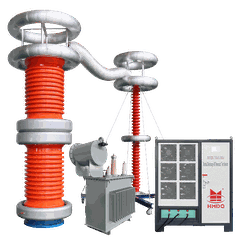



Battery Charge Discharge Machine
Best Manufacturer of Battery Charge Discharge Machine Industry
Wuhan Goldhome Hipot Electrical Co., Ltd. was established in 2008, located in Economic and Technical Development Zone, working area more than 10000 square meters.We are professional OEM, ODM, OBM Manufacturer which is engaged in the research, development, sale and service of High Voltage Testing Equipment including: Resonant Test System, High Voltage Tester,Transformer Tester ,Primary Current Injection Tester,Circuit Beaker Tester, Relay Protection Tester, Cable Tester, SF6 Test Analyzer,Oil Testing Instruments, Battery Charge Discharge Machine etc.


What is Battery charging and discharging equipment


Battery charging and discharging equipment is a specialized device designed for charging, discharging, and performance testing of various battery types (including lithium batteries, lead-acid batteries, nickel-metal hydride batteries, etc.), based on energy conversion and closed-loop control principles. At its core, it integrates a “programmable precision power supply + electronic load + high-precision measurement instrument.” Its core function is to regulate battery energy input (charging) and output (discharging) under controlled conditions while simultaneously collecting real-time key parameters such as voltage, current, and temperature. This enables precise evaluation of core battery performance metrics including capacity, cycle life, and charge/discharge efficiency, providing scientific data support for battery R&D, production, and operations. It is truly an indispensable “performance diagnostic tool” for the battery industry.
What is the principle of a Battery Charge Discharge Machine?
The core principle of a Battery Charge Discharge Machine (BCDM) is based on controllable energy conversion and closed-loop precision regulation. It centers on three core aspects—battery safety, testing accuracy, and performance protection—to achieve scientific management throughout the entire charging and discharging process:
Energy Closed-Loop and Controlled Conversion Principle
The core is to achieve closed-loop management of battery energy “input (charging) - output (discharging).” Through precision circuitry, energy flow is controlled to ensure stable energy input during charging and orderly energy release (recoverable or reasonably consumed) during discharging, preventing energy waste or abnormal loss. Simultaneously, energy conversion efficiency is strictly controlled to guarantee the accuracy of test data.
Precise Matching and Parameter Adaptation Principle
Key parameters such as battery type (lithium-ion, lead-acid, etc.), capacity, and nominal voltage must be precisely matched with critical charging/discharging modes (constant current, constant voltage, constant power, etc.), cutoff voltage, and current. This prevents battery damage and distorted test data caused by parameter mismatches, ensuring the testing process aligns with the battery's actual operating characteristics.
Safety First and Multi-Layer Protection Principle
Uphold “safety above all” throughout the process. Implement built-in protections against overvoltage, overcurrent, overtemperature, reverse connection, and short circuits. Continuously monitor battery status and equipment parameters during charging/discharging. Immediately halt operation and trigger alarms upon anomalies to prevent battery swelling, fires, or leakage while safeguarding equipment integrity.
Data Accuracy and Full Process Control Principle
Core data including battery voltage, current, temperature, capacity, and cycle count are collected in real-time during testing. Closed-loop regulation ensures precise data acquisition (with error controlled within reasonable limits) while enabling full traceability and controllability throughout the charge/discharge cycle. This provides authentic and reliable scientific basis for battery performance evaluation and quality control.


The Main Functions of Battery Charge Discharge Machine
I. Core Charge/Discharge Control Functions
- Multi-mode Charging/Discharging: Supports four core modes—Constant Current (CC), Constant Voltage (CV), Constant Power (CP), and Constant Resistance (CR)—accommodating lithium battery CC-CV charging and lead-acid three-stage charging requirements, covering most battery testing scenarios.
- Parameter Adjustment: Voltage and current adjustment accuracy ≤±0.5%. Supports smooth regulation from 0 to rated power, enabling step and pulse charging/discharging to meet specialized testing needs.
- Cycle Charging/Discharging: Preset cycle count adjustable from 1 to 9999 cycles, automatically completes cyclic testing to accurately simulate actual battery degradation for lifespan evaluation.
- Energy Recovery (High-End Models): Discharge energy recovery rate ≥85%, significantly reducing energy waste and lowering testing costs.
II. Precise Battery Performance Testing Capabilities
- Capacity Testing: Testing error ≤±1%, enabling accurate calculation of actual battery capacity and rapid screening of substandard products with insufficient capacity or poor consistency.
- Multi-Parameter Monitoring: Real-time acquisition of voltage, current, temperature, internal resistance, and other parameters at ≥10Hz sampling frequency. Displays live data curves to visually track battery performance changes.
- Consistency Testing: Supports multi-channel synchronous testing (expandable up to 32 channels). Compares individual cell parameter variations; deviations ≤2% are considered acceptable, providing a basis for cell grouping.
- Life Testing: Capable of continuous cycling tests from 1 to 9999 cycles, monitoring capacity degradation trends to accurately assess battery cycle life (typically tests 1000 to 3000 cycles).
III. Full-Process Safety Protection Features
- Abnormal Protection: Features 7 core protections (overvoltage, overcurrent, overtemperature, etc.), with an abnormal response time ≤10ms. Immediately shuts down and alarms to prevent battery damage or safety incidents.
- Temperature Management: Temperature measurement accuracy of ±0.3°C with configurable safety thresholds (standard range 0–60°C). Automatically reduces power output or shuts down during overheating to prevent irreversible damage.
- Emergency Control: Equipped with an emergency stop button with a response time ≤1ms for manual rapid shutdown to address unexpected situations.
IV. Intelligent Control and Data Management Functions
- Intelligent Operation: Supports local, touchscreen, and remote PC control. Automated operation requires no manual supervision, with single tests automatically completing within 8–48 hours.
- Program Presets: Stores ≥50 test programs for direct recall, reducing repetitive tasks and boosting testing efficiency by over 40%.
- Data Processing: Automatically records full-process data, generates standardized reports, supports Excel/PDF export, and archives data for ≥10 years for traceability.
- Fault Diagnosis: Identifies over 10 common faults in circuits, sensors, etc., with ≥95% diagnostic accuracy for rapid troubleshooting.
V. Auxiliary Maintenance & Expansion Functions
- Battery Activation: Reactivates idle or degraded batteries, restoring capacity to 70%–90% of original levels and extending battery lifespan by 1–2 times.
- Compatibility & Expansion: Supports batteries ranging from 6V to 600V voltage and 1Ah to 500Ah capacity. Features multi-channel expansion to meet bulk testing demands.


Product Features of Battery Charge Discharge Machine

I. High-Precision Measurement And Control
The equipment employs high-precision sampling and closed-loop control technology, achieving voltage and current measurement accuracy ≤±0.05% FS and regulation accuracy ≤±0.5%, ensuring highly accurate capacity testing and parameter control.
It supports four core operating modes: constant current, constant voltage, constant power, and constant resistance, meeting diverse process requirements such as CC-CV charging for lithium batteries and three-stage charging for lead-acid batteries.
Data sampling frequency ≥10Hz. A single unit stores up to 999 test data sets with built-in 2G storage, retaining data during power loss to fully document the entire battery charge/discharge cycle.
II. Multi-Layer Safety Protection
The entire unit features seven-fold comprehensive protection against overvoltage, overcurrent, short circuits, reverse connections, overtemperature, overcharging, and overdischarging. Abnormal response time ≤10ms, emergency shutdown response ≤1ms. Output is immediately cut off upon detecting hazards, ensuring battery and operator safety.
Core power components utilize imported IGBTs, while the control unit employs industrial-grade chips paired with PTC ceramic resistor discharge. No red-hot components or open flames ensure stable and reliable long-term operation.
Dual CPU redundancy design provides dual monitoring of operational status, further enhancing equipment safety and stability.
III. Fully Intelligent Operation.
Equipped with a 7-inch color touchscreen supporting bilingual Chinese/English interfaces for intuitive, simple operation. Supports presetting 1 to 9999 charge/discharge cycles, automatically completing test procedures to achieve true unattended operation.
Supports data export via USB drives, SD cards, or host computers, automatically generating standard PDF/Word test reports. This significantly boosts testing efficiency while simplifying report storage and traceability.
Features battery activation functionality to intelligently reactivate long-idle or capacity-degraded batteries. Restores battery capacity to 70%–90%, effectively extending battery lifespan by 1–2 times.
IV. Wide-Range Compatibility.
Voltage coverage spans 10V to 300V (up to 600V for high-end models), with a maximum discharge current of 120A. Compatible with battery packs ranging from 1Ah to 500Ah, meeting testing needs from small-capacity cells to high-power battery packs.
Supports multi-channel synchronous testing and multi-unit parallel expansion with current sharing accuracy ≤3%, enabling simultaneous batch battery testing to significantly boost production and quality inspection efficiency.
Features quick-connect terminals and a portable design, improving wiring efficiency by 50% and offering easy mobility. Suitable for diverse scenarios including laboratories, production workshops, field maintenance, and power plant inspections.

Battery Charger/Discharger Usage Steps
1. Connect Cables
Connect the battery's positive and negative terminals correctly, ensuring no reverse connection or loose connections.
2. Set Parameters
Select the charge/discharge mode and configure voltage, current, cutoff conditions, capacity, etc.
3. Start Charging
The device automatically performs constant-current/constant-voltage charging and stops automatically when fully charged.
4. Start Discharging
Discharge according to the set parameters to test the actual capacity.
5. Real-Time Monitoring
View data including voltage, current, capacity, time, and temperature.
6. Auto Shutdown & Data Saving
Testing stops automatically upon completion. View, save, or export test reports.
7. Disconnect Cables
After confirming shutdown, disconnect battery cables.


Other Names for Battery Charge Discharge Tester
Battery Charge Discharge Machine
Battery Charger Discharger
Battery Charge and Discharge Unit
Battery Charge Discharge Equipment
Battery Capacity Tester
Battery Capacity Analyzer
Battery Performance Tester
Battery Life Cycle Tester
Battery Regenerator & Charge Discharge Tester
Battery Activator & Capacity Tester
DC Battery Charge Discharge Test Set
Intelligent Battery Charge Discharge Tester
Programmable Battery Charge Discharge Tester
FAQ
Q: 1. What is a battery charge-discharge tester?
A: A battery charge-discharge tester is a device used to conduct charging, discharging, and cycling tests on batteries, enabling the assessment of capacity, internal resistance, voltage, cycle life, and performance. This equipment is widely employed in the research, development, production, quality control, and maintenance of lithium-ion, lead-acid, nickel-metal hydride, and other rechargeable batteries.
Q: 2. What types of batteries can it test?
A: Supports most rechargeable batteries:
Lithium-ion batteries (Li-ion, Li-polymer, LiFePO₄)
Lead-acid batteries (AGM, gel, flooded)
Nickel-metal hydride (NiMH)
Nickel-cadmium (NiCd)
Battery packs and modules
Q: 3. What functions does the battery charger/tester possess?
A: Common functions include:
Constant current/constant voltage (CC/CV) charging
Constant current/constant power discharging
Capacity testing
Cycle life testing (charge/discharge cycles)
Data logging and PC software
Overcurrent/overvoltage/overtemperature protection
Internal resistance testing (select models)
Q: 4. What difference a battery tester from a charge/discharge tester?
A: Standard battery testers typically measure only voltage, resistance, or approximate capacity.
Charge/discharge testers perform full charge-discharge cycles to obtain accurate capacity data and conduct long-term cycling tests.
Q: 5. How to use a charge-discharge tester to measure battery capacity?
A: Fully charge the battery
Set the discharge current
Discharge to cut-off voltage
The tester automatically calculates actual capacity (Ah)
View data on screen or export via software
Q: 6. What are 1C, 0.5C, and 2C charge-discharge rates?
A: C-rate = charge/discharge speed relative to battery capacity:
1C: Charge/discharge completed in 1 hour
0.5C: Completion within 2 hours
2C: Completion within 30 minutes
Q: The tester supports adjustable C-rates to accommodate diverse testing requirements.
A: 7. Can battery cycle life be tested?
Yes. Automatic charge-discharge cycles (100/500/1000+ cycles) can be configured to assess capacity degradation over time.
Q: 8. Is PC software and data export supported?
A: Most models support:
PC real-time monitoring
Data logging (voltage, current, capacity, time)
Export to Excel/PDF/graphs
Historical data retrieval
Q: 9. What distinguishes single-channel/dual-channel/multi-channel configurations?
A: 1/2 channels: Suitable for small batteries, R&D, and laboratory settings
Multi-channel (4/8/16/32...): Suitable for batch testing, production lines, and quality control
Each channel operates independently.
Q: 10. Is it suitable for testing 18650 batteries?
A: Yes. This is one of the most common testing applications for 18650, 21700, 26650 and other cylindrical lithium batteries.
Q: 11. Can it test battery packs (e.g. 12V, 24V, 48V)?
A: Yes. Models with wider voltage ranges support 12V, 24V, 48V, 72V battery packs and electric vehicle battery modules.
Q: 12. How to select the appropriate battery charge/discharge tester?
A: Key parameters:
Battery type
Voltage range
Charge/discharge current
Number of channels
Capacity range
Required functions (cycle testing/PC software/IR testing)
Q: 13. Does it feature overcharge/overdischarge protection?
A: Yes. Professional models include:
Overvoltage protection
Overcurrent protection
Overtemperature protection
Reverse polarity protection
Ensuring safe testing.
Q: 14. Can it be used for battery repair or regeneration?
A: Certain models support pulse repair/activation functions, restoring partial performance in aged lead-acid batteries.
Q: 15. What is the tester's accuracy?
A: High-precision model specifications:
Current accuracy: ±0.1%
Voltage accuracy: ±0.1%
Suitable for laboratory and quality inspection applications.
As one of the most professional battery charge discharge machine manufacturers in China, we're featured by quality products and good price. Welcome to buy battery charge discharge machine in stock here and get pricelist from our factory. Contact us for customized service.