

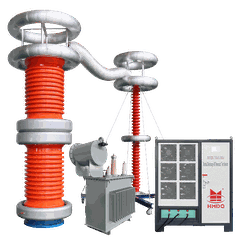



Capacitance Inductance Tester
Goldhome Capacitance and Inductance Tester OEM Manufacturer Supplier

20+
years
Goldhome has specialized in the production and manufacturing of SF6 Comprehensive Analyzer for 20 years
35
Patents
With 35 patents, Goldhome keeps innovating and providing advanced, reliable power testing equipment.
14
Service offices overseas.
Singapore, Malaysia,UAE, Saudi Arabia, South Africa, Nigeria, Germany, Poland, Brazil,the USA,India,the UK, Switzerland, Russia.


A capacitance and inductance tester (LCR meter) is a high-precision electronic measuring instrument specifically designed to accurately measure the inductance (L), capacitance (C), and resistance (R) parameters of electronic components or power equipment. It is widely used in electronic research and development, production quality control, and power system operation and maintenance.
Core Measurement Principles of Capacitance and Inductance Testers
The core function of a capacitance and inductance tester lies in measuring the impedance (Z) of a component and extracting the capacitive (C) or inductive (L) components from it. The basic principle is as follows: a known AC signal is applied to the component, and the voltage (V) across its terminals and the current (I) flowing through it are measured. The impedance is then calculated using the formula :Z = V / I.
Bridge Method
- Core Principle: The component under test and standard components are arranged to form the four arms of a bridge. By adjusting the standard components to balance the bridge (satisfying Z1 × Z3 = Z2 × Z4), the value of the component under test is calculated based on the known values of the standard components.
- Advantages: Extremely high accuracy; a classic method for achieving high-precision measurements.
- Disadvantages: Typically requires repeated manual adjustments to achieve balance, resulting in long measurement times and making rapid automated measurement difficult to implement.
Resonance Method
- Core Principle: Utilizes the resonance characteristics of an LC oscillation circuit. When the circuit resonates, the frequency f is related to the inductance L and capacitance C by the formula f = 1 / (2π√LC). By measuring the resonance frequency, the value of one of the unknown components can be calculated.
- Advantages: Simple measurement circuit; particularly suitable for measuring high-frequency circuit parameters; minimally affected by stray coupling.
- Disadvantages: Accuracy is generally lower than that of the bridge method (typically 2%–5%), and it requires a high-frequency excitation signal, resulting in a limited measurement range.
Voltage-Current Method
- Core Principle: A known AC voltage is directly applied to the component, and the current flowing through it is measured, while simultaneously determining the phase difference between the voltage and current. The impedance Z is calculated using complex number operations, and the values of capacitance or inductance are then further separated.
- Advantages: The principle is intuitive; when combined with high-performance microprocessors, it facilitates intelligent and automated measurement.
- Disadvantages: Early analog circuit implementations were relatively complex and had lower accuracy, but modern digital technology has effectively overcome these limitations.
Power-Specific Bridge Circuit (Non-Disconnect Measurement)
- Application Scenarios: Specifically designed for field environments such as substations, this method directly measures individual capacitors within a shunt capacitor bank without disconnecting the connecting wires.
- Core Principle: A standard capacitor and the capacitor under test serve as two arms of a bridge circuit. Current signals from both are acquired using synchronous sampling technology, and the measured capacitance value is calculated by a processor.
- Advantages: Eliminates manual operation errors and the need to disconnect wires; offers excellent stability and repeatability, making it highly suitable for on-site testing in power systems.

Capacitance and Inductance Tester: Core Functions
1. Capacitance Measurement
Measures the actual capacitance of capacitors, capacitor banks, coupling capacitors, and compensation capacitors to determine whether there is capacitance degradation, under-capacitance, or breakdown.
2. Inductance Measurement
Measures the inductance of reactors, current transformers, transformers, arc suppression coils, and other devices to detect inter-turn short circuits and abnormal inductance.
3. Resistance / Loss / Impedance Measurement
Includes DC resistance, equivalent series resistance (ESR), loss values, and impedance to identify insulation degradation, poor contacts, and potential internal overheating hazards.
4. Three-Phase Automatic Testing
Performs simultaneous testing of all three phases on three-phase capacitor cabinets and three-phase reactors, automatically calculating phase imbalance without manual phase switching.
5. Online Measurement Without Disconnecting Wires
Enables direct measurement at substation sites while the system is live or without power interruption, significantly improving operational and maintenance efficiency.
6. Automatic Component Identification
Automatically identifies whether the measured component is capacitive, inductive, or resistive, eliminating the need for manual range switching.
7. Data Storage, Printing, and Upload
Stores test records and supports printing, exporting to a USB drive, and generating reports via a connected computer.
8. Interference Resistance & Field Applicability
Provides stable measurements in strong electromagnetic environments, making it suitable for use in substations, power plants, and distribution rooms.

Main Types
Handheld LCR Digital Bridge (Electronic Component Grade)
- Applications: Electronics factories, laboratories, repair shops
- Measures: Surface-mount capacitors, inductors, resistors, chip pins
- Features: High accuracy, multiple frequencies, small measurement range
- Not suitable for: High-voltage power capacitors, reactors
Portable Capacitance and Inductance Tester (General-Purpose for Power Field Applications)
- Applications: Distribution rooms, substation sites
- Measures: Low-voltage compensation capacitors, small reactors, single-phase capacitors
- Features: Portable, simple and fast, capable of online measurement
- Common: Single-phase testing, low current output
Fully Automatic Three-Phase Capacitance and Inductance Tester (Mainstream Power Industry Model)
- Applications: Substations, power plants, high-voltage switchgear maintenance
- Measures: Three-phase capacitor banks, series reactors, arc suppression coils
- Key Features:
- Simultaneous three-phase measurement
- Automatic calculation of capacitance, inductance, loss, and imbalance
- High current output with strong anti-interference capability
- No need to disconnect wiring; online testing
Specialized High-Voltage / Integrated Test System
- Applications: Large substations, testing institutes
- Measurements: High-voltage shunt capacitors, large reactors
- Features: Higher voltage, higher current, stronger anti-interference capabilities
- Primarily used for acceptance testing and type testing


1. Signal Excitation: The instrument’s internal frequency-converting signal source outputs a specific AC test voltage to the device under test (such as a capacitor) according to preset instructions. For power capacitors, the output voltage is typically 2 V or 20 V.
2. Synchronous Sampling: After the test voltage is applied, the built-in dual-channel high-speed AD converter simultaneously acquires the voltage and current signals flowing across the device under test.
3. Signal Processing: The acquired signals are fed into a programmable amplifier for conditioning and amplification, and then precisely analyzed by a DSP/ARM processor.
4. Equivalent Circuit Conversion: The processor treats the component as an equivalent circuit model composed of resistors, capacitors, and inductors, and uses complex number operations to extract parameters such as capacitance (C), inductance (L), and loss factor (D).
5. Result Output: The final measurement results are displayed on the instrument’s high-definition LCD/touchscreen and can be output via the built-in high-speed miniature thermal printer or USB interface.
Application Scenarios
Substation Capacitor Bank Testing
- Measure the capacitance, loss, and three-phase imbalance of high-voltage shunt capacitors and modular capacitor banks.
- Determine whether capacitors exhibit capacitance degradation, internal open circuits, capacitance loss, bulging, or breakdown.
- Used for routine inspections, preventive testing, and fault location.
Reactor / Arc Suppression Coil Testing
- Measure the inductance of series reactors, shunt reactors, arc suppression coils, and current-limiting reactors
- Identify potential hazards such as turn-to-turn short circuits, loose cores, and inductance deviations
- Suitable for pre-commissioning acceptance and post-overhaul testing
Low-Voltage Reactive Power Compensation Cabinet Testing in Distribution Rooms
- Rapid on-site measurement of low-voltage self-healing capacitors and smart capacitors
- Quickly determine whether the compensation cabinet is functioning normally without disconnecting wires or interrupting power
- Used for power distribution operation and maintenance in factories, residential communities, and commercial buildings
Auxiliary Testing of Transformers / Instrument Transformers
- Measure the leakage inductance and stray inductance of transformers and voltage transformers
- In conjunction with other tests, determine whether windings have short circuits or deformation
Factory Testing and Incoming Inspection of New Equipment
- Factory inspections by capacitor and reactor manufacturers
- Random inspections and acceptance testing by power companies and construction contractors upon delivery
- Ensure parameters comply with nameplate and contract specifications
Rapid Fault Diagnosis
- Poor compensation performance in capacitor cabinets, low power factor → Measure capacitance to determine if components have failed
- High system harmonics, abnormal resonance → Verify reactance ratio and inductance values
- Equipment overheating, unusual noises → Detect abnormal losses and impedance
PV / Wind Power Grid-Connected Stations
- Testing of capacitors and reactors in prefabricated substations, SVGs, and reactive power compensation devices
- Ensuring safe and stable grid-connected operation of renewable energy stations
Critical Loads in Industrial, Mining, and Petrochemical Facilities
- Conduct regular inspections of compensation capacitors and filter reactors used with high-power motors and rectifier equipment.
- This helps prevent tripping and production shutdowns caused by capacitor failure.
Famous Brands
International Brands
1. Megger (U.S.A.)
As a leading brand in the global electrical testing industry, Megger offers capacitance and inductance test instruments that feature high precision and robust protection. These instruments provide comprehensive testing capabilities, including impedance, dielectric loss, and insulation testing, and are distinguished by their exceptional stability and interference resistance. Widely used in high-end applications such as substations, power plants, and industrial electrical systems, Megger holds a significant position in the global power testing market.
2. OMICRON (Austria)
Specializing in high-voltage electrical testing and diagnostics, OMICRON’s capacitance, inductance, and impedance instruments offer exceptional precision. Their modular design and robust data processing capabilities make them ideal for in-depth testing of large substations, power generation units, and high-voltage equipment. These instruments are frequently used for professional testing and fault diagnosis under demanding conditions, making them the mainstream choice for high-end power testing applications.
3. Doble (USA)
A leading brand in the high-voltage power testing sector, Doble’s instruments offer exceptional precision in measuring impedance, loss, and capacitance. Paired with specialized analysis software, they primarily serve equipment evaluation and preventive testing for ultra-high-voltage power grids and large energy enterprises. Positioned as a high-end solution, the brand emphasizes professional-grade comprehensive testing.
4. Tonghui Electronics (Taiwan, China)
With digital LCR bridges as its core strength, Tonghui offers high measurement accuracy and a wide testing frequency range. It is highly competitive in the field of precision testing for electronic components and small capacitors and inductors. Widely used in electronic R&D, production line quality control, and laboratory metrology, it is a well-known brand in the precision component testing sector.
Domestic Brands
1.Goldhome
Goldhome specializes in the R&D, production, and sales of power testing instruments. With years of deep expertise in the power operation and maintenance sector, its capacitance and inductance testers are designed with a core focus on “on-site adaptability, ease of operation, and performance stability.” These instruments precisely address the practical testing needs of domestic power sites and have become the standard-bearer for operation and maintenance as well as testing and commissioning in China’s power industry, boasting outstanding core advantages and a prominent market position.
The core competitiveness of Goldhome’s capacitance and inductance testers is reflected in the following:
First, they feature non-disconnecting, live-line measurement, perfectly adapting to the complex operating conditions of domestic substations and distribution rooms. They can rapidly detect the capacitance, inductance, losses, and three-phase imbalance of power equipment such as high-voltage shunt capacitor banks, reactors, and arc suppression coils without complex operations, significantly improving on-site operation and maintenance efficiency;
Second, the instruments are optimized for the strong electromagnetic environments typical of domestic substations, achieving measurement accuracy of ±1% to 1.5%. Their capacitance and inductance measurement ranges cover 0.2 μF to 2000 μF and 1 mH to 9.99 H, respectively, meeting the testing needs of the vast majority of power field applications;
Third, compared to international brands, it offers a more competitive price point, while providing rapid after-sales response and localized technical support to eliminate users’ concerns regarding on-site testing;
Fourth, its flagship models (such as the HM5020 and HMRG-H) meet the configuration requirements for Class II and Class III power testing qualifications, and are widely used in power companies, testing agencies, new energy stations, and industrial and mining enterprises, with a market share that consistently ranks among the top domestic brands in its category.
2.Huatian Electric:
Focuses on automated data management; features redundant instrument functions; relatively complex to operate; priced slightly higher than Guodian Huamei; less adaptable to on-site conditions than Guodian Huamei;
3.Tonghui Electronics:
Specializes in laboratory-grade precision measurement; focuses on electronic component R&D and production line quality inspection; not suitable for testing high-voltage, high-capacity equipment in power plant environments
4. Applent:
Primarily offers benchtop bridge meters, focusing on laboratory-grade precision measurement; unable to meet the core requirements of power field applications, such as non-disconnect testing and interference resistance.
Key Considerations for Selection
1. Identify the Application Scenario
- Power System Field Applications: A three-phase tester that supports non-disconnect measurement and is resistant to power-frequency interference (e.g., using the heterodyne method) is essential for rapid testing of shunt capacitor banks and reactors.
- Electronics R&D/Repair: Prioritize LCR meters with a wide frequency range (20 Hz–1 MHz) and high accuracy (0.1% class) for component analysis and fault diagnosis.
2. Verify Key Performance Parameters
- Measurement Range: Power capacitors typically range from 0.1 μF to 2000 μF, and inductors from 1 mH to 50 H; small electronic components require higher resolution (e.g., pF, nH levels).
- Accuracy Grade: For power applications, capacitor accuracy should be no less than ±1%, and inductor accuracy no less than ±2%; for precision measurements, select ±0.5% or higher
- Test Frequency: Power frequency (50 Hz) is suitable for power capacitors; wide-bandwidth LCR meters can evaluate component frequency characteristics.
3. Evaluate Features and Portability
- No-Disconnection Measurement: A core value in the power industry, significantly improving efficiency and avoiding the risks of disassembly; this feature must be confirmed.
- Data Management: Built-in thermal printer (for on-site documentation), USB export, or Bluetooth transmission to facilitate report generation.
- Portable Design: For field operations, the device should weigh ≤5 kg and have a built-in lithium battery with a runtime of ≥4 hours.
4. Verify Safety and After-Sales Support
- Protection Mechanisms: Must include overvoltage, overcurrent, and short-circuit protection to prevent equipment damage from accidental operation.
- Certifications: Prioritize manufacturers with ISO 9001 certification, a warranty period of at least 1 year, and technical support.

Key Points for Use
Strictly Follow Safety Procedures
- Discharge: Be sure to fully discharge the capacitor under test before testing (a discharge rod may be used) to prevent residual charge from causing injury or damage to the equipment.
- Voltage Check: Confirm that the terminals are free of high voltage and that the test leads are properly insulated.
Proper Wiring and Operation
- Wiring: Connect the test leads correctly according to the instrument’s markings. Keep voltage and current circuits separate to avoid introducing errors.
- Calibration: Perform open-circuit/short-circuit zeroing before testing to eliminate the influence of stray impedance in the test leads.
- Range Selection: For manual-range instruments, estimate the component value and select the appropriate range; for fully automatic instruments, simply start the test.
Special Techniques for On-Site Measurement
- Measurement Without Disconnecting Wires: Use a dedicated clamp-on current transformer to clamp onto each branch of the capacitor bank; the instrument will automatically isolate and measure the value of each individual capacitor.
- Interference Suppression: In highly interfered environments such as substations, enable the instrument’s built-in non-power-frequency (e.g., 55 Hz) measurement mode to avoid power-frequency harmonic interference.
Data Recording and Maintenance
- Record and Compare: Save the results of each test (capacitance values, dissipation factor), compare them with historical data or nameplate values, and assess deterioration trends (e.g., issue a warning if capacitance decay exceeds 5%).
- Regular Calibration: Send the instrument for calibration at least once a year, using standard capacitors/inductors to verify accuracy and ensure traceability of measurement values.
Differences Between Capacitance and Inductance Testers
1. Capacitance and Inductance Tester:
This can be viewed as the “dedicated LCR meter” for the power/industrial sector. It specializes in capacitance and inductance measurements and is optimized for on-site applications in power systems, such as in-circuit measurement and anti-interference design, striking an excellent balance between practicality, portability, and cost
2. LCR Bridge
An LCR bridge is a precision component analyzer for laboratory use. It offers higher accuracy and adjustable test frequencies (allowing for the evaluation of component frequency characteristics), but requires disconnection of the circuit for measurement and has weak resistance to power-frequency interference, making it unsuitable for environments with strong electric fields. In contrast, capacitance and inductance testers are designed for power field applications, sacrificing some accuracy and bandwidth in exchange for practical features such as non-disconnect measurement and interference resistance. They are also more expensive.
3. Multimeter
A multimeter is a basic electrical measurement tool; capacitance and inductance are merely auxiliary functions. It has low accuracy, cannot measure without disconnecting the circuit, and is only suitable for routine, rough screening. Capacitance and inductance testers can accurately measure key parameters such as capacitance values and loss factors.
4. Insulation/Dielectric Withstand Testers
Insulation resistance testers and dielectric withstand testers are specifically designed to inspect the insulation performance of equipment (by measuring insulation resistance or evaluating dielectric strength). They do not measure capacitance or inductance values at all, and their test subjects and operating principles are entirely different.
5. Power Quality Analyzer
Power quality analyzers focus on grid parameters such as harmonics, flicker, and voltage fluctuations, and do not directly measure the capacitance or inductance values of components themselves. Capacitance and inductance testers, on the other hand, directly assess the health status of components such as capacitors and reactors.
Alternative Name
Capacitor inductor tester
LCR tester
Capacitor tester
Inductor tester
3-phase capacitor inductor tester
Portable LCR meter
High precision LCR tester
No disconnection capacitor tester
Capacitance inductance measuring instrument
Anti-interference LCR tester
Capacitor inductor tester manufacturer
LCR tester wholesale
Power capacitor test equipment
Portable electrical measuring instrument
Goldhome capacitor inductor tester
Megger LCR tester
OMICRON capacitor tester
Tonghui LCR meter
Capacitance and Inductance Tester
Automatic Capacitance and Inductance Tester
Handheld Capacitance and Inductance Meter
Portable Capacitance and Inductance Tester
Transformer Capacitance and Inductance Tester
Three-Phase Capacitance and Inductance Tester
Single-Phase Capacitance and Inductance Tester
LCR Meter
Impedance Analyzer
Component Analyzer
RLC Meter
LCZ Meter
Q Meter

FAQ
Q1: What is a capacitance and inductance tester? What are its primary applications?
A: A capacitance and inductance tester is a specialized electrical testing device used to measure parameters such as capacitance and inductance. It is primarily used for testing and fault diagnosis of reactive power compensation devices in power systems. It specifically addresses the following issues: the need to disconnect connection wires when measuring individual capacitors on-site, low fault detection rates caused by low output voltage from capacitance meters, and the measurement of reactor inductance. This instrument is widely applicable for the maintenance of capacitor banks and reactors in substations, industrial and mining enterprises, and new energy power stations.
Q2: What is the difference between a capacitance and inductance tester and a standard multimeter?
A: While standard multimeters can measure capacitance and inductance, they offer lower accuracy and cannot perform “no-disconnection measurements” in power field environments. The capacitance and inductance tester is specifically optimized for on-site power system applications. It employs a bridge circuit structure and synchronous sampling technology, enabling the measurement of individual capacitors within a parallel capacitor bank without disconnecting the wiring, thereby significantly improving work efficiency and safety. Additionally, the instrument features automatic range switching, data storage and printing, and resistance to power-frequency interference.
Q3: What are the main measurement parameters of the capacitance and inductance tester?
A: The main measurement parameters include capacitance (C), inductance (L), loss tangent (D-value), quality factor (Q-value), equivalent resistance, impedance, and phase angle. Some models can also simultaneously display voltage, current, power, frequency, and other information, enabling multi-dimensional analysis.
Q4: Does the capacitance and inductance tester support multi-functional use?
A: Yes. The instrument’s current measurement unit can be expanded for use in measuring electrical equipment such as current transformers (CVTs) and surge arresters, offering multi-functional capabilities. Some models can also serve as power frequency current testers, meeting various on-site testing needs.
Q5: What are the core advantages of the Guodian Huamei HM5020 Capacitance and Inductance Tester?
A: The HM5020 fully automatic capacitance and inductance tester is a flagship product of Guodian Huamei, offering the following core advantages:
Busbar-free measurement: On-site measurement of individual capacitors requires no disconnection of connecting wires; one-button fully automatic measurement ensures high accuracy and stability.
Automatic range switching: Automatically selects the optimal test range to avoid errors caused by manual operation.
Large LCD Display: 320×240 LCD screen with Chinese menu prompts; waveforms and measurement data are displayed simultaneously on the same screen.
Data Storage and Printing: Stores up to 7,168 test data sets; features a built-in high-speed mini thermal printer for on-site printing of results.
Multi-Functional Design: In addition to measuring capacitance and inductance, it can measure reactor inductance while simultaneously displaying voltage and current waveforms and phase angles.
Q6: What preparations are needed before using the capacitance and inductance tester?
A: Before use, please complete the following preparations:
After unpacking the instrument, check the packing list to ensure all accessories are included
Read the user manual thoroughly, or operate the instrument under the guidance of someone familiar with it
Check that the power cord and connection cables are intact and that the ground connection is secure
Ensure the testing environment meets the technical specifications; keep connection cables away from strong electromagnetic fields
Before testing, ensure the test specimen is de-energized and fully discharged
Q7: How do I correctly perform in-circuit measurements?
A: In-circuit measurement is a core function of the capacitance and inductance tester. The procedure is as follows:
Clamp the voltage test leads onto the busbar connecting the two terminals of the capacitor bank under test
Clamp the current clamp onto the bushing or connecting lead of the individual capacitor to be measured
Ensure the front of the current clamp faces the red clamp (voltage output terminal)
When using this instrument, be sure to set the clamp meter’s rotary switch to “OFF”
Turn on the instrument; it will automatically complete the measurement and display the results
Q8: What safety precautions should be observed when using the capacitance and inductance tester?
A: Safety precautions include:
The instrument must only be used when the test specimen is de-energized and fully discharged
Before testing, ensure the capacitor has been fully discharged using a grounding rod (residual voltage <50V)
Do not touch the metal parts of the test leads during measurement to avoid electric shock
Test wiring must strictly follow the instructions in the manual
Test wiring must be performed with the circuit under test grounded to prevent electric shock from induced voltage
It is best to use a grounded power outlet
Wait until the test is complete and the instrument has exited measurement mode before disconnecting the leads
Q9: How should the test voltage be selected?
A: When selecting the test voltage, it is recommended to start with a lower voltage for preliminary testing: if the impedance of the test specimen is unknown, begin with 2V; if the test current is less than 1A, switch to 20V or 30V for measurement
Q10: How should high-precision current clamps be maintained?
A: High-precision current clamps are critical components for this instrument’s measurements; damage to them can significantly affect test data. Handle them with care during use—handle them gently and avoid dropping them from heights or subjecting them to impacts. After each use, return them to their protective case to prevent damage, and keep them clean to ensure good contact during testing.
Q11: What special precautions should be taken when measuring small inductance values?
A: Since the instrument operates at a relatively high test voltage, when measuring small inductance values (below 10 mH), the test duration should not be too long. Once the test results stabilize, turn off the voltage output switch as soon as possible to prevent high currents from damaging the instrument’s power supply or the inductor under test. When measuring inductors smaller than 5 mH or resistors smaller than 1 Ω, be sure to use the low-inductance/low-resistance measurement mode.
Q12: What should I do if the instrument does not respond or the LCD screen does not display anything after powering on?
A: Follow these troubleshooting steps:
Check if there is an AC power supply
Check if the power cord is intact and securely connected to both the tester and the power outlet
Check whether the fuse inside the power outlet (e.g., a 5A fuse) has blown; replace it if necessary
If using battery power, check whether the battery is sufficiently charged; try replacing it with a new battery
For equipment that has not been used for an extended period, the lithium battery may have entered a protection state; it must be charged continuously for at least 2 hours to reactivate it
Avoid powering on the device directly in environments below -10°C; allow it to warm up to room temperature first
Q13: What causes large measurement deviations or abnormal three-phase imbalance?
A: Common causes and solutions are as follows:
Loose connections: Check that the voltage clamps and current clamps are securely connected, ensuring no short circuits or open circuits
Current clamp not closed: Ensure the jaws are closed and free of foreign objects
The capacitor under test has not been fully discharged: Ensure the capacitor has been fully discharged using a grounding rod before testing.
Incorrect wiring configuration: For delta-connected capacitor banks, verify that the instrument settings match the actual wiring to avoid phase sequence identification errors.
Try replacing the test component: Test with a different capacitor or inductor to determine if the fault originates from the component under test.
Perform calibration: Perform manual or automatic calibration according to the manual to ensure instrument accuracy
Q14: What should I do if the data fluctuates or is unstable?
A: Data fluctuations are typically caused by strong electromagnetic interference at the site or poor contact. We recommend taking the following measures:
Move away from interference sources such as inverters and welders; install shielded cables or use filter mode if necessary
Clean the metal contacts of the voltage clamps to ensure good contact with the terminals
Enable the instrument’s “Averaging” or “Filtering” function to smooth out fluctuating data
Keep the clamp meter at least 1 meter away from the instrument; if measuring an inductor with severe magnetic leakage, keep it at least 1 meter away from the inductor
Q15: The test results are very small (only a few tenths of a unit). What is the cause?
A: When capacitance/inductance test results are very low, it is likely that the 20A protective fuse has blown; simply replace it. Additionally, check that the test circuit connections are correct and ensure there are no loose or broken connections.
Q16: USB communication is abnormal. How can this be resolved?
A: Please follow these troubleshooting steps:
Confirm that the instrument has successfully entered the computer communication interface after powering on.
Check that the USB cable connection is secure; try replacing the USB cable or using a different port.
Verify that the USB drivers are correctly installed on the computer; reinstall or update them if necessary.
After installing the USB drivers, try unplugging and reinserting the USB cable to confirm the connection.
As one of the most professional capacitance inductance tester manufacturers in China, we're featured by quality products and good price. Welcome to buy capacitance inductance tester in stock here and get pricelist from our factory. Contact us for customized service.