

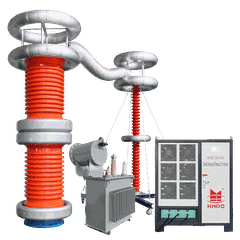


Oil Dielectric Loss Tester
Goldhome Manufacture Anti-interference design for Oil Dielectric Loss Tester

Company Profile
Wuhan Goldhome Hipot Electrical Co., Ltd. was established in 2008, located in Economic and Technical Development Zone, working area more than 10000 square meters.We are professional OEM, ODM, OBM Manufacturer which is engaged in the research, development, sale and service of High Voltage Testing Equipment including: AC Series Resonant Test Systems, AC DC Hipot Testers, Lightning Impulse Voltage Generator, Primary Current Injection Testers, CT PT Analyzer, Transformer Turns Ratio, Insulation Resistance Tester,Circuit Breaker Testers, Relay Protection Testers, Cable Fault Locator, SF6 Comprehensive Analyzers, Transformer Oil Test Device, etc.
high quality
Reliable Quality for Safe Power.
advanced equipment
Precision Equipment,Superior Performance
professional team
51 professional technicians, Advanced Solutions
Custom Service
Technical Consultation:≤1 H
Quotation:≤2 H


What is Oil Dielectric Strength Test
The Insulating Oil Dielectric Loss Tester (Insulating Oil Dielectric Loss Factor and Volume Resistivity Tester,Oil Tan Delta Tester / Oil Dielectric Loss Tester) is a high-precision, fully automatic oil quality analyzer specifically designed to measure the dielectric loss factor (tanδ), relative permittivity (εᵣ), and volume resistivity (ρ) of insulating oil (transformer oil). It serves as a core precision testing instrument for assessing the degree of oil aging, moisture absorption, and contamination
Principle of Operation
Apply power-frequency AC high voltage (typically 50 Hz, ≤2 kV) to the oil sample in a standard three-electrode oil cell:
Ideal insulation: The current (Ic) is purely capacitive, leading the voltage by 90°, with no losses.
Actual oil sample: Loss current (Ir) is generated due to water, polar impurities, and aging products.
Key Calculations:
Dielectric loss angle (δ): The phase difference between the current and 90°.
Dielectric loss factor (tanδ): tanδ = Ir / Ic.
Volume resistivity (ρ): Calculated by measuring leakage current after applying DC high voltage.
The lower the tanδ value, the purer the oil and the better its insulating performance.
Through an automated control program, this instrument sequentially performs three steps—heating, temperature control, and measurement—to accurately calculate the various electrical parameters of insulating oil.
Heating and Temperature Control: The instrument uses a high-frequency induction furnace to heat the oil sample. When the oil sample temperature is low, high-power rapid heating is employed; as the temperature approaches the preset value, the system switches to low-power PWM (Pulse Width Modulation) mode, combined with a PID (Proportional-Integral-Derivative) algorithm for precise temperature control, ensuring that the oil sample maintains a constant and uniformly distributed temperature throughout the test. This forms the foundation of the entire test, as the dielectric loss tangent is highly sensitive to temperature.
Dielectric Loss Measurement: Once the oil sample reaches the preset test temperature, the instrument applies an AC test voltage simultaneously to both the internal standard capacitor and the oil cup containing the sample. The measurement circuit simultaneously acquires these two signals and performs operations such as Fast Fourier Transform (FFT) via a Digital Signal Processor (DSP), ultimately calculating the dielectric loss tangent (tanδ), the capacitance value of the oil cup (Cx), and the relative permittivity (εr). The dielectric loss tangent is a key indicator of energy loss in insulating oil under the action of an alternating electric field; the smaller the value, the better the insulation performance.
Resistivity Measurement: After completing the dielectric loss measurement, the instrument applies a DC high voltage to the oil cup and measures the minute current generated in the measurement circuit. This current is amplified and converted via analog-to-digital (AD) conversion, after which the DSP calculates the insulation resistance (Rx) of the insulating oil and further derives the volume resistivity (ρ). Volume resistivity reflects the insulating oil’s ability to resist the passage of DC current and is also a critical parameter for evaluating its insulation performance.
Key Features
Highly Integrated
Integrates key components such as the dielectric loss oil cell, temperature controller, test bridge, test power supply, and standard capacitor into a single unit, offering a compact design and easy operation.
Automation and Intelligence
Utilizes microcomputer control to achieve a fully automated process from heating and temperature control to measurement. It features a large LCD display with a Chinese menu and supports automatic data printing.
High Measurement Accuracy
Utilizes specially designed power supplies and standard capacitors, such as AC-DC-AC power conversion and SF6-filled three-terminal capacitors, effectively mitigating the effects of mains voltage fluctuations and environmental temperature and humidity, ensuring the accuracy and long-term stability of measurement results.
Multiple Protection Functions
Features overvoltage, overcurrent, and short-circuit protection, as well as high-voltage indication and alarm alerts, ensuring safety during the testing process.
Digital Bridge Technology
Based on DSP or vector measurement, it replaces traditional Weston bridges and offers strong resistance to interference.
Three-Electrode Oil Cup
Effectively eliminates edge effects and surface leakage, ensuring precise measurements.
Main Types of Insulating Oil Dielectric Loss Testers
I. Classification by Functional Integration
1.Single-Function Dielectric Loss Tester
- Measures only: dielectric loss (tanδ), capacitance (C), and dielectric constant (εr)
- Simple structure and lower price.
2.Integrated Oil Dielectric Loss + Resistivity Tester
- Measures the following parameters simultaneously from a single oil sample:
- tanδ + C + εr + Volume Resistivity ρ
- Meets all requirements of national standards and is the most commonly used in the power industry.
3.Multifunctional Comprehensive Tester
- Integrates multiple parameters such as dielectric loss, resistivity, moisture content, and acidity
- Primarily used in laboratories and third-party testing institutions.
II. Classification by Temperature Control Method
1.Constant-Temperature Heating Type
- Built-in heating capable of reaching standard temperatures such as 90°C and 100°C
- Complies with GB/T 5654 and IEC 60247 requirements; the most commonly used.
2.Room-Temperature Testing Type
- No heating; tests only at room temperature
- Lower accuracy; primarily used for rapid on-site screening.
III. Classification by Oil Cup Electrode Structure
1.Three-electrode oil cup (high-precision type)
- Equipped with a shielding electrode to eliminate surface leakage and edge stray capacitance
- Accurate measurements, compliant with standards, essential for formal testing.
2.Two-electrode oil cup
- Simple structure, low cost
- Slightly lower accuracy, primarily used for rapid on-site testing.
IV. Classification by Application Scenario
1.Laboratory Benchtop Models
- High accuracy, full functionality, temperature-controlled, with printing and data storage capabilities
- Suitable for electrical research institutes, quality inspection centers, and transformer manufacturers.
2.Portable Field Models
- Compact size, lightweight, dual-power supply (AC/DC)
- Suitable for substations, on-site inspections, and field testing.
V. Classification by Measurement Principle
1.Digital Vector Dielectric Loss Tester
- DSP digital processing, strong interference resistance, high accuracy
- Currently, the vast majority of models on the market belong to this category.
2.Traditional Weston Bridge Type
- Manual adjustment, complex operation, poor interference resistance
- Gradually being phased out.
VI. Classification by Number of Test Cells
1.Single-cell Type
- Tests one oil sample at a time; most common.
2.Dual-cell / Multi-cell Type
- Can test two or more oil samples simultaneously; high efficiency
- Primarily used for batch testing in laboratories.
Test Procedure
Pre-test Preparation
- Remove the three-electrode oil cup. Clean the electrodes and the cup body with anhydrous ethanol or petroleum ether, then allow them to air dry.
- Use a dry, clean syringe to draw a sample of the insulation oil to be tested, and slowly inject it into the oil cup along the inner wall to avoid creating air bubbles.
- Secure the lid on the oil cup, place it on a stable surface, and connect the instrument test leads (high voltage, measurement, and ground).
- Turn on the instrument, enter the main interface, and select the test items: Dielectric Loss Tangent (tanδ) + Volume Resistivity (ρ).
Setting Test Parameters
- Set the test temperature: The standard value is 90°C.
- Set the test voltage: Generally 1000 V to 2000 V.
- Select the test mode: Fully Automatic / Manual.
- Confirm the cup constant and electrode parameters (these are built-in and generally do not require modification).
Heating and Temperature Stabilization
- Start heating; the instrument begins medium-frequency induction heating.
- Once the temperature reaches the set value, it automatically enters the temperature stabilization phase to maintain a stable temperature.
- After temperature stabilization, the instrument displays “Ready to Test.”
Automatic Voltage Application Test (Dielectric Loss Factor tanδ)
The instrument automatically applies AC high voltage to the oil sample.
The internal digital bridge acquires voltage and current signals, separating capacitive current from loss current.
Automatically calculates:
- Dielectric loss tangent tanδ
- Capacitance Cx
- Relative permittivity εr
Upon test completion, the system automatically reduces voltage and returns to zero.
Volume Resistivity ρ Test (AC/DC Combined Model)
- After the dielectric loss test is complete, the instrument automatically switches to DC high-voltage output.
- A DC voltage is applied to measure the leakage current of the oil sample.
- Volume resistivity ρ is calculated based on the current.
- Upon test completion, the system automatically discharges the charge and powers down.
Data Display, Storage, and Printing
The screen displays complete results:
- tanδ, Cx, εr, ρ, temperature, test duration, etc.
- Data is automatically saved and can be printed directly via thermal printer or exported via USB drive.
Test Completion and Cleanup
- After high voltage has returned to zero and safety has been confirmed, disconnect the test leads.
- Once the oil cup has cooled, pour out the waste oil and clean the electrodes and oil cup.
- Turn off the instrument and tidy up the work area.
Application Area
Operation, Maintenance, and Testing of Power Transformers
Regular oil analysis for equipment such as transformers, reactors, current transformers, and oil-filled bushings
Determining whether the oil has absorbed trace amounts of moisture, has aged, or contains polar impurities
A mandatory test item for equipment condition assessment and preventive testing
Acceptance Testing of New/Regenerated Oil
Factory acceptance testing of new transformer oil, switchgear oil, and capacitor oil
Quality acceptance after oil filtration and regeneration treatment
Verification of the treatment effectiveness of purification equipment (vacuum oil purifiers)
Early Warning of Oil Deterioration
Early detection of internal deterioration even when withstand voltage values remain normal
Monitoring trends in tanδ to provide early warning of latent faults
Avoiding the discovery of severe oil degradation only after it has occurred, thereby preventing equipment risks
Fault Analysis and Diagnosis
Significant increases in oil dielectric loss occur during transformer overheating, partial discharge, or insulation aging
Combined with chromatography, withstand voltage, and moisture content tests to comprehensively determine fault types
Used for post-incident oil quality traceability analysis
Manufacturing and Factory Acceptance Testing
Factory acceptance testing of finished products at transformer, instrument transformer, and bushing manufacturers
Ensuring the quality of internal insulation oil meets standard requirements
Research and Quality Inspection Institutions
Electric Power Research Institutes, Quality Inspection Centers, and third-party testing organizations
Conduct standard testing and arbitration tests in accordance with GB/T 5654 and IEC 60247

The two are complementary and cannot replace each other:
Insulating Oil Dielectric Strength Tester (Dielectric Withstand Tester)
- What it measures: Breakdown voltage (kV).
- What it measures: The oil’s ultimate dielectric strength (whether it can withstand high voltage without breaking down).
- Sensitivity: Sensitive to macroscopic impurities such as moisture, particles, and bubbles.
- Purpose: To determine whether the oil meets standards and is suitable for use (safety baseline).
Insulating Oil Dielectric Loss Tester
- What it measures: tanδ, ρ, εᵣ.
- What it measures: The oil’s internal energy loss and microscopic quality.
- Sensitivity: Highly sensitive to trace moisture, aging products, and polar contaminants.
- Purpose: To provide early warning of oil quality degradation and assess the degree of aging.
Recommend Brands
International:
1. Megger (UK)
- Representative Model: OTD Series Insulating Oil Dielectric Loss Tester
- Features: Ultra-high precision, fully automatic, stable temperature control, compliant with IEC/GB standards, a benchmark model for laboratories
2. BAUR (Austria)
- Representative Model: DTL C Series
- Features: Precise temperature control, three-electrode design, automatic oil sample injection and drainage, excellent long-term stability.
3. OMICRON (Austria)
- Representative Model: DIRANA (Dielectric Loss + Polarization/Depolarization)
- Features: Multifunctional, in-depth insulation diagnosis, suitable for condition assessment of large transformers.
4. Tettex (Switzerland, part of Megger)
- Representative Model: 2863 Series
- Features: Digitalized classic Weston bridge, high precision, laboratory standard instrument
Domestic:
Goldhome Hipot (Wuhan)
Core Product: HM601 Insulating Oil Dielectric Loss and Volume Resistivity Tester
Core Advantages:
- 20 years of R&D in power testing equipment; high-tech, specialized, and innovative enterprise.
- Fully automatic integrated system: Simultaneously measures tanδ, C, εr, and volume resistivity ρ, meeting all requirements of national standards. Wuhan Guodian Huamei Electrical Equipment Co., Ltd.
- High-precision three-electrode oil cup, medium-frequency induction heating, precise temperature control (90°C/100°C).
- Strong anti-interference (frequency conversion technology), simple operation, large Chinese display, USB storage and printing.
- Reasonable pricing, fast after-sales service, nationwide warranty, suitable for both field and laboratory applications.
- Applications: State Grid, China Southern Power Grid, power plants, transformer manufacturers, electric power research institutes, third-party testing.
2. Beijing Kanggaote (KGT)
- Representative Model: Taiyi Series
- Features: High-end domestic product, high precision, strong anti-interference capability, high level of intelligence.
3. Wuhan Ultra-High Voltage Power
- Representative Model: RTTT Series
- Features: Fully automatic, integrated design, high cost-effectiveness, stable performance in batch testing.
4. Shanghai Siyuan
Features: Established power equipment manufacturer; dielectric loss testers are a traditional flagship product; complete certifications; high market coverage.

· Insulating oil dielectric loss tester
· Insulation oil tan delta tester
· Transformer oil dielectric loss tester
· Oil dissipation factor tester
· Insulating oil tanδ tester
· Automatic oil dielectric loss analyzer
· Insulation oil loss factor tester
· Insulating oil dielectric loss and resistivity tester
· Transformer oil tan delta & volume resistivity tester
· Insulating Oil Dielectric Loss and Volume Resistivity Tester
· Oil dissipation factor and resistivity analyzer
· Integrated oil tan delta & resistivity tester
· Portable oil dielectric loss tester
· Benchtop oil tan delta tester
· Fully automatic oil tester
· Laboratory oil analyzer
· On-site oil test instrument
· Oil Dielectric Loss Tester
· Transformer Oil Tan Delta Tester
· Automatic Oil Dielectric Loss Tester
· Oil Tan Delta and Resistivity Tester
· Oil Dissipation Factor Tester
· Oil Tangent Delta Tester
· Insulation Oil Tan Delta Test Set
FAQ
Q: 1. What does this instrument primarily measure?
A: It is used to measure the dielectric loss factor (tanδ), capacitance (Cx), relative permittivity (εr), and volume resistivity (ρ) of insulating oil/transformer oil to assess the degree of moisture, aging, and contamination in the oil.
Q: 2. Which standards does it comply with?
A: It complies with standards such as GB/T 5654, IEC 60247, ASTM D924, and DL/T 846.14.
Q: 3. Is this Goldhome model fully automatic?
A: It is a fully automatic, integrated unit that automatically performs heating, temperature control, pressurization, testing, calculation, data storage, and printing.
Q: 4. What is the test temperature range? What is the standard test temperature?
A: Room temperature to 125°C; the standard test temperature is 90°C.
Q: 5. What is the temperature control accuracy?
A: Temperature control accuracy is ±0.5°C; some high-precision models can achieve ±0.1°C.
Q: 6. What is the measurement range and accuracy for dielectric loss?
A: tanδ: 0.0001–0.1; Accuracy: ±(1% of reading + 0.0001).
Q: 7. How many electrodes does the oil cup use?
A: It uses a standard three-electrode oil cup to eliminate surface leakage and ensure accurate measurement of volumetric dielectric loss.
Q: 8. How much sample is required?
A: Chinese: Approximately 50–60 ml; this may vary slightly depending on the oil cup capacity.
Q: 9. How should the oil sample be prepared before testing?
A: Pour the oil slowly to avoid bubbles, let it stand to degas, and begin testing after the instrument has automatically reached a constant temperature.
Q: 10. How long does a single test take?
A: Approximately 15–20 minutes including heating and temperature stabilization; approximately 3–5 minutes for testing at room temperature.
Q: 11. Can multiple samples be tested consecutively?
A: Supports continuous testing; data is automatically stored and can be printed or exported to a USB drive.
Q: 12. What tanδ value is considered acceptable?
A: For new oil, generally <0.005; for in-service oil at 90°C, typically ≤0.010 is acceptable, though specific standards should be followed.
Q: 13. What does a high dielectric loss indicate?
A: It typically indicates that the oil has absorbed moisture, has aged, contains polar impurities, or has been contaminated.
Q: 14. What is the difference between a dielectric loss tester and a dielectric strength tester?
A: A dielectric strength tester measures breakdown voltage (dielectric strength); a dielectric loss tester measures internal loss, providing a more sensitive indication of early degradation.
Q: 15. How should the oil cup be cleaned?
A: Clean with petroleum ether or anhydrous ethanol, then dry in an oven or air-dry, taking care to avoid scratches and contamination.
Q: 16. Is periodic calibration required?
A: Annual calibration is recommended; the instrument can be sent to a metrology institute or returned to the manufacturer for calibration.
Q: 17. What is the warranty period for the instrument?
A: Standard warranty: 1 year; lifetime maintenance.
Q: 18. Why must the instrument be properly grounded?
A: The instrument must be properly grounded; otherwise, an alarm will sound and you will not be able to access the main menu. Improper grounding can pose a safety hazard or cause data instability. Operating the instrument with wet hands may also result in damage to the instrument or electric shock.
Q: 19. Can the lid be opened during testing?
A: No. The lid must remain closed during heating and dielectric loss testing. The instrument is equipped with a lid-open protection feature that automatically interrupts heating and high-voltage output when the lid is opened, ensuring operational safety.
Q: 20. What are the requirements for replacing a fuse?
A: If a fuse is damaged, you must ensure that it is replaced with a fuse of the same specification.
Q: 21. How should I handle a malfunction?
A: If the instrument malfunctions, first turn off the power switch and wait one minute before inspecting it. If the issue cannot be resolved on your own, contact the manufacturer’s technical support immediately.
Wuhan Goldhome Hipot Electrical Co., Ltd. is one of the most professional oil dielectric loss tester manufacturers and suppliers in China, featured by quality products and good price. Welcome to buy oil dielectric loss tester in stock here and get pricelist from our factory. Contact us for customized service.