

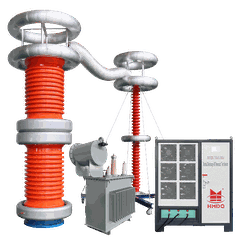



Transformer Tan Delta Tester
Supply Manufacture Price for Transformer Tan Delta Tester

Company Profile
Wuhan Goldhome Hipot Electrical Co., Ltd. was established in 2008, located in Economic and Technical Development Zone, working area more than 10000 square meters.We are professional OEM, ODM, OBM Manufacturer which is engaged in the research, development, sale and service of High Voltage Testing Equipment including: AC Series Resonant Test Systems, AC DC Hipot Testers, Lightning Impulse Voltage Generator, Primary Current Injection Testers, CT PT Analyzer, Transformer Turns Ratio, Transformer Tan Delta Tester,Insulation Resistance Tester,Circuit Breaker Testers, Relay Protection Testers, Cable Fault Locator, SF6 Comprehensive Analyzers, Transformer Oil Test Device, etc.
high quality
Reliable Quality for Safe Power.
advanced equipment
Precision Equipment,Superior Performance
professional team
51 professional technicians, Advanced Solutions
Custom Service
Technical Consultation:≤1 H
Quotation:≤2 H


A transformer dielectric loss tester is a device specifically designed to measure the insulation performance of transformers. It evaluates the overall condition of a transformer’s insulation system by measuring the dielectric loss factor (tanδ). It primarily measures the transformer’s dielectric loss factor (tanδ) and capacitance (C) to determine:
Whether the transformer insulation has absorbed moisture
Whether the insulating oil or insulating paper has aged or deteriorated
Whether there are internal localized defects, overheating, or contamination
A higher tanδ value indicates greater insulation loss, more severe heating, and a higher likelihood of failure.
While standard dielectric loss testers can also measure transformers, models specifically designed for transformers typically:
- Support high-capacity test specimens (transformers have high capacitance and high current)
- Include a built-in high-power, high-voltage power supply;
- Offer strong interference resistance (suitable for highly interfered environments at substations);
- Support multiple connection methods, including positive connection, reverse connection, and external high-voltage methods;
- Directly measure the dielectric loss between windings and ground, as well as between windings.

Transformer Dielectric Loss Tester Key Features
Fully Automatic Measurement
The entire process—including energization, voltage ramp-up, testing, voltage ramp-down, and discharge—is completed with a single button press, eliminating the need for manual range switching and ensuring simple operation.
Strong Frequency-Modulation Interference Suppression
Utilizing frequency-modulation interference suppression technology, the device enables stable testing and accurate data acquisition even in the strong electric fields typical of substations.
Suitable for High-Capacitance Test Specimens
Specifically designed to address the high capacitance and high absorption current characteristics of transformers, the unit features ample power supply capacity to ensure stable testing without tripping.
Multiple Testing Methods
Supports forward connection, reverse connection, external high-voltage, and CVT self-excitation methods, accommodating a wide range of test specimens including transformers, bushings, and current transformers.
Direct Measurement of Key Parameters
Automatically displays:
Dielectric loss factor tanδ
Capacitance Cx
Loss values, etc.
High accuracy and excellent repeatability.
Comprehensive Safety Protection
Equipped with overvoltage, overcurrent, short-circuit, poor grounding, and misoperation protection. Automatically discharges after testing to ensure personal and equipment safety.
Sensitive Detection of Moisture and Aging
It responds sensitively to moisture, aging, oil degradation, and localized defects in transformer insulation, serving as the core basis for assessing the condition of the main insulation.
Data Storage and Printing
Supports storage of multiple data sets, which can be printed directly or uploaded to a computer for convenient archiving of test reports.
Large-Screen Chinese/English Interface
Features a user-friendly interface with switchable Chinese and English languages, suitable for on-site use and export to international markets.

- Transformers: Testing of bushings and insulating oil.
- Current and Voltage Transformers: Includes current transformers and voltage transformers.
- Power Cables: Evaluation of the condition of the main insulation.
- Capacitors: Includes power capacitors and coupling capacitors.
- Insulation Materials: Evaluates solid, liquid, and other insulation materials in a laboratory setting.
- Insulating Oil: Evaluates the performance of liquid insulating media such as transformer oil and switchgear oil.
Main Types
I. Classification by Structure and Application
1. Portable (Field-Type) Dielectric Loss Tester
- Compact and lightweight, suitable for use at substations, construction sites, and during routine inspections
- Built-in high-voltage power supply eliminates the need for external high-voltage equipment
- High resistance to interference, capable of operation in environments with strong electric fields
- Simple operation with one-button fully automatic testing
- Commonly used for preventive testing and acceptance testing
2. Benchtop (Laboratory-Type) Dielectric Loss Testers
- Higher accuracy and better stability
- Higher power output, suitable for large-capacity transformers, long cables, and other test specimens
- More comprehensive features and a wide range of interfaces (RS232, USB, Ethernet)
- Primarily used for factory acceptance testing, quality control laboratories, and research institutions
II. Classification by Anti-Interference Technology
1. Conventional Power-Frequency Dielectric Loss Testers
- Uses 50 Hz power frequency testing
- Simple structure, lower cost
- Suitable for laboratory environments without strong interference
- Moderate on-site interference resistance
2. Variable-Frequency Anti-Interference Dielectric Loss Tester (Mainstream Model)
- Uses 45–65 Hz variable-frequency testing
- Can avoid on-site 50 Hz power frequency interference
- Capable of high-precision measurement even in strong electric field environments at substations
- Currently the most commonly used and recommended type for transformer testing
III. Classification by Test Function and Wiring Method
1. Forward Connection Dielectric Loss Tester
- The low-voltage end of the test specimen is grounded
- Suitable for bushings, small-capacity current transformers, and insulators
- Simple wiring and high safety
2. Reverse-Connection Dielectric Loss Tester
- The high-voltage end of the test specimen is grounded, while the test terminals are left floating
- Suitable for transformer bodies and large high-voltage equipment
- High requirements for instrument insulation and anti-interference capabilities
3. Self-Excitation / External High-Voltage Dielectric Loss Tester
- Can be used in conjunction with an external high-voltage test transformer
- Specifically designed for testing CVTs (capacitive voltage transformers)
- Can also be used for high-voltage dielectric loss testing of large transformers
IV. Classification by Degree of Automation
1. Fully Automatic Dielectric Loss Tester
- Automatic voltage application, automatic range switching, automatic calculation, automatic voltage reduction and discharge
- No manual adjustment required, reducing the risk of operator error
- Data displayed directly: tanδ, capacitance C, loss value
2. Intelligent Dielectric Loss Tester (with Data Management)
- Supports data storage, printing, and uploading to a computer
- Touchscreen operation, Chinese and English interfaces
- Some models support WiFi, Bluetooth, and APP remote control
- Suitable for standardized testing and export projects
V. Core Common Features of Dedicated Transformer Dielectric Loss Testers
- Measurement Parameters: Dielectric loss tanδ, capacitance Cx
- High accuracy: tanδ accuracy typically ≤±0.1%
- Strong resistance to magnetic and electric field interference
- Suitable for high-capacitance test specimens, with high output current
- Equipped with overvoltage, overcurrent, short-circuit, and leakage protection
- Automatic discharge upon test completion, ensuring safety and reliability
- Applicable for testing: transformer bodies, bushings, CTs, PTs, CVTs, cables, etc.
A transformer dielectric loss tester is designed to measure the dielectric loss factor tanδ (dielectric loss value) and the capacitance Cx of the insulation in high-voltage electrical equipment.
Under the influence of an AC voltage, the insulating dielectric can be modeled as a lossless capacitance Cx in parallel with a lossy resistance R:
Capacitive current: reactive component, does not cause losses
Resistive current: active component, causes heating losses
The ratio of the two is the tangent of the dielectric loss angle: tanδ = IC/IR = QP
The higher the tanδ → the greater the active power loss → the poorer the insulation (due to moisture, aging, or degradation)

Precautions for Using Transformer Dielectric Loss Testers
I. Basic Safety Requirements
1.Grounding must be strictly enforced.
The instrument, test, and test specimen must be reliably grounded, and the grounding resistance must meet specifications to prevent high-voltage electric shock.
2.Unauthorized personnel are prohibited from entering the test area.
Since high voltage is generated during testing, safety barriers and warning signs must be installed, and operators must maintain a safe distance.
3.Never Connect or Disconnect Wires While the System Is Energized
Wiring or disconnection must only be performed after the instrument has been powered off, fully discharged, and the high-voltage indicator light has turned off.
4.Ensure Complete Discharge After Testing
Transformers and capacitive test specimens store significant energy. Although the instrument will automatically discharge after testing, manual verification of complete discharge is still required.
II. Precautions for Wiring and Test Specimen Connection
1.Distinguish Between Positive and Reverse Connection Methods
Positive connection: The low-voltage end of the test specimen is grounded; suitable for bushings and current transformers.
Reverse connection: The high-voltage end of the test specimen is grounded; suitable for testing the insulation of the transformer body.
Incorrect connection may result in inaccurate data or even damage to the equipment.
2.Keep test leads away from sources of interference
High-voltage leads and measurement leads should be kept away from live busbars and high-current conductors to avoid data drift caused by electromagnetic field interference.
3.Keep test terminals clean and dry
Oil, dust, or moisture on the test specimen’s surface, test clamps, or high-voltage probes will significantly increase the dielectric loss tangent, leading to incorrect results.
4.Do not exceed the measurement range
Do not exceed the instrument’s rated voltage or capacitance range during testing, as this may damage the high-voltage source or measurement circuit.
III. Environmental and On-Site Usage Precautions
1.Avoid testing indiscriminately in environments with strong electromagnetic interference
When on-site interference is high, use the frequency-modulated anti-interference mode, and keep test leads as short as possible while staying away from operating equipment.
2.Ensure appropriate environmental humidity and temperature
Excessive humidity, condensation, or outdoor testing in rainy weather will severely affect insulation, leading to distorted tanδ values.
3.Avoid Direct Sunlight and Severe Vibration
As this is a precision measuring instrument, handle it with care during transport and storage to prevent damage to internal components.
IV. Instrument Operation Precautions
1.Strictly Follow the Startup and Parameter Setting Procedures
First connect the power supply → ground the instrument → connect the test leads → power on → set the test voltage → start the test. Do not skip any steps.
2.Do Not Touch High-Voltage Components During Testing
Do not touch the test specimen, high-voltage leads, or test clamps during voltage ramp-up, measurement, or voltage ramp-down.
3.Stop the test immediately if any abnormalities occur
If you hear a discharge sound, smell an unusual odor, observe display abnormalities, or receive an overcurrent alarm, stop immediately → reduce voltage → disconnect power → discharge the instrument, then troubleshoot the fault.
4.Do not disassemble the instrument without authorization
The instrument contains high-voltage circuits and precision sampling units; non-professionals must not open the casing for maintenance.
Manufacture Brand
Domestic Brand:
1.Goldhome(HMDQ)
- Positioning: A national-level high-tech enterprise and a Hubei Province “Specialized, Refined, Unique, and Innovative” enterprise; a leading domestic brand in power testing equipment.
- Core Product: HM5006 Fully Automatic Variable-Frequency Dielectric Loss Tester (designed specifically for transformers, current transformers, and bushings).
- Technical Features:
- Frequency-modulation anti-interference (45–65 Hz), stable measurement under strong electric fields
- Built-in 10 kV high-voltage source, fully automatic positive/negative wiring, self-excitation method
- Accuracy: tanδ ≤±0.1%, Cx ≤±0.5%
- Strong anti-interference capability, excellent stability, suitable for on-site use at substations
- Data storage, USB export, printing, Chinese and English interfaces
- Market: Widely used by State Grid, China Southern Power Grid, power construction companies, power plants, and transformer manufacturers.
2.Wuhan Huatian Electric (HTAP)
- Positioning: A long-established manufacturer of power testing equipment with a high market share.
- Product: HTJS-V Series Variable Frequency Dielectric Loss Tester.
- Features: Excellent stability, simple operation, strong interference resistance, and high cost-effectiveness.
3.Siyuan Electric
- Positioning: A publicly listed company specializing in large-scale testing equipment and system integration.
- Products: Fully automatic dielectric loss testing systems (can be integrated with withstand voltage and partial discharge testing).
- Features: Suitable for factory acceptance testing at transformer manufacturers; high precision; high degree of automation.
4.Beijing KGT
- Positioning: In-house R&D + distributor for international brands.
- Products: Taiyi Series Dielectric Loss Testers, MEGGER distributor.
- Features: High precision, strong interference resistance, suitable for both laboratory and field use.
International Brands
1.MEGGER (UK, USA)
- Positioning: The world’s leading brand in power testing.
- Products: DELTA9000, MIT510/520 (transformer dielectric loss + insulation).
- Features: Extremely high precision, high reliability, global after-sales service, high price.
2. OMICRON (Austria)
- Positioning: High-end transformer diagnostic equipment.
- Products: DIRANA (dielectric response + dielectric loss + polarization/depolarization).
- Features: In-depth insulation diagnosis, suitable for large main transformers, research/high precision.
3.BAUR (Austria)
- Positioning: Precision laboratory-grade.
- Products: DTL C Series (oil dielectric loss + insulation dielectric loss).
- Features: Extremely accurate temperature control, good repeatability, suitable for laboratory use.

· Transformer Dielectric Loss Tester
· Transformer Tan Delta Tester
· Automatic Transformer Tan Delta Tester
· Automatic Dielectric Loss Tester
· Variable Frequency Dielectric Loss Tester
· Anti-interference Tan Delta Tester
· Frequency Conversion Tan Delta Tester
· Tan Delta Test Set
· Transformer Tan Delta Test Kit
· Dielectric Loss Test Equipment
· HV Tan Delta Tester
· Transformer Capacitance and Tan Delta Tester
· Fully Automatic Transformer Insulation Loss Tester
· On-site Transformer Tan Delta Measuring Instrument
· Automatic Variable Frequency Transformer Tan Delta Tester
· High Precision Anti-interference Dielectric Loss Tester for Transformer
· Portable Transformer Capacitance & Tan Delta Test Set
· Insulation Power Factor Tester
· Dissipation Factor Test Set
FAQ
Q: 1: What is a transformer dielectric loss tester? What does it primarily measure?
A: A transformer dielectric loss tester is a precision instrument specifically designed to measure the dielectric loss factor (tanδ) and capacitance (Cx) of a transformer’s insulation system. It applies a high-voltage AC signal to the transformer’s insulation, measures the phase difference between the current and voltage, and calculates the tanδ value to determine whether the insulation is damp, aged, or has localized defects.
Q: 2: What is the dielectric loss factor (tanδ)? Why is it important?
A: tanδ is an indicator of energy loss in insulating materials under the influence of an AC electric field. A lower tanδ value indicates better insulation performance. Measuring tanδ allows for the sensitive detection of overall defects in insulation, such as general moisture ingress or aging, and is one of the core methods for assessing the insulation condition of high-voltage electrical equipment.
Q: 3: What are the different wiring methods for transformer dielectric loss testers? How should one choose?
A: There are primarily two core wiring methods, selected based on whether the test specimen is grounded:
Forward Connection: Used when the low-voltage end of the transformer winding is insulated from ground, providing higher measurement accuracy.
Reverse Connection: Used when the low-voltage end of the transformer winding is directly grounded; this is also the most common wiring method in the field.
Q: 4. Does the instrument require an external high-voltage test transformer?
A: Mainstream portable, fully automatic models all feature a built-in adjustable high-voltage power supply ranging from 0 to 10 kV. Routine transformer dielectric loss tests do not require any external high-voltage equipment; the entire test can be completed with a single unit. Only for special tests on ultra-high-voltage or extra-large-capacity transformers can an external high-voltage source be used for expanded functionality; routine field testing requires no external equipment at all.
Q: 5. What types of equipment can this instrument test?
A: In addition to the transformer itself, it can simultaneously test high-voltage bushings, current transformers (CTs), voltage transformers (PTs/CVTs), high-voltage circuit breakers, insulators, high-voltage power cables, and capacitive insulation equipment. This single instrument serves multiple purposes, covering all routine insulation test items in substations.
Q: 6. What preparations must be made before testing?
A: - The transformer under test must be completely de-energized, voltage-tested, and fully discharged; the test circuit must be safely isolated from live equipment;
- Wipe the surfaces of the transformer bushings and terminals to remove oil, dust, and condensation, ensuring they remain dry and clean to prevent surface leakage from affecting test data;
- Ensure the instrument’s dedicated grounding lead is securely grounded, with grounding resistance meeting on-site safety requirements;
- Arrange test leads according to specifications, keeping high-voltage and measurement leads away from live busbars and high-current equipment to avoid crossing or tangling and minimize interference.
Q: 7. Can I touch the terminals or test leads during the test?
A: Absolutely not. The instrument outputs high voltage throughout the entire process—including voltage ramp-up, testing, and voltage ramp-down. It is strictly prohibited to touch the test specimen, high-voltage leads, test clamps, or terminals. A safety warning zone must be established, and unauthorized personnel must not enter the test area.
Q: 8. Can the test leads be disconnected immediately after the test is complete?
A: No. After the test concludes, the instrument will automatically reduce the voltage and fully discharge the test specimen and high-voltage circuit. You must wait until the high-voltage indicator light has completely turned off, the screen displays a message indicating discharge is complete, and the instrument has reset before disconnecting the leads. It is strictly prohibited to disconnect the leads immediately after the test to prevent electric shock from residual charge.
Q: 9. Can on-site testing be conducted in rainy or humid weather?
A: It is not recommended. Excessively high air humidity, condensation on the test specimen’s surface, or moisture absorption can cause significant surface leakage current, resulting in severely inflated and distorted tanδ data that fails to accurately reflect the transformer’s internal insulation condition. Testing should be conducted in a clear, dry environment with humidity below 80%.
Q: 10. What does the magnitude of the dielectric loss factor (tanδ) value signify?
A: tanδ is the ratio of active loss to reactive loss in the insulating medium. A lower value indicates better insulation performance and lower heat loss. If the tanδ value exceeds the standard or shows a significant increase compared to historical data, it suggests that the transformer’s insulation may be affected by moisture, degraded insulating oil, aged insulating paper, or internal localized defects. This indicates a decline in insulation performance and a risk of operational failure.
Q: 11. How should the test voltage be selected?
A: For routine preventive testing of transformers, the standard test voltage is 5 kV or 10 kV, with 10 kV being the preferred rated test voltage. Specific settings must follow the “Regulations for Preventive Testing of Power Equipment” and the transformer’s factory technical specifications; testing must not exceed the rated voltage arbitrarily.
Q: 12. What causes large fluctuations and poor repeatability in on-site test data?
A: The most common cause is excessive power-frequency electromagnetic interference at the site, followed by improper wiring, a dirty or damp test specimen surface, unreliable grounding, and damaged or leaky test leads. Solution: Enable the instrument’s anti-interference mode, ensure proper wiring and reliable grounding, clean and dry the test specimen surface, and move away from strong interference sources to stabilize data and ensure repeatability.
Q: 13. What is the measurement accuracy of the instrument, and does it meet national standards?
A: Standard accuracy for mainstream compliant models: measurement error for the dielectric loss tangent (tanδ) is ≤±0.1%, and measurement error for capacitance (Cx) is ≤±0.5%. These specifications fully comply with national power testing standards and IEC international standards, and meet the accuracy requirements for substation handover, pre-commissioning, and factory testing.
Q: 14. Why does the instrument fail to start up or display a black screen?
A: First, check whether the power supply is connected properly, the voltage matches the requirements, and the power cord is intact. For models with built-in batteries, check if the battery is sufficiently charged and if charging is proceeding normally. After ruling out power supply issues, check if the instrument’s fuse has blown. Non-professionals must not disassemble the instrument for repair.
Q: 15. Why does the instrument alarm or shut down automatically during testing?
A: The instrument is equipped with comprehensive protection mechanisms. In the event of overvoltage, overcurrent, short circuits, poor grounding, test specimen insulation breakdown, or excessive interference, it will immediately shut down automatically and discharge by reducing voltage. This is a safety protection action and will not damage the instrument. After shutdown, first disconnect the power and discharge the instrument, then troubleshoot for wiring errors, test specimen faults, or grounding issues. Once the abnormalities are resolved, retest.
Q: 16. What should I do if the tanδ value is negative or abnormally high?
A: Negative values or abnormally high readings are caused by interference or wiring errors: First, check whether the wiring is correct, the grounding is reliable, and the test leads are short-circuited or leaking current; enable the frequency-modulation anti-interference mode, rewire according to specifications, move away from interference sources, clean the test specimen’s surface, and retest to restore normal operation.
Q: 17. Why is the instrument unable to increase voltage, or why is there no high-voltage output?
A: First, check for short circuits in the wiring, whether the test specimen has suffered a breakdown, and whether the grounding wire is securely connected. If the instrument door is not properly closed, there is a wiring error, or the protection circuit is triggered, the high-voltage output will be forcibly locked out. Once wiring and test specimen issues are resolved, the voltage will increase normally.
Q: 18. Does the instrument require periodic calibration? What is the calibration interval?
A: Yes. As a precision metrological testing instrument, the calibration interval is one year under normal usage conditions. It must be sent to an accredited metrology institution for calibration to obtain a calibration certificate, ensuring the accuracy and reliability of test data and meeting power testing compliance requirements.
Q: 19. What precautions should be taken for daily storage and transportation of the instrument?
A: The instrument should be stored in a dry, well-ventilated environment free of corrosive gases and strong magnetic fields. Avoid direct sunlight, severe vibration, and impact. During transportation, use the original shock-resistant carrying case and ensure adequate moisture and shock protection to prevent damage to the internal high-voltage modules and precision sampling units.
As one of the most professional transformer tan delta tester manufacturers in China, we're featured by quality products and good price. Welcome to buy transformer tan delta tester in stock here and get pricelist from our factory. Contact us for customized service.