

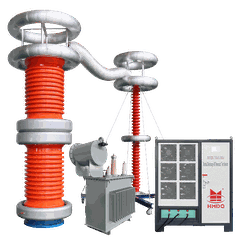


Transformer Testing Bench
Goldhome Manufacturer Automatic Transformer Comprehensive Test Bench for Distribution Transformer Testing
Wuhan Goldhome Hipot Electrical Co., Ltd. was established in 2008, located in Economic and Technical Development Zone, working area more than 10000 square meters.We are professional OEM, ODM, OBM Manufacturer which is engaged in the research, development, sale and service of High Voltage Testing Equipment including: AC Series Resonant Test Systems, AC DC Hipot Testers, Lightning Impulse Voltage Generator, Primary Current Injection Testers, Transformer Test Bench, CT PT Analyzer, Transformer Turns Ratio, Insulation Resistance Tester,Circuit Breaker Testers, Relay Protection Testers, Cable Fault Locator, SF6 Comprehensive Analyzers, Transformer Oil Test Device, etc.

01
High Quality
Reliable Quality for Safe Power.
02
Advanced Equipment
Precision Equipment,Superior Performance
03
Professional Team
51 professional technicians, Advanced Solutions
04
Custom Service
Technical Consultation:≤1 H
Quotation:≤2 H


A comprehensive transformer test bench is a highly integrated electrical testing system designed specifically for the comprehensive and automated testing and evaluation of various performance parameters of power transformers and distribution transformers. It consolidates test items that would otherwise require multiple separate instruments into a single unit, making it a critical piece of equipment for ensuring transformer product quality and operational safety.
Click News:Wuhan Goldhome Delivers Comprehensive Transformer Test Bench Training For Clients
Core Functions
1. No-load characteristic test: Measure no-load losses and no-load current.
Core objective: To assess the quality of the transformer core, including material, assembly process, and insulation integrity. Excessive no-load current or losses may indicate defects in the core.
2. Load characteristic test: Measure load losses and impedance voltage.
Core Objective: To evaluate the structural quality and electrical conductivity of the transformer windings. The impedance voltage affects the transformer’s voltage regulation and parallel operation capability within the system.
3. Turns Ratio, Tap Position, and Error Testing: Accurately measure the transformer’s voltage transformation ratio and tap position.
Core Objective: To verify that the winding turns ratio is correct and that the wiring configuration meets design requirements. This is fundamental to ensuring the transformer can adjust voltage as intended.
4. DC Resistance Test: Measures the DC resistance values of each transformer winding.
Core Objective: To inspect the connection quality of conductive circuits, including the internal windings, leads, and tap changers. This test is used to identify potential hazards such as inter-turn short circuits, poor contacts, and broken strands.
5. Insulation Resistance Test: Measures the insulation resistance values between windings and between windings and ground.
Core Objective: To preliminarily assess the overall degree of moisture ingress or aging in the transformer’s insulation.
6. Power-Frequency Withstand Voltage Test: Apply a power-frequency AC voltage higher than the rated voltage for one minute.
Core Objective: To evaluate the electrical strength of the transformer’s main insulation (windings to ground and between windings); this is a critical destructive test for determining the reliability of the insulation.
7. Double-frequency Induced Voltage Test: A power source with a frequency of 100 Hz or higher and a correspondingly increased voltage is applied.
Core Objective: Specifically tests the electrical strength of the transformer’s longitudinal insulation (turn-to-turn, layer-to-layer, and section-to-section), effectively detecting localized insulation defects within the windings.
Click News: Wuhan Goldhome Hipot Successfully Completes Transformer Test Bench Project

Core Components
I. Main Hardware Structure
- Integrated Control Console / Cabinet
- Incorporates power supply, control switches, terminal blocks, and protective devices to enable centralized wiring and safe operation.
- Voltage Regulator / Step-up / Current-boosting Unit
- Provides the voltage and current required for testing and serves as the power source for withstand voltage, no-load, and load tests.
- Safety Protection System
- Includes overcurrent, overvoltage, grounding, emergency stop, door interlock, and audible/visual alarms to prevent breakdown caused by operator error.
II. Core Measurement Modules
- These are the “heart” of the test bench and are indispensable:
- Transformer Ratio and Connection Group Tester Module
- Measures transformer ratio error, connection group, polarity, and tap position.
- DC Resistance Rapid Tester Module
- Measures winding DC resistance to identify defects in joints, leads, and between windings.
- No-Load Loss & Load Loss Tester Module
- Measures no-load current, no-load loss, load loss, and short-circuit impedance, with automatic temperature compensation.
- Insulation Resistance Test Module
- Measures absorption ratio and polarization index to detect overall insulation moisture ingress.
- Dielectric Loss (Dielectric Constant) Test Module
- Measures tanδ and capacitance to identify insulation aging, moisture ingress, and local defects.
- Withstand Voltage Test Module
- Power frequency withstand voltage and induction withstand voltage tests to evaluate the strength of main and longitudinal insulation.
III. Control and Data System
- Industrial Control Host / Touchscreen
- Human-machine interface; one-click test initiation and parameter configuration.
- High-Precision Data Acquisition Unit
- Synchronized voltage, current, and power sampling to ensure accuracy.
- Automatic Test Software
- Automatic wiring prompts, automatic calculations, automatic generation of test reports, data storage, and printing.

Click News:Knowledge Dissemination And Analysis Of Transformer Test Bench
Principles of Operation for the Transformer Comprehensive Test Bench
1. Overall Operating Logic
The built-in voltage regulator, step-up transformer, and current booster provide the voltage and current required for testing.
Test leads are connected to a dedicated terminal block, eliminating the need for frequent meter changes or disconnection of leads.
The industrial control computer issues commands → controls output levels → simultaneously acquires voltage, current, and power signals.
The software automatically calculates and determines whether the test passes or fails → generates a test report.
2. Detailed Operating Principles
(1) Turns Ratio & Connection Group Testing Principle
A standard low-voltage excitation signal is applied to the high-voltage side of the transformer.
A voltage is induced on the low-voltage side, and the instrument compares the measured turns ratio with the rated turns ratio.
The connection group (Yyn0, Dyn11, etc.) and polarity are determined based on the voltage phase difference.
(2) Principle of Winding DC Resistance Testing
Constant current source charging method is used: a stable, low current is applied to the winding.
Once the current stabilizes, the voltage across the winding is measured, and the DC resistance is calculated using R = U/I.
Used to determine: whether the winding is short-circuited, whether joints are cold-soldered, and whether tap changer contacts are in good condition.
(3) Principle of No-Load & Load Tests
1.No-Load Test
Apply low-voltage excitation while keeping the high-voltage circuit open; measure no-load current and no-load losses to assess core quality and detect any short circuits in the laminations.
2.Load (Short-Circuit) Test
Apply excitation to one side while short-circuiting the other; measure short-circuit impedance and load losses to evaluate winding structure and conductor quality.
The instrument simultaneously samples voltage, current, and power, automatically converting the readings to standard values at 75°C or 120°C.
(4) Insulation Resistance Test Principle
A DC high voltage (500V/1000V/2500V/5000V) is generated internally and applied between the windings and ground.
Leakage current is measured, and insulation resistance is calculated using R = U/I.
The absorption ratio and polarization index are simultaneously calculated to determine whether the insulation is damp or aged.
(5) Dielectric Loss (tanδ) Test Principle
Utilizes a high-voltage bridge / frequency-modulation anti-interference principle.
Measures the ratio of active power loss to reactive power capacity of the insulation, i.e., tanδ.
A higher tanδ value indicates more severe moisture, contamination, or aging of the insulation.
(6) Power Frequency Withstand Voltage / Induced Withstand Voltage Principles
Power Frequency Withstand Voltage: High voltage is output via a test transformer to evaluate the strength of the main insulation.
Induction Withstand Voltage: Uses a medium-frequency power supply to increase frequency and apply voltage, evaluating turn-to-turn and layer-to-layer longitudinal insulation.
Full-process overcurrent and breakdown protection is provided; the system trips immediately upon insulation breakdown.
3. System Control and Protection Principles
Centralized Control: A single industrial control computer uniformly manages all test items and automatically switches test circuits.
Synchronous Sampling: Voltage, current, and power are collected simultaneously to ensure measurement accuracy of losses.
Multiple Protections: Overcurrent, overvoltage, ground interlock, emergency stop, and audible/visual alarms prevent personal injury and equipment accidents.
Automatic Data Processing: Automatically calculates errors, performs temperature compensation, determines pass/fail, and generates reports directly.
Key Features
High Integration, One-Stop Testing
It integrates tests for turns ratio and tap position, DC resistance, no-load and load resistance, dielectric loss, insulation resistance, and withstand voltage. A single connection is sufficient to complete all tests, eliminating the need for frequent equipment changes.
High Automation, Simple Operation
Supports one-click startup via touchscreen or computer, featuring automatic voltage ramp-up, measurement, calculation, and pass/fail determination, significantly reducing manual labor.
High Measurement Accuracy, Stable and Reliable Data
Utilizes high-precision synchronous sampling, digital filtering, and anti-interference technology to ensure high accuracy and repeatability in measuring parameters such as losses, resistance, and turns ratio, meeting national testing standards.
Comprehensive Safety Protection
Equipped with multiple safeguards including overcurrent, overvoltage, short-circuit, ground interlock, emergency shutdown, and audible/visual alarms, effectively preventing equipment damage and personal injury caused by operational errors.
Automatic Data Processing and Report Generation
Automatically stores test data and supports temperature compensation (e.g., loss at 75°C). Standard test reports can be generated, printed, and exported directly for easy archiving and traceability.
Standardized Wiring and Efficient Operation
Features a dedicated wiring panel with a clear layout and convenient test circuit switching, significantly reducing overall testing time. Suitable for factory acceptance testing, on-site handover, and preventive maintenance.
High Adaptability and Wide Application Range
Compatible with various types of transformers, including distribution transformers, power transformers, and rectifier transformers, catering to both batch testing at manufacturing plants and on-site maintenance in power facilities.

Application Scenarios
Transformer Manufacturers
Used for routine factory tests and type tests on products such as distribution transformers, oil-immersed transformers, and dry-type transformers, enabling rapid batch testing.
Electric Power Companies and Power Supply Departments
Used for handover acceptance tests of newly commissioned transformers at substations, as well as periodic preventive tests on in-service transformers, ensuring the safe operation of the power grid.
Industrial and Mining Enterprises and Large Power Consumers
Used for routine testing, fault diagnosis, and post-overhaul re-inspection of on-site transformers in factories, mines, oil fields, data centers, and other facilities.
Transformer Repair and Rental Companies
Performs performance testing on repaired, refurbished, and rented transformers to ensure equipment compliance and serviceability.
Third-Party Testing Agencies & Quality Inspection Units
Conducts professional testing services including commissioned transformer inspections, quality arbitration, energy efficiency testing, and certification testing.
Vocational Colleges and Research Institutes
Used for practical training in electrical engineering, skill assessments, and R&D and experimental research related to transformers.

Famous Brands
International Brands
1. OMICRON (Austria)
- Positioning: A leading global brand in power testing and the benchmark for medium- and high-voltage testing
- Representative Products: CT Analyzer, TRA, MPD series (comprehensive transformer testing, dielectric loss, partial discharge, on-load tap changers)
- Advantages: Extremely high accuracy, strong stability, powerful software diagnostics, and first-class interference resistance; suitable for large main transformers, research, third-party testing, and international projects
- Price: High
2. Megger (UK / US)
- Positioning: A century-old giant in electrical testing with high global market share
- Representative Products: TRAX Substation Comprehensive Test System, DELTA Series
- Advantages: One-stop integration, portable/vehicle-mounted, automatic reporting, comprehensive safety features, and a global service network
- Applications: Power utility field sites, substations, multinational projects
3. Doble (USA)
- Positioning: North American authority, expert in power system diagnostics
- Advantages: Leading in partial discharge, dielectric loss, insulation diagnostics, temperature rise, and aging assessment; suitable for power grid preventive testing and overhaul evaluations
4. Highvolt (Germany)
- Positioning: Leading in ultra-high voltage / extra-high voltage testing, laboratory-grade accuracy
- Advantages: Ultra-high withstand voltage, partial discharge testing, strong customization capabilities, long-term stability; suitable for national-level laboratories and main transformer type tests
5. Haefely / Phenix (Switzerland / USA)
- Positioning: Authority in high-voltage testing, partial discharge, and impulse testing
- Advantages: Strong in power frequency / induction withstand voltage, partial discharge, and lightning impulse testing; suitable for high-end manufacturing and certification testing
Domestic Brands:
1. Goldhome (Wuhan)
- Positioning: Leading domestic brand for comprehensive test benches; high-tech enterprise; specialized, refined, distinctive, and innovative
- Representative Product: HM5050 Series Transformer Comprehensive Test Bench
Core Configuration:
- Integrated: Turns ratio, DC resistance, no-load/load losses, power frequency withstand voltage, induction withstand voltage, dielectric loss, partial discharge, temperature rise
- Fully automatic, one-button testing, automatic conversion (75°C losses), data storage, standard reports
- Applications: Factory, handover, and pre-commissioning testing for distribution and power transformers up to 2500 kVA
Advantages:
- 20 years of high-voltage testing experience, full-chain in-house R&D (hardware + software)
- High cost-effectiveness, stable and reliable, compliant with national standards, fast after-sales response
- Customizable (vehicle-mounted / containerized / assembly line), exported to over 100 countries
Applications: Transformer manufacturers, power companies, industrial and mining facilities, third-party testing, overseas projects
2. Guodian Xigao (Wuhan)
- Flagship Product: GDBT Series Comprehensive Test Bench
- Advantages: High integration, cabinet-style structure, integrated no-load/load, withstand voltage, and partial discharge testing; suitable for manufacturing plants
3. Huatian Electric (Wuhan)
- Advantages: Comprehensive product line, modular design, flexible configuration, reasonable pricing, wide market coverage
4. Shanghai Huyu
- Positioning: Mid-range, high cost-performance ratio, suitable for small and medium-sized transformer manufacturers and local power utilities
How to Select a Comprehensive Transformer Test Bench?
Test Subject
Transformer Capacity
Distribution transformers (10 kV/35 kV) with a capacity ≤2500 kVA: A standard-type comprehensive test bench is sufficient.
Large main transformers, rectifier transformers, and electric furnace transformers: Select a bench capable of high-power no-load and full-load testing, high-current direct resistance testing, and high-voltage withstand testing.
Test Item Requirements
For routine factory tests only: Turns ratio + DC resistance + No-load/Load tests + Insulation + Power frequency withstand voltage.
For type testing or third-party inspection: Must include dielectric loss, induced voltage withstand, partial discharge, and on-load tap changer testing.
Applicable Standards
Prioritize models compliant with GB1094 and DL/T power system preventive testing regulations to avoid issues with non-standard equipment failing acceptance inspections.
Accuracy and Stability
- No-load and load loss accuracy: Class 0.2 or 0.5; accuracy must be maintained even at low currents.
- DC resistance: μΩ-level resolution, with automatic demagnetization and temperature compensation.
- Dielectric loss / Turns ratio: The smaller the error, the better; generally required to be ≤0.2%.
- Interference resistance: Must be strong for field use; otherwise, data may fluctuate.
Automation and Operation Methods
- Manual knob type: Inexpensive, but inefficient and prone to errors.
- Touchscreen semi-automatic: Suitable for small factories or occasional use.
- Computer-controlled fully automatic: One-button testing, automatic wiring prompts, and automatic report generation; suitable for mass production and power grid acceptance testing.
- Recommendation: Transformer manufacturers should prioritize fully automatic models; power field personnel may opt for portable or vehicle-mounted types.
Structure and Application Scenarios
Workshop Cabinet-Style Fixed Benches: High power capacity, durable, suitable for batch production.
Portable / Vehicle-Mounted Models: Suitable for utility companies’ emergency repairs and on-site pre-testing.
Assembly Line Automatic Test Benches: Designed for high-volume distribution transformer production.
Brand and After-Sales Service
- International Brands (OMICRON, Megger, Doble): Extremely high accuracy, expensive, high maintenance costs.
- Top domestic brands (Guodian Huamei, Guodian Xigao, Huatian Electric):
- Full-featured, high cost-performance ratio, fast after-sales response, and customizable.
Key Selection Criteria
- Prioritize professional manufacturers with years of experience in producing comprehensive test benches.
- Ensure comprehensive training, installation and commissioning, and lifetime after-sales support.
- Confirm the ability to provide customizable report formats and software upgrades.
Budget and Cost-Effectiveness
- Basic Model: Low-cost, suitable for small workshops.
- Standard Fully Automatic Model: Most versatile, recommended for the majority of users.
- High-Spec Model (with partial discharge, inductance, and dielectric loss testing): Suitable for type testing and third-party certification.
Alternative Name
· Transformer Test Bench
· Transformer Comprehensive Test Bench
· Transformer Integrated Test System
· Transformer Test Station
· Automatic Transformer Test Bench
· Full Function Transformer Test Bench
· Transformer Ratio & Winding Resistance Test Set
· Transformer No-load & Load Loss Test System
· Transformer Loss Test Bench
· Transformer AC Withstand Voltage Test Set
· Transformer Induced Over-voltage Test Set
· Transformer Tan Delta & Capacitance Test Set
· Distribution Transformer Test Bench
· Power Transformer Test System
· Transformer Factory Test Bench
· Transformer Routine Test Equipment
· Transformer Type Test System
· Transformer Handover Test Equipment
· Transformer Preventive Test Set
· On-site Transformer Test System
· Transformer Test Equipment
· Transformer Testing Machine
· Transformer Test Panel
· Transformer Test Rig
· Fully Automatic Transformer Tester
· Multi-function Transformer Tester
· Full Automatic Transformer Integrated Test Bed
· High Precision Automatic Transformer Test Bench
· Distribution Transformer Automatic Test System

Click News:Essential Guide to Transformer Test Benches: Applications and Key Technologies
FAQ
Q: 1. What is a comprehensive transformer test bench?
A: It is an integrated testing device that combines test items such as turns ratio, DC resistance, no-load and load losses, insulation resistance, dielectric loss, and withstand voltage into a single system. It enables all tests to be completed automatically with a single connection and is primarily used for factory acceptance, handover, and preventive testing of transformers.
Q: 2. What tests can a comprehensive test bench perform?
A: Standard tests include:
- Turns ratio and connection group testing
- Winding DC resistance testing
- No-load loss and no-load current testing
- Load loss and short-circuit impedance testing
- Insulation resistance, absorption ratio, and polarization index testing
- Dielectric loss (tanδ) testing
- Power frequency withstand voltage testing
- Induced voltage withstand testing (optional)
- On-load tap changer testing (optional)
Q: 3. What capacity range of transformers is it suitable for testing?
A: Standard models are suitable for:
- Distribution transformers: 10kV/35kV class, 10kVA–2500kVA
- High-power models can be expanded to power transformers of 10,000kVA and above
- Specific capacity depends on the power of the configured voltage and current boosters.
Q: 4. Does the accuracy of the test data meet national standards?
A: Yes. The equipment generally employs 0.2-class / 0.5-class high-precision sampling with automatic temperature compensation (75°C). The data complies with:
- GB 1094 Power Transformer Standard
- DL/T Power Preventive Test Procedures
It can be directly used for factory reports and acceptance inspections.
Q: 5. Is operation complicated? Does it require specialized personnel?
A: Modern models are mostly fully automated via computer or touchscreen control:
Enter transformer parameters → One-click start
Automatic voltage ramp-up, measurement, calculation, and pass/fail determination
Ordinary electricians can operate the equipment after simple training; no professional test personnel are required.
Q: 6. How long does a complete test take?
A: Traditional single-instrument testing takes 1–2 hours;
With a comprehensive test bench, the entire process takes approximately 15–30 minutes with a single setup, improving efficiency severalfold.
Q: 7. Can test reports be generated automatically?
A: Yes. The system automatically saves data and supports:
- Automatic generation of standard test reports
- Printing and exporting to Excel/PDF
- Historical data querying and traceability
- Some models support custom report formats.
Q: 8. How is the system’s interference resistance in field use?
A: Products from reputable manufacturers all employ:
- Frequency modulation anti-interference
- Hardware filtering + software algorithms
- Shielded cables and grounding design
- Stable testing is maintained even in strong electromagnetic environments such as substations and workshops.
Q: 9. How is equipment safety ensured?
A: Standard configuration includes multiple safety protections:
- Emergency stop button
- Overcurrent, overvoltage, and breakdown protection
- High-voltage door interlock
- Audible and visual alarms
- Reliable grounding and isolated circuits
- Effectively prevents operational errors and risks to personnel and equipment.
Q: 10. What are the advantages of an integrated test bench over individual test instruments?
A: High integration reduces wiring, minimizes cable changes, and lowers the risk of errors
Faster testing speeds, suitable for mass production
Unified data management and standardized reporting
Compact footprint and better overall cost-effectiveness
Q: 11. Can it be used on-site?
A: Multiple configurations are available:
Fixed cabinet type: Factory acceptance testing in workshops
Portable / cart-mounted: On-site maintenance
Vehicle-mounted: For utility companies’ field inspections
Q: 12. What are the warranty and after-sales service terms?
A: Major domestic brands (such as Guodian Huamei) generally offer:
- 1–3-year warranty on the entire unit
- Free installation, commissioning, and training
- Lifetime free software upgrades
- Rapid after-sales response
Q: 13. Can the equipment be exported overseas and adapted to foreign voltages?
A: Yes. Customization options:
- Input voltage: 220V/380V/415V/440V/480V
- Frequency: 50Hz/60Hz
- English / multilingual user interface
- Suitable for use in regions such as Europe, the Americas, Southeast Asia, and Africa.
Wuhan Goldhome Hipot Electrical Co., Ltd. is one of the most professional transformer testing bench manufacturers and suppliers in China, featured by quality products and good price. Welcome to buy transformer testing bench in stock here and get pricelist from our factory. Contact us for customized service.
electrical testing equipment, electrical maintenance tester