

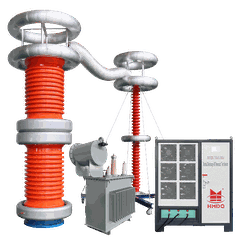


Advances in knowledge about transformer test bench applications
Continuous development in the electrical testing sector has led to greater demands for reliability in evaluating transformer performance. Industry experts widely recognize that transformer test benches represent a fundamental solution for comprehensively evaluating the integrity and operational safety of transformers. Recent knowledge-sharing initiatives have highlighted the increasingly important role of advanced testing methodologies in preventing electrical failures and optimizing energy infrastructure.
2. Essential functions and components of a transformer test bench
The test bench is a set of high-power equipment, precision measurement systems and control software.
Main test functions:
Insulation resistance (IR) and polarisation index (PI): checks the quality of the insulation between the windings and earth.
Transformation ratio test (TTR): checks the correct transformation ratio between the primary and secondary windings.
Winding resistance test: measures the DC resistance of the windings to detect faulty connections, broken wires or contact problems.
Dielectric response analysis (DRA/FDS, RVM): advanced tests to assess the moisture content and ageing of solid insulation (paper, pressed cardboard).
Power factor/dissipation factor test: measures power loss in insulation, indicating its quality and degradation.
Scanning frequency response analysis (SFRA): detects mechanical deformation or displacement within windings (e.g., due to short-circuit forces or transport damage).
Load loss and impedance test: measures losses under load conditions.
Partial discharge (PD) measurement: detects localised dielectric breakdowns within the insulation, a key indicator of future failures.
Key components of the test bench
- High voltage/high current source: AC/DC high voltage source, current injector.
- Precision measuring bridge: for measuring power factor and capacitance.
- Special sensors: capacitance coupler for partial discharge detection, as well as current and voltage transformers for accurate signal acquisition.
- Data acquisition system (DAQ): equipped with high-speed, high-resolution analogue-to-digital converters capable of capturing transient events such as partial discharges.
- Control and automation software: functions as a control centre to coordinate test sequences, control equipment, and collect data.
- Reference calibrator: a central device that ensures the accuracy of all measuring instruments.
3. Dissemination of knowledge through the transformer test bench
The test bench is the main source of accurate knowledge about the specific conditions of a transformer.
A. Types of knowledge generated and shared:
Knowledge about quality assurance and manufacturing: In the factory, the test bench disseminates knowledge about the quality of the manufacturing process. For example, failed TTR test results immediately inform the production line about possible wiring errors.
Basic knowledge about condition: Initial 'as-built' test results serve as baseline data for the transformer. This knowledge is disseminated to end users (power companies) and is crucial for future comparative analysis during the transformer's 40+ year service life.
Diagnostic and prognostic knowledge: For field testing, the test bench reveals the internal condition. High moisture content (from DRA) or developing partial discharge activity are critical insights that are passed on to asset managers for risk assessment and maintenance planning.
Forensic knowledge: after a malfunction or lightning strike, the test bench is used to analyse the damage. The knowledge gained (e.g. 'the malfunction in the winding occurred in phase B as a result of insulation loss') is passed on to the design teams to improve future models and to the maintenance teams to perfect the inspection protocols.
Knowledge of standards and compliance: test procedures are often determined by international standards (IEC, IEEE). The test bench disseminates this normative knowledge by incorporating these standards into its automated test sequences, thereby ensuring normative compliance in the process.
B. Dissemination mechanisms:
Standardised test reports: automated generation of detailed reports (often in PDF format with tables, graphs and exceedance/failure limits) that can be easily shared with public services, regulatory bodies and insurance companies.
Resource status dashboard: data from periodic tests is entered into centralised transformer resource management systems. Trends over time are displayed, disseminating predictive knowledge to decision-makers.
Database integration: test results are stored in structured databases (e.g. SQL), enabling powerful searches.
Ongoing knowledge exchange within the sector continues to address the challenges posed by transformer testing standardisation and best practices in its implementation. Professional workshops and technical seminars have facilitated discussions on test bank calibration, safety protocols, and new testing requirements for various types of transformers and voltage levels.
As electricity networks expand and age simultaneously, the role of transformer test banks in preventive maintenance strategies is becoming increasingly important. The sector's collective growth of knowledge in this area contributes to a more reliable electricity supply and reduces the risk of power outages through proactive evaluation of transformer conditions.
Reliable testing solutions from industry experts
Wuhan Goldhome Hipot Electrical Co., Ltd remains committed to supporting the electrical industry with reliable electrical testing equipment. The company's transformer testing solutions reflect decades of experience in high-voltage testing technology and offer practical tools for a wide range of energy testing applications. Professionals seeking quality testing equipment can explore Goldhome Hipot's extensive product range to meet their transformer testing needs.


