

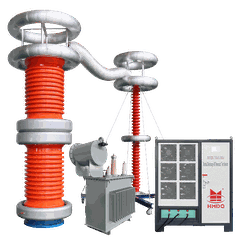



CT/PT Testing Instrument
A Prominent Manufacturer of CT/PT Testing Equipment in 20 years, Professional Quality Technology, Supply Manufacture Price
Our company has specialized in the production and manufacturing of CT/PT testing equipment for 20 years, with a modern intelligent factory covering an area of over 10000 square meters, staffed by 51 professional technicians, and hold CE certification. 35 patents, 10+ software copyrights,Currently, we have over 150 stable distributors worldwide and established more than 10 service offices overseas.
A CT/PT Tester is a specialized, portable electronic instrument designed to test, verify, and calibrate Current Transformers (CTs) and Voltage Transformers (VTs or PTs). These transformers are critical components in electrical power systems, and their accuracy is paramount for safety, metering, and protection. Both CTs and PTs fall under the category of “special-purpose transformers.” Their underlying operational principles adhere to Faraday's law of electromagnetic induction and fundamental transformer principles, with core structures comprising three components: Primary winding; Secondary winding ; Iron core.


Why is this CT/PT Testing Necessary?
Commissioning:To verify new CTs/PTs are installed correctly and meet specifications before energizing the system.
Periodic Maintenance:To ensure accuracy hasn't drifted over time due to aging, thermal cycling, or environmental stress.
Troubleshooting:To diagnose suspected problems, such as:
Discrepancies in meter readings;Nuisance tripping of protection relays;
Physical damage to equipment after a fault or lightning strike.
Safety & Compliance:To comply with utility standards, national electrical codes, and safety regulations.


The Features of CT/PT Tester
- Lightweight and portable, featuring a compact, rugged design built for field use, typically weighing less than 10 kilograms (22 pounds).
- Built-in high-power signal source (precision measurement unit), eliminating the need for bulky external power supplies.
- The touchscreen displays a large, high-resolution color LCD or LED touchscreen, providing real-time, intuitive visualization of results such as excitation curves.
- Automatic contact detection and demagnetization: After testing concludes, residual magnetism in the current transformer core is eliminated to ensure accuracy in subsequent tests.
- Multiple safety features: Hardware and software interlocking prevents energization during incorrect or unsafe connections; automatic discharge; rugged housing prevents accidental contact.
- Multi-functional connectivity, featuring a USB port, supporting Ethernet or Wi-Fi for network connections, and Bluetooth functionality for wireless communication.
- Software & Functional Features:Fully Automated Testing,The user simply selects the test and the instrument automatically performs the entire sequence, measuring responses, calculating results, and providing a Pass/Fail judgment.
- Fully automated equipment testing: Simply select the test items, and the instrument will automatically execute the entire process.
- Graphical Excitation Curve Display,Built-In Accuracy Class Verification, Onboard Data Storage & Management, Report Generation automatically.
- Wi-Fi/Cloud Connectivity,Data Integration with CMMS,Data Integration with CMMS:Multi-Lingual Support.
The Main Function of CT/PT Tester
1.Ratio Test: Checks if the CT/PT transforms current/voltage precisely, Prevents measurement errors in billing (metering) and relay protection.
2.Excitation (Saturation) Test: Applies voltage to the CT secondary and plots a curve to detect core damage or saturation limits. Ensures the CT won’t fail during faults (e.g., short circuits).
3.Polarity Verification: Confirms the direction of current / voltage flow matches the design.Critical for differential relays to avoid false tripping.
4.Winding Resistance Measurement: Measures DC resistance of windings to detect poor connections, corrosion, or damage. High resistance degrades accuracy and causes overheating.
5.Burden Test: Measures the total load (impedance) connected to the CT/PT secondary. Overburdening causes measurement drift and risks failure.
6.Insulation Resistance Test: Checks insulation health between windings and ground. Prevents short circuits and ensures safety.
7.Demagnetization effect: After testing concludes, residual magnetism in the current transformer core is eliminated to ensure accuracy in subsequent tests.

The Main Application of CT/PT Tester
Electrical Substations
Reason:Substations are full of CTs and PTs that feed protection relays and meters. A failure here can cause a major blackout or damage expensive equipment like transformers.
Target:Every CT and PT on transmission and distribution lines, circuit breakers, power transformers, and busbars.
Industrial Plants & Factories
Reason:Large motors, furnaces, and high-power machinery require accurate monitoring and protection. Incorrect readings can lead to process downtime, equipment damage, and inaccurate utility billing.
Target:CTs/PTs on main incoming lines, large motor feeders, and generator sets.
Power Generation Facilities
Reason:Wind farms, solar parks, and traditional power plants need to ensure the power they generate is measured correctly for revenue and that their equipment is protected.
Target:CTs/PTs on the output of generators, inverters, and the connection point to the grid.
Commercial Buildings & Data Centers
Reason: Large office towers and critical facilities like data centers have complex electrical systems.
Tested: Main service entrance CTs, backup generator CTs, and critical branch circuit monitors.
Metering Cabinets & Points
Reason:Utility companies use testers to verify the accuracy of revenue metering CTs/PTs to ensure correct billing for large consumers.
Tested:The specific CTs and PTs installed for watt-hour metering.
Laboratory & Calibration Facilities
Reason: Used to provide official certification that a CT or PT meets its stated accuracy class (e.g., Class 0.2) before it is installed in the field.
Tested:New transformers before they are shipped to customers.
When to Use a CT/PT Tester
- During commissioning of new equipment
- For routine maintenance checks
- After fault events to diagnose damage
- When calibrating protection/metering systems
How to use a CT/PT Tester?
Using a CT/PT tester involves a structured process to ensure accurate testing and safety. Below is a simplified step-by-step guide:
Step 1: Safety Precautions
● De-energize Equipment: Ensure the CT/PT is completely isolated from the live power system.
● Grounding: Connect the tester’s ground terminal to a reliable earth ground to prevent electric shock.
● Disconnect Wires:Remove all secondary wires ( connections to meters, relays) from the CT/PT terminals.
Step 2: Connections
● For CT Testing:Connect the tester’s current output terminals to the secondary side of the CT.
● For PT Testing: Connect the tester’s voltage output terminals to the primary side of the PT.
Step 3: Configure the Tester
Turn on the tester and select the test type:
● Enter Nameplate Data: Input the CT/PT’s rated values
● Select Test Parameters: Choose voltage/current levels or automated test sequences.


Step 4: Perform Tests
Start the test ( Auto-Test for a full diagnostic).
Step 5: Interpret Results
● Check for PASS/FAIL status based on predefined standards
● Review key outcomes: Ratio Error ; Excitation Curve
● Polarity: Confirm correct direction of current/voltage transformation.
Step 6: Post-Test Actions
● Demagnetize the CT to remove residual magnetism.
● Disconnect the tester and restore all secondary wiring.
● Document results and generate reports.
Our Certifications
Certifications
ISO 9001:2015 QMS, OHSAS 18001, ISO 14001 EMS.
01
Honors
National High-Tech Enterprise, Wuhan Technology Innovation "Gazelle" Enterprise.
02
Intellectual Property
35 patents, 10+ software copyrights.
03
Industry Compliance
Products meet State Grid testing standards and international CE certification.
04


Our Factory
A Prominent Manufacturer of CT/PT Testing Equipment in 20 years, Professional Quality Technology, Supply Manufacture Price, Customization available!
FAQ
Q: What are the primary functions of CTs and PTs?
A: They serve as standard signal devices that proportionally convert high-voltage, high-current inputs into safe low-voltage, low-current outputs. These are utilised for measurement, metering, and protection purposes, whilst simultaneously achieving electrical isolation between high- and low-voltage systems to safeguard personnel and equipment.
Q: What constitutes the fundamental distinction between CTs and PTs?
A: The fundamental distinction lies in their connection method and operating state:
CT (Current Transformer): Connected in series within the circuit, with the secondary side approaching a short-circuit state. Opening the circuit is strictly prohibited.
PT (Potential Transformer): Connected in parallel within the circuit, with the secondary side approaching a no-load state. Short-circuiting is strictly prohibited.
Q: How should the CT ratio be selected?
A: The ratio should be slightly greater than the line's maximum continuous operating current. For example, with a normal line current of 360A, a 400A/5A or 500A/5A CT may be selected to ensure measurement accuracy and prevent core saturation.
Q: What are accuracy classes? What do 0.2s, 0.5, and 5P10 represent?
A: Accuracy classes denote the permissible error range of instrument transformers. 0.2s, 0.5: Used for measurement and metering.
5P10: Used for protection.
Q: Why must the CT secondary be earthed?
A: Safety earthing. Prevents high voltage from entering the secondary low-voltage circuit during insulation breakdown between primary and secondary windings, safeguarding personnel and equipment.
Q: Why must the CT secondary side never be open-circuited? What consequences would arise?
A: An open CT secondary causes the entire primary current to become excitation current, leading to severe core saturation and excessive heating. Simultaneously, extremely high voltages (potentially thousands of volts) are induced in the secondary, resulting in insulation breakdown, equipment explosions, and personal injury.
Q: Why must the PT secondary side never be short-circuited?
A: A short circuit in the PT secondary generates immense short-circuit currents far exceeding its rated output capacity, thereby burning out the transformer windings. Protection must be provided using fuses or miniature circuit breakers.
Q: What precautions should be taken when replacing instruments on the CT secondary side?
A: The CT secondary must first be reliably short-circuited using shorting plates or conductors connected to the terminals before removing the old meter and installing the new one. The shorting plates should only be removed after installation is complete.
Q: What are the possible causes of inaccurate electricity meter readings?
A: Possible causes include: CT issues; wiring problems; meter malfunction.
Q: Could CT-related issues cause protective relays to trip incorrectly?
A: Highly probable. Reversed polarity: May cause differential protection to misjudge an internal fault and trip. CT saturation: Severe saturation under fault currents distorts secondary current, leading to protective failure or misoperation. Open circuit: Generates high voltage, potentially causing equipment damage and erroneous signals.
As one of the most professional ct/pt testing instrument manufacturers in China, we're featured by quality products and good price. Welcome to buy ct/pt testing instrument in stock here and get pricelist from our factory. Contact us for customized service.