

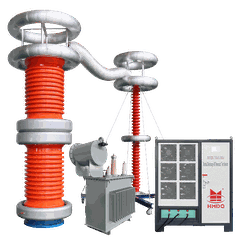



Online Partial Discharge Monitoring System
Supply Manufacture Price for Online Partial Discharge Monitoring System
Wuhan Goldhome Hipot Electrical Co., Ltd. was established in 2008, located in Economic and Technical Development Zone, working area more than 10000 square meters.We are professional OEM, ODM, OBM Manufacturer which is engaged in the research, development, sale and service of High Voltage Testing Equipment including: AC Series Resonant Test Systems, AC DC Hipot Testers, Lightning Impulse Voltage Generator, Primary Current Injection Testers, CT PT Analyzer, Transformer Turns Ratio, Online Partial Discharge Monitoring System,Insulation Resistance Tester,Circuit Breaker Testers, Relay Protection Testers, Cable Fault Locator, SF6 Comprehensive Analyzers, Transformer Oil Test Device, etc.

01
High Quality
Reliable Quality for Safe Power.
02
Advanced Equipment
Precision Equipment,Superior Performance
03
Professional Team
51 professional technicians, Advanced Solutions
04
Custom Service
Technical Consultation:≤1 H
Quotation:≤2 H


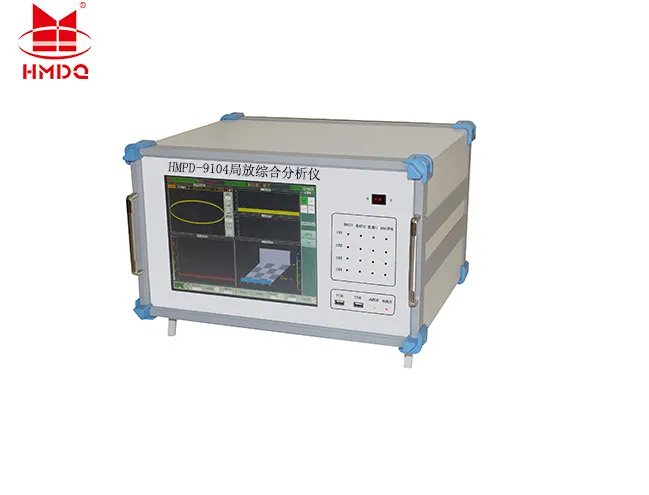
The Online Partial Discharge Monitoring System is an intelligent system designed to continuously and automatically monitor and diagnose latent insulation “sparks”—known as partial discharges (PD)—within high-voltage electrical equipment while the equipment remains operational without power interruption. It is hailed as the “intelligent eye” of equipment monitoring and serves as a key technology enabling the power industry's transition from periodic manual inspections to predictive maintenance.
Such systems primarily use sensors installed on the equipment to capture physical signals—such as ultra-high-frequency (UHF) electromagnetic waves, acoustic emissions (AE), and high-frequency current (HFCT)—generated by partial discharges in real time. These signals are then analyzed using advanced signal processing and artificial intelligence algorithms to assess the equipment’s health status and issue early warnings.
Key Advantages of the Online PD Monitoring System
Online Monitoring Without Power Outages
Provides 24/7 continuous monitoring while equipment operates normally under load. No power outages or maintenance are required, and power supply to the grid remains unaffected, thereby avoiding the economic losses and supply risks associated with power-off testing.
Early Warning of Latent Faults
Detects minute partial discharges in the early stages of insulation degradation, long before potential hazards can be identified by visual inspection, infrared imaging, or periodic withstand voltage tests. Enables early prediction of defects such as insulation aging, bubbles, metal particles, and floating potentials, thereby preventing sudden breakdowns, explosions, and widespread power outages.
Condition Assessment Under Real-World Operating Conditions
Real-time adaptation to actual on-site voltage, load, temperature, humidity, and environmental interference ensures that data accurately reflects the equipment’s true insulation status, providing a more realistic representation of operational conditions than offline power-off testing.
Continuous Real-Time Monitoring Around the Clock
With 24/7 uninterrupted data collection, the system captures transient, intermittent, and sporadic partial discharge signals, ensuring that sudden defects are not missed, unlike during annual routine inspections.
Multi-dimensional Anti-Interference + Precise Fault Localization
Integrates UHF/HFCT/AE multi-sensor fusion; hardware filtering combined with intelligent algorithms eliminates on-site electromagnetic noise; supports Time Difference of Arrival (TDoA) for precise fault location, quickly pinpointing defect locations.
Enabling Condition-Based Maintenance (CBM) to Reduce Costs and Improve Efficiency
Transition from traditional “mandatory periodic maintenance” to condition-based maintenance (CBM), reducing excessive operations and maintenance, minimizing manual inspection workloads, and lowering spare parts and O&M costs.
Trend Analysis and Data Traceability
Long-term storage of partial discharge amplitude, frequency, phase spectra, and trend data enables aging trend analysis, equipment lifespan assessment, and full lifecycle asset management.
Intelligent Alarms and Remote Maintenance
Automatic pop-up alerts, audible and visual alarms, and platform/SMS notifications for out-of-limit conditions; supports remote data viewing without the need for on-site monitoring, making it suitable for unmanned substations and smart grid construction.
Wide Range of Applications and Strong Compatibility
Compatible with all types of high-voltage primary equipment, including switchgear, GIS, high-voltage cables, transformers, and bushings; supports both retrofits of existing substations and new power plant installations.
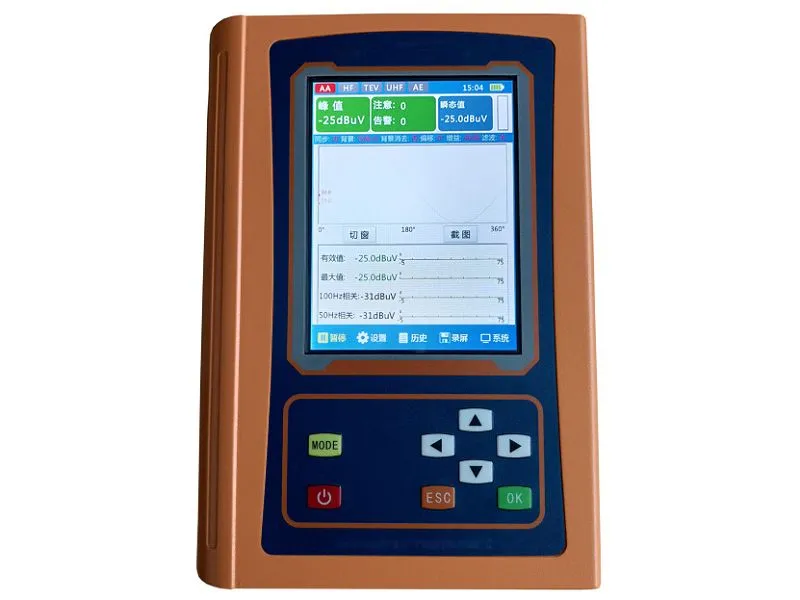
The implementation of the Modern Online PD Monitoring System relies on the synergistic interaction of the following key technologies:
- High-Precision Sensing Technology: The system utilizes a variety of sensors to comprehensively capture discharge signals. Ultra-High Frequency (UHF) sensors, known for their strong interference resistance, are among the most widely used technologies, capable of detecting electromagnetic waves in the 300 MHz–3 GHz frequency band. Additionally, Acoustic Emission (AE) and High-Frequency Current (HFCT) sensors are employed to gather complementary information for comprehensive diagnostics.
- Data Communication and Processing Architecture: Data collected by front-end sensors is transmitted to the backend via wired (e.g., Ethernet) or wireless (e.g., 4G/5G) networks. Modern systems commonly adopt an edge computing architecture, performing real-time preprocessing and feature extraction at the device front end to effectively filter out interference such as corona and rectifier noise.
- Intelligent Diagnostic Algorithms: By analyzing discharge data, the system generates PRPS (Phase-Resolved Pulse Sequence) and PRPD (Phase-Resolved Partial Discharge) spectra to identify discharge types (such as corona discharge and floating potential discharge) and assess their severity. Leveraging artificial intelligence, modern systems can automatically detect various defects and provide alerts within seconds.
Online PD Monitoring System Applicable Equipment
High-Voltage Switchgear
- Medium- and high-voltage switchgear / Ring main units (RMUs)
- GIS (Gas-Insulated Switchgear)
- GIL (Gas-Insulated Line)
- Vacuum circuit breakers, SF6 circuit breakers, load break switches
Main Substation Equipment
- Power transformers (oil-immersed, dry-type)
- Transformer Bushings, Instrument Transformers (CT/PT/VT)
- Reactors, Capacitor Banks
Power Cables
- Medium- and High-Voltage Power Cables (10 kV–500 kV)
- Cable Joints, Cable Terminations, Cables in Tunnels/Ducts
Distribution and Renewable Energy Equipment
- Prefabricated Substations (PPS)
- High-Voltage Equipment for PV/Wind Power Boosting Stations
- Converter Stations, SVGs, Reactive Power Compensation Units
Industrial and Special-Purpose High-Voltage Equipment
- High-Voltage Motors, Large Asynchronous Motors
- High-Voltage Variable Frequency Drives, High-Voltage Soft Starters
- High-Voltage Distribution Equipment for Industrial and Mining Plant Sites, High-Voltage Equipment for Steel/Chemical Industry On-Site Power Plants
Rail Transit & Data Centers
- High-Voltage Equipment for Rail Transit Traction Substations
- High-Voltage Distribution Rooms for Large Data Centers and Industrial Parks
1. Sensors (Front End)
- UHF Antenna: Mounted on the outer wall of switchgear or GIS to detect electromagnetic waves in the 300 MHz–3 GHz range; highly resistant to interference;
- HFCT (High-Frequency Current Transformer): Fitted over the cable grounding wire to capture discharge pulses in the 1–100 MHz range;
- AE (Acoustic Emission) Sensor: Attached to the equipment housing to receive acoustic waves (20 kHz–100 kHz) generated by discharges.
2. Data Acquisition Unit (Middle Tier)
- Signal amplification, filtering, and analog-to-digital conversion;
- Synchronization with power frequency (50 Hz) to mark the exact moment of discharge occurrence.
3. Analysis and Early Warning Platform (Backend)
- Real-time display: Discharge amplitude (pC), frequency, and phase distribution;
- Trend analysis: Monitoring the progression of insulation degradation;
- Location tracking: Estimating defect location using Time Difference of Arrival (TDoA) with multiple sensors;
- Intelligent Alarms: Automatic alert notifications (SMS / platform) when thresholds are exceeded.
Core Principle
The core principle of an online partial discharge monitoring system can be summarized as a complete closed-loop process: “Signal excitation → Physical sensing → Signal conditioning → Pattern recognition and diagnosis”
Step 1: Signal Source – The Physical Process of Partial Discharge
Partial discharge is a weak, non-penetrating breakdown phenomenon that occurs in localized areas of insulation within high-voltage equipment. Each discharge is accompanied by various physical phenomena, which form the basis for system detection.
Nanosecond-scale current pulses: A steep current pulse is generated at the moment of discharge, with a rise time as short as nanoseconds.
Ultra-High Frequency (UHF) Electromagnetic Waves: The pulse current excites electromagnetic waves with frequencies ranging from 300 MHz to 3 GHz, forming the core of UHF detection.
Ultrasonic Waves (AE): The discharge area generates pressure waves due to the energy release, forming acoustic signals that can be captured by ultrasonic sensors.
Other associated phenomena: These include transient earth voltage (TEV) fluctuations, heat generation, light emission, and ozone decomposition.
Step 2: Signal Detection – Core Sensing Technology
The system uses high-sensitivity sensors deployed on the equipment to convert the physical phenomena generated in the first step into measurable electrical signals.
Ultra-High Frequency (UHF) Method: Receives UHF electromagnetic wave signals via built-in or external antennas. This method offers strong interference resistance and high sensitivity (capable of detecting discharges as low as 0.1 picoCoulombs), but has limited penetration capability for tightly sealed equipment.
Acoustic Emission (AE) Method: Uses piezoelectric sensors attached to the equipment housing to detect mechanical waves generated by discharges. This method allows for precise defect localization but is insensitive to acoustic waves generated within SF6 gas, resulting in limited effectiveness.
Transient Earth Voltage (TEV) Method: During a discharge, a transient earth voltage is formed on the surface of the equipment’s metal enclosure. This voltage can be captured using a capacitive coupling probe, making this method an effective means of testing switchgear insulation.
High-Frequency Current Method (HFCT): A high-frequency Rogowski coil is placed on the equipment’s grounding wire to detect discharge pulse currents. This method is simple and effective, and is commonly used for online monitoring of transformers.
Combined Detection Method: By integrating multiple sensors (such as electro-acoustic or opto-electronic combinations) and leveraging differences in signal propagation speeds, this method enables more precise fault localization and interference filtering.
Step 3: Signal and Data Processing – From Analog to Digital
The raw signals collected by sensors are typically very weak and contain a significant amount of noise, requiring a series of complex hardware processing steps and software algorithms to extract and convert them.
Hardware Conditioning: The raw signals sequentially pass through signal conditioning circuits (including filtering, shaping, and amplification) and an analog-to-digital converter (ADC), ultimately being converted into digital signals.
Core Processing Platform: The converted digital signals are processed in parallel by high-performance chips such as Field-Programmable Gate Arrays (FPGAs) and Digital Signal Processors (DSPs), enabling high-speed data acquisition and complex algorithmic computations.
Software Noise Reduction: This is one of the core challenges of online monitoring. The system employs advanced algorithms such as wavelet analysis to effectively isolate genuine partial discharge signals from strong background noise (such as environmental corona and communication interference).
Step 4: Intelligent Diagnosis and Output – From Data to Decision
The ultimate value of the processed, clean digital signal lies in its interpretation and application. Through feature extraction and pattern recognition, the system transforms data into operational and maintenance decisions.
Generating Analysis Spectra: The system combines the processed data with the phase information of the power frequency voltage to generate PRPD (Phase-Resolved Partial Discharge Spectrum) and PRPS (Phase-Resolved Pulse Sequence Spectrum). These two spectra serve as the core basis for subsequent defect type identification.
Discharge Localization: Using time-difference localization (by comparing the time differences between signals received by multiple sensors) or other localization algorithms, the system can pinpoint the fault location within a range of meters or even decimeters, providing precise guidance for maintenance.
Intelligent Identification: The system uses a built-in expert system or artificial neural network (ANN) to match specific spectra with defect models in the database, automatically identifying defect types (such as metal particles, suspended potential discharges, etc.).
Usage Instructions
- Step 1: On-site Hardware Installation
Deploy various sensors
Switchgear / GIS: Attach UHF (Ultra-High Frequency) sensors, AE (Acoustic Emission) sensors, and TEV (Thermal Emission) sensors
Cable grounding: Install HFCT (High-Frequency Current Transformers)
Transformers / Bushings: Install UHF+AE sensors
Wiring and Connections
Connect all sensor signal cables to the online partial discharge monitoring unit; power supply is connected to the substation’s AC 220V/DC 24V.
Secure Installation
Affix sensors tightly to the metal casing of the equipment, avoiding strong sources of interference (such as variable frequency drives and high-power motors).
- Step 2: Device Networking and Power-Up
Connect the data acquisition host to the substation’s internal network or server via Ethernet cable, 4G, or fiber optic cable;
Power on the data acquisition units, industrial control computers, and servers; the devices will automatically initialize;
Connect the backend computer or tablet to the same network.
- Step 3: System Software Configuration
Device Registration
Enter the following in the platform: device name, serial number, voltage level, and installation location.
Parameter Settings
Set partial discharge alarm thresholds, sampling frequency, storage cycle, and notification method.
Interference Calibration
Perform background noise calibration when there are no obvious defects on-site; the system will automatically filter out environmental interference.
- Step 4: Routine Automatic Operation (No Manual Intervention Required)
The system enters 24/7 fully automatic online monitoring:
Real-time acquisition of partial discharge pulse signals
Automatic generation of PRPD/PRPS phase spectra
Calculation of discharge amplitude (pC), discharge frequency, and trend curves
Automatic differentiation between genuine partial discharges and on-site noise
- Step 5: Daily Monitoring and Data Analysis
Log in to the monitoring platform via computer, web browser, or mobile device;
View each device: real-time partial discharge values, spectra, and historical trends;
Compare daily, weekly, and monthly changes to determine if insulation is undergoing gradual aging.
- Step 6: Alarm Handling
When partial discharge amplitude or growth rate exceeds thresholds, the system automatically:
Displays pop-up alerts, activates audible and visual alarms, and sends SMS/WeChat notifications;
Operations personnel respond to alerts by:
Identifying defect types (air gap / surface discharge / metal particles / corona discharge);
Using TDoA to pinpoint the fault location;
Scheduling maintenance or power outages to resolve issues and prevent sudden incidents.
- Step 7: Regular Maintenance
Inspect sensor connections every six months or annually for looseness;
Clean dust from sensor surfaces;
Back up historical partial discharge data in the backend for equipment lifespan assessment.
Famous Brands
Internationally Renowned Brands
- ABB (Switzerland)
Featured Products: Ability™ TXpert™ Series
Key Advantages: Deeply integrated smart transformer components, UHF + acoustic-electrical hybrid localization, sensitivity as low as 1 pC, suitable for high-end power grids and industrial users.
- Siemens Energy (Germany)
Flagship Product: TEC Series
Core Advantages: End-to-end solutions (sensors + diagnostics), standard HFCT+UHF configuration, PRPD/PRPS spectrum analysis, and deep expertise in high-voltage equipment manufacturing.
- Austria: OMICRON
Flagship Product: MONCABLO (cable-specific)
Core Advantages: Multi-channel synchronous data acquisition, strong noise suppression, precise fault location, and suitability for high-voltage cable insulation monitoring.
- UK Megger (including Power Diagnostix)
Representative Products: GISmonitor (GIS-specific), ICMmonitor (general-purpose)
Core Advantages: Modular design, UHF parallel measurement, automatic defect identification, compliance with IEC 60270 standards, suitable for multiple scenarios.
Well-known Chinese Brands
- Goldhome Hipot(HMDQ, Wuhan)
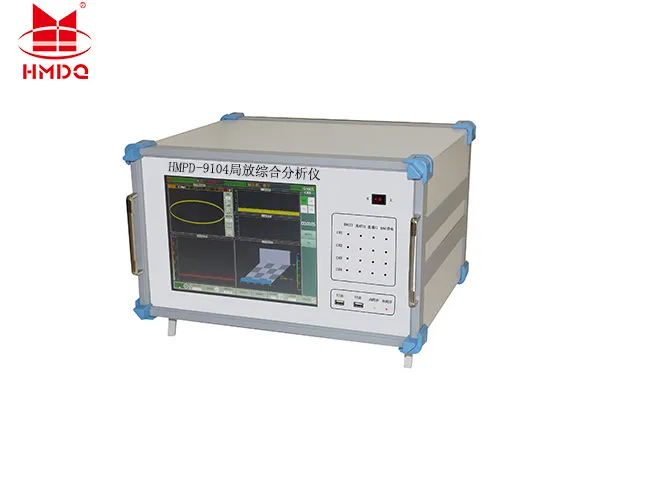
Representative Products: HMPD-9102/HMPD-9104 (online), HM9209 (portable)
Key Advantages: Four-signal fusion (UHF/AE/HFCT/TEV), strong anti-interference capability; sensitivity of 0.1 pC, wide measurement range coverage; AI-powered intelligent diagnosis + TDoA positioning (error ≤ 0.5 m); suitable for all scenarios from 10 kV to 500 kV, compliant with IEC 60270 and GB/T 7354.
- Beijing Huazheng
Products: Online Partial Discharge Monitoring Series
Advantages: High cost-effectiveness, strong customization capabilities, excellent localized service, suitable for domestic power grids and industrial projects.
- Zhuhai Huawang Technology
Products: Switchgear / GIS / Cable Online Monitoring Systems
Advantages: TEV+UHF composite sensors, IoT platform, intelligent early warning, suitable for new energy step-up stations and substations.
Alternative Name
· Partial Discharge Online Monitoring System
· PD Online Monitoring System
· Online PD Monitor
· Partial Discharge Monitor Online
· GIS Partial Discharge Online Monitoring System
· Switchgear Online PD Monitoring System
· Transformer Partial Discharge Monitoring System
· High Voltage Cable Online PD Monitoring System
· Substation Online PD Monitoring System
· UHF TEV HFCT Integrated Online PD Monitoring System
· UHF Online Partial Discharge Monitoring System
· TEV PD Monitoring System
· HFCT Partial Discharge Monitoring System
· AE Ultrasonic PD Online Monitor
· High Voltage Online Partial Discharge Monitoring System
· Intelligent Online PD Monitoring and Diagnosis System
· Real Time Partial Discharge Monitoring System
· 24/7 Online PD Monitoring System
· Partial Discharge Condition Monitoring System
· Online Partial Discharge Monitoring System for Switchgear GIS Transformer
· High Voltage Substation Online Partial Discharge Monitor
· Online Partial Discharge Monitoring System
· On-line PD Monitoring System
· Continuous Online PD Monitoring
· Remote PD Monitoring System / RPDMS
· On-Line Partial Discharge OLPD
· Partial Discharge Monitoring System PDMS

Market Size of Online Partial Discharge Monitoring Systems
Market Size of Online Partial Discharge Monitoring Systems
I. Global Market Size (2025–2026)
2025: Approximately $555–562 million (≈4.0–4.2 billion RMB), with an annual growth rate of approximately 5%.
2026: Projected at $589–600 million, continuing steady expansion.
Long-Term Forecast: Approximately $777 million in 2032, approximately $934 million in 2035, with a CAGR of approximately 5.2% from 2026 to 2035.
II. China Market Size (2025–2026)
2024: Online partial discharge systems: approximately 802 million RMB (total partial discharge market: approximately 2.87 billion RMB) .
2025: Online systems at approximately 857 million yuan (total market at approximately 5.4 billion yuan), a year-on-year increase of 6.85%.
2026: Online systems are projected to reach 900–1,000 million yuan, with the overall partial discharge market expected to exceed 6 billion yuan.
Market share breakdown: Online monitoring accounts for approximately 42%, portable systems for approximately 58%; the online segment’s share is projected to rise to 58% by 2030.
III. Key Drivers and Competitive Landscape
Drivers:
Smart grid / new power system construction (State Grid aims to complete the intelligent retrofitting of 80% of hub substations by 2027).
Ultra-high voltage (UHV) transmission and renewable energy grid integration (wind and solar penetration to reach 45% by 2030).
Equipment aging and the widespread adoption of condition-based maintenance, replacing traditional periodic testing.
Competitive Landscape (China):
International Brands (ABB, Siemens Energy, OMICRON, Megger): Account for approximately 35%, dominating high-end GIS and transformer projects.
Domestic brands (Goldhome, NARI, Zhicheng Electric, Kaimer Electric, etc.): Account for approximately 52.4%, offering high cost-effectiveness and rapid service response, with a clear advantage in medium- and low-voltage systems and distribution networks.
IV. Segmented Demand (2025)
Transformers: Approximately 38%
GIS: Approximately 27%
Switchgear: Approximately 21%
Cables: Approximately 14%
FAQ
Q: 1. What is an online partial discharge monitoring system?
A: It is an intelligent system designed for high-voltage electrical equipment that provides 24/7 real-time online monitoring of insulation partial discharges without power interruption and while the equipment is under load. By collecting signals via UHF/HFCT/AE/TEV sensors, it analyzes insulation aging and internal defects, providing early fault warnings to prevent equipment breakdown, explosions, and sudden power outages.
Q: 2. What is partial discharge? What are its hazards?
A: When defects such as bubbles, cracks, metal burrs, or floating potentials exist within the insulation of high-voltage equipment, minute non-penetrating discharges occur under operating voltage.
Prolonged partial discharge gradually erodes the insulation, leading to equipment aging, breakdown, internal short circuits, and station-wide power outages. It is the greatest hidden hazard in high-voltage equipment.
Q: 3. Which high-voltage equipment can be monitored?
A: Applicable to: high-voltage switchgear, ring main units, GIS/GIL, power transformers, bushings, CT/PT transformers, high-voltage power cables, cable joints and terminations, prefabricated substations, high-voltage equipment in wind and solar power step-up stations, and on-site power plants at industrial and mining enterprises.
Q: 4. Can it be used for both high- and low-voltage equipment?
A: It is primarily designed for medium- and high-voltage primary equipment ranging from 10 kV to 500 kV. Low-voltage equipment generally does not pose a risk of partial discharge in insulation and therefore does not require this system.
Q: 5. What principle does the system use to detect partial discharge?
A: By collecting four characteristic signals generated by partial discharge—ultra-high frequency (UHF), high-frequency current (HFCT), acoustic emission (AE), and transient earth voltage (TEV)—the system performs filtering and noise reduction, power-frequency phase synchronization, and PRPD spectrum analysis to intelligently identify defect types and locate the discharge source.
Q: 6. Why is multi-sensor fusion necessary? Wouldn’t a single sensor suffice?
A: A single sensor is prone to on-site interference and may miss or misidentify defects. The fusion of UHF, AE, HFCT, and TEV signals provides stronger interference resistance, more accurate identification, and coverage of discharge types across different equipment.
Q: 7. How sensitive is the system? How small a discharge can it detect?
A: High-precision models can detect as little as 0.1 pC, capturing faint, latent discharges in the early stages of insulation degradation—detecting potential hazards long before infrared, visual inspections, or withstand voltage tests can identify them.
Q: 8. Does installation and monitoring require a power outage?
A: No power outage is required. Sensors and the main unit can be installed directly while the equipment is operating under normal load, without affecting power supply.
Q: 9. Is installation and commissioning complicated? Does it require dedicated personnel for monitoring afterward?
A: Sensors feature wireless, easy installation; the main unit only needs to be powered on and networked. Once commissioning is complete, the system operates fully automatically without manual supervision, and data can be viewed remotely via smartphone or computer.
Q: 10. Will on-site variable frequency drives, lightning, or electromagnetic interference trigger false alarms?
A: The system features built-in hardware filtering, wavelet noise reduction, and intelligent algorithms for discrimination. It can automatically distinguish between genuine partial discharges and environmental noise, offering strong interference resistance and a low false alarm rate.
Q: 11. What are the system’s core features?
A: Real-time partial discharge detection, PRPD/PRPS phase spectra, discharge amplitude/frequency statistics, defect type identification, TDoA precise localization, trend analysis, threshold alarms, remote monitoring, data storage, and report export.
Q: 12. Can it identify the type of defect?
A: Yes. It can automatically identify typical defects such as insulation gap discharge, surface discharge, suspended metal particle discharge, and tip-spike discharge.
Q: 13. Can it pinpoint the exact location of the fault?
A: It supports Time Difference of Arrival (TDoA) positioning, utilizing multi-sensor collaborative calculations to quickly pinpoint the exact location of the discharge source, facilitating targeted maintenance.
Q: 14. What is the difference between online monitoring and annual offline PD testing during power outages?
A: Online: 24/7 continuous monitoring, real-time operating conditions, early warning, no power outage required, condition-based maintenance
Offline: Once a year, requires system shutdown, only detects current status, prone to missing intermittent or sudden defects
Q: 15. What practical benefits does installing this system provide?
A: Early detection of latent hazards to prevent sudden power outages and equipment failures; transition from scheduled maintenance to condition-based maintenance, reducing excessive operations and maintenance, lowering labor and maintenance costs, and extending the service life of high-voltage equipment.
Q: 16. Which industry standards does it comply with?
A: Complies with international and power industry standards such as IEC 60270, GB/T 7354, and DL/T 417.
Q: 17. Can it be upgraded remotely, and can monitoring channels be expanded later?
A: Supports remote firmware upgrades and remote operation and maintenance; the main unit allows flexible expansion of monitoring channels, so new equipment added later does not require purchasing an entirely new system.
Q: 18. Does Goldhome offer this mature product?
A: Yes. Goldhome’s HMPD series of online partial discharge monitoring systems is available in 2-channel and 4-channel configurations. Featuring multi-sensor fusion, high sensitivity, and built-in AI diagnostics, it is suitable for various high-voltage applications both domestically and internationally. We provide complete systems, individual sensors, and comprehensive solutions.
As one of the most professional online partial discharge monitoring system manufacturers in China, we're featured by quality products and good price. Welcome to buy online partial discharge monitoring system in stock here and get pricelist from our factory. Contact us for customized service.