

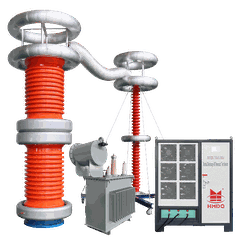



Partial Discharge Detector
Supply Manufacture Price for Partial Discharge Detector
Our company has specialized in the production and manufacturing of Partial Discharge Detector for 20 years, with a modern intelligent factory covering an area of over 10000 square meters, staffed by 51 professional technicians, and hold CE certification. 35 patents, 10+ software copyrights,Currently, we have over 150 stable distributors worldwide and established more than 10 service offices overseas.

35+
National patents
20+
Years Experience
51
Technical Staff
31411
Active Members


A partial discharge detector is a specialized instrument used to identify potential insulation hazards in high-voltage electrical equipment; it is one of the core tools for preventive maintenance in power systems. By capturing and analyzing the faint signals generated by partial discharges (PD) within the equipment, it assesses the condition of the insulation and determines the risk of failure.
A Partial Discharge Detector is a precision instrument specifically designed to collect, detect, quantify, and analyze partial discharge signals from high-voltage equipment; it can measure discharge charge (pC), discharge phase, and discharge frequency to determine whether the insulation has latent faults.
precautions for product use
Lorem ipsum dolor sit, amet consectetur adipisicing elit.
High-Sensitivity Detection
Captures faint partial discharge pulses and accurately measures apparent discharge volume (pC), enabling the detection of even minor insulation defects.
Compatibility with Multiple Detection Methods
Supports connection of various sensors, including UHF, ultrasonic, TEV (terrestrial electric waves), and HFCT (high-frequency current), making it suitable for a wide range of high-voltage equipment.
Robust Interference Immunity
Digital filtering, intelligent noise reduction, and phase separation technology effectively distinguish genuine partial discharges from on-site industrial electromagnetic interference.
Visualization of Waveforms and Spectra
Real-time display of discharge waveforms, PRPD phase spectra, and discharge trend charts enables intuitive identification of defect types.
Intelligent Recognition of Multiple Defects
Automatically distinguishes between fault types such as internal air gap discharge, corona discharge, surface discharge, and floating potential discharge.
Dual-Purpose Offline/Online Operation
Can be used for offline laboratory testing in conjunction with a PD-free withstand voltage system, or for live online inspections in the field.
Portable Design
Compact size, lightweight, and simple touchscreen operation, making it convenient for mobile testing at substations and switchgear sites.
Data Storage and Playback
Automatically saves test data, spectra, and waveforms; supports historical playback, report export, and archival traceability.
Wide Frequency Response Range
With a wide high-frequency signal acquisition bandwidth, it is compatible with all types of high-voltage equipment, including transformers, GIS, cables, switchgear, and CT/PT.
Intelligent Analysis and Alarms
Features built-in threshold settings and automatically alerts users when partial discharge exceeds limits, providing early warnings of insulation aging and latent faults.

Working Principle
Generation of Partial Discharge Signals
Air gaps, cracks, impurities, sharp points, and floating potentials exist within the insulation of transformers, GIS, switchgear, cables, and CT/PTs;
When high voltage is applied, the local electric field becomes concentrated, generating non-penetrating micro-discharges that release instantaneously:
Ultra-high frequency (UHF) electromagnetic waves
Ultrasonic waves
Transient earth waves (TEV)
HFCT (High-Frequency Current Transducer): Captures high-frequency current pulses
Sensor Signal Acquisition
Different sensors capture different signals:
UHF (Ultra-High Frequency) Sensor: Captures electromagnetic waves from discharges inside GIS and switchgear
Ultrasonic Sensor: Captures sound waves generated by discharges
TEV (Transient Earth Voltage) Sensor: Captures discharge pulses on the surface of switchgear enclosures
HFCT (High-Frequency Current Transducer): Mounted on the cable grounding wire to capture high-frequency current signals from partial discharges
Signal Amplification and Filtering
The raw signals collected are extremely weak and contain a significant amount of on-site industrial interference;
The instrument internally employs:
High-gain preamplification
Digital bandpass filtering
Hardware + software anti-interference algorithms
to filter out unwanted noise and retain the true partial discharge pulses.
ignal Digitization and Sampling
Converts analog discharge pulses into digital signals, using high-speed sampling to capture pulse amplitude, phase, and time characteristics.
Apparent Discharge Quantity Calculation & Spectral Analysis
Converts data into apparent discharge quantity (pC) using built-in algorithms;
Generates PRPD phase-resolved spectra, pulse waveforms, and trend curves.
Data Storage, Display, and Alarms
Displays numerical values and spectra in real time; provides automatic alerts for out-of-limit conditions; saves data, supports playback, and exports test reports.
Defect Identification and Assessment
Intelligently distinguishes between the following based on discharge phase distribution, amplitude, and repetition rate:
Internal air gap discharge
Metal tip corona discharge
Surface discharge
Suspended potential discharge
External interference noise


I. High-Voltage Switchgear
- High-voltage switchgear / Medium-voltage switchgear / Ring main units
- GIS (Gas-Insulated Switchgear)
- SF6-filled switchgear, load break switches, circuit breakers
II. Substation Equipment
- Power transformers, dry-type transformers, oil-immersed transformers
- CTs (Current Transformers), PTs (Voltage Transformers)
- High-Voltage Bushings, Wall-Penetrating Bushings
III. Power Cables
- High-Voltage Cross-Linked Power Cables
- Cable Joints, Cable Terminations
- Long-Distance Power Transmission Cable Lines
IV. Insulation and Hardware
- High-Voltage Insulators (Ceramic, Composite Insulators)
- High-Voltage Surge Arresters
- High-Voltage Insulation Poles, Insulation Components
V. Other High-Voltage Electrical Equipment
- High-Voltage Motors, Generators
- High-Voltage Frequency Converters, Reactors
- Pre-assembled Substations, Prefabricated Substations
Mainstream Detection Methods for Partial Discharge Detectors
1. Ultra-High Frequency (UHF) Method
Detection Signal: Electromagnetic waves ranging from 300 MHz to 3 GHz.
Working Principle: An antenna sensor captures the ultra-high frequency electromagnetic waves generated during partial discharge, effectively avoiding common low-frequency interference signals.
Key Advantages: Strong interference resistance, high sensitivity (up to 0.1 picocoulombs), and high localization accuracy (up to 5 centimeters), making it highly suitable for online monitoring.
Key Limitations: If the equipment has a fully enclosed metal housing (such as GIS), a non-metallic window must be provided to enable measurement; susceptible to interference from high-frequency signals in the environment, such as 5G; relatively high equipment costs.
Typical Applications: Precise diagnosis and online monitoring of fully enclosed high-voltage equipment such as GIS (Gas-Insulated Switchgear), GIL (Gas-Insulated Lines), and UHV transformers.
2. Ultrasonic Method (AE)
Detection Signal: Acoustic waves (ultrasonic waves) in the 20 kHz to 200 kHz range.
Principle of Operation: Utilizes piezoelectric sensors to convert ultrasonic signals generated by partial discharges into electrical signals.
Key Advantages: Sensors are completely electrically isolated from high-voltage circuits, providing inherent resistance to electromagnetic interference; highly sensitive to surface discharges and corona discharges; convenient and flexible installation.
Key Limitations: Ultrasonic waves attenuate rapidly as they propagate through the medium, affecting detection sensitivity; susceptible to interference from environmental noise such as mechanical vibrations of the equipment.
Typical Applications: Oil-immersed transformers, reactors, switchgear, and cable joints. Often used in conjunction with the UHF method; suitable for live-line inspections.
3. High-Frequency Current Method (HFCT)
Detection Signal: High-frequency pulse currents ranging from hundreds of kHz to tens of MHz.
Principle of Operation: A Rogowski coil (high-frequency current transformer) is clamped onto the equipment’s grounding conductor to capture high-frequency ground current pulses generated by partial discharges.
Key Advantages: It is the only recognized method capable of absolutely quantifying discharge levels (in the pico-coulomb range), strictly adhering to the IEC 60270 standard; particularly suitable for cable lines; moderate cost.
Main Limitations: Relatively weak resistance to on-site interference, potentially low signal-to-noise ratio; applicable only to equipment with a complete ground loop; poor localization accuracy, typically only capable of identifying the approximate fault section.
Typical Applications: High- and medium-voltage power cables, transformers, and surge arresters; serves as the core solution for online monitoring of cable lines.
4. Transient Earth Voltage Method (TEV)
Detection Signal: High-frequency voltage pulses ranging from 5 MHz to 100 MHz.
Working Principle: A capacitive sensor is attached to the surface of the equipment’s metal enclosure to capture the transient earth voltage generated on the enclosure during partial discharge.
Key Advantages: Non-invasive operation; simple and convenient; fast detection speed; low cost; supports live testing without powering down the equipment.
Main Limitations: Low signal-to-noise ratio and slightly lower sensitivity; only applicable to equipment with metal enclosures.
Typical Applications: Switchgear, ring main units, distribution panels, etc. It is a common method for efficient on-site screening (rapid inspection).
5. Chemical Detection Method (DGA)
Detection Signal: Decomposition products of insulating oil or sulfur hexafluoride (SF₆) gas.
Working Principle: Uses methods such as gas chromatography to detect characteristic gases produced by the decomposition of insulating materials under partial discharge conditions, as well as their concentrations.
Key Advantages: Completely immune to electromagnetic interference; capable of reflecting the dynamic process of long-term cumulative degradation of insulating materials.
Key Limitations: Slow response time (cannot monitor in real time); insensitive to sudden faults; and unable to precisely locate the source of discharge.
Typical Applications: Oil chromatography analysis for oil-immersed transformers; analysis of decomposition products in SF₆ gas-insulated equipment.
6. Acoustic Imaging Method
Detection Signals: Audible and ultrasonic sounds in the 2 kHz to 100 kHz range.
Working Principle: Utilizes a microphone array to receive sound waves; algorithms overlay the location of the sound source in real time as a color image (acoustic image) on a visible light image.
Key Advantages: Provides intuitive, “what-you-see-is-what-you-get” visualization; enables non-contact, rapid scanning of large areas from a distance.
Key Limitations: Difficulty in providing quantitative analysis of discharge levels; limited positioning accuracy for discharge sources located deep within equipment or in complex structures.
Typical Applications: Live-line inspection of switchgear, insulators, and cable terminations, as well as leakage point detection in GIS equipment.
Partial Discharge Detector Operating Precautions
I. Safety Precautions
Strictly adhere to high-voltage safety regulations during on-site testing, maintain a safe distance, and never touch live parts.
The instrument, sensors, and grounding wires must be reliably grounded; poor grounding can introduce interference and pose an electric shock hazard.
Outdoor testing is prohibited during thunderstorms, strong electromagnetic interference, or other adverse weather conditions.
Never approach equipment for testing if severe flashover or breakdown faults have not been isolated to prevent sudden accidents.
Do not disassemble the unit or modify internal circuits without authorization. Under no circumstances should sensor connectors be plugged in or unplugged while live at high-voltage sites.
II. Wiring and Installation Precautions
Sensors must be placed or installed in accordance with specifications, away from interference sources such as variable frequency drives, mobile phones, walkie-talkies, and high-power motors.
Signal cables should be as short and straight as possible, without coiling, and should avoid running parallel to high-voltage leads and power cables.
Do not misconnect TEV, UHF, ultrasonic, or HFCT sensors to the corresponding interfaces, as this may result in no signal or channel damage.
The HFCT transformer clamp must be securely closed and locked, and attached to the cable shield or a dedicated ground wire.
III. Instrument Calibration and Parameter Settings
Allow the instrument to warm up before powering on, then enter the measurement interface. First, measure environmental background interference, followed by partial discharge in the equipment.
Set gain, threshold, and frequency bandwidth appropriately to avoid excessive gain causing a screen full of noise, or insufficient gain leading to missed weak partial discharges.
When on-site interference is high, promptly enable digital filtering, phase filtering, and interference suppression functions.
Do not arbitrarily modify the system’s factory calibration parameters to prevent measurement inaccuracies.
IV. Precautions During Testing
During testing, personnel should stay as far away as possible from the sensor and high-voltage equipment; do not place your body close to the sensor to avoid interfering with the signal.
It is recommended to take multiple samples at the same location and compare the spectra to avoid misjudgment from a single measurement.
Distinguish between external interference signals and actual partial discharges from the equipment; do not rely solely on numerical values, but make a comprehensive judgment by combining PRPD spectra and waveforms.
During prolonged continuous monitoring, monitor the instrument’s temperature and battery level to prevent unexpected shutdowns that could interrupt the test.
V. Post-Use, Storage, and Maintenance
After testing, remove the sensor before turning off the main unit, and neatly coil and store the cables.
Avoid storing the device in environments subject to heavy pressure, drops, rain, or humidity.
Calibrate and clean the sensor probe regularly to maintain sensitivity.
If the device will not be used for an extended period, disconnect the power, remove the battery, and store it in a dry, well-ventilated area.
Main Types

I. Classification by Detection Principle / Detection Method
Ultra-High Frequency (UHF) Partial Discharge Detector
Detects using ultra-high frequency electromagnetic waves in the 300 MHz to 3 GHz range;
Suitable for: GIS, high-voltage switchgear, ring main units, and gas-insulated switchgear.
Ultrasonic Partial Discharge Detector
Captures ultrasonic signals above 20 kHz generated by discharges;
Suitable for: Insulators, bushings, transformers, and corona and surface discharge on exposed high-voltage equipment.
TEV Ground Wave Partial Discharge Detector (TEV Type)
Detects transient ground waves on the surface of metal enclosures;
Suitable for: Medium- and high-voltage metal-enclosed switchgear and prefabricated substations; allows for inspection without opening the enclosure or interrupting power supply.
HFCT High-Frequency Current Partial Discharge Detector (HFCT Type)
Detects partial discharge pulses on grounding wires via high-frequency current transformers;
Suitable for: high-voltage cables, cable joints/terminals, transformers, CTs/PTs.
Combined 4-in-1 Partial Discharge Detector
Integrates four detection methods: UHF, Ultrasonic, TEV, and HFCT;
Handles all high-voltage equipment with a single unit—the market’s leading best-seller.
II. Classification by Application Scenario
Offline Partial Discharge Detector (Offline Type)
Used with a partial discharge-free high-voltage test system for synchronous partial discharge testing during withstand voltage tests in laboratories, enabling precise pC quantification.
On-site Portable Partial Discharge Detector (On-site Portable Type)
Portable and handheld, designed for live, uninterrupted inspections and defect surveys at substation sites.
Fixed Online Partial Discharge Monitoring System (Fixed Online Monitoring Type)
Sensors are permanently installed in GIS, switchgear, or cables for 24/7 real-time online monitoring and remote alarm notification.
III. Classification by Number of Channels
Single-Channel Partial Discharge Detector
An entry-level model for single-point detection, offering excellent value for money.
Multi-Channel Partial Discharge Detector
Available in 4-channel, 8-channel, and 16-channel configurations, enabling simultaneous multi-point data acquisition and comparative analysis.
IV. Classification by Structural Type
Handheld Portable
Lightweight and portable with touchscreen operation, suitable for on-site inspections.
Desktop Lab Type
High precision and advanced algorithms, suitable for factory testing, type testing, and scientific research.
Cabinet Type
Integrated into a monitoring cabinet for online partial discharge monitoring of entire substations.

Famous Brands
Domestic Brands
Goldhome Hipot (HMDQ, Wuhan)
Core Advantages: Full range of partial discharge testers (UHF/TEV/Ultrasonic/HFCT 4-in-1), sensitivity of 0.1 pC, multi-layer shielding for interference resistance, suitable for all testing scenarios.
Featured Products:
HMJFS-03 Handheld 4-in-1 Partial Discharge Tester (TEV/UHF/Ultrasonic/HFCT)
HMPD-9104 Desktop High-Precision Partial Discharge Analyzer (4 channels, 0.1 pC–100 nC)
HMOWTS Cable Oscillation Wave Partial Discharge Testing System (medium-voltage cable diagnosis and location)
China Shanghai Siyuan Electric
Advantages: Comprehensive power equipment service provider; partial discharge monitoring systems compatible with GIS, transformers, and switchgear; supports online monitoring and fault diagnosis.
Representative Products: Siyuan GIS Partial Discharge Online Monitoring System.
State Grid Electric Power Research Institute, Beijing, China
Advantages: Backed by the State Grid’s research and development system, specializing in insulation testing for power equipment; PD analyzers are suitable for high-voltage laboratories and on-site grid testing.
Flagship Product: State Grid Electric Power Research Institute PD Series Digital Partial Discharge Detector.
International Brands
Austria: OMICRON
Advantages: A leading brand in power testing and diagnostics, featuring a modular design, combined electrical and acoustic detection, sensitivity of 0.1 pC, and compatibility with both offline testing and online monitoring.
Representative Products: MPD 600/800 Partial Discharge Systems, CableScout Cable Partial Discharge Locator.
USA: Megger
Advantages: Global benchmark for portable high-voltage testing; full range of UHF/TEV/HFCT products; strong interference resistance; suitable for field inspections and precision laboratory measurements.
Representative Products: ICMcompact/ICMneo cable partial discharge testers, PD Scan handheld inspection instrument.
ABB (Switzerland)
Advantages: A leading power grid equipment manufacturer; offers combined UHF and ultrasonic location with 1 pC sensitivity; features deep integration with smart monitoring for transformers and GIS; supports cloud-based data analysis.
Representative Products: Ability TXpert Online Partial Discharge Monitoring System for Transformers.
Siemens Energy (Germany)
Advantages: End-to-end solutions for high-voltage equipment; standard HFCT+UHF configuration; frequency range 300 MHz–1.5 GHz; PRPD/PRPS spectrum analysis; compatible with GIS, switchgear, and transformers.
Representative Products: TEC Series Partial Discharge Monitoring Systems.
Market Prices

I. Domestic Prices:
1. Handheld (Inspection / Single-point, TEV / Ultrasound / UHF)
Basic models (single-function, e.g., ultrasound only): 6,000–20,000 RMB
Goldhome HM9001: approx. 6,000 RMB
Mainstream models (2-in-1 / 3-in-1, TEV + Ultrasound): 28,000–60,000 RMB
High-end models (4-in-1: TEV + UHF + ultrasonic + HFCT): 65,000–120,000 RMB
Goldhome HMJFS-03: approx. 80,000–100,000 RMB
2. Benchtop / Portable (laboratory / field precision, multi-channel)
Dual-channel (0.1 pC sensitivity): 78,000–150,000 RMB
Goldhome HM9102: Approx. 90,000–120,000 RMB
Four-channel (high precision, IEC 60270): 150,000–300,000 RMB
Goldhome HMPD-9104: Approx. 180,000–250,000 RMB
3. Online Monitoring Systems (GIS / Transformers / Switchgear, Long-term Deployment)
Single Bay (GIS / Switchgear): 200,000–500,000 RMB
Multi-Bay / Full-Station Integration: 500,000–1,500,000 RMB
Goldhome GIS Online Monitoring System: Approx. 300,000–800,000 RMB
II. International Brand Prices
1. Handheld
OMICRON (MPD Handheld): 180,000–250,000 RMB
Megger (PD Scan): 150,000–220,000 RMB
EA Technology (UltraTEV Plus²): 120,000–180,000 RMB
2. Benchtop / Portable
OMICRON (MPD 600/800): 350,000–600,000 RMB
ABB (TXpert): 400,000–700,000 RMB
Haefely (PD 700): 300,000–500,000 yuan
3. Online Monitoring Systems
OMICRON (CableScout+): 800,000–1,500,000 yuan
Siemens Energy (TEC Series): 600,000–1,200,000 yuan
Doble (PDMonitor): 500,000–1,000,000 yuan

Alternative Name
· Partial Discharge Detector
· Partial Discharge Tester
· Partial Discharge Analyzer
· PD Detector
· PD Tester
· PD Analyzer
· HV Partial Discharge Detector
· High Voltage Partial Discharge Tester
· Partial Discharge Testing Device
· Partial Discharge Monitoring Device
· UHF Partial Discharge Detector
· Ultrasonic Partial Discharge Detector
· TEV Partial Discharge Tester
· HFCT Partial Discharge Detector
· 4-in-1 Partial Discharge Detector
· Portable Partial Discharge Detector
· Handheld PD Detector
· Online Partial Discharge Monitor
· Substation Partial Discharge Detector
· Switchgear Partial Discharge Tester
· GIS Partial Discharge Detector
· Transformer Partial Discharge Tester
· Cable Partial Discharge Detector
· CT PT Partial Discharge Analyzer
· ortable Partial Discharge Detector 4-in-1 UHF TEV Ultrasonic HFCT
· High Voltage Partial Discharge Tester for GIS Transformer Switchgear
· Handheld PD Detector Online Partial Discharge Monitoring Device
· Partial Discharge Measuring System
· Digital Partial Discharge Detector
· Partial Discharge Detector
· GIS PD Monitoring
· RMU Partial Discharge Detector
·Switchgear PD Tester
·Transformer PD Analyzer
·Cable PD Detector
·Cable Partial Discharge Tester
·Motor Partial Discharge Tester
·Online PD Monitor
·PD monitoring systems

FAQ
Q: 1: What is a partial discharge detector?
A: A partial discharge detector is a specialized high-voltage testing instrument used to detect, measure, and analyze partial discharge signals in high-voltage equipment, enabling early detection of insulation defects and latent faults.
Q: 2: What types of equipment can it detect?
A: It is suitable for GIS high-voltage switchgear, transformers, high-voltage cables, CT/PT transformers, insulators, bushings, reactors, and more.
Q: 3: What detection methods does it support?
A: The four mainstream methods are: Ultra-High Frequency (UHF), Ultrasonic, TEV (Terrestrial Electromagnetic Waves), and HFCT (High-Frequency Current). Most models are integrated 4-in-1 units.
Q: 4: What is the sensitivity of the partial discharge detector?
A: Standard models range from 1 pC to 5 pC; the high-precision model from Goldhome can reach 0.1 pC.
Q: 5: Can testing be performed while the system is energized without power interruption?
A: It supports live online patrol testing in substations and can also be used with a non-PD withstand voltage system for offline PD testing in laboratories.
Q: 6: What are the main features?
A: Real-time PD waveforms, PRPD phase spectra, digital filtering, intelligent defect recognition, data storage and playback, and automatic generation of test reports.
Q: 7: Is Goldhome(HMDQ) a well-known brand?
A: Yes, Goldhome is a renowned domestic brand for high-voltage testing equipment. Its partial discharge detectors feature a comprehensive range of models, stable performance, and excellent cost-effectiveness, with a significant volume exported overseas.
Q: 8: What are the different types of partial discharge detectors?
A: They are categorized into handheld portable models, desktop laboratory models, multi-channel models, and fixed online monitoring systems.
Q: 9: How is the interference resistance?
A: With built-in digital filtering and professional anti-interference algorithms, it can effectively distinguish between on-site industrial interference and genuine partial discharge signals.
Q: 10: Does after-sales support include overseas services?
A: We provide English technical documentation, remote debugging, operation training, and lifetime maintenance services.
Q: 11. What are the main types of partial discharge?
A: Based on discharge location and mechanism, common partial discharges can be divided into three categories:
- Internal Partial Discharge (Internal PD): Occurs in air gaps, cracks, or delaminations within solid insulation, commonly found inside the insulation of transformers, bushings, and cables.
- Surface Partial Discharge (Surface PD): Occurs along the surface of insulating materials, often caused by electric field distortion resulting from moisture or contamination on the insulation surface; this is a common form of discharge in switchgear and post insulators.
- Corona Discharge (Corona PD): Occurs in the air surrounding sharp conductors with highly non-uniform electric fields (such as burrs on high-voltage cable bundles or damaged conductors), often accompanied by a “hissing” discharge sound.
Q: 12. How can one distinguish genuine partial discharge signals from external interference?
A: This is one of the greatest challenges in on-site testing. The key lies in utilizing the “phase correlation” of discharge signals:
- Examine the PRPD spectrum: This is the most effective method, superimposing the amplitude and frequency of discharge signals onto the phase of the power frequency voltage. Genuine discharges exhibit highly repetitive, specific phase patterns closely correlated with the 50/60 Hz power frequency (e.g., concentrated around 90° and 270°). External interference (such as mechanical vibration), on the other hand, manifests as irregular spikes.
- Integrate multiple types of spectra: Combine time-domain waveforms, spectrum plots, and flight charts for analysis. For example, the waveform of a genuine discharge is typically pulsed, and the spectrum exhibits certain characteristics.
- Conduct on-site troubleshooting: Try turning off potential nearby sources of interference (such as air conditioners, lighting, motors, etc.) to see if the signal disappears.
- Cross-validation using multiple sensors: For example, use both acoustic emission (AE) and transient earth voltage (TEV) sensors simultaneously. If both sensors detect signals in phase, it is highly likely that a genuine discharge is occurring.
As one of the most professional partial discharge detector manufacturers in China, we're featured by quality products and good price. Welcome to buy partial discharge detector in stock here and get pricelist from our factory. Contact us for customized service.