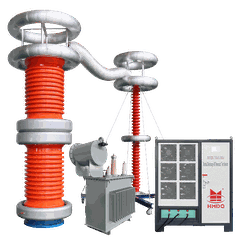
High Current Primary Current Generator Test suppliers
High Current Primary Current Generator Test factory
High Current Primary Current Generator Test best
High Current Primary Current Generator Test high quality
High Current Primary Current Generator Test price
1/
High Current Primary Current Generator Test
The 5000A high-current tester, commonly referred to as a primary-side feed-in tester, is a specialized electrical testing device designed to feed and deliver extremely high alternating currents (up to 5000 amps or more) directly into the primary side of high-current circuits under low-voltage conditions. Its main function is to test and validate the performance and accuracy of high-current electrical protection systems under actual load conditions.
Send Inquiry
Description
Technical Parameters
Wuhan Goldhome Hipot Electrical Co., Ltd. is one of the leading manufacturers and suppliers of high current primary current generator test in China. With abundant experience, our factory offer high quality customized products made in China with competitive price. Welcome to contact us for quotation.
Product video
HMSLQ 5000A 6V HIGH CURRENT GENERATOR TEST DISPLAY VIDEO
Products Description
The 5000A High-Current Tester is a specialised electrical testing apparatus designed to inject extremely high alternating currents (up to 5000 amperes or greater) directly into the primary side of high-current circuits under low-voltage conditions. Its primary function is to test and validate the performance and accuracy of high-current electrical protection systems under actual load conditions.
Technical Parameters
Rated Capacity: 75 kVA
Low Voltage Current: 0~197.3A
output Current:0~5000 A
Overall accuracy:0.2%
Power Supply Voltage: AC 380V +10%;50Hz 土2H
Products details
FAQs
Q: What is the typical output voltage?
A:The output voltage is very low, typically between 2 V and 10 V AC. This tester is designed as a high-current, low-voltage power supply, as the device under test (circuit breaker or busbar) is inherently in a short-circuit state.
Q: What are the most important safety measures before commissioning?
A:
Complete isolation: The system to be tested must be de-energized, locked out (LOTO), and grounded.
Safe grounding: The housing of the test device must be connected to a reliable safety grounding device.
Personal protective equipment: Wear standard-compliant arc flash protective clothing (flame-retardant material), insulating gloves with rated voltage, and face protection.
Connection safety: Ensure that all high-current clamps are securely fastened and have clean, contamination-free contact surfaces.
Q: Why are the output cables so thick and heavy?
A:They must have extremely low resistance to carry 5,000 amps of current without overheating. Power loss (the heat generated) is proportional to the square of the current (I²R). Thin cables would overheat and melt instantly.
Q: The output current is lower than the value I set. Why?
A:
This is usually due to high impedance in the circuit. The causes can be as follows:
Loose or dirty connections (most common cause).
The test object has a higher impedance than expected.
The input voltage drops due to an insufficient power source.
Q: Is it possible to test a circuit breaker without current transformers and relays?
A:Yes. You may perform a "bare circuit breaker" test by directly passing current through the breaker's poles. This allows testing of the breaker's own mechanical trip mechanisms (such as instantaneous magnetic trip functions), but does not validate the effectiveness of the entire protection scheme.