

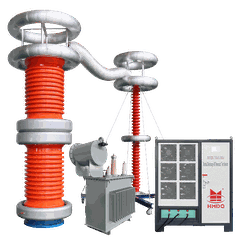

As a leading supplier of Current Injection Temperature Testers, I'm often asked about the types of sensors these sophisticated devices employ. In this blog post, I'll delve into the various sensors used in Current Injection Temperature Testers, exploring their functions, advantages, and how they contribute to the overall performance of our testing equipment.
1. Current Sensors
Current sensors are the heart of any Current Injection Temperature Tester. They are responsible for measuring the electrical current flowing through the test object. There are several types of current sensors commonly used in these testers, each with its own unique characteristics.
Hall - Effect Current Sensors
Hall - effect current sensors are based on the Hall effect, which states that when a magnetic field is applied perpendicular to a current - carrying conductor, a voltage is generated perpendicular to both the current and the magnetic field. These sensors are non - intrusive, meaning they can measure current without making direct electrical contact with the conductor. This makes them ideal for measuring high - current applications safely.
One of the main advantages of Hall - effect current sensors is their wide dynamic range. They can accurately measure currents from a few milliamperes to several thousand amperes. Additionally, they have a fast response time, which is crucial for capturing transient current events. In our Current Injection Temperature Testers, Hall - effect current sensors ensure precise current measurement, allowing us to accurately simulate real - world operating conditions.
Rogowski Coils
Rogowski coils are another type of current sensor commonly used in Current Injection Temperature Testers. They consist of a flexible coil of wire that is wrapped around the conductor. The induced voltage in the coil is proportional to the rate of change of the current in the conductor. Rogowski coils are lightweight, flexible, and easy to install. They are particularly useful for measuring large alternating currents (AC) and can be used in applications where space is limited.
The advantage of Rogowski coils lies in their linearity and low phase error. They provide a very accurate measurement of the current waveform, which is essential for analyzing the electrical characteristics of the test object. Our testers equipped with Rogowski coils offer high - precision current measurement, enabling us to detect even the slightest changes in the current during the testing process.
2. Temperature Sensors
Temperature is a critical parameter in Current Injection Temperature Testing. Temperature sensors are used to monitor the temperature of the test object during the injection of current. There are several types of temperature sensors used in our testers, each with its own set of features.
Thermocouples
Thermocouples are one of the most widely used temperature sensors in industrial applications, including Current Injection Temperature Testing. They consist of two different metals joined together at one end. When there is a temperature difference between the junction and the other end of the thermocouple, a voltage is generated. This voltage is proportional to the temperature difference.
Thermocouples have a wide temperature range, from - 200°C to over 2000°C, depending on the type of metals used. They are rugged, reliable, and can withstand harsh environments. In our Current Injection Temperature Testers, thermocouples are used to measure the temperature of the test object accurately. They are placed at strategic locations on the test object to ensure comprehensive temperature monitoring.
Resistance Temperature Detectors (RTDs)
Resistance Temperature Detectors (RTDs) are based on the principle that the electrical resistance of a metal changes with temperature. Platinum is the most commonly used metal in RTDs due to its high stability and accuracy. RTDs offer a high degree of precision in temperature measurement, typically with an accuracy of ±0.1°C to ±0.5°C.


Compared to thermocouples, RTDs have a slower response time but provide more accurate and stable temperature readings. In our testers, RTDs are used when high - precision temperature measurement is required, such as in the testing of sensitive electrical components. For more information on our high - precision testing capabilities, you can visit our DC Primary Current Injection Test Set page.
3. Voltage Sensors
Voltage sensors are used in Current Injection Temperature Testers to measure the voltage across the test object. This information is essential for calculating the power dissipated in the test object and for analyzing its electrical characteristics.
Resistive Voltage Dividers
Resistive voltage dividers are a simple and cost - effective way to measure voltage. They consist of two or more resistors connected in series, and the output voltage is taken across one of the resistors. The ratio of the output voltage to the input voltage is determined by the resistance values of the resistors.
Resistive voltage dividers are easy to implement and have a relatively low cost. However, they have some limitations, such as a limited input impedance and the potential for power dissipation in the resistors. In our testers, resistive voltage dividers are used for applications where a moderate level of voltage measurement accuracy is sufficient.
Isolated Voltage Sensors
Isolated voltage sensors are used when electrical isolation between the test circuit and the measurement circuit is required. They use techniques such as opto - isolation or magnetic isolation to transfer the voltage signal without direct electrical connection. This provides a high level of safety and reduces the risk of electrical interference.
Isolated voltage sensors offer high accuracy and a wide input voltage range. They are commonly used in high - voltage applications, where electrical isolation is crucial. Our 7500A Primary Current Injection Test Set is equipped with isolated voltage sensors to ensure safe and accurate voltage measurement during high - current testing.
4. Pressure Sensors (Optional)
In some applications, pressure sensors may be used in Current Injection Temperature Testers. For example, in the testing of electrical components that are enclosed in a pressure - sealed environment, pressure sensors can be used to monitor the internal pressure.
Piezoresistive Pressure Sensors
Piezoresistive pressure sensors work on the principle that the resistance of a semiconductor material changes when it is subjected to pressure. They are compact, reliable, and have a fast response time. Piezoresistive pressure sensors can accurately measure both static and dynamic pressures.
In our 3000A Integrated Current Tester, optional pressure sensors can be added to provide comprehensive testing capabilities for applications where pressure monitoring is required.
Conclusion
The sensors used in Current Injection Temperature Testers play a crucial role in ensuring accurate and reliable testing results. From current sensors that measure the electrical current to temperature sensors that monitor the thermal behavior of the test object, each sensor contributes to the overall performance of the tester.
At our company, we are committed to using the latest sensor technology to provide our customers with the highest - quality Current Injection Temperature Testers. Whether you need to test low - power electrical components or high - voltage power systems, our testers offer the precision and reliability you need.
If you are interested in learning more about our Current Injection Temperature Testers or have specific testing requirements, we encourage you to contact us for a detailed discussion. Our team of experts is ready to assist you in finding the right testing solution for your needs.
References
- "Electrical Measurement and Instrumentation" by A. K. Sawhney
- "Sensor Technology Handbook" by Jon Wilson