

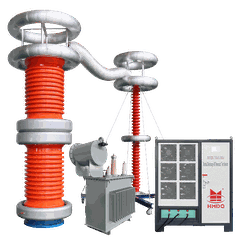

As a supplier of VLF (Very Low Frequency) hipot testers, I often encounter questions from customers regarding the applicability of our products in motor testing. In this blog post, I'll delve into the details of whether a VLF hipot tester can be used for testing motors, exploring the technical aspects, benefits, limitations, and practical considerations.
Understanding VLF Hipot Testers
Before discussing motor testing, it's essential to understand what a VLF hipot tester is. A VLF hipot tester is a high - voltage testing device that applies a very low - frequency (typically 0.1 Hz) AC voltage to electrical equipment. This low - frequency voltage is used to simulate the stress that the equipment would experience during normal operation but in a more controlled and test - friendly environment.
The main advantage of using a VLF voltage for testing is that it requires less power compared to a traditional 50/60 Hz AC voltage. This makes the testing equipment more portable and easier to use, especially for on - site testing. VLF hipot testers are commonly used for testing cables, transformers, and other high - voltage electrical components.
The Case for Using VLF Hipot Testers in Motor Testing
Similarities in Insulation Systems
Motors, like many other electrical equipment, have insulation systems that are designed to withstand a certain level of electrical stress. The insulation in motors is subject to degradation over time due to factors such as heat, moisture, and mechanical stress. A VLF hipot tester can be used to apply a high - voltage stress to the motor's insulation to detect any weaknesses or faults.
The insulation in motors and cables share some similarities in terms of their dielectric properties. The VLF voltage can penetrate the insulation in a similar way as it does in cables, allowing for the detection of insulation defects such as partial discharges, cracks, and moisture ingress.
Reduced Testing Power Requirements
Testing motors with a traditional 50/60 Hz AC hipot tester can be challenging due to the high power requirements. Motors typically have large capacitances, and applying a high - voltage 50/60 Hz AC signal would require a significant amount of power. In contrast, a VLF hipot tester can apply a high - voltage stress to the motor with much lower power consumption. This makes it a more practical option for on - site motor testing, especially in situations where access to a large power source is limited.
Detection of Incipient Faults
A VLF hipot test can be used to detect incipient faults in the motor's insulation system. By applying a high - voltage stress, the test can identify areas of the insulation that are starting to degrade but may not yet cause a complete failure. Early detection of these faults can help prevent costly motor failures and downtime. For example, if a partial discharge is detected during a VLF hipot test, it could indicate that the insulation is starting to break down, and corrective action can be taken before the situation worsens.
Limitations and Considerations
Different Insulation Configurations
While motors and cables have some similarities in their insulation systems, there are also some differences. Motors often have more complex insulation configurations, including slot insulation, phase insulation, and end - winding insulation. These different types of insulation may respond differently to the VLF voltage compared to the insulation in cables. As a result, the test results may need to be interpreted with caution, and additional testing methods may be required to fully assess the motor's insulation condition.
Motor Design and Construction
The design and construction of the motor can also affect the effectiveness of a VLF hipot test. For example, some motors may have internal shielding or grounding arrangements that can interfere with the test results. Additionally, the presence of certain components, such as capacitors or surge suppressors, in the motor circuit can also affect the test. It's important to understand the motor's design and construction before performing a VLF hipot test to ensure accurate results.
Test Frequency and Duration
The choice of test frequency and duration is crucial when using a VLF hipot tester for motor testing. The optimal test frequency may vary depending on the type of motor, its insulation material, and its operating conditions. Similarly, the test duration needs to be carefully selected to ensure that the test is sensitive enough to detect faults but does not cause unnecessary damage to the motor's insulation. In general, the test frequency for motor testing is typically in the range of 0.1 Hz to 0.01 Hz, and the test duration can range from a few minutes to several hours.
Our VLF Hipot Testers for Motor Testing
At our company, we offer a range of VLF hipot testers that are suitable for motor testing. Our 50kV VLF Hipot Tester is a powerful and reliable tool that can be used to test motors with a rated voltage of up to 50 kV. It features a user - friendly interface and advanced testing capabilities, allowing for accurate and efficient motor testing.


In addition, our VLF Hipot Tester with Tan Delta Measurement can provide valuable information about the motor's insulation condition. The tan delta measurement can help identify changes in the dielectric properties of the insulation, which can be an indication of insulation degradation.
Conclusion
In conclusion, a VLF hipot tester can be a valuable tool for testing motors. It offers several advantages, including reduced power requirements, the ability to detect incipient faults, and the potential to assess the insulation condition of the motor. However, it's important to be aware of the limitations and considerations, such as the different insulation configurations and motor design.
If you're interested in using a VLF hipot tester for motor testing or have any questions about our products, we encourage you to contact us for more information. Our team of experts can provide you with the guidance and support you need to ensure successful motor testing. Whether you're a maintenance technician, an electrical engineer, or a facility manager, our VLF hipot testers can help you keep your motors in optimal condition and prevent costly failures.
References
- Electrical Insulation Testing Handbook, Various Authors
- IEEE Standards for High - Voltage Testing of Electrical Equipment