

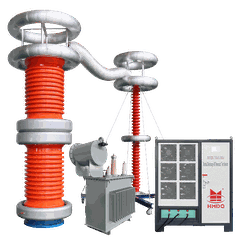



The resolution of a Generator Power Frequency Tester is a critical aspect that directly impacts its performance and the accuracy of test results. As a supplier of Generator Power Frequency Testers, understanding and communicating this concept is essential for both our technical team and our customers.
Understanding Resolution in a Generator Power Frequency Tester
Resolution refers to the smallest change in a measured quantity that a tester can detect and display. In the context of a Generator Power Frequency Tester, it is related to parameters such as voltage, current, and frequency. A high - resolution tester can detect very small variations in these electrical parameters, providing more detailed and accurate information about the generator's performance.
For example, when testing the output voltage of a generator, a tester with high resolution can distinguish between voltage values that are very close to each other. Suppose a generator is supposed to output a voltage of 400V. A tester with low resolution might only be able to display voltage values in increments of 10V. So, it could show the voltage as 390V or 400V or 410V. In contrast, a high - resolution tester might be able to display voltage values with an increment of 0.1V, allowing for a much more precise measurement. This precision is crucial in detecting potential issues in the generator's voltage regulation system.
Similarly, resolution is important when measuring current. In a generator, current is a key parameter that reflects the load it is carrying and the health of its windings. A high - resolution current measurement can help identify small changes in current that might indicate a developing fault, such as a short - circuit in the windings or an imbalance in the load.
Frequency is another parameter where resolution matters. The power frequency of a generator is typically 50Hz or 60Hz, depending on the region. A high - resolution frequency measurement can detect even the slightest deviation from the standard frequency. These deviations can be caused by issues such as mechanical problems in the generator's prime mover or problems with the governor system that controls the speed of the generator.
Factors Affecting the Resolution of a Generator Power Frequency Tester
Several factors can affect the resolution of a Generator Power Frequency Tester. One of the primary factors is the quality of the analog - to - digital converters (ADCs) used in the tester. ADCs are responsible for converting the analog electrical signals (voltage, current, etc.) into digital values that can be processed and displayed by the tester. High - quality ADCs with a higher number of bits can provide a higher resolution. For example, a 12 - bit ADC can represent 4096 different levels, while a 16 - bit ADC can represent 65536 different levels. The more levels an ADC can represent, the smaller the increment between each level, and thus the higher the resolution of the measurement.
The design of the signal conditioning circuitry also plays a role in determining the resolution. Signal conditioning circuitry is used to amplify, filter, and otherwise prepare the electrical signals before they are sent to the ADC. A well - designed signal conditioning circuit can reduce noise and interference in the signals, allowing the ADC to make more accurate conversions and improving the overall resolution of the tester.
The sampling rate of the tester is another important factor. The sampling rate determines how often the tester takes a measurement of the electrical signals. A higher sampling rate means that the tester can capture more data points in a given period, which can improve the resolution of the measurement. However, increasing the sampling rate also requires more processing power and memory in the tester, which can increase its cost.
Importance of High Resolution in Generator Testing
High resolution in a Generator Power Frequency Tester offers several benefits. Firstly, it allows for more accurate detection of faults in the generator. As mentioned earlier, small changes in voltage, current, or frequency can be early indicators of potential problems. A high - resolution tester can detect these small changes, enabling maintenance personnel to take corrective action before the problems become more serious and lead to generator failure.
Secondly, high - resolution testing can improve the efficiency of generator maintenance. With more accurate test results, maintenance personnel can better diagnose the root cause of problems and develop more targeted maintenance plans. This can reduce the time and cost associated with maintenance, as well as minimize the downtime of the generator.
In addition, high - resolution testing can help ensure compliance with industry standards and regulations. Many industries have strict requirements for the performance of generators, including limits on voltage variation, current imbalance, and frequency deviation. A high - resolution tester can provide the accurate measurements needed to demonstrate compliance with these standards.


Our Generator Power Frequency Testers and Resolution
As a supplier of Generator Power Frequency Testers, we understand the importance of resolution in generator testing. Our testers are designed with high - quality ADCs and advanced signal conditioning circuitry to provide the highest possible resolution. We also offer a range of sampling rates to meet the different needs of our customers.
Our Generator Power Frequency Tester is capable of measuring voltage, current, and frequency with high precision. The voltage measurement resolution can be as low as 0.1V, and the current measurement resolution can be as low as 0.01A. This high resolution allows for detailed and accurate analysis of the generator's performance.
In addition to the high - resolution measurement capabilities, our testers are also equipped with user - friendly interfaces and advanced data analysis software. The software can display the test results in various formats, such as graphs and tables, and can also perform statistical analysis on the data. This makes it easy for our customers to interpret the test results and make informed decisions about generator maintenance.
Related Testing Equipment
In addition to our Generator Power Frequency Testers, we also offer other related high - voltage testing equipment. Our AC Withstand Voltage Tester is used to test the insulation performance of generators and other electrical equipment. It can apply a high - voltage AC signal to the equipment under test and measure the leakage current to determine if the insulation is in good condition.
Our Cylinder Type AC Test Transformer is another important piece of equipment for high - voltage testing. It is used to generate high - voltage AC signals for testing purposes. The cylinder type design provides good insulation and stability, ensuring accurate and reliable test results.
Contact Us for Your Testing Needs
If you are in need of high - quality Generator Power Frequency Testers or other high - voltage testing equipment, we invite you to contact us. Our team of experts can provide you with detailed information about our products, as well as technical support and advice on generator testing. We are committed to providing our customers with the best possible products and services to meet their testing needs. Whether you are a small business or a large industrial enterprise, we have the right solution for you.
References
- Electrical Testing Handbook, Third Edition, by John D. McDonald
- Power System Testing and Diagnosis, by M. E. El-Hawary


