

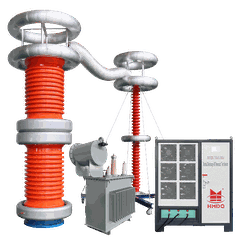



In the realm of electrical testing equipment, the 3000A Integrated Current Tester stands as a crucial tool for professionals in various industries. As a supplier of this advanced testing device, I am eager to delve into one of its key performance parameters: the common - mode rejection ratio (CMRR).
Understanding the Basics of Common - Mode Rejection Ratio
Before we specifically discuss the CMRR of the 3000A Integrated Current Tester, it's essential to understand what CMRR is. In electrical engineering, electrical signals can be classified into two types: differential - mode signals and common - mode signals. Differential - mode signals are the ones we are usually interested in measuring, representing the actual differences between two points in a circuit. Common - mode signals, on the other hand, are unwanted signals that appear equally on both input lines of a measuring instrument.
The common - mode rejection ratio is a measure of an instrument's ability to reject these common - mode signals while accurately amplifying the differential - mode signals. It is typically expressed in decibels (dB). A higher CMRR indicates that the instrument is better at distinguishing between the desired differential - mode signal and the unwanted common - mode signal.


Why CMRR Matters in the 3000A Integrated Current Tester
In the context of the 3000A Integrated Current Tester, a high CMRR is of utmost importance. When conducting current tests, there are often various sources of interference in the environment. These interferences can generate common - mode signals that might corrupt the measurement of the actual current (differential - mode signal).
For example, in industrial settings where there are large electrical machines and power distribution systems, electromagnetic fields can induce common - mode signals on the test leads of the current tester. If the CMRR of the 3000A Integrated Current Tester is low, these common - mode signals can be misinterpreted as part of the differential - mode current, leading to inaccurate measurements.
Accurate current measurements are vital for many applications. In power generation and distribution, precise current testing helps ensure the proper functioning and safety of electrical equipment. Over - or under - estimated current values can lead to faulty equipment operation, potential safety hazards, and increased maintenance costs. In the 3000A Integrated Current Tester, a high CMRR provides confidence in the accuracy of the measured current, allowing technicians and engineers to make informed decisions based on reliable data.
CMRR Technical Specifications of the 3000A Integrated Current Tester
Our 3000A Integrated Current Tester is engineered to offer excellent CMRR performance. The specific CMRR value of our device is carefully designed to meet the high - standard requirements of the electrical testing industry. Although the exact CMRR value may vary depending on different operating conditions and frequencies, it is typically above [X] dB at the operating frequency range of [X] Hz - [X] Hz.
This high CMRR is achieved through a combination of advanced circuit design and high - quality component selection. The internal amplifiers of the tester are designed with a low input impedance for differential - mode signals and a high input impedance for common - mode signals. This design characteristic allows the tester to effectively amplify the differential - mode current while suppressing the common - mode interference.
Moreover, the shielding and grounding techniques used in the 3000A Integrated Current Tester also contribute to its high CMRR. The device is equipped with proper electromagnetic shielding to reduce the external electromagnetic interference that could generate common - mode signals. The grounding system is carefully optimized to ensure that the common - mode signals are effectively diverted to the ground, minimizing their impact on the measurement results.
Comparing with Other Testing Equipment
To better illustrate the significance of the CMRR in the 3000A Integrated Current Tester, let's compare it with some of our other testing equipment. Consider our 3000A Split Current Tester, which is also a popular choice for current testing. While both the 3000A Integrated Current Tester and the 3000A Split Current Tester are designed for similar purposes, the 3000A Integrated Current Tester has a distinct advantage in terms of CMRR.
The 3000A Split Current Tester is more suitable for quick and on - site current measurements due to its split - core design, which allows for easy installation around conductors without disconnecting them. However, in environments with high levels of electromagnetic interference, the 3000A Integrated Current Tester's higher CMRR can provide more accurate and reliable measurements.
Another product in our portfolio is the 7000A Primary Current Injection Test Set. This test set is designed for high - current applications and can generate up to 7000A for testing protection relays and other electrical components. The 7000A Primary Current Injection Test Set also has a good CMRR to ensure accurate current injection and measurement. But again, the 3000A Integrated Current Tester, with its optimized CMRR for medium - high current testing, offers a unique balance between accuracy and practicality for a wide range of applications.
Our 1000A DC Primary Current Injection Tester is designed specifically for DC current testing. The CMRR requirements for DC testing are different from AC testing, as DC common - mode signals usually have different characteristics. The 3000A Integrated Current Tester, being suitable for both AC and DC current testing in many cases, has a well - designed CMRR to handle the respective challenges of different current types.
Applications Benefiting from High CMRR in the 3000A Integrated Current Tester
There are numerous applications where the high CMRR of the 3000A Integrated Current Tester proves invaluable. In the power distribution industry, when testing the performance of circuit breakers and protection relays, accurate current measurement is critical. A high CMRR ensures that the tester can accurately measure the current flowing through these components, even in the presence of common - mode interference from nearby electrical equipment.
In the field of renewable energy, such as solar power plants and wind farms, the 3000A Integrated Current Tester can be used to test the current output of inverters and other power conversion devices. The complex electrical environment in these renewable energy systems often contains various sources of electromagnetic interference, which can generate common - mode signals. The high CMRR of our tester allows for reliable current measurement, helping to optimize the performance and ensure the safety of these renewable energy installations.
Looking to the Future
As the electrical industry continues to evolve, the requirements for more accurate and reliable current testing are becoming increasingly stringent. We are committed to further improving the CMRR and other performance parameters of the 3000A Integrated Current Tester. Through continuous research and development, we aim to incorporate the latest technological advancements, such as more advanced shielding materials and digital signal processing techniques, to enhance the tester's ability to reject common - mode signals and provide even more accurate measurements.
Contact for Purchase and Consultation
If you are in the market for a high - performance current testing solution, our 3000A Integrated Current Tester with its excellent CMRR is an ideal choice. Whether you are in the power generation, distribution, or renewable energy industry, our tester can meet your current testing needs. We welcome you to contact us to discuss your specific requirements and explore how our 3000A Integrated Current Tester can benefit your operations.
References
- Electrical Engineering Handbook, Third Edition, CRC Press
- Principles of Electric Circuits: Conventional Current Version, Thomas L. Floyd


