

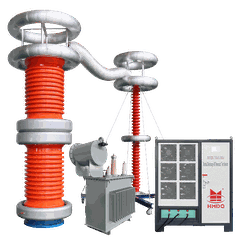

Can a VLF Hipot Tester Be Used for Testing Switchgear?
As a supplier of VLF (Very Low Frequency) hipot testers, I often encounter inquiries from customers regarding the applicability of our products in testing switchgear. This blog post aims to explore whether a VLF hipot tester can indeed be used for switchgear testing, delving into the technical aspects, advantages, limitations, and real - world applications.
Understanding VLF Hipot Testers
VLF hipot testers are specialized high - voltage testing equipment designed to apply a very low - frequency voltage (typically 0.1 Hz) to electrical insulation systems. The primary purpose of these testers is to detect insulation weaknesses and potential faults in cables, motors, generators, and other electrical components. The low - frequency voltage allows for a more effective simulation of the electrical stress on the insulation compared to direct current (DC) testing, while also being more practical and less time - consuming than using power - frequency (50/60 Hz) testing.
We offer two popular models: the 50kV VLF Hipot Tester and the VLF Hipot Tester with Tan Delta Measurement. The 50kV VLF Hipot Tester is capable of generating a high - voltage output of up to 50kV at a very low frequency, making it suitable for a wide range of insulation testing applications. The VLF Hipot Tester with Tan Delta Measurement, on the other hand, not only applies the VLF voltage but also measures the tan delta (dissipation factor) of the insulation, which provides valuable information about the condition of the insulation.
Switchgear and Its Testing Requirements
Switchgear is an essential component in electrical power systems. It is used to control, protect, and isolate electrical equipment. Switchgear includes circuit breakers, switches, fuses, and other devices that are designed to interrupt the flow of electricity in case of a fault or to control the power flow in a normal operation.
The insulation in switchgear needs to be regularly tested to ensure its reliability and safety. Testing methods typically aim to detect insulation degradation, such as moisture ingress, mechanical damage, or aging. Common testing parameters include insulation resistance, dielectric strength, and partial discharge.
Can a VLF Hipot Tester Be Used for Switchgear Testing?
The answer is yes, a VLF hipot tester can be used for switchgear testing, and here are the reasons:
- Insulation Stress Simulation: VLF hipot testers can simulate the electrical stress on the insulation of switchgear. The low - frequency voltage can penetrate the insulation more effectively than DC voltage, making it possible to detect insulation weaknesses that might be missed by DC testing. For example, in a switchgear with a long - term insulation degradation due to environmental factors, the VLF voltage can reveal the reduced dielectric strength of the insulation.
- Non - Destructive Testing: VLF hipot testing is a non - destructive testing method. It applies a relatively low - frequency voltage for a short period, which does not cause excessive damage to the insulation. This is particularly important for switchgear, as it allows for regular testing without compromising the integrity of the equipment.
- Portability and Ease of Use: VLF hipot testers are generally more portable and easier to use compared to power - frequency testing equipment. This makes them suitable for on - site testing of switchgear, especially in remote locations or in situations where it is difficult to access the power - frequency source.
However, there are also some limitations:
- Complexity of Switchgear Design: Switchgear often has a complex design with multiple components and insulation materials. The VLF hipot tester may not be able to accurately assess the insulation condition of all components simultaneously. For example, some internal components with complex geometries may require more specialized testing methods.
- Partial Discharge Detection: While VLF hipot testing can detect some insulation weaknesses, it may not be as effective as power - frequency testing in detecting partial discharges. Partial discharges are an important indicator of insulation degradation in switchgear, and in some cases, additional partial discharge testing equipment may be required.
Real - World Applications
In real - world scenarios, VLF hipot testers have been successfully used for switchgear testing in many power plants, substations, and industrial facilities. For instance, in a large industrial plant, regular VLF hipot testing of the switchgear has helped to identify early signs of insulation degradation. By detecting insulation weaknesses in a timely manner, the plant was able to schedule maintenance and replacement of the affected components, thus avoiding potential electrical failures and production downtime.
Conclusion
In conclusion, a VLF hipot tester can be a valuable tool for switchgear testing. It offers several advantages, such as effective insulation stress simulation, non - destructive testing, and portability. However, it also has some limitations, especially in dealing with the complex design of switchgear and partial discharge detection.


As a supplier of VLF hipot testers, we understand the importance of providing reliable and effective testing solutions for switchgear. Our products are designed to meet the diverse needs of our customers in the electrical industry. If you are interested in using a VLF hipot tester for your switchgear testing or have any questions about our products, please feel free to contact us for further discussion and procurement details.
References
- IEEE Std 400.2 - 2013, Guide for Field Testing and Evaluation of the Insulation of Shielded Power Cable Systems Using Very Low Frequency (0.1 Hz)
- IEC 60270:2000, High - voltage test techniques - Partial discharge measurements