

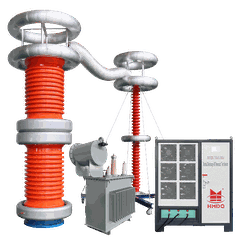

An inductive resonant test system is a crucial piece of equipment in the field of high - voltage testing. It is widely used for testing the insulation performance of various electrical equipment, such as cables, transformers, and generators. As a supplier of inductive resonant test systems, I have in - depth knowledge of this technology. However, like any other technology, inductive resonant test systems also have their limitations. In this blog, I will discuss some of the key limitations of an inductive resonant test system.
Limited Frequency Range
One of the primary limitations of an inductive resonant test system is its relatively limited frequency range. The resonance frequency of an inductive resonant test system is determined by the inductance (L) and capacitance (C) in the circuit, according to the formula (f = \frac{1}{2\pi\sqrt{LC}}). Most inductive resonant test systems are designed to operate within a specific frequency band.
For some electrical equipment, such as long - distance power cables, the ideal test frequency may vary depending on the cable's characteristics. A narrow frequency range may not be able to accurately simulate the actual operating conditions of the equipment. For example, if the test frequency is not properly matched to the cable's capacitance and inductance, the test results may not accurately reflect the insulation condition of the cable. This can lead to false positives or false negatives in the insulation assessment, potentially causing undetected insulation defects or unnecessary maintenance on the equipment.
Sensitivity to Load Variations
Inductive resonant test systems are highly sensitive to load variations. The resonance condition of the system is based on a specific combination of inductance, capacitance, and resistance. When the load connected to the test system changes, for instance, if the capacitance of the tested equipment varies due to environmental factors or aging, the resonance frequency of the system will shift.
This shift in resonance frequency can disrupt the normal operation of the test system. The power transfer efficiency may decrease significantly, and the test voltage may not reach the required level. In some cases, the system may even lose resonance completely, making it impossible to conduct an accurate test. To address this issue, additional control mechanisms and compensation circuits are often required, which can increase the complexity and cost of the test system.
High Initial Investment and Maintenance Costs
The design and manufacturing of inductive resonant test systems involve advanced technologies and high - quality components. As a result, the initial investment required to purchase an inductive resonant test system is relatively high. Moreover, the maintenance and calibration of these systems also require specialized knowledge and skills.
The components of an inductive resonant test system, such as high - voltage inductors and capacitors, need to be regularly inspected and maintained to ensure their performance and safety. Any malfunction or degradation of these components can affect the accuracy and reliability of the test results. The cost of spare parts and professional maintenance services can add up over time, making it a significant financial burden for some users.
Limited Portability
Many inductive resonant test systems are large and heavy due to the presence of bulky inductors and capacitors. This makes them difficult to transport and install at different test sites. For on - site testing of electrical equipment in remote locations or multiple testing points, the lack of portability can be a major drawback.
In contrast, Vehicle - Mounted AC Resonant Tester offers better portability, but it still has limitations in terms of size and weight compared to some other types of test equipment. The large size of the inductive resonant test system also requires a relatively large space for installation, which may not be available in some testing environments.
Difficulty in Testing Complex Systems
Modern electrical systems are becoming increasingly complex, with multiple components and subsystems interconnected. An inductive resonant test system may face challenges when testing such complex systems.
For example, in a power substation with a large number of transformers, switchgear, and cables, the interaction between different components can be very complicated. The electromagnetic fields generated by one component may interfere with the test results of another component. Additionally, the resonance characteristics of the overall system may be affected by the complex network of inductance and capacitance. It can be difficult to isolate the individual components for accurate testing, and the test results may be influenced by the interactions between different parts of the system.
Safety Risks
Working with high - voltage equipment always involves certain safety risks, and inductive resonant test systems are no exception. The high - voltage output of the test system can pose a serious threat to the operators if proper safety precautions are not taken.
The resonance process can generate strong electromagnetic fields, which may interfere with other electronic devices in the vicinity. Moreover, in case of a malfunction or a sudden change in the load, the test system may experience over - voltage or over - current situations, which can damage the test equipment and even cause safety hazards to the operators. Specialized safety training and strict safety protocols are required to ensure the safe operation of the inductive resonant test system.
Inability to Detect Some Types of Defects
Although inductive resonant test systems are effective in detecting many types of insulation defects, they may not be able to detect certain types of subtle or intermittent defects. For example, some partial discharge defects that occur only under specific operating conditions may not be easily detectable during a standard test using an inductive resonant test system.
These intermittent defects can be particularly challenging to diagnose because they may not be present during the test period. As a result, the test system may miss these defects, leaving the equipment at risk of failure in the future. Complementary testing methods, such as partial discharge monitoring using other techniques, may be required to supplement the inductive resonant test results.
Limited Applicability to Non - Linear Loads
Inductive resonant test systems are typically designed for linear loads. When dealing with non - linear loads, such as those containing power electronic devices, the test results may be inaccurate. Non - linear loads introduce harmonic components into the electrical circuit, which can distort the voltage and current waveforms.


The resonance characteristics of the test system may be affected by these harmonic components, leading to incorrect test results. The presence of harmonics can also cause additional heating and stress on the components of the test system, potentially reducing its lifespan. To accurately test non - linear loads, more sophisticated test methods and equipment may be required.
Impact of Environmental Factors
Environmental factors, such as temperature, humidity, and altitude, can have a significant impact on the performance of inductive resonant test systems. Temperature changes can affect the electrical properties of the components, such as the inductance of the inductor and the capacitance of the capacitor. High humidity can increase the surface leakage current of the insulation, which can interfere with the test results.
At high altitudes, the air density decreases, which can affect the dielectric strength of the air and the corona discharge characteristics. These environmental factors need to be carefully considered during the test process, and appropriate compensation measures may be required to ensure the accuracy of the test results.
Despite these limitations, inductive resonant test systems still play a vital role in the high - voltage testing field. Technologies such as the Inductance Adjustable AC Resonant Test System and the Capacitor Divider Of Resonant Test Set are continuously evolving to overcome some of these limitations.
If you are interested in learning more about inductive resonant test systems or have specific testing requirements, we are here to help. Our team of experts can provide you with professional advice and customized solutions. Contact us to start a procurement discussion and find the most suitable test system for your needs.
References
- Smith, J. (2018). High - Voltage Testing Techniques. IEEE Press.
- Brown, A. (2019). Electrical Insulation Assessment: Principles and Practices. Wiley.
- Chen, L. (2020). Resonant Test Systems for Electrical Equipment: Design and Application. Springer.