

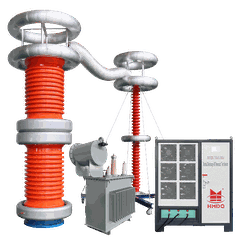

When it comes to selecting a Variable Frequency Power Supply (VFPS), numerous factors need to be taken into account to ensure that the chosen equipment meets the specific requirements of your application. As a supplier of Variable Frequency Power Supplies, I understand the importance of these considerations and am here to guide you through the process.
1. Output Voltage and Frequency Range
The output voltage and frequency range are fundamental parameters of a VFPS. Different applications demand different voltage and frequency levels. For instance, in some industrial testing scenarios, a wide range of output voltages may be required to simulate various operating conditions. If your application involves testing electrical equipment designed for different regions, a VFPS with a broad frequency range is essential, as different countries have different standard power frequencies (e.g., 50 Hz in most of Europe and Asia, and 60 Hz in North America).
When selecting a VFPS, carefully assess the maximum and minimum voltage and frequency values your application needs. Ensure that the power supply can provide stable output within the required range. Some advanced VFPS models offer adjustable voltage and frequency settings, allowing for precise customization according to specific test or operational requirements.
2. Power Rating
The power rating of a VFPS is another crucial factor. It determines the amount of electrical power the power supply can deliver to the load. To select the appropriate power rating, you need to know the power consumption of the equipment or load that will be connected to the VFPS. If the power rating of the VFPS is too low, it may not be able to meet the power demands of the load, leading to unstable operation or even damage to the equipment. On the other hand, choosing a VFPS with an excessively high power rating can result in unnecessary costs.
Consider not only the continuous power requirements but also any peak power demands that may occur during startup or transient operations. Some loads, such as motors, may require a higher initial power surge to start up. Make sure the VFPS can handle these peak loads without overheating or tripping its protective circuits.
3. Waveform Quality
The quality of the output waveform is significant, especially for applications that are sensitive to waveform distortion. A pure sine wave is often preferred as it closely resembles the waveform of the utility power grid. Many electronic devices, such as sensitive medical equipment and high - precision measurement instruments, require a clean sine wave to operate correctly.
When evaluating a VFPS, look for specifications related to total harmonic distortion (THD). A lower THD value indicates a cleaner waveform with fewer harmonic components. Some VFPS models are designed to produce waveforms with extremely low THD, ensuring reliable operation of connected equipment.
4. Stability and Accuracy
Stability and accuracy are essential for applications that demand precise control of voltage and frequency. A stable VFPS maintains a consistent output voltage and frequency over time, even under varying load conditions. Accuracy refers to how closely the actual output of the VFPS matches the set values.
For applications such as calibration laboratories or scientific research, high - precision VFPS models with excellent stability and accuracy are necessary. These power supplies often use advanced control algorithms and high - quality components to achieve tight voltage and frequency regulation.
5. Protection Features
Protection features are vital to safeguard both the VFPS and the connected equipment. Over - voltage protection (OVP) prevents the output voltage from exceeding a safe level, which can damage the load. Under - voltage protection (UVP) ensures that the output voltage does not drop below a certain threshold, which may cause improper operation of the equipment.
Over - current protection (OCP) limits the current flowing through the VFPS to prevent overheating and damage to the power supply and the load. Short - circuit protection (SCP) automatically shuts off the output in case of a short - circuit, protecting the power supply from catastrophic failure.
Some VFPS models also offer over - temperature protection (OTP). This feature monitors the temperature of the power supply and reduces the output power or shuts down the unit if the temperature exceeds a safe limit, preventing damage due to overheating.
6. Control and Monitoring Capabilities
Modern VFPS models come with a variety of control and monitoring options. Local control panels allow for manual adjustment of voltage, frequency, and other parameters. Some power supplies also support remote control via interfaces such as RS - 232, USB, or Ethernet. Remote control is particularly useful for applications where the VFPS needs to be operated from a distance or integrated into an automated test system.
Monitoring capabilities are also important. The ability to display real - time information such as output voltage, current, power, and frequency on a built - in display or transmit this data to a remote device allows for easy monitoring of the power supply's operation and the performance of the connected load.
7. Size and Portability
The physical size and portability of the VFPS may be important depending on your application. If you need to move the power supply between different locations or use it in a confined space, a compact and lightweight model is preferable. Some VFPS units are designed to be rack - mountable, which is suitable for installation in standard equipment racks in laboratories or industrial control rooms.
8. Compatibility with Other Equipment
Consider the compatibility of the VFPS with other equipment in your system. For example, if you are using the VFPS in conjunction with a AC Resonant Test System with PD, AC Series Resonant Test System, or Inductive Resonant Test System, ensure that the VFPS can provide the appropriate voltage, frequency, and power to these test systems.
Also, check the electrical interfaces and communication protocols of the VFPS to ensure seamless integration with other devices in your setup.
9. Cost - Effectiveness
Cost is always a consideration when selecting any equipment. However, it is important to balance the initial purchase price with the long - term benefits and performance of the VFPS. A cheaper power supply may lack some of the advanced features and quality components, which could lead to higher maintenance costs or reduced reliability in the long run.
Evaluate the total cost of ownership, including not only the purchase price but also operating costs, maintenance costs, and the expected lifespan of the VFPS. Look for a power supply that offers a good combination of performance, features, and price.


10. Manufacturer Reputation and Support
The reputation of the manufacturer is an important factor. A well - established manufacturer with a good track record is more likely to produce high - quality VFPS units. Check for customer reviews, industry certifications, and the manufacturer's experience in the field.
Good technical support is also crucial. In case of any problems or questions during the installation, operation, or maintenance of the VFPS, you need to be able to rely on the manufacturer's support team. Look for manufacturers that offer comprehensive warranties, training programs, and readily available spare parts.
In conclusion, selecting the right Variable Frequency Power Supply requires a careful evaluation of multiple factors. By considering the output voltage and frequency range, power rating, waveform quality, stability and accuracy, protection features, control and monitoring capabilities, size and portability, compatibility with other equipment, cost - effectiveness, and manufacturer reputation and support, you can make an informed decision that meets your specific application requirements.
If you are in the process of selecting a Variable Frequency Power Supply and have any questions or need further assistance, please feel free to contact us. We are here to help you find the most suitable VFPS for your needs and ensure a successful procurement process.
References
- "Power Electronics: Converters, Applications, and Design" by Ned Mohan, Tore M. Undeland, and William P. Robbins.
- Industry standards and guidelines related to variable frequency power supplies and electrical testing equipment.