

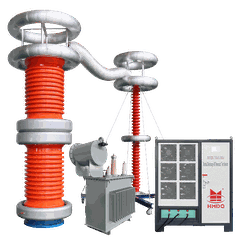

Hey there! As a supplier of Inductive Resonant Test System, I often get asked about the grounding requirements for these systems. So, I thought I'd write this blog to share some insights on this crucial topic.
Why Grounding Matters
First off, let's talk about why grounding is so important for an Inductive Resonant Test System. Grounding serves multiple purposes, and safety is at the top of the list. When we're dealing with high - voltage equipment like our test systems, there's always a risk of electrical faults. A proper ground provides a safe path for electrical current in case of a short - circuit or other malfunctions. This helps protect both the equipment and the people operating it.
Another key reason for grounding is to ensure the accuracy of the test results. In an Inductive Resonant Test System, the electrical environment needs to be stable. A good ground helps to minimize electrical noise and interference, which can otherwise distort the test data. Without proper grounding, we might end up with false readings, leading to incorrect assessments of the equipment under test.
Basic Grounding Principles
The basic idea behind grounding is to connect the electrical equipment to the earth. This is usually done through a grounding electrode, which is a conductor buried in the ground. The grounding electrode should have a low resistance to the earth to effectively carry the fault current.
For an Inductive Resonant Test System, all metallic parts of the equipment, including the enclosures, frames, and shields, should be connected to the grounding system. This creates a equipotential bonding, which means that all these parts are at the same electrical potential. In case of a fault, the current will flow through the grounding path rather than through a person who might come into contact with the equipment.
Grounding Resistance
One of the most important aspects of grounding is the grounding resistance. The grounding resistance is the resistance between the grounding electrode and the earth. For an Inductive Resonant Test System, a low grounding resistance is crucial. Generally, the grounding resistance should be less than 5 ohms, but in some cases, especially in areas with high soil resistivity, a resistance of up to 10 ohms might be acceptable.
To measure the grounding resistance, we can use a grounding resistance tester. This device sends a test current through the grounding electrode and measures the voltage drop. Based on Ohm's law (V = IR), the resistance can be calculated. If the measured resistance is too high, we may need to take additional measures to reduce it.
Methods to Reduce Grounding Resistance
There are several ways to reduce the grounding resistance. One common method is to increase the surface area of the grounding electrode. This can be done by using multiple electrodes connected in parallel or by using larger electrodes. For example, instead of a single rod electrode, we can use a grid of electrodes buried in the ground.
Another way is to improve the soil conductivity around the grounding electrode. We can do this by adding conductive materials to the soil, such as salt or graphite. However, this method has some limitations, as the conductive materials may be washed away over time by rain or groundwater.
Grounding for Different Components of the System
Power Supply Unit
The power supply unit of the Inductive Resonant Test System is the heart of the system. It should be properly grounded to prevent electrical shocks and to ensure stable operation. The grounding conductor for the power supply unit should be of sufficient size to carry the maximum fault current.
Resonant Reactor
The resonant reactor is a key component in the Inductive Resonant Test System. It should be grounded to prevent electrostatic charges from building up on its surface. A good ground also helps to reduce the electromagnetic interference generated by the reactor.
Test Object
When testing an object, such as an HV Cable AC Resonant Tester, the test object itself should also be grounded. This is to ensure that any electrical charges on the test object are safely discharged to the ground.
Safety Precautions During Grounding Installation
When installing the grounding system for an Inductive Resonant Test System, we need to follow some safety precautions. First, we should always wear appropriate personal protective equipment, such as insulated gloves and safety shoes.
Before starting the installation, we need to make sure that the power supply to the test system is turned off. This prevents the risk of electrical shock during the installation process.
During the installation, we should carefully connect all the grounding conductors. Loose connections can increase the grounding resistance and pose a safety hazard.
Comparison with Other Test Systems
Compared to other test systems, such as the Variable Frequency AC Resonant Test System, the grounding requirements for an Inductive Resonant Test System are similar in many aspects. However, due to the specific characteristics of the inductive resonant principle, the grounding system needs to be more carefully designed to ensure the resonance conditions are not affected.
In a Variable Frequency AC Resonant Test System, the frequency can be adjusted to achieve resonance. While in an Inductive Resonant Test System, the resonance is mainly determined by the inductance and capacitance values. Any change in the grounding conditions can potentially affect these values and thus the resonance state.
Importance of Regular Grounding Checks
Grounding is not a one - time thing. We need to regularly check the grounding system to ensure its effectiveness. Over time, the grounding electrode may corrode, the connections may loosen, or the soil conditions around the electrode may change.
Regular grounding checks can help us detect these problems early and take corrective actions. We can perform visual inspections to check for any signs of damage or corrosion. And we should also measure the grounding resistance periodically to make sure it is still within the acceptable range.


Conclusion
In conclusion, the grounding requirement for an Inductive Resonant Test System is of utmost importance. It is essential for safety, accuracy of test results, and stable operation of the system. By following the basic grounding principles, ensuring a low grounding resistance, and taking proper safety precautions during installation and maintenance, we can ensure that our test systems work effectively.
If you're in the market for an Inductive Resonant Test System or have any questions about grounding requirements, don't hesitate to reach out. We're here to help you make the right choice and ensure that your testing processes are safe and reliable.
References
- Electrical Safety Standards for High - Voltage Testing Equipment
- Handbook of Electrical Grounding Design and Installation