

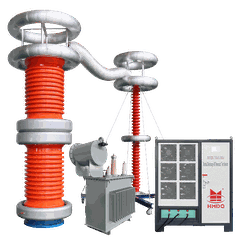

Hey there! As a supplier of VLF hipot testers, I often get asked about the voltage range these nifty devices can cover. So, let's dive right in and explore this topic in detail.


First off, let's understand what a VLF hipot tester is. VLF stands for Very Low Frequency. These testers are used to perform dielectric withstand tests on electrical cables, motors, and other high - voltage equipment. They work by applying a low - frequency voltage to the equipment under test to detect any insulation weaknesses.
Now, to the main question: what voltage range can a VLF hipot tester cover? Well, it can vary quite a bit depending on the specific model and its intended use.
Low - End Voltage Range
Some basic VLF hipot testers can start at relatively low voltages, around 0.1 kV or even lower. These lower - voltage testers are great for testing small, low - voltage components or for initial screening of equipment. For example, in a laboratory setting where you're testing small printed circuit boards or low - power electrical devices, a tester with a low - end voltage range can be very useful. It allows you to apply a small amount of voltage to check for any immediate insulation breakdowns without risking damage to the components.
Mid - Range Voltage
Most commonly, VLF hipot testers cover a mid - range voltage from about 5 kV to 20 kV. This range is suitable for a wide variety of applications. Many industrial electrical cables used in factories, commercial buildings, and even some residential complexes fall within this voltage testing range. For instance, if you're testing the insulation of medium - sized power cables that supply electricity to a manufacturing plant, a VLF hipot tester in the 5 - 20 kV range can effectively detect any insulation defects.
High - End Voltage
On the high end, some advanced VLF hipot testers can go up to 50 kV or even higher. These high - voltage testers are used for testing high - voltage transmission and distribution cables, large motors, and other heavy - duty electrical equipment. For example, in the power generation and distribution industry, where high - voltage cables are used to transmit electricity over long distances, a 50kV VLF Hipot Tester is essential. It can simulate the high - voltage conditions that these cables experience in real - world operation and help identify any potential insulation problems before they lead to costly failures.
Specialized Voltage Ranges
There are also some specialized VLF hipot testers that can cover even wider or more specific voltage ranges. For example, some testers are designed to cover a very narrow voltage range with high precision for specific research or quality control applications. Others may be able to cover a broader range from a few hundred volts up to 50 kV or more, providing more flexibility for different types of testing.
One of the great features of modern VLF hipot testers is their ability to adjust the voltage within the specified range. This means that you can set the exact voltage you need for a particular test, depending on the requirements of the equipment under test. It gives you more control and accuracy in the testing process.
Importance of the Right Voltage Range
Choosing the right voltage range for your VLF hipot tester is crucial. If the voltage is too low, you may not be able to detect all the insulation defects. On the other hand, if the voltage is too high, you risk damaging the equipment being tested. For example, if you use a high - voltage tester on a small, low - voltage component, you could cause irreversible damage to the insulation and other components.
Tan Delta Measurement and Voltage Range
Another important aspect related to VLF hipot testers is tan delta measurement. Tan delta is a measure of the dielectric loss in an insulation material. Some VLF hipot testers come with the capability of tan delta measurement, like the VLF Hipot Tester with Tan Delta Measurement. This feature can be very useful in determining the overall condition of the insulation. Different voltage ranges can affect the tan delta measurement results. Generally, as the voltage increases, the tan delta value may change, and by analyzing these changes, you can get a better understanding of the insulation's health.
In conclusion, the voltage range that a VLF hipot tester can cover varies widely, from very low voltages for small - scale testing to high voltages for heavy - duty electrical equipment. As a supplier, I understand the importance of having the right tester for your specific needs. Whether you're a small - scale electronics manufacturer or a large - scale power utility company, we have a wide range of VLF hipot testers to suit your requirements.
If you're interested in learning more about our VLF hipot testers or if you have any questions regarding the voltage range and which tester is right for you, don't hesitate to reach out. We're here to help you make the best choice for your electrical testing needs. Contact us today to start a discussion about your procurement requirements, and let's find the perfect VLF hipot tester for you.
References
- Electrical Insulation Testing Handbook, various industry publications
- Manufacturer's specifications for VLF hipot testers